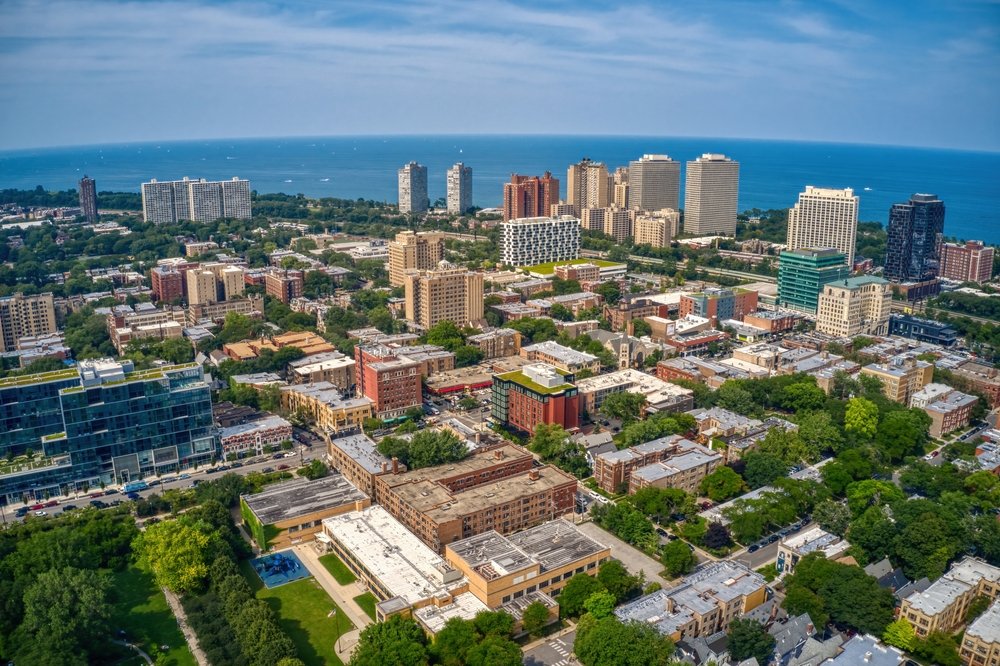
When I moved from Üsküdar to Hyde Park in 2018, I was bracing myself for the usual disorientation of living abroad for the first time. The anxiety of adaptation, the loneliness of starting over in a foreign city, the sense of being perpetually one step behind everyone else: I had prepared for all of it. What I had not prepared for was how quickly it dissolved. Hyde Park surprised me into belonging.
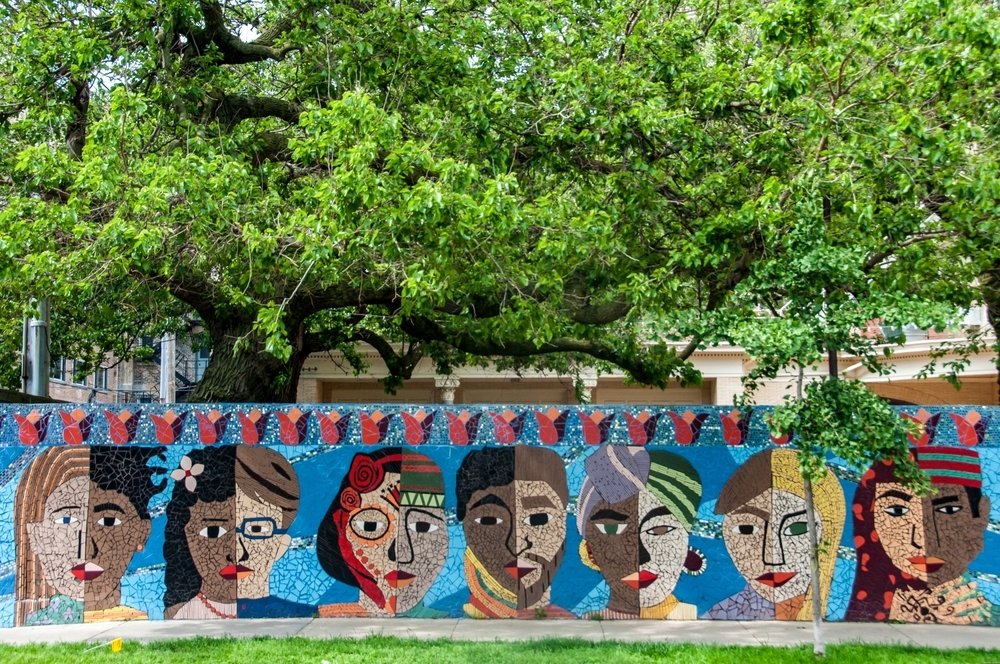
The neighborhood that surrounds the University of Chicago is what Americans call "multicultural," a word that sometimes flattens the texture of what it actually describes. But in Hyde Park, the word earns its keep. Students and scholars from dozens of countries share sidewalks, seminar rooms and corner cafes. You hear English spoken in more accents than you knew existed, and you realize, with a small shock of relief, that your own accent, whatever it is, has always been welcome here. No one raises an eyebrow. No one asks where you are really from.
I remember the first time a neighbor stopped me on the street just to chat, the way neighbors do, as if I had always lived there. The city absorbs you before you have decided to be absorbed.
I grew up between Istanbul and Ankara, cities where belonging is assumed by birth, written into the soil. Hyde Park taught me something different: that belonging can also be chosen, extended and rebuilt from scratch.
I became a Chicagoan, I think, before I fully intended to. That is the quiet power of a place that has built its identity on layered arrivals. And it is precisely that power, the power to make newcomers feel that they too are part of the story, that is now under pressure.
The United States is rethinking one of its most foundational promises: that being born on American soil makes you American.
The debate over birthright citizenship, protected by the 14th Amendment since 1868, is no longer academic. Executive orders, legal challenges and a political climate that frames immigration as an existential threat have brought this question into millions of living rooms, including immigrant ones like mine.
I did not expect, when I first arrived in Chicago, that I would one day sit with these questions not as an engineer analyzing policy from a distance, but as someone who feels their weight in a personal and immediate way.
I came to this country as an engineer, a writer, someone who studies cities and the way people belong or fail to, in them. I have spent years watching Chicago absorb newcomers, watching neighborhoods transform and admiring the complicated choreography of integration.
Hyde Park alone carries within it the stories of generations who arrived with almost nothing and built institutions, businesses and communities.
What I see now is something different: not the usual friction between newcomers and old-timers as they find their footing together, but a deliberate unraveling of the social contract that made American cities work in the first place.
Birthright citizenship was never just a legal technicality. It was an architectural decision, a way of saying that the future belongs to everyone who arrives and puts down roots. The 14th Amendment was written in the aftermath of the Civil War precisely to make citizenship unconditional, to sever it from blood, lineage or the politics of any given moment. It was, in other words, a statement about what kind of country America intended to be. For over 150 years, it held.
Mass deportations operate on a different logic, one that sorts human beings into those who belong and those who do not, often by documents they never chose to carry. I think of families in neighborhoods like Hyde Park, where children hold American passports while their parents dismantle their homes. These children speak with Chicago accents. They know no other sky. The passport says "born here." The atmosphere, increasingly, says "but not quite one of us." That gap, between the document and the feeling, is where so much human damage quietly accumulates.
As someone who carried Istanbul to Chicago, not as nostalgia, but as a way of seeing, I know something about that gap between legal status and felt belonging.
A visa, a green card, a naturalization certificate: these are milestones, not answers. I remember the day I received my Social Security Number (SSN), how I held that small card expecting to feel something definitive, some click of arrival. What I felt instead was that belonging was still somewhere ahead of me, patient and unhurried.
Belonging is slower, subtler than any paperwork. It lives in the corner bakery that knows your order, in the neighbors who wave without hesitation, in the school where your child made her first friend, and in the confidence that your family's future is not hostage to the next election cycle.
That confidence is what mass deportations erode, even for those who are never directly targeted.
When a community watches its members disappear, sometimes people who have lived here for two or three decades, who coach Little League, who pay taxes, who have never known another home, it not only loses those individuals, but also loses its sense of permanence.
The street looks the same but feels different. People lower their voices. They stop putting down roots because roots, they have learned, can be pulled. Fear becomes the architecture of daily life, and fear is a very poor material for building a city.
I have become careful, as a guest in this country, not to prescribe solutions. That is not my place, and I know it.
But I am also a student of cities, and cities are long, patient teachers. What they teach us is this: they thrive on density of life, on the overlapping of stories, on the productive tension of difference.
The Irish were once told they did not belong here. So were the Italians, the Chinese, the Polish and the Puerto Ricans. And Mexicans are still told this, from time to time, even now.
Yet what I observe every day in Chicago tells a different story entirely. Mexicans, just like the Irish and Italians, are woven into the fabric of this city in ways that most Chicagoans would not trade for anything: their tacos, their music, their passion for soccer and the particular warmth of their neighborhoods.
Chicagoans do not tolerate this presence. They celebrate it, seek it out and build their lives around it.
The greatest American cities were built by people who were told, at various points in history, that they did not quite belong. They belonged anyway. They built anyway. The city, in the end, remembered them better than the politics did.
Hyde Park taught me that belonging is not granted. It is generated, quietly, by the daily act of sharing a city with strangers who become neighbors, by the accumulated weight of small recognitions: a nod, a held door, a conversation that starts and goes nowhere in particular but leaves both people slightly warmer.
What is at stake in this debate is not just a legal clause or a constitutional amendment. It is that generation that slows and irreplaceably makes the home. And it is, ultimately, what America will have to answer for itself, not in courts or executive orders, but in the quiet accumulation of choices about who gets to feel, fully and without fear, at home.