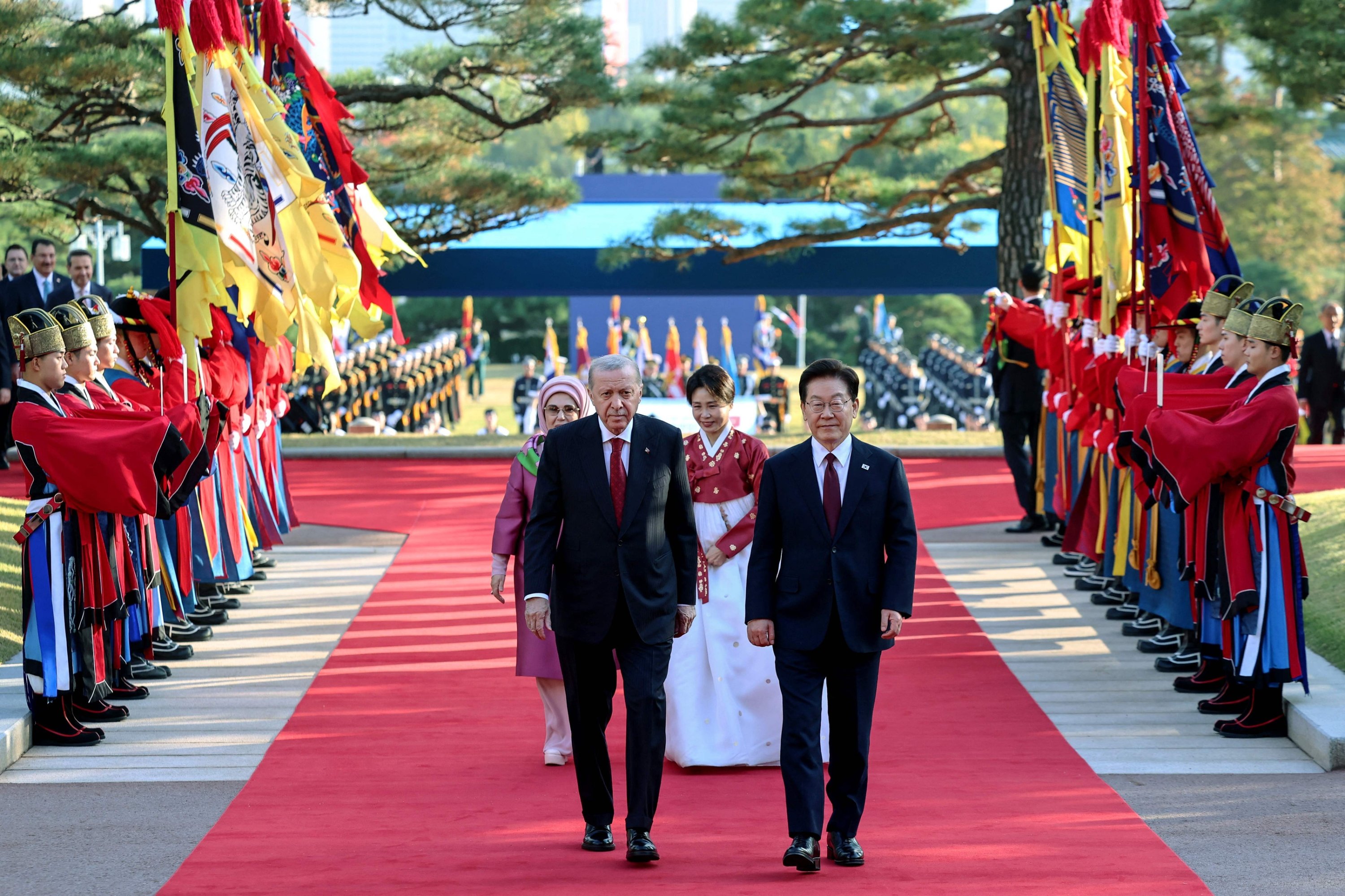
Eight years passed between President Recep Tayyip Erdoğan’s 2018 visit to South Korea and his return to Seoul this November. Yet consider how often the two presidents have seen each other in the past year. President Lee Jae-Mung visited Türkiye in November 2025. The two met again in July at the NATO summit in Ankara in 2026. For two countries that call each other brothers, the most promising feature of Erdoğan's latest visit is that the conversation could pick up where it left off four months ago.
South Korea and Türkiye call each other brothers not only in diplomacy but also among ordinary citizens. Whenever I visit Türkiye, people often call me a "blood brother" when they learn that I am Korean. That made me think of a Korean proverb at a policy roundtable in Seoul during the visit: “A close neighbor is better than a distant relative.”
This proverb raises a practical question for South Korea and Türkiye: How can two countries that call each other brothers keep that bond strong across the distance? Brotherhood needs regular contact, shared experiences and practical cooperation to flourish. Seoul and Ankara cannot change the distance between them, but they can decide how often they meet and what they do for each other when they do. Turkish soldiers who fought alongside Koreans during the Korean War earned an affection that survives to this day. My students know that history. I would like them to have stories of their own to tell.
Five or six years ago, on flights between Seoul and Istanbul, I mostly heard Korean around me. On a recent Turkish Airlines flight, I was struck by how much Turkish I heard in the cabin. At my university in Seoul, my graduate assistant studied Asian Studies at Boğaziçi University in Istanbul. For years, I helped Korean students find their way to Türkiye. Now someone educated in Türkiye helps shape what students in Seoul learn about the region. More direct flights and joint degree programs would give others the same chance.
South Korea and Japan call the practice of regular visits between their leaders “shuttle diplomacy.” For Seoul and Ankara, an annual presidential meeting is a reasonable goal. Some years the presidents could meet in either capital. In others, they could set aside time at a multilateral summit. Knowing the date of the next meeting gives a minister a reason to settle a question that might otherwise wait, whether it concerns an additional flight or recognition of a degree earned abroad.
South Korea and Türkiye already belong to several circles in which they can meet as middle powers. MIKTA brings their foreign ministers together with those of Mexico, Indonesia and Australia. A South Korean minister can hear how an event that looks one way from Seoul looks quite different from Ankara or Jakarta. That geographic range also explains why agreement on a sustained common agenda can be elusive. Each government has pressing concerns in its own region. MIKTA’s particular value lies in the informal conversations that help ministers understand those concerns and recognize the occasions when their interests converge.
The G-20 gives the two governments a wider audience when they are ready to act together. A disruption to energy supplies or maritime trade is an issue on which Seoul and Ankara could develop a common position before a broader negotiation.
NATO serves a different purpose. Türkiye is an ally, and South Korea participates as an Indo-Pacific partner. At the Ankara summit in July, Lee met both Erdoğan and NATO’s secretary-general. Korea’s longstanding alliance with the United States gives it a firm basis for practical cooperation with NATO. Türkiye, which knows both the alliance and its South Korean partner well, can bring officials together on questions such as the reliability of defense supplies.
These meetings help the two governments stay in touch. But if an issue concerns a particular region, there is a further reason to meet: the countries whose decisions will determine the outcome need to be in the room. For South Korea and Türkiye, that points to two invitations.
The first could come from Ankara. At the 2025 Gabala summit, the Organization of Turkic States (OTS) established OTS+ to work with external partners. Türkiye assumed the chairmanship at last week’s Ankara summit. With the support of its fellow members, it could invite South Korea to an OTS+ discussion on the Middle Corridor. A Korean manufacturer moving goods across the Caspian needs to know whether a delayed train can still connect with a ferry and whether its paperwork will be accepted at the next border. The railway, port and customs authorities that can answer those questions are natural participants in such a meeting.
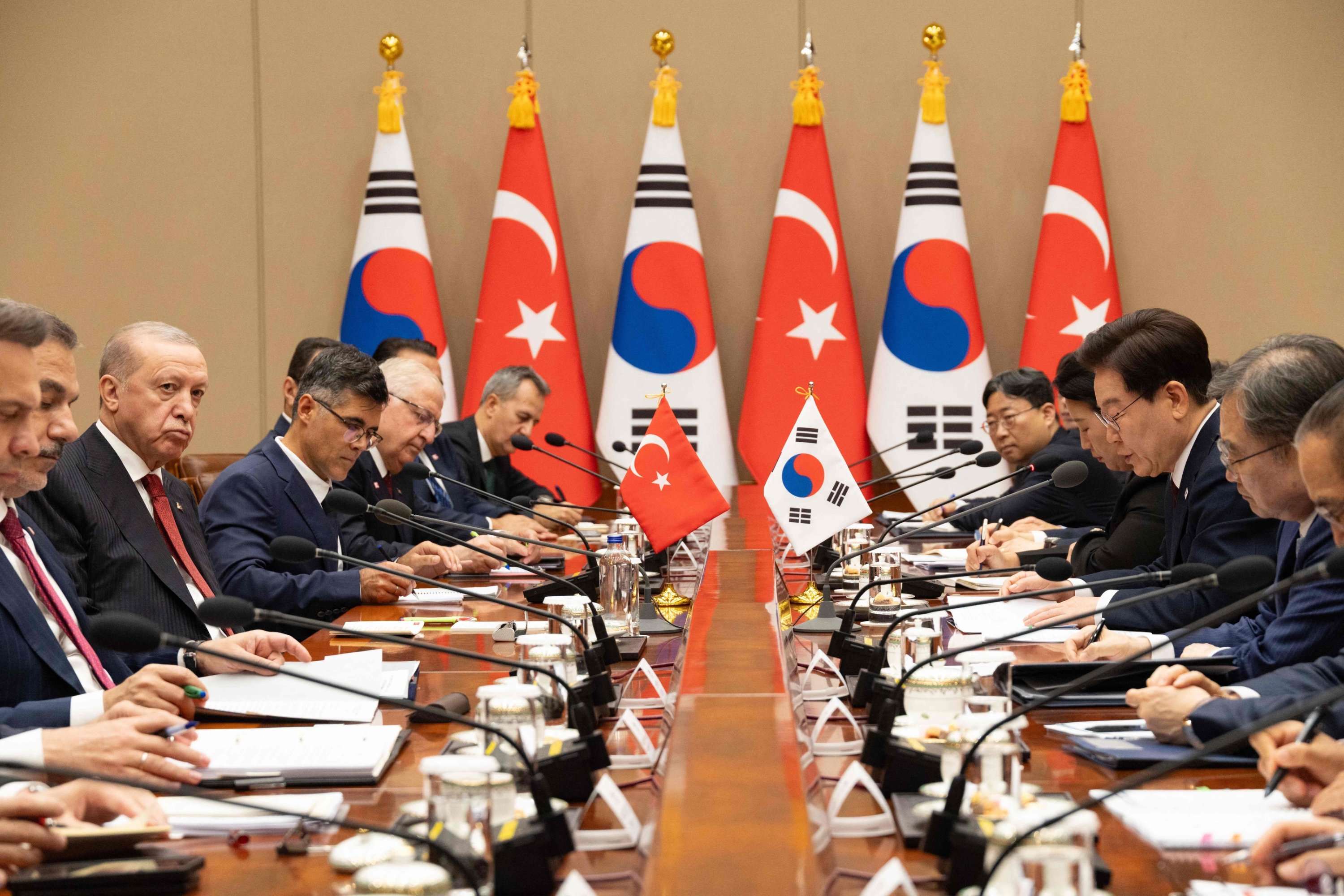
The second invitation could come from Seoul. The South Korea-Central Asia Cooperation Forum began in 2007, and this September South Korea and the five Central Asian states held their first leaders’ summit in Seoul. Korea could consult its five partners about inviting Türkiye to a forum session on transport. If all six governments see value in its contribution, they could invite Türkiye to a future South Korea-Central Asia summit as an observer. A discussion on a trade route extending through Türkiye to Europe would benefit considerably from having Turkish officials at the table.
Moreover, the case for these invitations goes well beyond movement of goods. Across all five Central Asian countries, centuries of trade, shared customs and the influence of Islam have given people much in common. Kazakh, Kyrgyz, Turkmen and Uzbek belong to the same language family as Turkish. These ties help explain why Türkiye has a natural place in a conversation about the region’s future.
South Korea’s ties to the region run deeper than the history of the Koryo-in (Soviet Korean), whose families have made Central Asia their home for generations. As a South Korean scholar of Türkiye, I regard South Korea as one of the Turkic world's closest cultural neighbors outside the Turkic-speaking world itself. I see this affinity as part of a broader Altaic cultural sphere connecting South Korea, Central Asia and Türkiye. A South Korean student learning Turkish can recognize familiar features even in the very first lesson: both languages typically place the verb at the end of a sentence and build meaning by adding suffixes to words. Such similarities offer people a point of entry into one another's cultures. Inviting South Korea to an OTS+ discussion and Türkiye to the South Korea-Central Asia dialogue would give these longstanding affinities a place in today's regional diplomacy.
When Lee and Erdoğan met in Türkiye last November, they began to identify what they might build together. The proposed nuclear plant at Sinop shows what must happen next. Last year’s memorandum opened discussions on licensing, site assessment and financing. Erdoğan has identified South Korea as a potential partner. Energy officials now need to determine which issues can be addressed through a joint study and which require decisions by their respective governments.
Defense engineers exploring joint development face their own questions about technical requirements. A pilot in digital public services could give the two sides a manageable first project in artificial intelligence. South Korean and Turkish contractors could also explore reconstruction work where local authorities seek their help, including, when conditions permit, in Ukraine or Gaza.
Next year marks 70 years of diplomatic relations. A fitting way to mark the anniversary would be to welcome a Korean delegation to an OTS+ meeting and a Turkish delegation to the South Korea-Central Asia dialogue, with the agreement of the countries around each table. The officials who meet should leave knowing what they have agreed to do and when they will see each other again. That would give the presidents something concrete to review at their next summit. And it would give practical meaning to a word South Koreans and Turks already use with affection: blood brother. Even brothers who live far apart have to make time for each other.