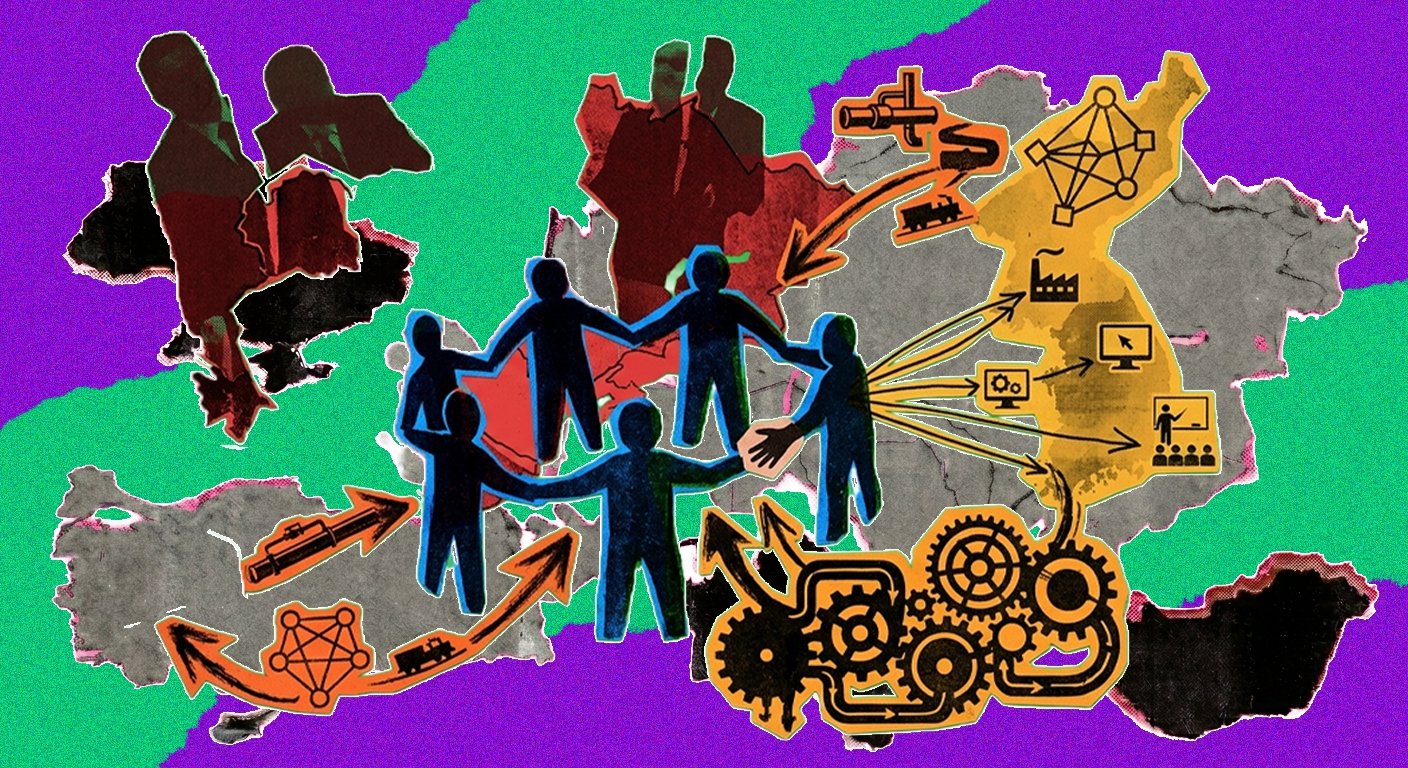
The transformation currently unfolding in Central Asia may appear incremental at first glance, yet it, in fact, represents one of the most consequential shifts in Eurasian regional dynamics in recent years. With Azerbaijan’s formal inclusion in the Consultative Meetings of Central Asian States, the long-standing C5 framework has evolved into what can meaningfully be described as C6. This transition is not merely a technical expansion of membership; rather, it reflects a deeper structural reconfiguration of how regional cooperation is conceptualized, organized and practiced across Eurasia.
At its core, the emergence of C6 signals the consolidation of a more autonomous and internally driven regional order. For much of the post-Soviet period, Central Asia’s external engagements were largely mediated through “C5+1” formats, in which major powers such as the United States, Russia, China, the European Union, Japan and Korea engaged the region collectively. While these mechanisms contributed to dialogue and economic cooperation, they were inherently shaped by external agendas. Today, however, Central Asian states are increasingly asserting their own agency, seeking to construct cooperative frameworks grounded in shared regional priorities rather than external strategic competition.
Azerbaijan’s inclusion is pivotal in this regard. Geographically, it anchors the South Caucasus to Central Asia. Economically, it serves as a gateway to European markets and strategically, it reinforces the viability of the Middle Corridor as an alternative to traditional northern routes. The ongoing integration of transport infrastructure, energy networks and trade corridors demonstrates that this is not an abstract geopolitical vision but a material transformation already underway.
What is particularly striking about this development is that it reflects a broader evolution in the nature of regionalism itself. In the past, cooperation in the Turkic world, especially within the framework of the Organization of Turkic States (OTS), was largely anchored in shared history, linguistic affinity and cultural identity. While these elements provided an important foundation, they also imposed certain limitations on the scope of cooperation. Today, we are witnessing a gradual but unmistakable shift from identity-driven regionalism toward function-oriented collaboration.
This shift is evident not only in the expanding agenda of the OTS but also in the emergence of its more flexible extension, OTS+, which seeks to engage external partners beyond the immediate Turkic sphere. At the same time, the C6 framework introduces a complementary logic: one that is less concerned with cultural homogeneity and more focused on geographic connectivity, economic pragmatism and shared developmental challenges. The inclusion of Tajikistan, despite its non-Turkic identity, further underscores this transition, illustrating that regional cooperation is increasingly defined by necessity rather than identity alone.
To fully appreciate the significance of this transformation, it is useful to situate it within the broader history of Eurasian integration efforts. Earlier initiatives, particularly those led by Russia, were often framed as ambitious attempts to reconstruct a coherent post-Soviet regional order. As Richard Sakwa has argued in works such as "Frontline Ukraine" and "Russia Against the Rest," these projects were never purely economic. Rather, they reflected a complex interplay of geopolitical ambition, institutional constraints and civilizational narratives.
Yet, such initiatives have consistently encountered structural limitations. Power asymmetries between Russia and its partners have often undermined perceptions of equality, while weak institutionalization and divergent foreign policy orientations have limited their effectiveness. More fundamentally, the sustainability of such integration has been constrained by Russia’s own internal challenges, including the need for industrial modernization, institutional reform and demographic resilience. As a result, Eurasian integration has struggled to move beyond a predominantly state-centric and geopolitically driven model.
In contrast, the emerging C6 framework represents a different paradigm, one that is more horizontal, network-based and pragmatically oriented. Rather than imposing a singular regional order, it facilitates cooperation across multiple sectors, including trade, infrastructure, energy and human development. This reflects a broader shift in global regionalism away from rigid blocs toward flexible, overlapping networks.
Within this evolving landscape, it is also worth paying closer attention to Korea’s engagement with Central Asia. The Korea-Central Asia Cooperation Forum, long known as K+C5, now stands at the threshold of evolving into a K+C6 framework. While this transformation is still unfolding, it carries meaningful implications for both Korea’s regional engagement and the broader trajectory of Eurasian cooperation.
Korea’s approach to Central Asia has been characterized by pragmatism and partnership. Rather than seeking geopolitical dominance, Korea has focused on areas such as economic development, digital innovation, infrastructure, education and human resource development. These priorities align closely with the structural challenges facing Central Asia today, including industrial diversification, institutional reform and labor market transformation.
Moreover, Korea’s own developmental experience enhances its appeal as a partner. Having undergone rapid economic transformation within a relatively short period, Korea offers not only financial resources but also policy experience and institutional know-how. This positions Korea as a credible and constructive partner for countries pursuing sustainable and inclusive growth.
At the same time, the expansion from C5 to C6 opens new possibilities for rethinking the broader architecture of Eurasian cooperation. The intersection of C6, OTS+ and Korea’s engagement suggests the potential emergence of a wider framework that may be conceptualized as Turkic-Altaic cooperation. This concept is not merely cultural or historical. Rather, it reflects a strategic convergence among regions with complementary strengths.
The Turkic world provides a foundation rooted in shared heritage and geographic continuity, while countries such as Korea and Japan bring advanced technological capabilities, institutional sophistication and global economic integration. Together, these elements create the conditions for a more balanced and dynamic form of regional cooperation that bridges identity and functionality, tradition and innovation.
Such a framework also offers a pathway for Central Asia to navigate an increasingly fragmented global order. At a time when major powers are reinforcing inward-looking economic strategies and competitive regionalism, diversification of partnerships becomes a strategic necessity. In this context, cooperation across C6, OTS+ and K+C6 frameworks can enhance regional resilience, reduce overdependence on any single power and support long-term development goals.
Ultimately, what is emerging is not a replacement for existing regional structures but a reconfiguration of how they interact. C6 strengthens internal cohesion, OTS and OTS+ expand cultural and strategic linkages and K+C6 introduces a development-oriented external dimension. Together, these frameworks form a multilayered and interconnected system that reflects the complexity of contemporary Eurasian geopolitics.
In this context, Central Asia and the South Caucasus are no longer peripheral regions shaped solely by external forces. Instead, they are becoming active platforms for connectivity, cooperation and innovation. The transition from C5 to C6 symbolizes this transformation, marking the region’s evolution from a passive geopolitical space into a proactive and strategic actor.
For Korea, this moment represents more than an opportunity. It is an invitation to contribute constructively to the evolving landscape of Eurasian regionalism.
For Eurasia as a whole, the path forward will depend not on the dominance of any single power, but on the ability to connect diverse regions, identities and economies into a coherent and cooperative whole. In this emerging landscape, the convergence of C6, OTS+ and Korea’s engagement may well represent one of the most promising foundations for a new Eurasian moment, which is defined not by divisions but by connectivity, partnership and shared progress.