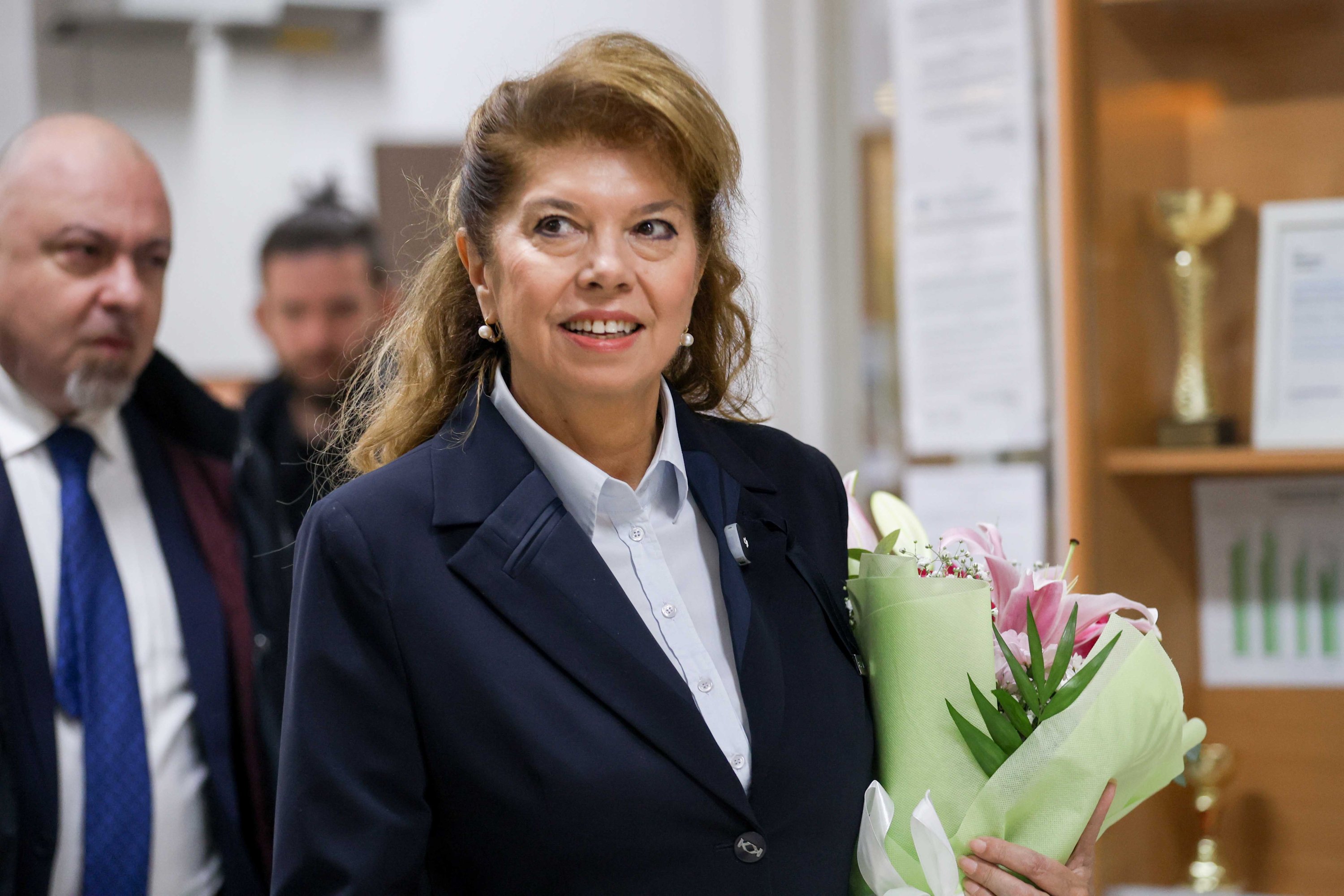
Yesterday, Bulgaria elected Iliana Iotova as its first directly elected female president, securing approximately 57.5% of the vote in the second round of the presidential election. Kiril Valchev will serve as her vice president. Her opponent, Andrey Gyurov, with Georgi Kandev as vice-presidential candidate, received 39.4-39.5%, while the option “I do not support any candidate” accounted for roughly 3%. The narrow margin observed in the first round of Oct. 25, with Iotova at 34.8% and Gyurov at 32%, widened in the runoff.
The most striking feature of the election was not the distribution of votes but voter turnout. After reaching a historically low 23% in the first round, turnout rose only slightly to 27% in the second. This low turnout should be understood less as an isolated feature of a single election and more as a reflection of the prolonged political instability Bulgaria has experienced since 2021. Over the past five years, the country has held eight parliamentary elections, governed through fragmented assemblies, short-lived coalitions and frequent recourse to caretaker governments.
The principal cause lies in deep-seated distrust of political parties. Perceptions of corruption, oligarchic networks of influence, and a competitive political culture that routinely portrays opponents as corrupt have prevented the formation of stable majorities. When parties cannot reconcile claims of ideological purity with the practical requirements of coalition-building, the electoral cycle becomes self-perpetuating. The resulting perception among voters that meaningful change is impossible has further depressed turnout. Even the April 2026 parliamentary elections, in which Rumen Radev’s Progressive Bulgaria secured around 44.7% of the vote and won a single-party majority, did not fully dispel this structural distrust. The low participation in the presidential contest suggests that much of the electorate remains disengaged, with some voters expressing protest and others showing passive acquiescence.
Born on Oct. 24, 1964, Iotova is a politician with a background in journalism. After studying Bulgarian and French philology at Sofia University, she worked as a reporter, editor and head of the news directorate at Bulgarian National Television. She spent many years in the Bulgarian Socialist Party (BSP), served as a Member of the European Parliament from 2007 to 2017, and held the office of vice president for two terms under President Rumen Radev, beginning in 2017. Following Radev’s resignation in January 2026, she assumed the presidency in accordance with constitutional procedure. With the Nov. 1 election, she became both the country’s first female president to serve in an interim capacity and the first woman to be directly elected to the office, which is an event widely regarded as a symbolic turning point in Bulgarian political history.
This background helps explain why Iotova’s victory is widely interpreted as a preference aligned with the line of Prime Minister Rumen Radev. After Radev stepped down from the presidency in January 2026 to pursue a parliamentary career, Iotova, who had been acting president, emerged with a discourse of the “president of peace.” She has maintained a cautious stance on increasing military assistance to Ukraine, emphasized that a negotiated settlement remains possible, and argued that Bulgaria can defend its national interests more independently without abandoning its European path.
Gyurov, by contrast, received support from reformist and pro-Western circles and advocated closer cooperation with Kyiv along with a firmer stance toward Russia. Conducted against the backdrop of drone attacks on commercial vessels in the Black Sea, the election rendered this geopolitical difference visible. The congratulatory message from European Commission President Ursula von der Leyen confirmed expectations that Sofia will remain within the European framework, while also indicating that the Iotova-Radev line may constitute a more cautious partner for Brussels and Kyiv.
The implications of this domestic political landscape for Türkiye and for the Turks in Bulgaria must be assessed on both the internal and external planes. The decline of the Movement for Rights and Freedoms (DPS) below 7% in the April 2026 parliamentary elections had already signaled a marked weakening of the Turkish minority’s parliamentary representation. The presidential contest appears to continue that trend. Turnout among dual citizens at polling stations in Türkiye (15 in Thrace and 78 nationwide) remained limited, while calls for boycott and general indifference were observed in minority-dense regions such as Kardzhali (Kırcaali).
As for Bulgaria's relations with Türkiye, Iotova’s more sovereignty-oriented and negotiation-focused foreign-policy discourse need not narrow the scope for cooperation between Ankara and Sofia on Black Sea security and energy. On the contrary, it may contribute to a more balanced search for dialogue on NATO’s eastern flank. At the same time, it remains uncertain whether the Radev government will take concrete steps on minority rights in the fields of education, language and culture, an uncertainty that has persisted since the April elections.
Although Iotova’s powers are largely ceremonial, her authority to appoint caretaker governments and exercise veto powers places her in a critical position within Bulgaria’s cycle of political instability. However, yesterday’s runoff confirmed not so much the filling of a political office as the limited legitimacy produced by chronic political distrust and persistently low voter turnout. The persistently low participation indicates that decision-makers in Sofia will be unable to achieve lasting stability without first addressing the deficit in public trust and political legitimacy. For Türkiye, the result once again underscores that relations with a neighboring NATO ally in the Black Sea require careful and pragmatic diplomacy on both minority rights and regional security.