Just as things seemed to be calming down after the tense 12 days of war in June, with negotiations between the U.S. and Iran continuing, and immediately after the Omani foreign minister visited the U.S., met with Vice President JD Vance and made quite positive statements, we woke up on the morning of Feb. 28 to one of the biggest turning points in Middle Eastern history.
This “unexpected” blow, which came in the shadow of the negotiations, brought about an outcome that Israel could not have achieved alone. Unlike the war that Israel started in June and ended with the U.S. attack on Iran's nuclear facilities, this was a joint operation between Israel and the U.S.
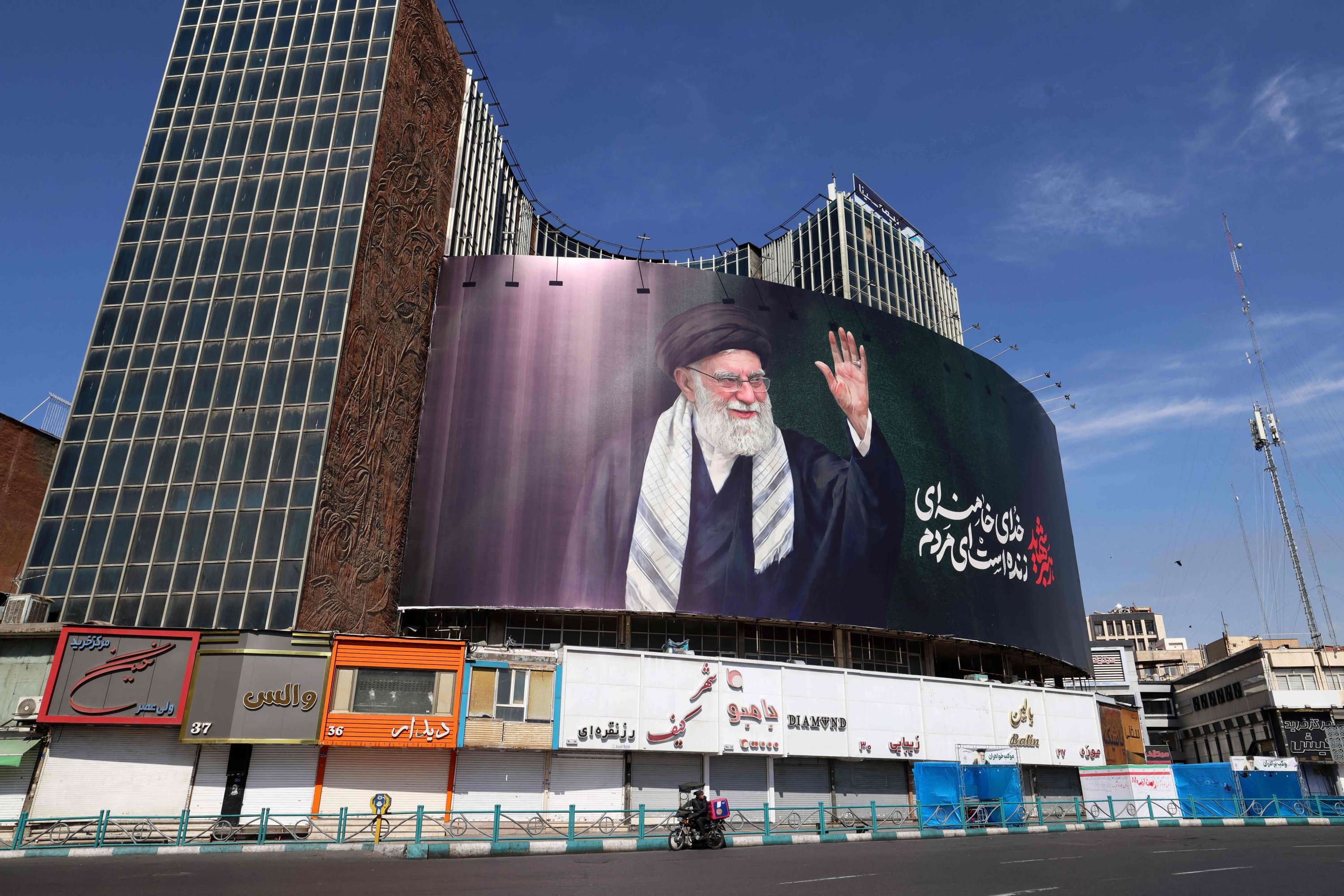
In this joint operation, dubbed “Epic Rage” by the U.S. and “Roaring Lion” by Israel, they attacked the area where Iran's government buildings were located, and about a day later, in the morning hours, it was announced that Iranian Supreme Leader Ayatollah Ali Khamenei had died. This was the news that a 37-year era had come to an end. U.S. President Donald Trump achieved the goal he had long been voicing and caused a new environment of chaos to emerge in the Middle East.
Khamenei was not only a head of state, but also the holder of the position of "Velayat-e Faqih," considered the representative of the expected Mahdi, believed to be the future of Shiism. His death will create a huge void in the Iranian Constitution and power balances. Iran must elect a new supreme leader to replace him in the shortest time possible, while trying to retaliate against the U.S. and Israeli attacks.
The fact that the U.S. primarily targeted official state institutions, senior political leaders and military commanders in its attacks shows that the goal was to paralyze the government by creating a leadership vacuum and inflict regime change rather than dealing with Iran's nuclear facilities.
After the attack the U.S. carried out on the morning of Feb. 28, protests began in Tehran. At the time, Trump signaled intervention in Iran, calling for the people to take to the streets and confront state institutions, adding that the U.S. would help. However, it did not go as he expected. After the death of Khamenei was officially announced, contrary to Trump's expectations, the Iranian people took to the streets for mourning ceremonies and to protest the attack.
On the fifth day of the attack, the U.S.-Israel alliance targeted military headquarters, police stations, militia centers known as basic centers, and airports in many Iranian cities.
In addition to military targets, many civilian sites, including hospitals and schools, were also targeted. It has been reported that the death toll has surpassed a thousand.
During the 12-day war, Iran, being shocked, had not retaliated for the first three days, but this time it was prepared. From the very first hours, it launched attacks on Israel and U.S. bases and missions in the region. It attacked U.S. bases in Bahrain, Qatar, the UAE, Saudi Arabia and Jordan. While it is stated that six U.S. soldiers were killed and many were wounded in these attacks, Iran claims that the actual number of U.S. soldiers killed is much higher.
At the same time, Iran announced that it was closing the Strait of Hormuz, one of its most important assets, saying that not a single drop of oil would be allowed to pass and that ships attempting to pass would be shot at. The closure of the Strait of Hormuz, through which 20% of the world's oil passes, will quickly affect global energy markets. Indeed, oil prices have risen in the first days of the war.
As the fifth day of the war passed, not only Tehran but also certain areas in other cities were subjected to heavy attacks. The situation is not very encouraging for Iran. However, the U.S., which entered this war under pressure from Israel, has begun to lose soldiers, and contrary to its expectations, there has been no popular uprising in Iran, and the Iranian state apparatus has not become dysfunctional. Within the U.S., the question “Why did we enter this war?” has begun to be voiced more loudly. As soldiers' coffins arrive in the U.S., these voices will grow louder and, most likely, widespread protests will begin.
Another question that needs to be answered is how long the war will last. Before the war even began, Iranian officials said, “The U.S. or Israel may start the war, but we will decide when it ends.” At this point, the American side is using contradictory statements, and Trump's saying different things at different times is interpreted as a sign that the U.S. administration has no plan for the course of the war it has launched against Iran.
This war is likely to cause major fractures in the region. Even if there is no regime change in Iran, the destruction caused by the war will mean huge financial losses for Iran. Although the events of the past days have been interpreted as indicating that there is no danger of civil war, the rumors currently circulating that separatist armed groups are being brought into Iran by the U.S. will be one of the most dangerous events for Iran and the region in the coming period.
On the other hand, Iran's closure of the Strait of Hormuz to oil tankers and its attacks affecting the oil and natural gas production of Gulf countries will impact the global economy.