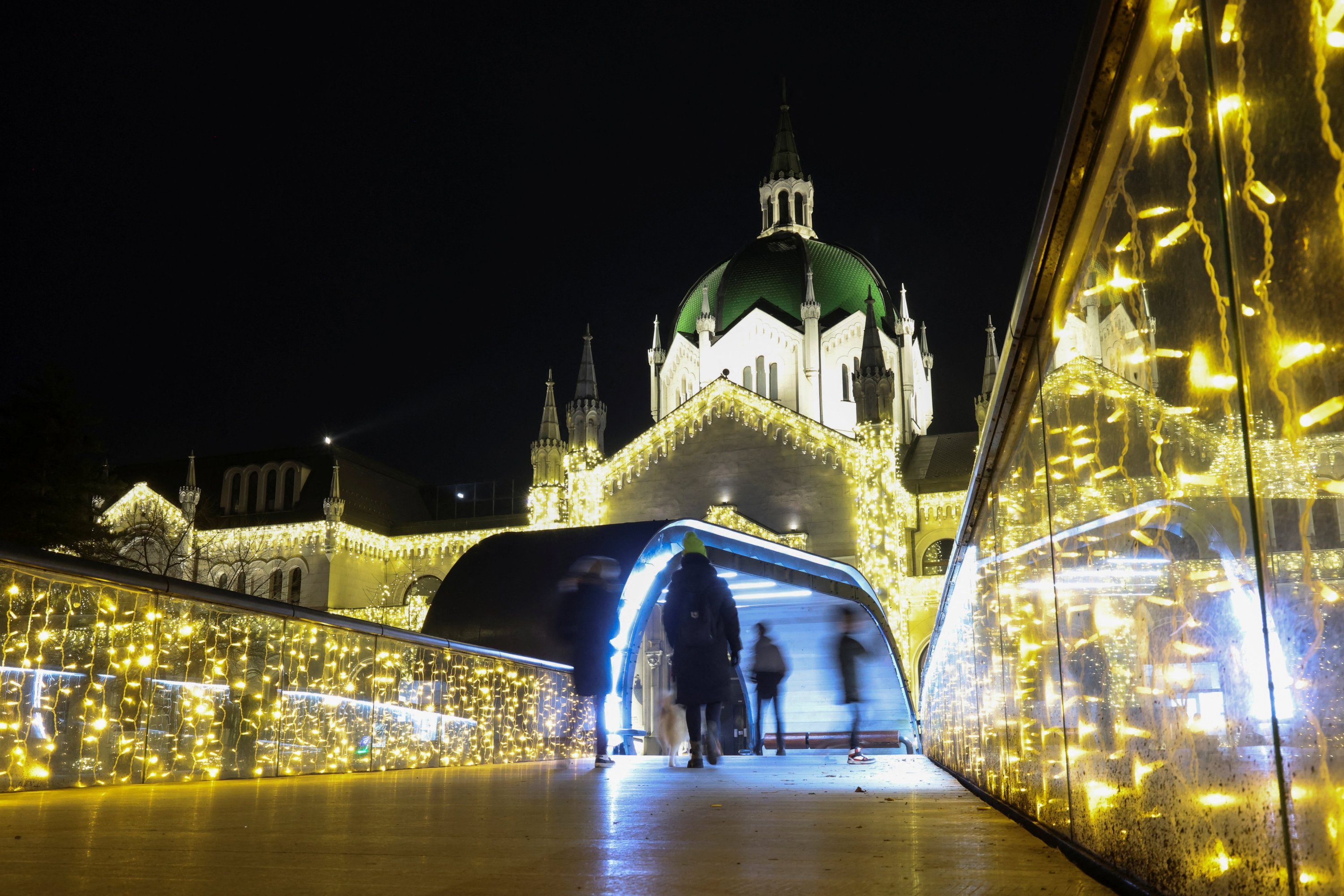
Every new year, an old feeling returns: a quiet sense of unease, of not quite belonging. With it come familiar voices from my childhood. I hear my parents saying, “We don’t put up a tree. This is not our tradition.” I remember my mother gently comforting me, explaining that I would receive gifts for Eid, but not for New Year’s Eve, like most of my peers. As deeply religious Muslims, my parents taught my brothers and me that these customs had nothing to do with us. Any sign of festive lights, Christmas trees or New Year's decorations would trigger an almost instinctive reaction in our home.
My father would always repeat: “We are Muslims. We have our own traditions. Why would we take over those of other religions? Go and celebrate Christmas at your Christian friends’ houses, that is fine. Spread the joy with them, but then invite them for Eid. I’ll buy you presents.”
I grew up without Santa Claus, without New Year’s gift bags and without the photographs that almost all my friends in Sarajevo seemed to have, smiling beside Santa. As a child, this confused me deeply. How was it that other children from Muslim families had those pictures? How was it that they celebrated something we did not? Were we a different kind of Muslims?
I was born in the late '80s, and my husband, who is about a decade older than me, remembers the New Year’s holiday very differently. For him, it was joyful, filled with sweets, presents, family gatherings and homemade cakes. When I asked him the other day whether anyone ever explained why they celebrated New Year's Eve, he said it was simply having fun. It had no religious meaning.
At the time, our country, Bosnia-Herzegovina, was part of Yugoslavia: a socialist federal state in Southeast Europe that existed for most of the 20th century. Yugoslavia was made up of six republics and multiple ethnic and religious communities, and it was governed by a one-party communist system that promoted a shared Yugoslav identity over individual national or religious ones.
In Yugoslavia, New Year’s Eve had a very specific role. It was deliberately designed as a secular, state-sponsored holiday in a society that systematically pushed religion out of public life. Santa Claus was stripped of any religious symbolism and presented as a universal figure of children’s joy. The Christmas tree was relocated from Christmas to New Year’s Eve, creating a “neutral” tradition meant to belong to everyone.
Historically, however, the Christmas tree is deeply rooted in Christian tradition. In Christianity, it symbolizes life and hope, an evergreen tree that survives the darkest time of the year, while its lights represent the coming of Jesus Christ as the light of the world.
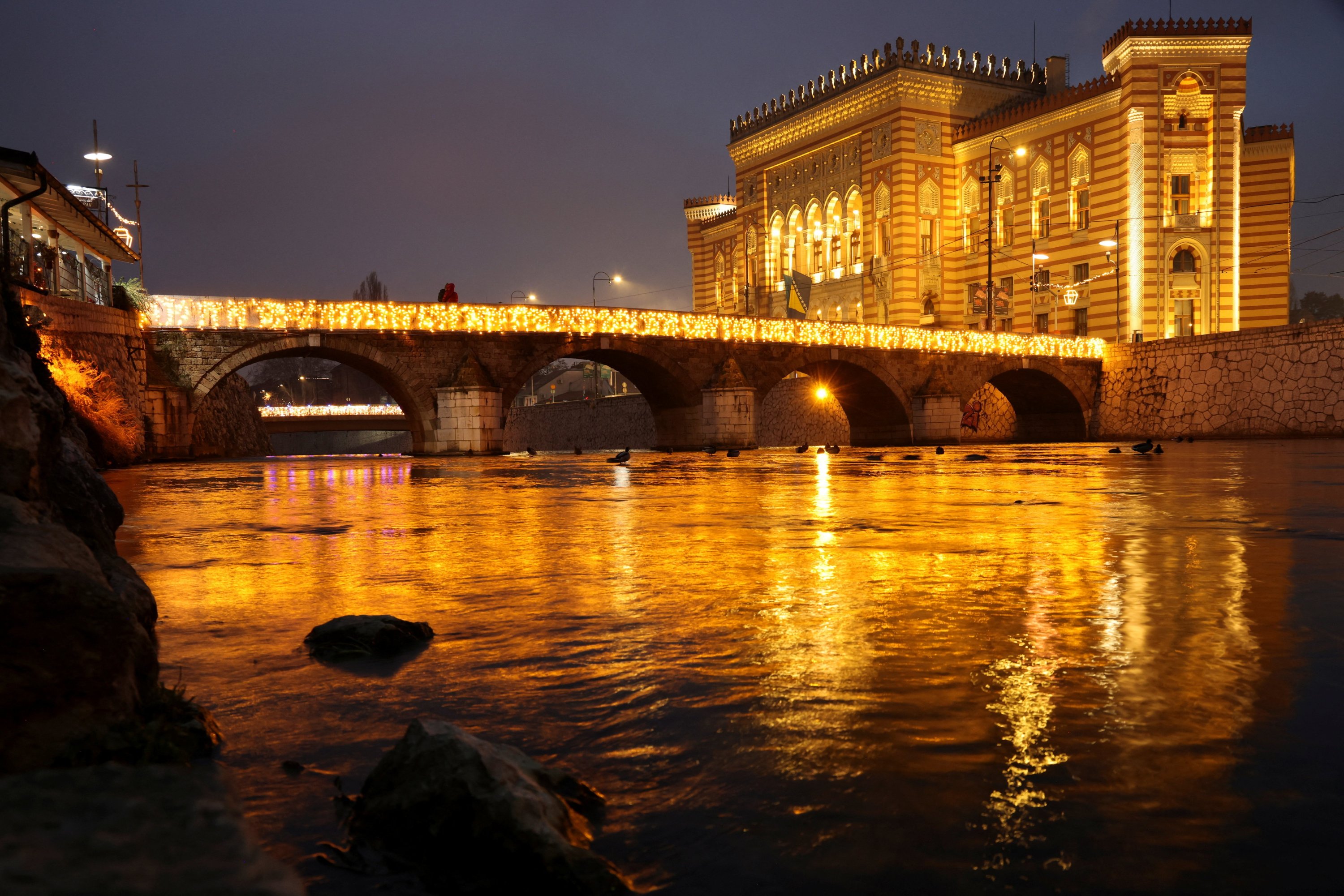
For my parents, however, the problem was never just the tree. It was the system that did not allow us to express our Islamic faith.
My family suffered serious injustices under communism. In the early 1980s, my father was imprisoned. He did not see me for the first six months of my life. He was arrested and sentenced during what became known as the Sarajevo Trial of 1983, one of the most notorious political trials in late Yugoslavia.
It was a staged judicial process against a group of Bosniak intellectuals accused of “hostile activity” and “Islamic fundamentalism.” Among them was Alija Izetbegovic, an Islamic thinker, writer and dissident who would later become the first president of independent Bosnia-Herzegovina. Most of the defendants were associated with the Young Muslims movement, an intellectual and religious circle founded after World War II, dedicated to preserving Islamic ethics, identity and cultural autonomy under a system that viewed such expression as a threat.
The charges were not based on acts of violence or any attempt to overthrow the state, but on books, essays and ideas that the authorities portrayed as dangerous. My father, then a 27-year-old writer, was sentenced for what he wrote and believed. In prison, he was subjected to forced physical labor and torture. My hijabi mother was persecuted and interrogated several times. The experience permanently marked our family.
Because of this, New Year’s festivities never felt neutral to me. They symbolized a system that spoke of equality, yet punished those who insisted on their religious and cultural identity.
Today, 30 years after the signing of the Dayton Peace Agreement, which ended the war in my country following the collapse of Yugoslavia, a war in which more than 100,000 people were killed, and genocide was committed against Bosniaks in Srebrenica by the Bosnian Serb Army, Bosnia-Herzegovina still carries deep political wounds. During the war, Serbian aggressors called us "balijas," animals. They mocked our faith, destroyed mosques and made Muslim existence itself a target.
Three decades later, Bosnia-Herzegovina remains burdened by political dysfunction and deep divisions. Yet it is also an independent country. A country where people live freely today. A country where, once again, the call to prayer and church bells can be heard at the same time. A country that has managed to preserve its multiethnic fabric despite a bloody past, and where everyone has the right to celebrate what they choose.
As my country matured, imperfectly and painfully, so did my relationship with the New Year’s holiday. It evolved alongside me, and alongside Bosnia-Herzegovina.
As the years pass, the holiday has become increasingly dear to me. I am more secure in my identity as a European Muslim than ever before. Recently, while in France, I found myself fully enjoying the Christmas atmosphere in the Alps, the pastries, the lights and the shared warmth.
Today, my husband and I do not decorate a tree. But we have many Muslim friends who do, and that is fine. We find the atmosphere beautiful and comforting. But as parents, we have consciously decided not to pass that tradition to our daughter. We teach her that gifts come for Eid and will explain to her the story behind the tree and our history when she is bigger. We will teach her to respect the holidays of her friends, while also knowing clearly who we are and why we celebrate, or do not celebrate, certain things. A few days ago, I bought her some lights and decorated her room, telling her they were for the new year. I may take her to sing songs with her friends and enjoy the moment. Because it’s New Year’s Eve. And it is a new beginning for all of us.