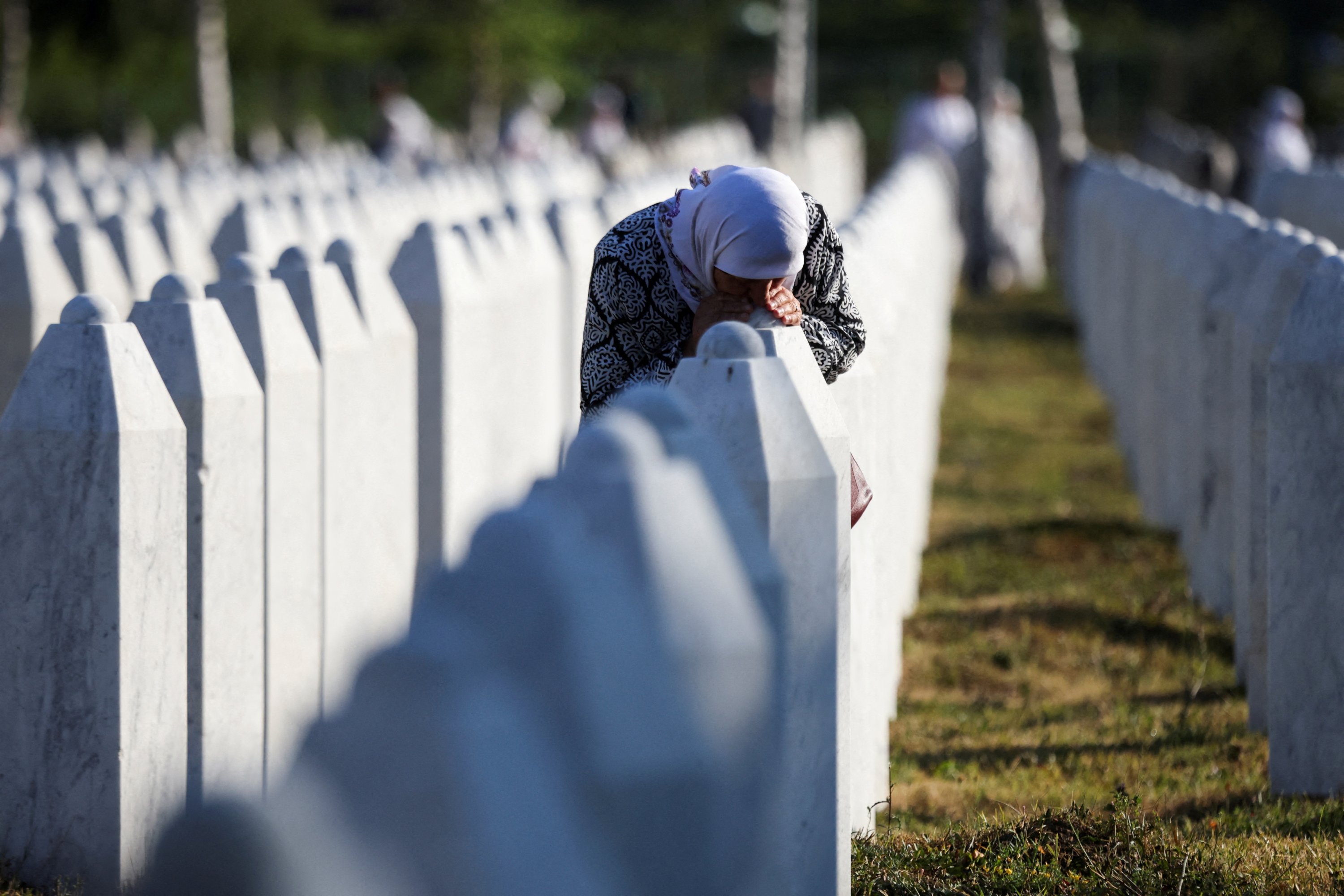
"Mother, father, why aren't you here?
I'm searching for you... I'm searching for you...
Wherever I go, I see you."
These verses come from "Srebrenica Inferno" a poetic oratorio that has become an enduring emblem of collective mourning. Each year on July 11, these haunting words echo through Srebrenica.
They will resonate once more on Friday, on the 30th anniversary of the 1995 massacre in the small eastern Bosnian town – Europe's only acknowledged post-World War II genocide.
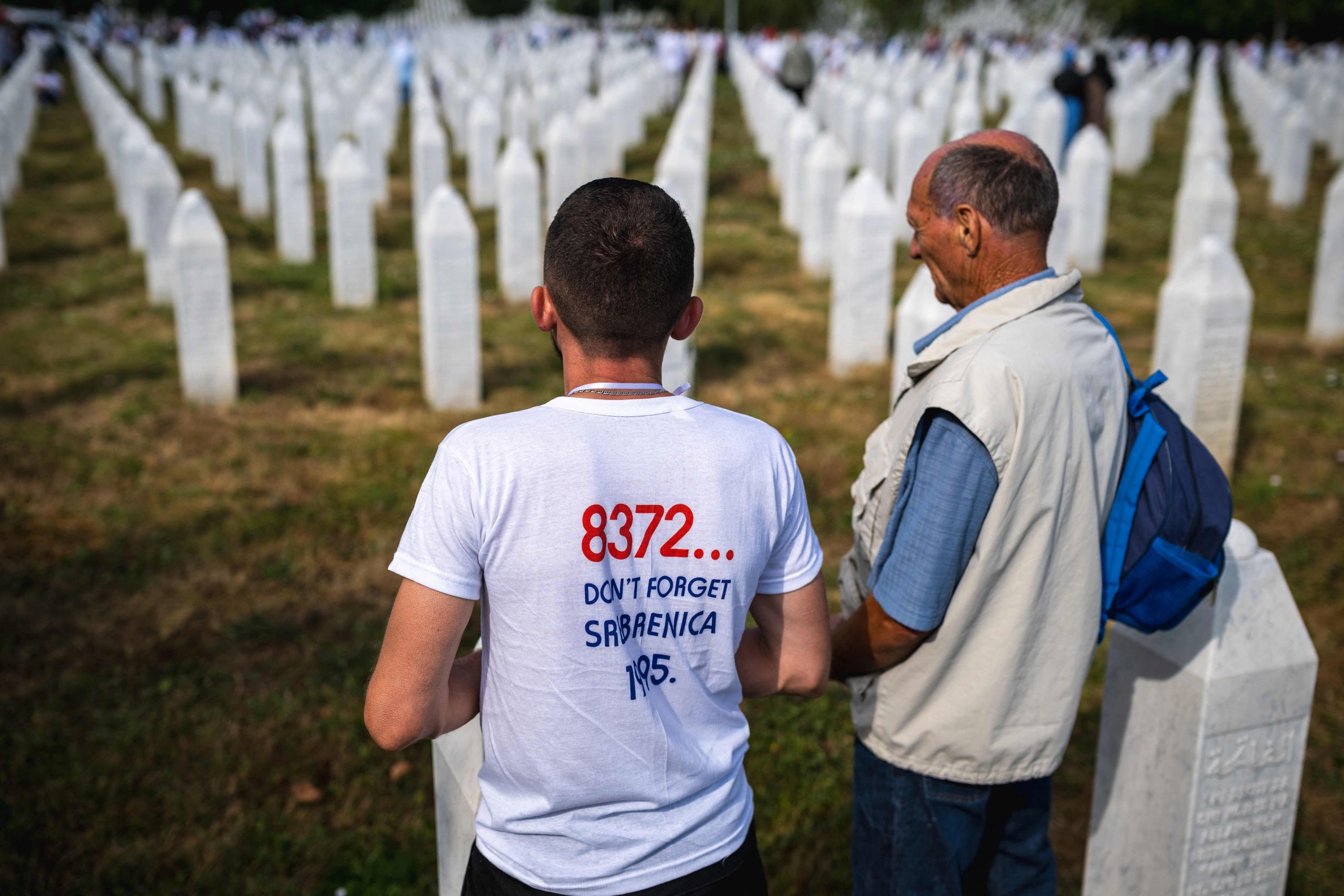
More than 8,000 Muslim men and boys were separated from their wives, mothers and sisters and executed in just several days after Bosnian Serb fighters overran Srebrenica during the final months of the war in the Balkan country.
Those who tried to escape were hunted through the forests and over the mountains surrounding the town.
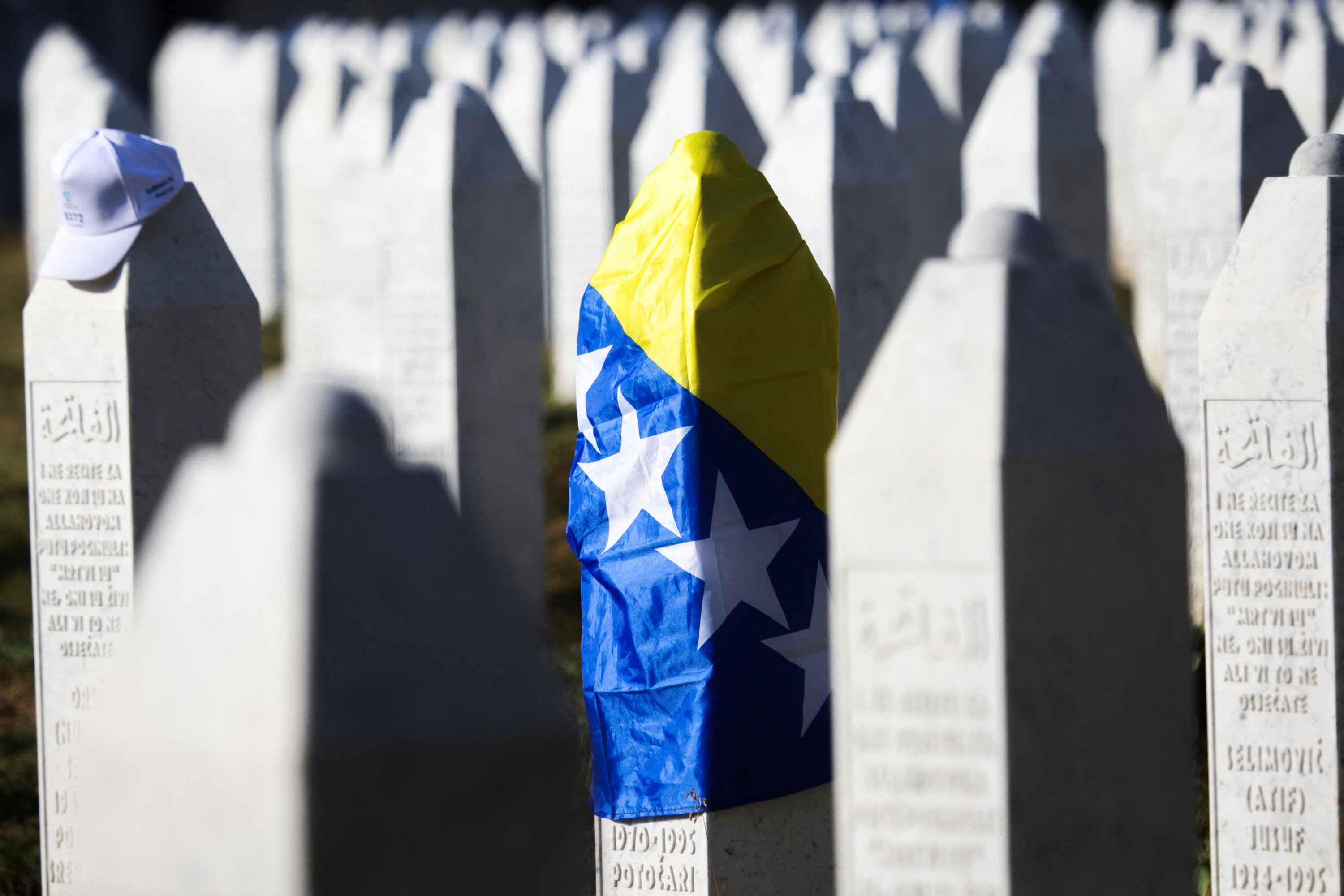
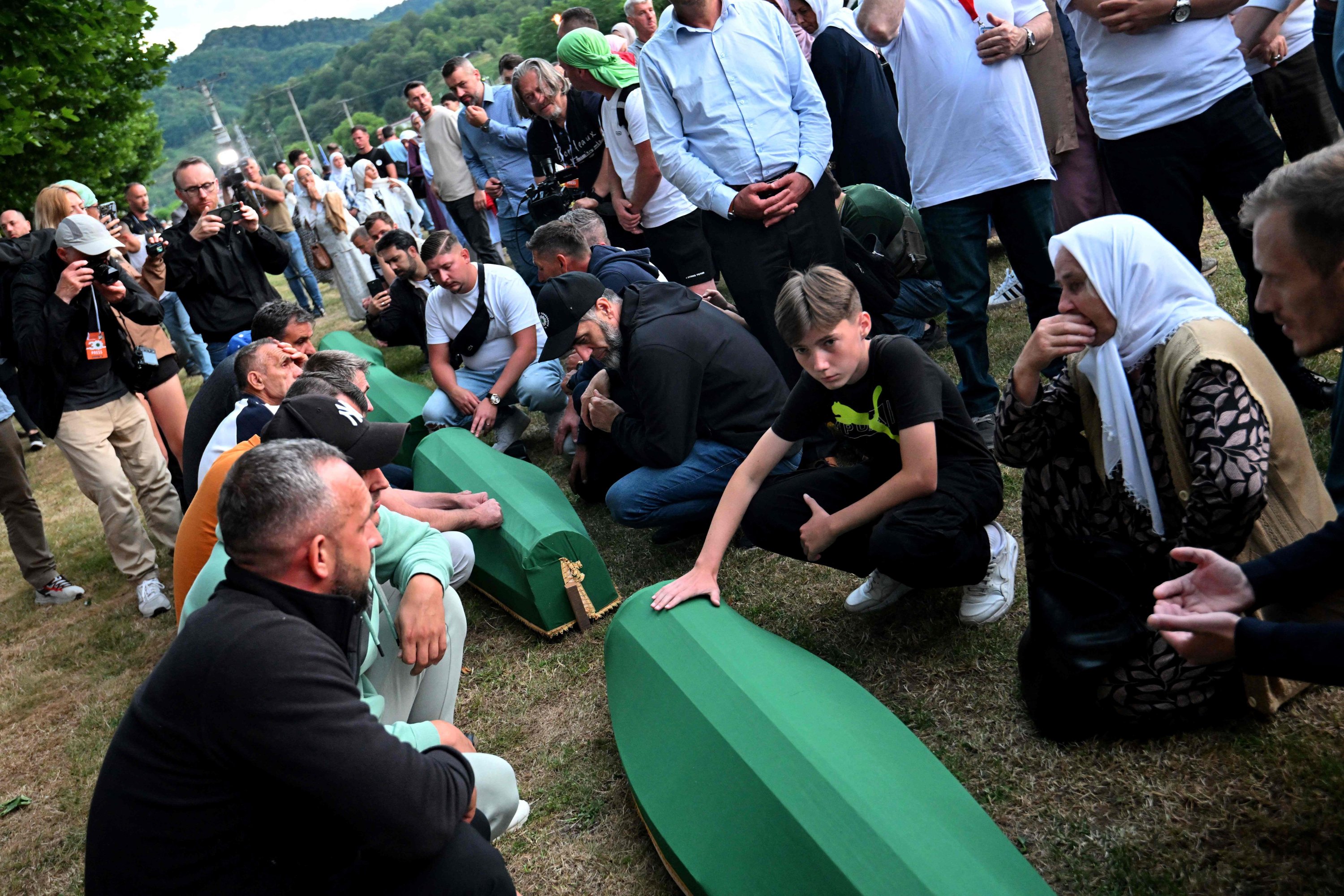
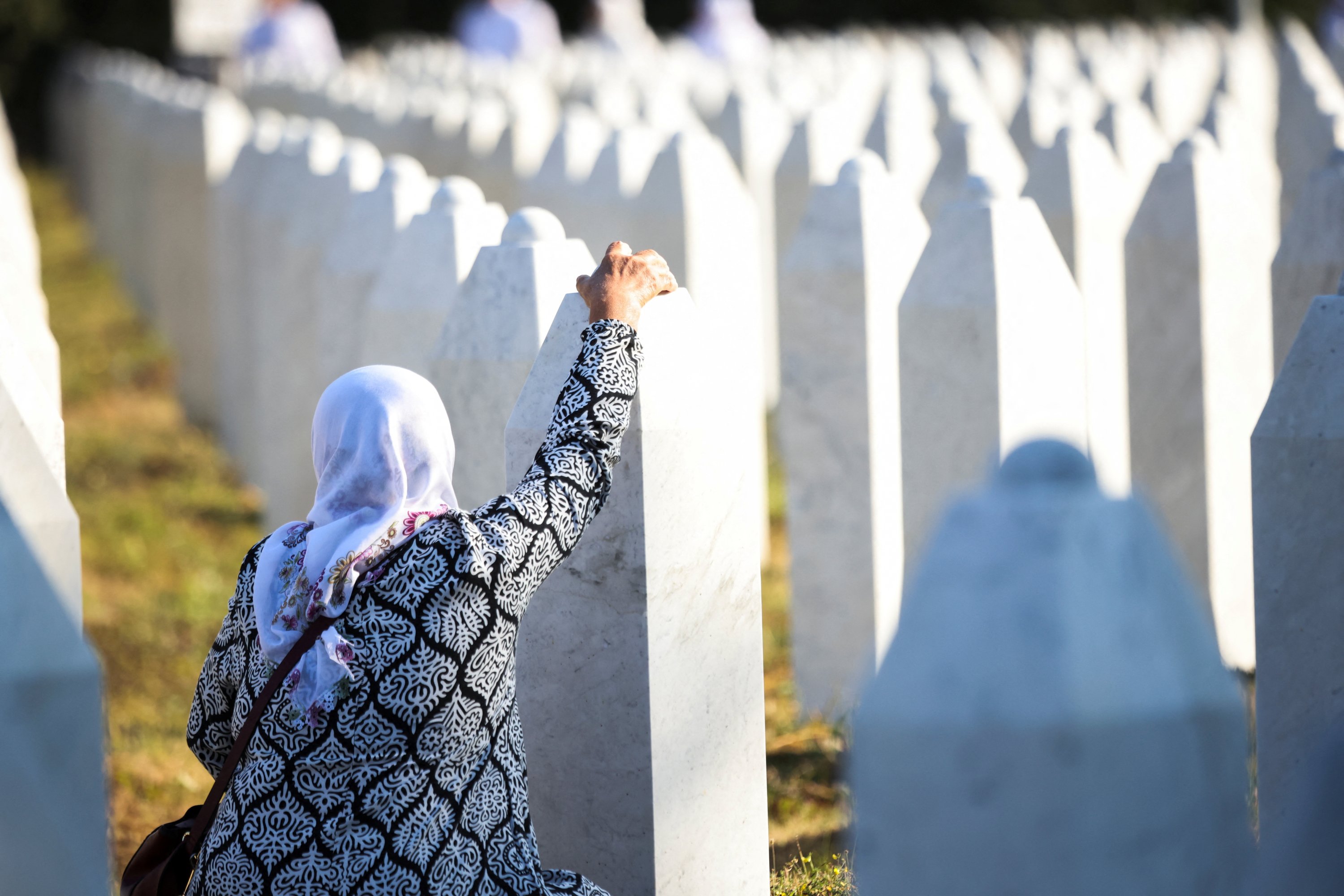
The bodies were dumped into mass graves around Srebrenica and later reburied multiple times to hide evidence of the crimes. To this day, the remains of the victims are still being excavated and buried each year on July 11, when the killings started in 1995.
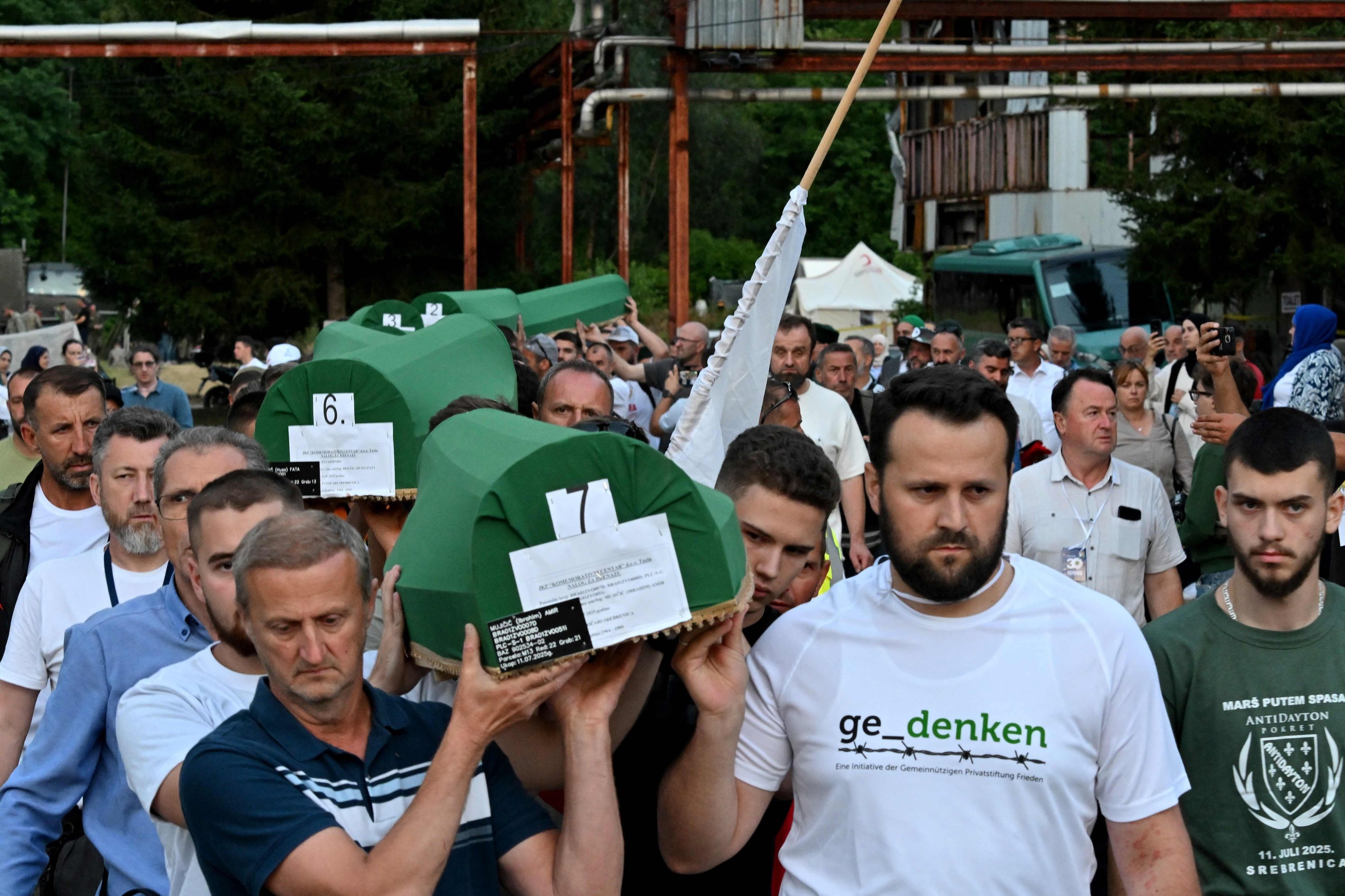
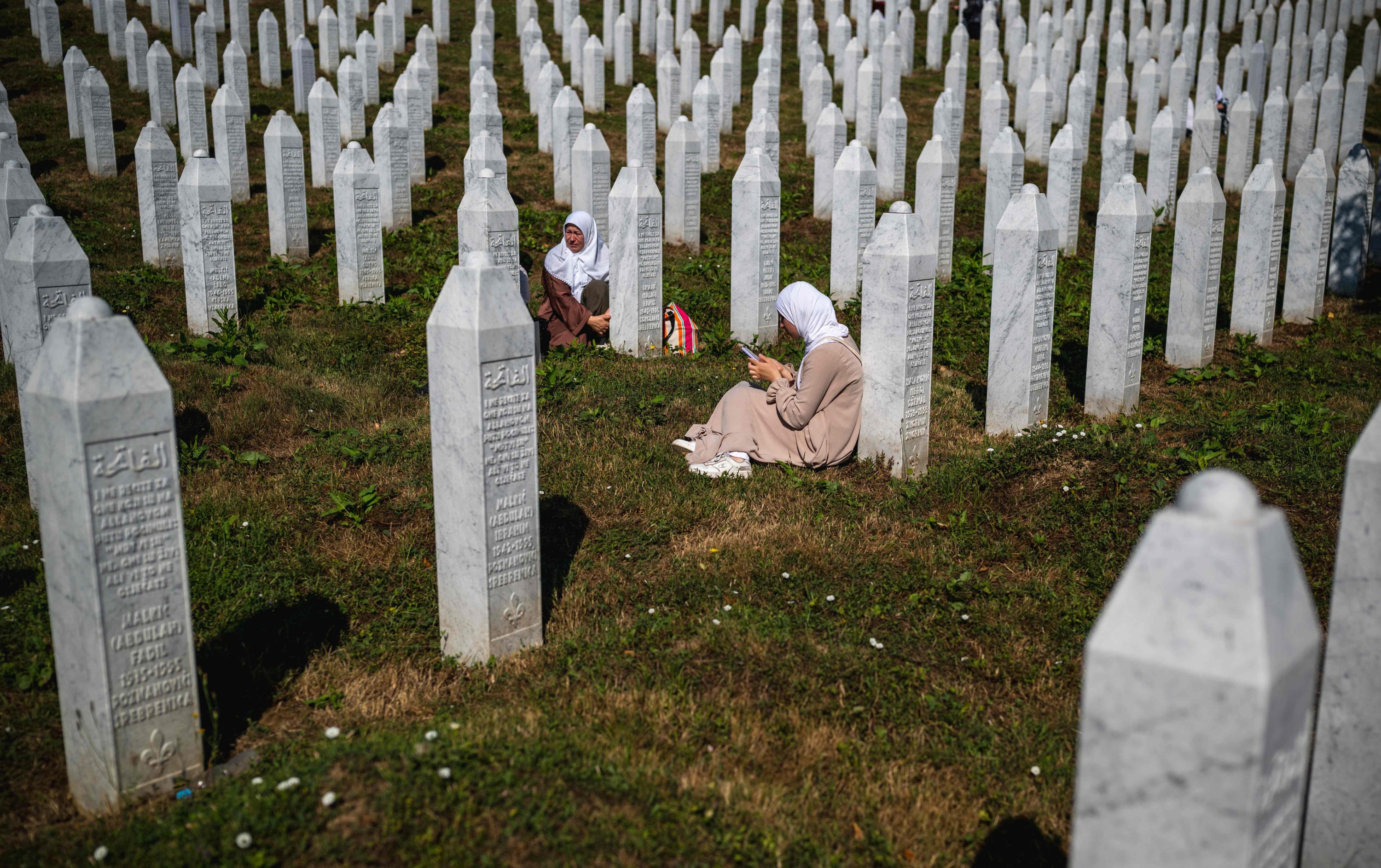
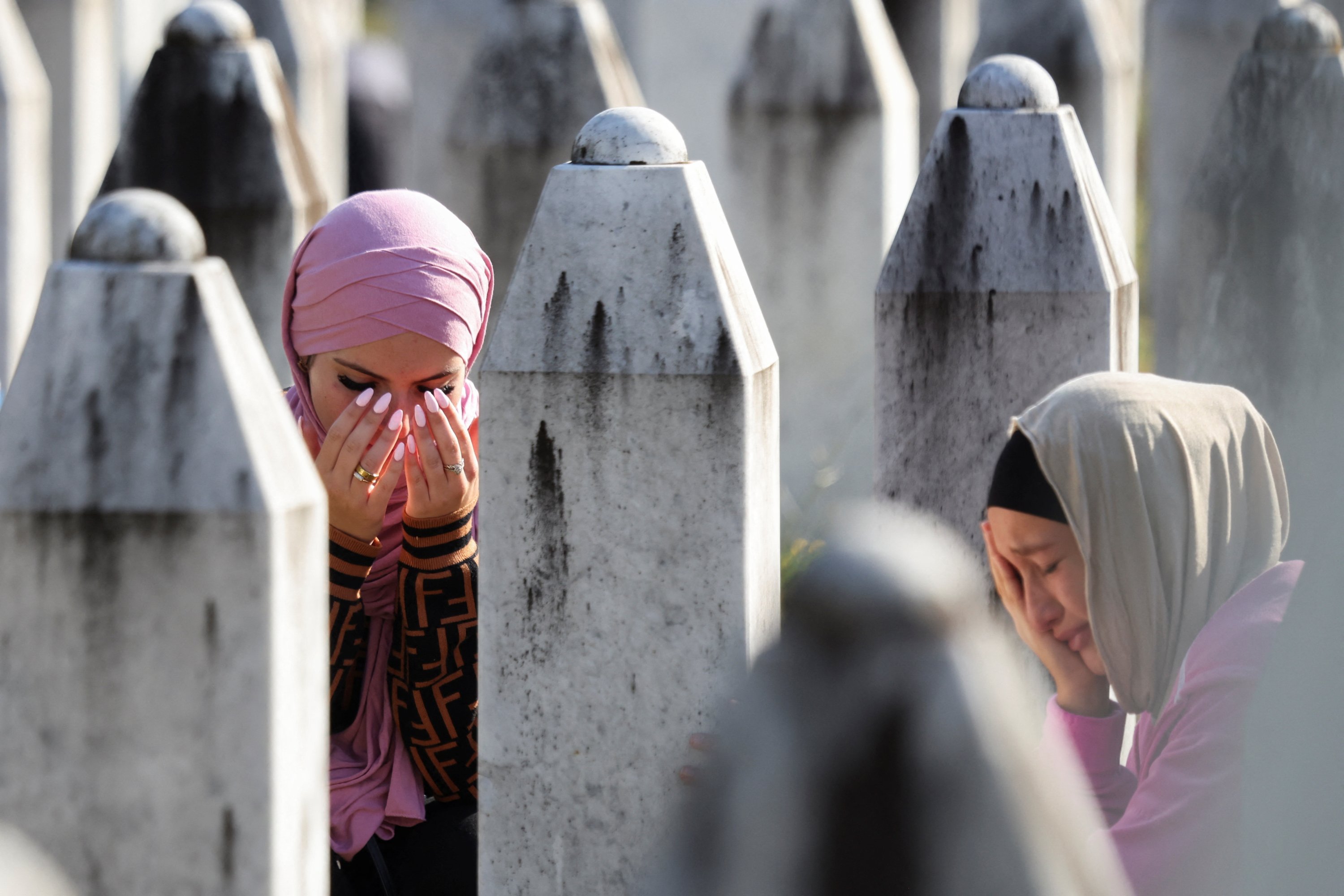
Thousands of people from Bosnia and around the world gathered in Srebrenica on Friday to mark the anniversary of the genocide.
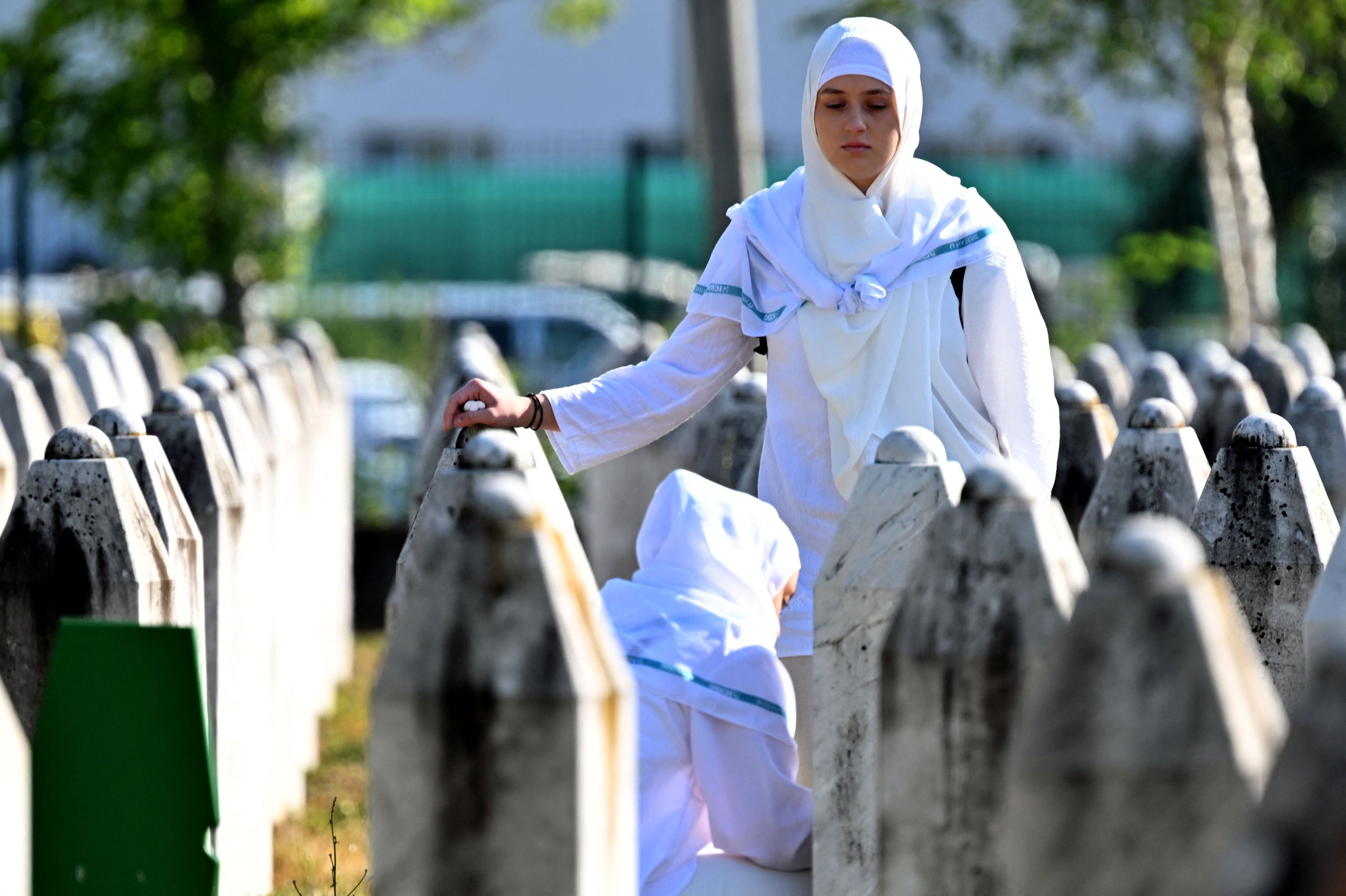
Seven newly identified victims whose remains were found in different locations over the past years will be laid to rest in the memorial cemetery at Potocari, just outside the town.
Dzemaludin Latic penned the verses of the "Srebrenica Inferno" to reflect the grief of children who lost their families in the genocide. The music was composed by the late Delo Jusic.
A prominent writer, poet and Islamic scholar, Latic says Bosniaks seem to be "never stronger than they are on July 11."
“And conversely, it feels like the greater Serbia ethnic movement – criminal and aggressive – is never weaker than it is on that day," he told Daily Sabah in an interview.
The massacre in Srebrenica was the bloody crescendo of Bosnia's 1992-95 war, which came after the breakup of the former Yugoslavia unleashed nationalist passions and territorial ambitions that set Bosnian Serbs against the Bosnian Muslims, or Bosniaks.
The conflict erupted after Bosnia's Serbs took up arms in a rebellion against Bosnia's independence from Yugoslavia and with an aim to create their own state and eventually unite with neighboring Serbia.
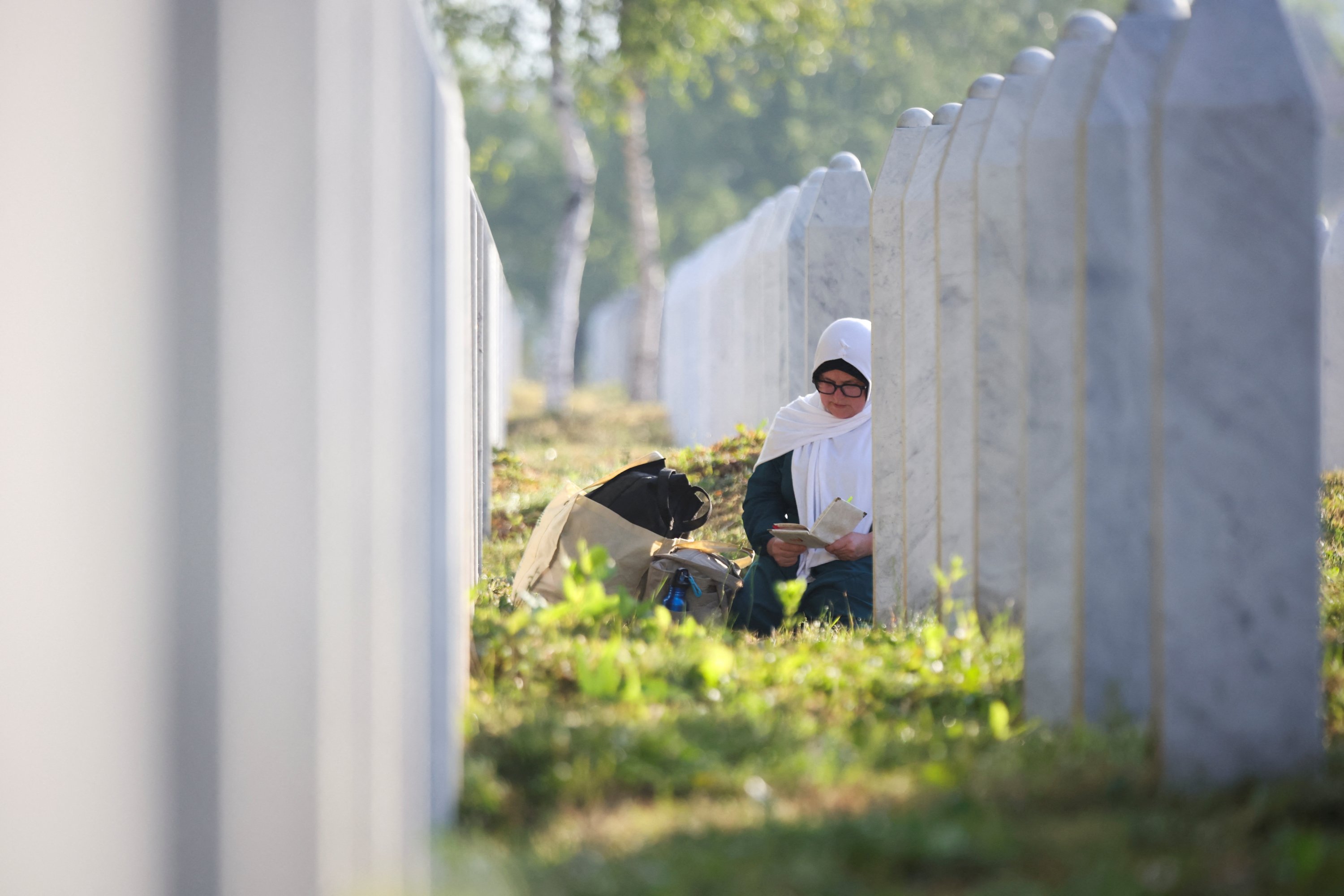
More than 100,000 people were killed and millions displaced before a U.S.-brokered peace agreement was reached in Dayton in 1995.
Bosnia remains ethnically split, while both Bosnia's Serbs and Serbia still downplay and refuse to acknowledge that what occurred in Srebrenica was genocide despite rulings by two U.N. courts.
Dozens of Bosnian Serb political and military officials have been convicted and sentenced for genocide and war crimes. Yet many of them are still celebrated by Serbian and Bosnian Serb officials as national heroes.
Regrettably, Latic says, the political leadership, the Bosniak people and much of the international community seem to have accepted the idea that the genocide occurred only in Srebrenica.
"But it didn't happen just in Srebrenica – it happened throughout Bosnia-Herzegovina. It was a genocide against the entire Bosniak people. That was its intent," he said.
Latic questions why they are not allowed to commemorate the genocide across all of Bosnia-Herzegovina and why it is limited to only July 11.
"Because the first genocide in Europe after World War II was committed here – and the responsible actors don't want to confront their own role. Primarily, I mean Western countries," he said.
"They were obligated, under international law, to allow us to defend ourselves after we gained international recognition. But they didn't.
They tied our hands from April 1992 to the end of the war in 1995. They want to hide their past and their complicity."
According to Latic, commemorations help expose the policies that led to genocide. But he stresses that they are still insufficient.
Latic himself was arrested in 1983 during a crackdown on Muslim intellectuals in Yugoslavia and sentenced to 6 1/2 years in prison. He was released in 1986 after international pressure.
He was a close associate of Alija Izetbegovic, Bosnia-Herzegovina's first president, who led the country to independence from Yugoslavia.
Latic emphasizes that the countries with power and influence are "still bargaining with Bosnia" and with its trauma.
"They are, in a way, still bargaining over our genocide."
He accused the international system of double standards. Bosnia, he says, was always intended to be divided unjustly, and "at the expense of Muslims."
"To be blunt and brutal: they are turning Bosnia into a new Palestine. It was effectively divided in Dayton," he stressed.
Bosniaks, Latic says, still face hardship and displacement.
"Before, we had an arms embargo; now we have an embargo on statehood, on democracy, on the right to live like people in the rest of the Western world," he added.
Through "Srebrenica Inferno," Latic says he merely fulfilled the duty of his poetic calling.
"Now I feel somewhat relieved, having done something, however small," he said.
"I don't believe we can ever say we have repaid our debt to the victims. That is impossible."
Latic believes art speaks of genocide more powerfully and lastingly than political speeches or academic texts.
He hopes his poem will not only inform future generations, but move them, and help them carry that truth in their hearts.
"To continue the fight for freedom, for our people and our land. And to never forget our innocent victims and the children who were murdered."
Latic says Bosnian Muslims are an indigenous people who have lived in the region for over a thousand years.
"We have our own art, our own artists – yet, like our country, since the collapse of the Ottoman Empire, we've been pushed aside, undervalued," he noted.
"They asserted themselves while denying us. They wrote the history. When I say 'they,' I mean Serbs, Croats and others," he added.
"They denied our country. They still deny Bosnia. They denied our national identity, our language. We weren't allowed to use our historical name."
Therefore, he says, Bosniaks must continue to fight for their freedom. "Through art, diplomacy, politics and by forging alliances."
The Turkish people, Latic says, "are our brotherly nation, perhaps our greatest ally in this struggle."
He recalled contributions of some of the late Turkish leaders, as well as some other Muslim world figures, saying their support will never be forgotten.
Latic added that had President Recep Tayyip Erdoğan been in power at the time, "the genocide would not have happened – or at least, not to that extent."
"Türkiye surely would have acted," he said.
Latic sees undeniable similarities between what happened in Bosnia-Herzegovina and the current massacre in Gaza.
"There are deep parallels between the Serbian Chetnik and Zionist movements. They collaborate to this day," he said. "And it's all because we are Muslims."
Latic went on to stress that Zionism "cannot achieve its goals without genocide, without bloodshed." Nor can the greater Serbian project, he said. "It's impossible."
Bosnia-Herzegovina and Palestine, he says, are inherently connected. "The Muslim world, and the broader democratic world, must recognize this."
"Without military and economic protection, Islam and Muslims cannot survive," he added.
Latic says the current times are too serious.
"We cannot afford to waste a single minute. We must unite, help one another, and prepare for the worst. We must pursue our goals – goals of peace, of justice. Peace in the world.
"Protection of every human life, regardless of faith," he added. "Our prophet taught us not to protect only Muslim lives, but the lives of all innocent beings. To oppose oppression in every form. To fight for the freedom – not just of Muslims – but of all humanity."
What happened in Srebrenica remains a mark of shame for the international community, as the town had been declared a U.N. "safe haven" for civilians in 1993.
When Bosnian Serb forces broke through two years later, thousands fled into the forests, while many sought shelter at a U.N. compound, which was formerly an industrial zone at the town's entrance, in the hope that Dutch U.N. peacekeepers would protect them.
Instead, the peacekeepers watched as Serb troops took men and boys from the compound for execution while bussing the women and girls to Bosnian government-held territory. Meanwhile, in the woods around Srebrenica, Serb soldiers hunted the fleeing Bosniaks, killing them one by one.
To hide the evidence, the killers piled most of the bodies into hastily made mass graves, which they subsequently dug up with bulldozers and scattered the bodies across numerous burial sites.
In the years since, bodies have been unearthed and the victims identified through DNA testing. About 1,000 victims remain to be found, according to authorities.
The U.N. has also been criticized for failing to authorize NATO airstrikes to support the lightly armed Dutch troops in July 1995.
Last year, the U.N. General Assembly adopted a resolution designating July 11 as the "International Day of Reflection and Commemoration of the 1995 Genocide in Srebrenica."
The resolution included the 2007 ruling by the International Court of Justice, the U.N.'s highest tribunal, which declared that the Srebrenica massacre constituted genocide. It marked Europe's first genocide since the Nazi Holocaust in World War II.
In a statement commemorating the genocide, U.N. Secretary-General Antonio Guterres said the international community must continue to stand against hatred, division and denial.
"Only by recognizing the suffering of all victims can we build mutual understanding, trust and lasting peace," Guterres said in his message delivered by Chef de Cabinet Courtenay Rattray on Tuesday.
"We must ensure the voices of Srebrenica survivors continue to be heard – countering denial, distortion and revisionism."
Latic described Guterres as "a fair man – or as fair as he can be."
"Guterres supports us and rightly supports Palestine. Of course, to the extent that he is able to."
In contrast, he called Boutros Boutros-Ghali, who served as the U.N. chief from 1992 to 1996, "a hypocrite" who "literally worked for the Chetniks and the Serbs."
"He came to Bosnia only to make a bigger mess. He was actively on the side of the aggressor," said Latic.
Today, the Western world is undergoing a major transformation, where "interests and forces collide," according to the professor.
Yet no Muslim country holds a seat on the U.N. Security Council, he noted. "We, like Muslim countries, even Türkiye, have no real power within the U.N. system."
But Latic remains hopeful that a unified Islamic political bloc will emerge in response to the shifting global order.