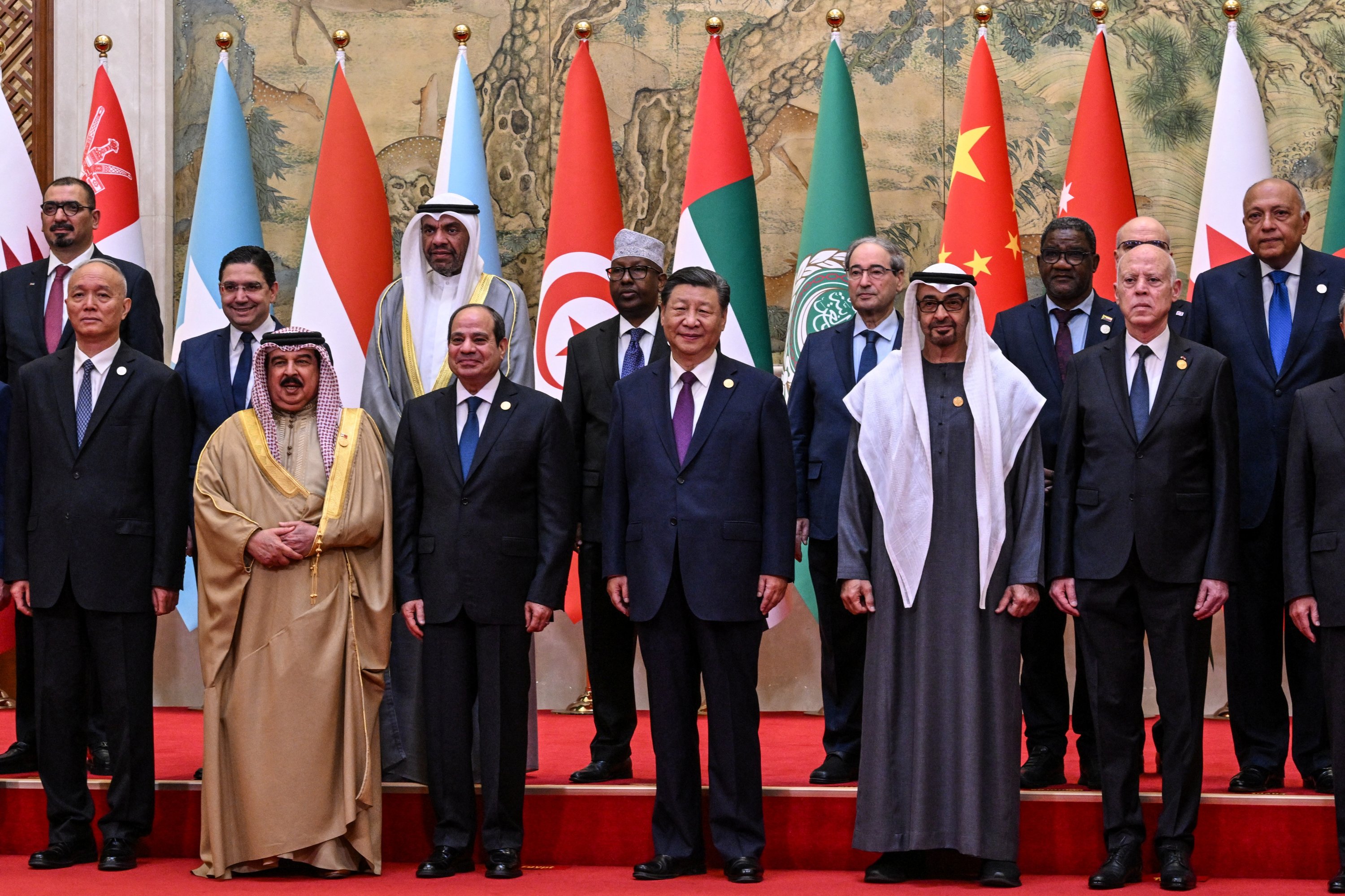
Due to China's strong support for the Palestinians in the Israeli-Palestinian conflict in recent years, Israel's attitude toward China has become increasingly hostile. When dealing with Arab countries, China has repeatedly claimed that the sovereignty of the three islands in the Persian Gulf, which Iran regards as its indivisible territory, is undecided. This has caused Iran to be strongly dissatisfied with China. Moreover, China is just one of the options for many Arab countries. China's Middle East diplomacy is not all smooth sailing and there will be more challenges.
During rapid economic development, China focused on economic and trade cooperation with Middle Eastern countries, pursuing a relatively balanced diplomacy and avoiding direct involvement in some of the region's disputes. For Middle Eastern countries, which have long suffered from external interference, conflicts, chaos, wars and slow development, China's support of the regional actors' strategic autonomy and countries' sovereignty, dignity and civilization has made the Far Eastern state an ideal partner for economic and trade cooperation. Through its peacebuilding strategy, China has already become the largest trading partner for several Middle Eastern countries.
However, merely engaging in economic and trade cooperation will not deepen or enhance the relationships between the two regions. After all, to a large extent, financial and trade cooperation is about each party pursuing its own economic interests, and it is only one of the indicators used to measure the overall state of bilateral relations.
Official Chinese data shows that the trade volume between China and the United States reached $664.451 billion in 2023. Official U.S. statistics say that U.S. exports to China reached the third highest in history at $147.81 billion in 2023. However, as we all know, in recent years, Sino-U.S. relations have deteriorated to the worst level since establishing diplomatic relations between the two countries.
Similarly, the relatively smooth development of economic and trade cooperation between China and Middle Eastern countries does not necessarily lead to a sustained warming of relations. In fact, the common practice among Middle Eastern countries has long been to seek economic cooperation with China while looking to the U.S. for security support. For most Middle Eastern countries, regime or national security is prioritized over economic development.
Therefore, if Beijing wishes to deepen its relations with Middle Eastern countries further, it must go beyond the scope of economic and trade cooperation and make progress in other areas, such as politics and security. Once China steps out of its comfort zone of investing in the economy, it will enter the challenging security and political interaction areas. Despite the challenges and potential risks, its diplomatic practices so far clearly indicate that Beijing realized what must be done to deepen its relations with the Middle Eastern countries and has already embarked on a new journey in regional diplomacy.
First, in recent years, China has put forward the concept of a community with a shared future for mankind, the Global Development Initiative, the Global Security Initiative and the Global Civilization Initiative. Promoting these ideas has become one of the core tasks of China's current diplomatic objectives. Beijing believes that the Middle East is an ideal place to implement these initiatives. In March 2023, China helped Saudi Arabia and Iran reach an agreement to normalize relations, which not only earned China widespread international acclaim but also significant confidence in continuing its efforts in the Middle East.
Second, the U.S. has already regarded China as its biggest competitor and even its primary enemy. The continuously deteriorating U.S.-China relationship has forced Beijing to seek more friends to counter the pressure from the U.S. and its allies. For example, Western powers have repeatedly used issues like Taiwan, Xinjiang, and human rights to attack China. In response, China needs more international political support, and Middle Eastern countries have become important targets in this effort.
Against this backdrop, China has increased its attention to political and security affairs in the Middle East. Although Beijing has strived to maintain a balanced role in the Israeli-Palestinian conflict since normalizing relations with Israel on Jan. 24, 1992, the stagnation of the peace process, the repeated outbreaks of conflict between the two sides, and changes in China's own diplomacy and relationships with major world powers have led to a change in China's perspective on the conflict. Lately, China has been advocating a just resolution to the Palestinian issue based on international law and relevant U.N. resolutions. As the occupier of Palestine, Israel's dissatisfaction with China has gradually intensified. Meanwhile, China's stance on the Palestinian issue has gained recognition and even praise from Islamic countries.
In addition, China actively facilitated the agreement for the normalization of relations between Saudi Arabia and Iran, which, unsurprisingly, displeased Israel. Despite the fact that Israel and most Arab countries are not in favor of deepening China-Iran relations, China nonetheless signed a 25-year comprehensive cooperation agreement with Iran.
Judging from diplomatic practices in recent years, Arab countries are clearly the focus of China's Middle East diplomacy. After all, in terms of numbers, there are far more Arab countries than non-Arab countries. Moreover, compared to Jews, Persians and Turks, Arabs have shown more enthusiasm and initiative in their interactions with China, which is crucial for advancing China's Arab diplomacy. Furthermore, the group of Arab countries is a more significant source of international political support and economic cooperation for China.
In two joint statements with Arab countries in 2022 and 2024, China clearly supported the UAE's struggle for sovereignty over the three islands in the Persian Gulf. This was certainly not China's proactive move. But why would China do this? In recent years, China has faced increasing international pressure on issues such as Taiwan and Xinjiang. China seeks clear support from its Arab partners in these areas. The UAE and other Arab countries have likely taken advantage of China's desire for such support by raising the issue of sovereignty over the three islands in the Persian Gulf. But for Iranians, the three islands in the Persian Gulf are as significant to Iran as Taiwan is to China.
China once tried not to get involved in disputes between Middle Eastern countries, but it is clear that such diplomacy is changing. China's greatest diplomatic advantage in the Middle East has been its balance. However, once this diplomatic balance is disrupted, Beijing may face increasing regional challenges.