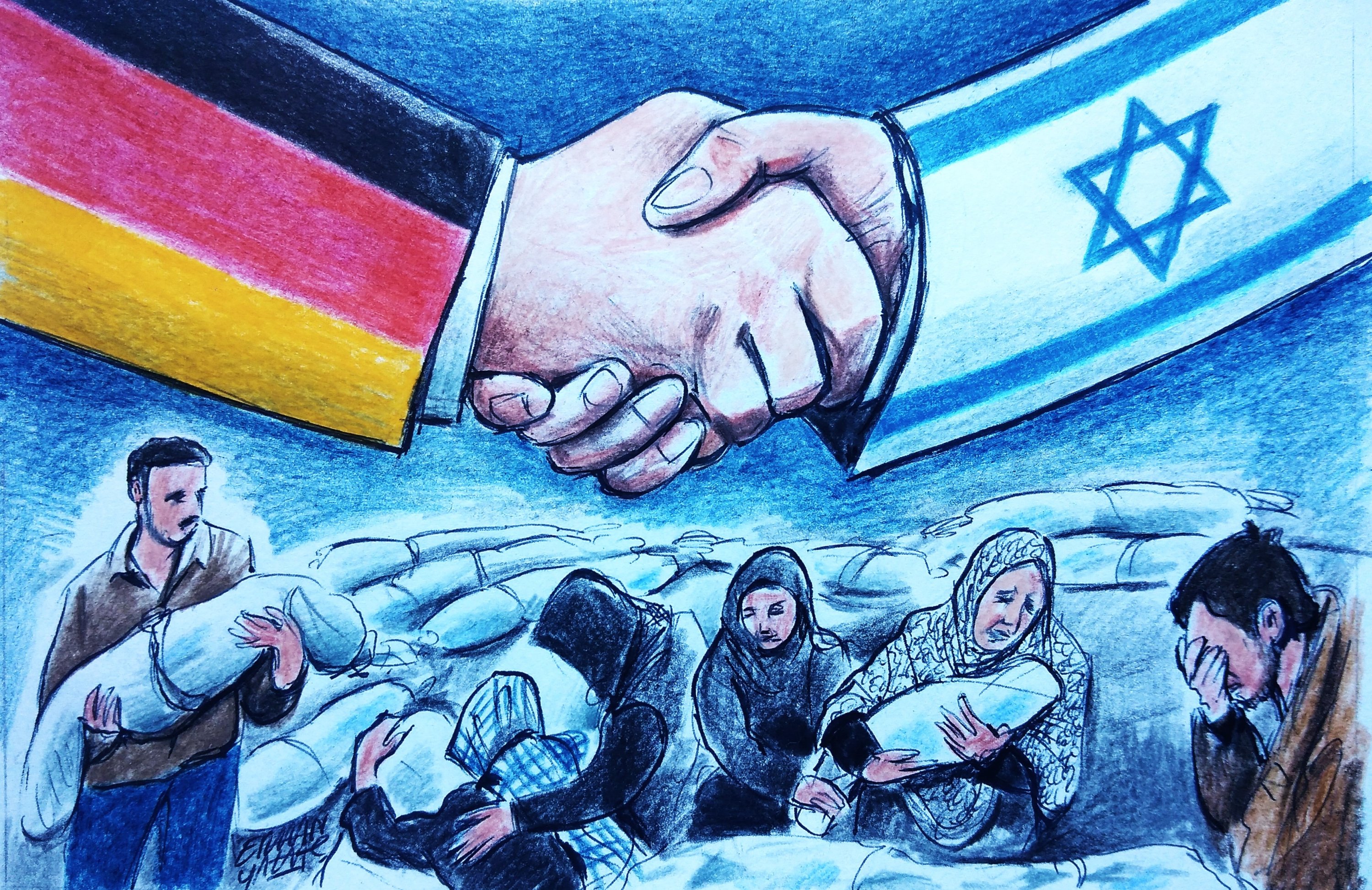
Germany’s bilateral relations with Israel have long been shaped by the legacy of the Holocaust and a corresponding sense of moral responsibility. This special relationship was reaffirmed after Oct. 7, as the former Chancellor Olaf Scholz-led “Traffic Light Coalition” became Israel’s second-largest arms supplier, effectively endorsing its Gaza offensive, which has been widely criticized as genocidal. In light of increasing global condemnation, questions have arisen about whether Chancellor Friedrich Merz’s new government, formed in May, will result in any substantive shift in Germany’s policy toward Israel.
Merz’s invitation to Israeli Prime Minister Netanyahu, despite an international arrest warrant, was seen as reinforcing Germany’s support for Israel. Yet, in response to escalating violence in Gaza, Merz’s rhetoric has shifted. His recent statements, criticizing Israel’s actions as unjustifiable and lacking a clear purpose, suggest a tonal adjustment in Germany’s stance, notable given its longstanding alliance with Israel. Considering Germany’s close alliance with Israel, Merz’s remarks raise critical questions about potential policy change.
Assessing this requires examining three key foundations of German-Israeli relations: Germany’s moral responsibility for the Holocaust, its steadfast loyalty to Israel and the U.S. under the principle of Staatsraison, and Israel’s strategic importance within the Western alliance.
Germany’s steadfast support for Israel stems from its moral obligation to confront the legacy of the Holocaust. The genocide of European Jews redefined Germany’s relationship with both the Jewish people and the Israeli state, fostering a special bilateral bond. Since 1949, the Federal Republic has viewed comprehensive (political, economic and military) support for Israel as a moral duty and a core tenet of its post-war foreign policy.
Aligned with this historical moral responsibility, Germany has long avoided critically engaging with Israel’s violations of international law, including the recent actions in Gaza. The legacy of the Holocaust has shaped German policy as a moral constraint, binding successive generations to an enduring duty to protect Israel’s existence and security, regardless of time or political context.
On the other hand, there is the concept of Staatsraison, or “Raison d'etat – Reason of State,” which grants governments the authority to take extraordinary measures to protect national integrity and security, even when these defy conventional moral or legal norms.
Although official diplomatic ties between Germany and Israel began in 1965, their “special relationship” originated with the 1952 Luxembourg Agreement, in which Germany pledged reparations for Holocaust victims. Since then, unwavering support for Israel’s security and existence has become a core aspect of Germany’s Staatsraison. This steadfast support has manifested in consistent and unconditional military, economic and political assistance.
Chancellor Angela Merkel affirmed this in 2008 when she declared that “Germany’s historical responsibility is part of my country’s raison d'etre.” Chancellor Olaf Scholz reiterated this statement in 2023 and said: “There is only one place for Germany today and that is alongside Israel. What we mean by this is: Israel’s security is part of Germany’s raison d'etre.”
Within the framework of Staatsraison, the security and continued existence of the State of Israel, as well as Germany’s unwavering alignment with the U.S. within the trans-Atlantic alliance, constitute fundamental tenets of German foreign policy. This absolute commitment to both Israel and the U.S. functions as a non-negotiable “red line” in both civil society and the apparatus of the state.
The principle of Staatsraison transcends partisan boundaries, enjoying broad consensus across the German political spectrum, from the far-right Alternative for Germany (AfD) to the far-left parties. It is not merely a policy stance but a foundational element of the post-war German state and its international identity, deeply embedded within the political and institutional architecture of the Federal Republic.
The political fallout and lynch mob faced by Aydan Özoğuz, deputy speaker of the Bundestag and a member of the Social Democratic Party (SPD), following her criticism of Israel’s military attack on civilians sheltering in tents at Al-Aqsa Martyrs’ Hospital, illustrates the intensity with which this red line is enforced. In the German political and media landscape, public figures – including politicians, academics, journalists and intellectuals – who challenge this consensus often face severe backlash, amounting to what may be described as political ostracization or symbolic “lynching.”
Furthermore, geopolitical interests are central to Germany’s relationship with Israel. Israel's strategic location in the volatile Middle East renders it a crucial ally for Western interests. Germany actively cooperates with Israel on counterterrorism, intelligence sharing and defense. Strengthened by its institutionalized ties with the U.S., Israel is viewed by Germany as its most vital strategic partner and a key defender of democratic values within the trans-Atlantic and broader Western alliances, effectively serving as the West's primary stronghold in the region.
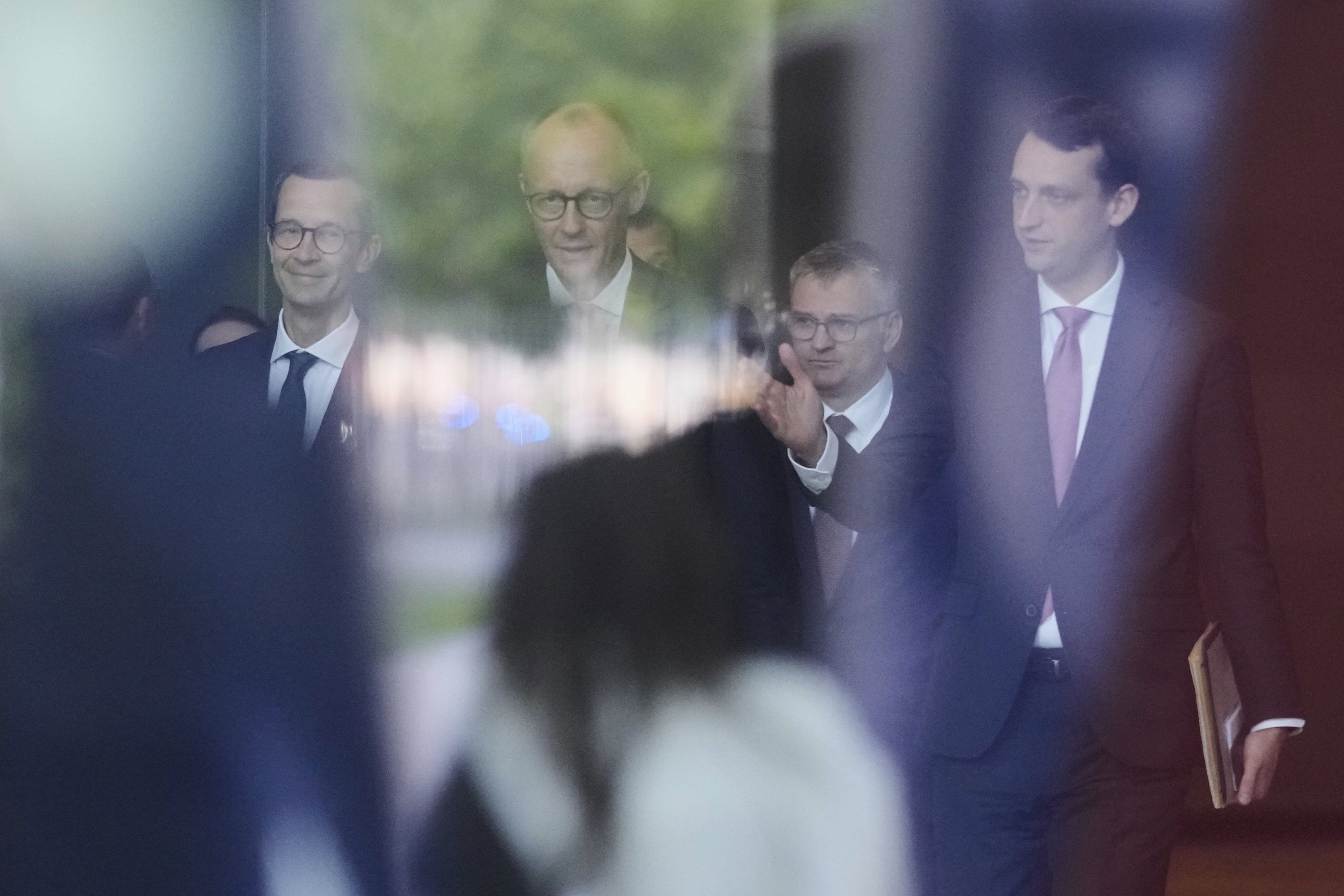
Recent criticisms and warnings issued by Merz and Foreign Minister Johann Wadephul concerning Israel’s intensifying military actions in Gaza and its obstruction of humanitarian aid have prompted questions about a possible shift in Germany’s tone toward Israel. However, the evidence does not support the conclusion that a substantive policy change has occurred. Despite rhetorical deviations, the German government continues to supply arms to Israel, supports it in the ongoing genocide proceedings at the International Court of Justice (ICJ) and remains largely silent on Israel’s violations of international law. Notably, these statements from German officials have not elicited any adverse response from the Israeli side.
On the contrary, Israel’s Ambassador to Germany Ron Prosor emphasized that, “When Friedrich Merz makes these criticisms of Israel, we listen to him very carefully because he is a friend.” Israel is known for generally responding to international criticism with a hostile reaction (typically characterized by insults, condemnation and distortion). In contrast, its measured and even welcoming tone in response to Germany creates a sharp contrast. This inconsistency indicates a prior coordination regarding this change in tone between the Merz government and Israeli officials.
Five principal factors become apparent after examining the rationale behind the recent shift in Germany’s policy toward Israel. Firstly, this alteration has been significantly influenced by Germany's apprehension of potential legal repercussions, specifically the risk of being prosecuted and penalized as Israel’s second-largest arms supplier. This concern stems from the perceived inevitability of Israel facing judgment for the crime of genocide committed in Gaza at the International Court of Justice. Consequently, the German government appears to be strategically adjusting its rhetoric to mitigate these potential legal ramifications.
Secondly, this shift also serves as a calculated move within domestic politics. It responds to escalating public dissent against Israel within German society and the diminishing credibility of arguments used to defend Israel’s actions.
The third contributing factor is Germany’s increasing diplomatic isolation within the European Union concerning its Israel policy. Germany had, for an extended period, impeded the EU's collective criticism of Israel. However, facing Israel’s escalating massacres, Germany’s apparent desire to alleviate its isolated stance within the EU now contributes to this evolving policy. Fourthly, Germany’s shared desire with the United Kingdom and France to prioritize the ongoing conflict in Ukraine and its reluctance to let the Palestinian issue remain prominent on the international agenda have significantly contributed to this policy shift. A closer look at the reasons behind the recent rhetorical shift reveals that, as a final factor, Germany was aware of the Israeli attack on Iran in advance. This suggests that Berlin is proactively trying to divert international and domestic attention away from the Palestinian issue.
Ultimately, a fundamental reorientation, let alone a "U-turn," in Germany’s Israel policy under the Merz government appears unlikely. While short-term rhetorical adjustments have emerged, particularly in response to escalating violence in Gaza and increasing international pressure, these should not be mistaken for substantive policy change. Germany’s deeply ingrained historical responsibility stemming from the Holocaust, its commitment to Israel’s security as part of its “Staatsraison,” and the strategic value it places on Israel within the Western alliance continue to anchor its approach.
Recent developments, including Merz’s explicit support for Israel amid growing tensions with Iran and official reiterations of Staatsrason by both the Chancellor and the Foreign Minister, have further confirmed this continuity.
Moreover, Germany’s criticisms have been carefully directed at Prime Minister Netanyahu’s government rather than the State of Israel itself, underscoring that Berlin’s foundational loyalty remains intact. Despite rhetorical shifts driven by legal concerns, domestic dissent, EU-level isolation, strategic recalibration, and prior knowledge of Israel’s planned escalation against Iran, the core tenets of Germany’s Israel policy remain unchanged.