The Middle East remains a region defined by its complexity and shifting dynamics. The enduring civil war in Syria and evolving geopolitical realignments reshape power balances and strategic policies. These developments push Türkiye and the U.S. to navigate a challenging environment where their interests diverge as often as they converge.
Turkish-U.S. relations have long been marked by contentious issues, particularly over Syria. However, the Middle East, which serves as a key intersection in the foreign policy approaches of Türkiye and the U.S., is not only a region of challenges but also one that offers partnership opportunities. In this context, Iraq emerges as a significant area for collaboration due to shared threat perceptions and interests. Moreover, the experiences accumulated after 2003 include numerous examples where Türkiye and the U.S. have identified common ground in Iraq, such as Sunni’s integration into the political system, the fight against Daesh, etc.
While Syria amplifies differences, Iraq offers a platform for collaboration. Both countries recognize Iraq’s stability as essential to regional security and share concerns over Iran’s growing foothold. Thus, Iraq emerges as a critical area where Turkish and U.S. strategies could align to support infrastructure projects and efforts to reform security institutions.
One promising avenue for cooperation is the "Development Road" project. This initiative aims to establish a trade and transportation corridor connecting the Arabian Gulf, Iraq and Europe through Türkiye. For Washington, the project offers a means to stabilize Iraq, reduce economic dependency on Iran and bolster Baghdad’s economy through connectivity. For Ankara, it reinforces its role as a logistical hub between East and West. Joint investment in infrastructure could deepen economic ties and foster broader regional collaboration. Türkiye has taken on significant roles in Iraq's reconstruction process since 2003. Approximately 2,700 Turkish companies are operating in Iraq and Turkish companies are experienced in strategic infrastructure projects such as the reconstruction of Mosul Airport.
Iranian-backed militias, which control significant swaths of Iraq, continue to challenge the country’s sovereignty. Iran’s regional pressure is an alignment area for Türkiye and the U.S. Iranian-backed militias threaten Türkiye’s cross-border counterterrorism operations and undermine U.S. missions as well as activities in the region. U.S. President Donald Trump's administration’s renewed emphasis on isolating Tehran may lay ground for closer cooperation, particularly in countering these groups in Syria and Iraq.
Türkiye and the U.S. could collaborate to help Baghdad assert greater control, either by integrating militias into formal state institutions or by strengthening Iraq’s security apparatus. Reconstruction efforts in Sunni-majority regions like Mosul and Anbar present another opportunity for collaboration. Türkiye’s ties with local communities could complement U.S.-led rebuilding initiatives, fostering long-term stability and reducing extremism risks. Coordinated investments in these regions would serve the broader goals of peace and development.
The presence of the PKK terrorist group in northern Iraq remains a persistent issue for Ankara despite ongoing cooperation with Irbil and Baghdad. The group’s use of the area as a staging ground for attacks on Türkiye has strained Turkish-Iraqi relations. While Washington has historically been cautious on this front, the Trump administration’s emphasis on decisive counterterrorism measures could encourage a more active U.S. role in addressing PKK activities. Such efforts would help rebuild trust with Ankara and align with broader stabilization objectives.
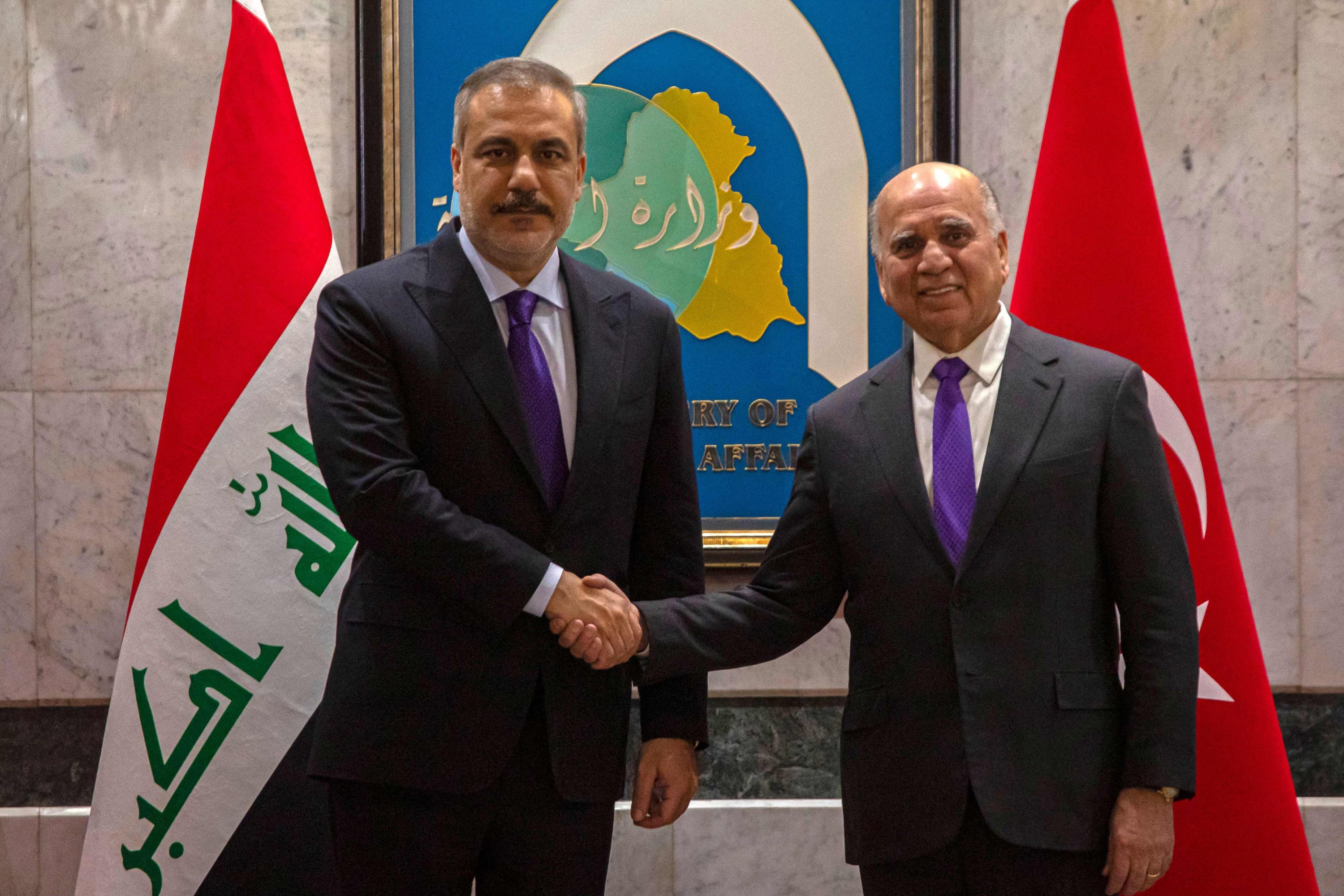
Despite their differences, both Türkiye and the U.S. remain committed to defeating Daesh and other extremist groups. In his recent visit to Baghdad, Foreign Minister Hakan Fidan underlined that the agenda of the talks included further steps against Daesh. Enhanced counterterrorism collaboration, including intelligence sharing and joint operations, offers a pathway to strengthen bilateral ties and advance mutual security interests.
In Syria, Washington’s support for the YPG, which Ankara views as the PKK’s Syrian offshoot, has remained a significant friction point. At the same time, both countries share a deep concern over Iran’s regional influence, particularly through militias in Iraq and Syria – some of which are linked to the PKK.
With the Trump administration now back in power, its foreign policy priorities are poised to reshape the Middle East. The Trump administration’s approach could either exacerbate these tensions or offer opportunities for recalibration. The administration’s "America First" approach, emphasizing bilateral agreements and counterterrorism, signals a shift to comprehensive regional strategies. This could present new opportunities for Ankara and Washington to align on shared goals, particularly around curbing terrorism and limiting Tehran’s influence in the region.
Syria continues to dominate the complexities of Turkish-U.S. relations. The fall of the Assad regime and the establishment of the new government have fundamentally reshaped the region’s dynamics, introducing both new challenges and opportunities for the future. For Türkiye, the YPG’s dominance in northeastern Syria remains a non-negotiable issue. For Washington, however, the YPG represents a critical partner in combating Daesh’s remnants. Both sides remain entrenched in their positions, leaving little room for compromise or deepening cooperation in the Syrian field.
A pragmatic reassessment of U.S. policy toward the YPG, coupled with an acknowledgment of Ankara’s legitimate security concerns, could pave the way for more constructive dialogue. Iran’s influence in Syria, particularly through extremist militias, presents a mutual challenge that both countries may find as common ground. Turkiye also expressed its readiness to prevent the revival of Daesh in Syria by supporting the Syrian interim administration.
Rebuilding trust between Ankara and Washington will not be easy, but Iraq provides a unique opportunity for progress. Collaborative efforts to counter Iranian militias for the sake of the region’s stability, addressing the PKK’s presence and rebuilding devastated communities could turn shared challenges into tangible outcomes.
The Middle East stands at a pivotal juncture, with Syria and Iraq at the center of its evolving landscape. While Syria continues to be a point of contention, Iraq’s potential for cooperation cannot be overlooked. By focusing on mutual interests, both countries can forge a stronger partnership that will contribute to regional stability.
This is not merely a diplomatic necessity but a strategic imperative. Türkiye and the U.S. have too much at stake to let their disagreements overshadow their shared vision for a stable and secure Middle East. If effectively managed, the Trump administration’s policies could offer a fresh framework for renewed collaboration and a revitalized bilateral relationship.