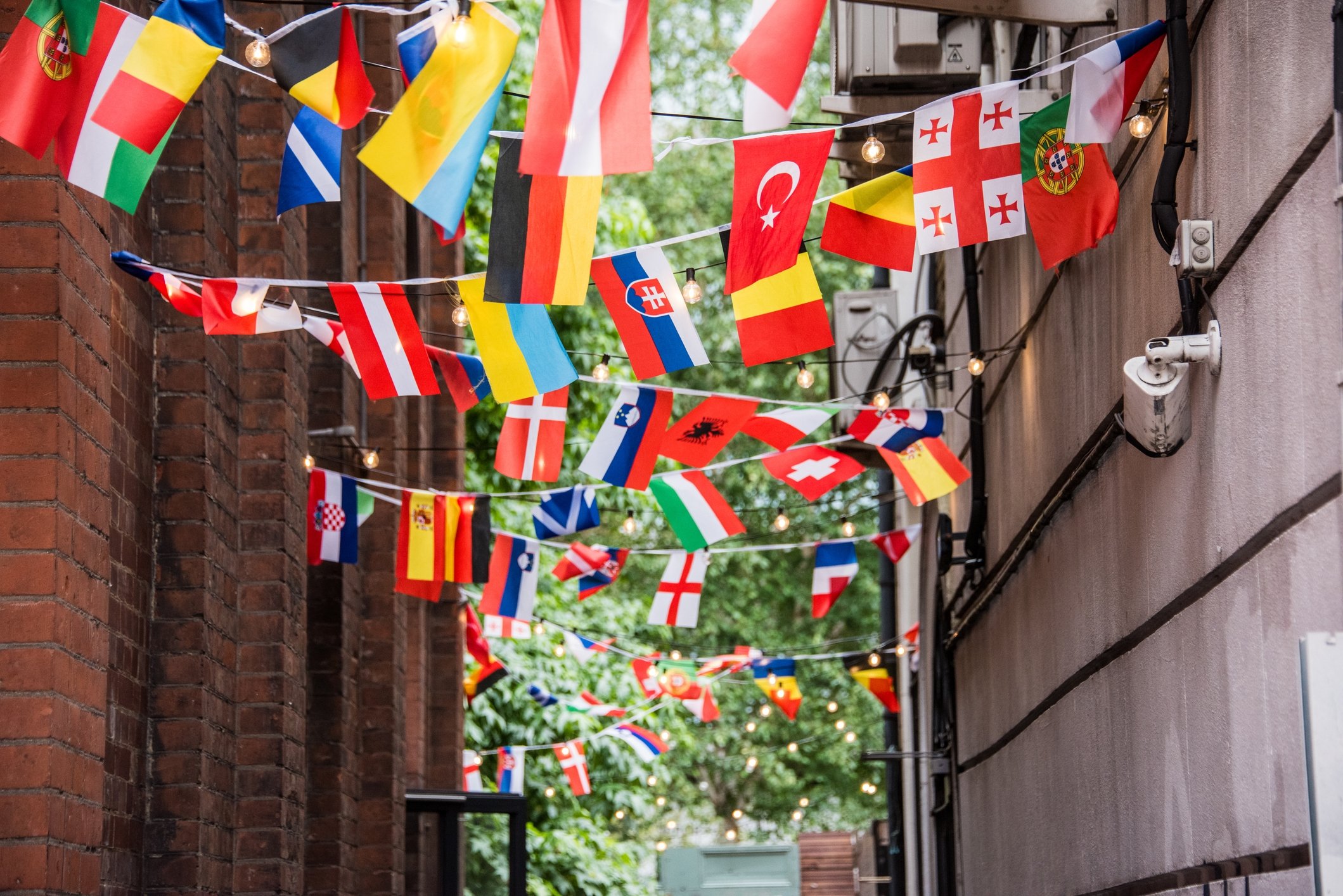
There is an old saying that to know another’s language is to possess another soul. In the field of international relations and global trade, this phrase is more than poetic wisdom; it is a reality that determines whether cooperation and trust can take root. For Türkiye, which today aspires to move from being a regional power to becoming a true global leader, the strategic promotion of what are called critical foreign languages, languages essential for security and diplomacy but less commonly studied, will be one of the decisive factors shaping the country’s future.
The example of South Korea illustrates this point vividly. When Korea emerged from colonial rule and war in the mid-20th century, it had almost nothing. Per capita income stood at just $60. There were no oil reserves, no great mines, no abundant farmland. The country’s only resource was its human capital. Recognizing this, Korea invested heavily in education and in the training of experts who could open doors to the broader world.
Over the decades, Korea’s transformation into a manufacturing powerhouse was not built only by engineers and entrepreneurs. Behind the scenes were specialists who spoke Turkish, Arabic, Indonesian, Portuguese, Uzbek, Persian and many other languages. These individuals gave Korean companies the ability to negotiate, to adapt to local cultures and to establish genuine partnerships. By 2025, Korea’s per capita gross national product in purchasing power parity terms reached around $65,000. This extraordinary leap from poverty to prosperity was grounded in the ability to communicate, to understand and to cooperate through language.
The Korean government eventually codified this lesson in law. In 2016, the National Assembly passed the Critical Foreign Languages Promotion Act. By 2018, the Ministry of Education had designated three national centers, including Hankuk University of Foreign Studies, as hubs for both expert training and public access. These institutions offer not only advanced regional studies programs to produce elite specialists but also free online and offline courses in Arabic, Turkish, Azerbaijani, Uzbek, Malay-Indonesian, Portuguese and other languages. Schoolchildren, university students and even ordinary citizens are encouraged to enroll. This dual approach both cultivates professional cadres needed for diplomacy, trade and national security and spreads awareness of critical languages across society. It signals that these languages are not hobbies for a few enthusiasts, but national assets that must be nurtured for the sake of Korea’s security and prosperity.
The reasoning behind this is clear. Artificial intelligence translators can help with literal words, but they cannot replace human nuance. A phrase uttered in the local idiom builds warmth and credibility; a small mistake can create mistrust. In sensitive negotiations, in moments of crisis, and in the forging of long-term friendships, nothing substitutes for the empathy and subtlety that comes from mastering another language. Korea’s own security history provides examples: During hostage crises, officials who had mastered local languages could negotiate directly with tribal leaders and secure the release of citizens. Language became not only a bridge of commerce but a safeguard of life.
Türkiye today stands at a crossroads where this lesson becomes urgent. As one of the most competitive manufacturing economies bridging Europe and Asia, Türkiye is expanding its economic and diplomatic horizons. The government’s Asia Anew initiative seeks to deepen relations with partners in East, Southeast and South Asia, ranging from Korea and Japan to Indonesia and Malaysia. Yet such ambitious policies cannot be realized solely through English or French. Genuine cooperation requires experts who can converse in Korean, Malay, Japanese, Chinese, Hindi or Uzbek, who can read local newspapers, understand cultural sensitivities and conduct negotiations without relying on intermediaries. Without this expertise, grand strategies risk remaining slogans.
The Turkish-Korean connection itself demonstrates the power of language. In 1973, Korean universities first introduced Turkish language education. Since then, hundreds of students have gone on to work as interpreters, scholars and business experts. Today, more than 60 Korean companies operate factories in Türkiye, serving markets that extend to Europe, the Middle East, Central Asia and Africa. These ventures succeed not only because of capital and technology, but also because language-trained specialists made communication possible. The history of Turkish studies in Korea underscores how investment in language creates durable bridges between nations.
For Türkiye, the next step should be to institutionalize a similar framework for critical foreign languages. A national law or government program could designate key universities as hubs for training and for outreach, provide scholarships and incentives for students, and align language education with Türkiye’s foreign policy and trade strategies. English, French and Arabic will remain important, but they are no longer enough. Türkiye must identify the languages most crucial to its economic future and treat them as strategic investments. Just as the United States maintains a list of “critical languages” essential for its national security and competitiveness, Türkiye should define its own list and mobilize resources accordingly.
Such an initiative would not only serve immediate needs but would also prepare the next generation for leadership. Imagine Turkish diplomats able to engage directly with their counterparts in Jakarta or Seoul in the local language. Imagine Turkish engineers and business executives working alongside African or Latin American partners in their native tongues, building trust that no interpreter can fully deliver. Imagine cultural institutions, universities and think tanks that can communicate with credibility across the Global South, positioning Türkiye as a natural leader of emerging powers.
The broader point is that language is not secondary but central to national strategy. Korea’s trajectory demonstrates how a resource-poor country can achieve miracles by investing in people and in communication. Türkiye, with its historic role as a bridge between continents and its current ambition to be a global actor, can achieve even more if it treats critical foreign languages as strategic assets. To know another’s language, after all, is to possess another soul. Suppose Türkiye can embody not only its own proud identity but also the linguistic and cultural souls of its partners. In that case, it will find doors opening to new markets, new alliances and new diplomatic influence.
In an era where global politics is fragmented and competition for markets is fierce, Türkiye’s edge will come not only from its factories and military strength but from its ability to build trust across cultures. That trust begins with language. Just as Korea’s investment in critical foreign languages helped it rise from the ruins of war to the ranks of advanced nations, Türkiye can now apply the same lesson. By promoting and institutionalizing critical foreign language education, Türkiye will not only prepare for the challenges of the present but also secure its place as a leader of the future.