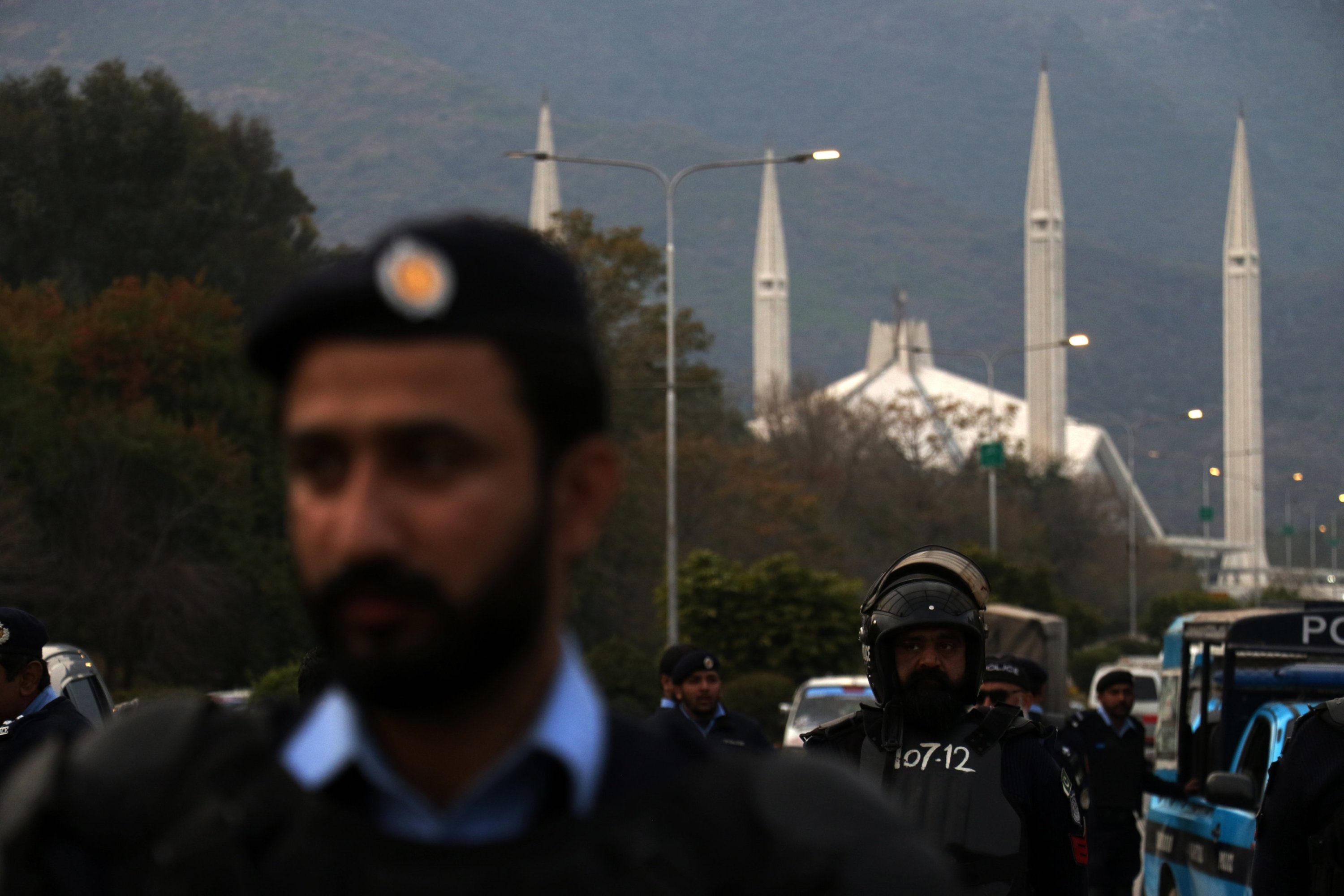
The Feb. 6, 2026, suicide blast at a mosque in Islamabad was designed to send precise signals: instilling fear, sectarian anxiety and doubts about the state’s ability to protect its core. The terrorists sought maximum symbolic disruption by striking a religious site in the federal capital, intended less to seize territory than to fracture public confidence through shock and spectacle.
Just days earlier, Balochistan was subjected to the same kind of coordinated violence that modern terrorist networks favour: simultaneous strikes, civilian intimidation and a parallel flood of exaggerated claims meant to create panic faster than facts can catch up. The intent was clear: paralyze governance, disrupt daily life and project a narrative of state retreat.
What followed instead was a hard demonstration of Pakistan’s counterterror resilience. According to official tallies carried by the main media, security forces mounted rapid clearance and pursuit operations that pushed militant losses to extraordinary levels. Some 145 terrorists were killed in roughly 40 hours after the first wave, rising to 216 over the weeklong military offensive called Operation Radd-ul-Fitna in Balochistan. Even as the narration of events varied across media, the core signal remained consistent: the attacks did not translate into sustained territorial control, strategic damage or a collapse of writ.
Pakistan’s response to dual terror attacks carries relevance well beyond its borders. From the Sahel to South Asia, contemporary terrorism now increasingly operates along two parallel lanes. The first is kinetic with bombs, raids and hostage-taking, while the second is perceptual with viral “victory” claims, inflated casualty narratives and carefully curated imagery designed for rapid digital spread. Media depicted the attack as a planned, coordinated pattern, small teams hitting multiple targets, eyewitness accounts of explosions and gunfire in civic areas, with sweeping claims of “success.”
The militants’ objective was not a conventional battlefield success but a psychological dislocation, eroding trust in institutions faster than facts can restore equilibrium. Pakistan’s response, however, told a different story. It was not a perfect shield, because no counterterror posture is. But it was a systematic defense absorbing shock, regaining control and then moving aggressively into pursuit. The containment and follow-on raids were executed at tempo, restoring control and preventing attackers from converting shock into sustained coercion. That sequence matters. In modern counterterrorism, the first contest is over minutes to contain the incident, the second is over days to deny militants the ability to regroup, and the third is over perception to prevent theatrics from becoming “momentum.” On all three counts, the attackers failed to convert violence into momentum.
Equally significant was the moral contrast exposed by terrorists’ targets. Earlier reports confirm the attacks killed civilians, including women and children, alongside law enforcement personnel. This is the point where “separatist” branding collapses into the reality of terrorism: when violence is directed at everyday life – homes, markets, public services – the claim to political representation becomes a rhetorical cover only.
This is where Pakistan’s counterterror posture intersects with the wider global menace. Pakistan’s response illustrated a principle widely recognized in counterterror doctrine: terrorism thrives where state response is slow, fragmented or ambiguous. This is also why the international legal environment increasingly supported Pakistan’s fight against terrorism by designating the Balochistan Liberation Army (BLA) and its alias, Majeed Brigade, as Foreign Terrorist Organizations in 2025, confirming that these are internationally recognized terrorist entities rather than political protest movements.
Another complicating phenomenon in tackling terrorism in recent times is its support from a foreign entity. Pakistan’s government and military alleged that BLA gets support from India, which India denies. But this underscores a broader regional reality: terrorism in borderlands is rarely “local-only,” and claims and counterclaims are part of a wider contest. But even beyond attribution debates, the structural risk is undeniable: porous frontier dynamics and the circulation of sophisticated weapons make terror campaigns more lethal and harder to contain.
Pakistan has increasingly internationalized its warning. It has cited findings from U.S. oversight and other investigations that American-supplied equipment left behind after 2021 now forms a major part of the Taliban’s arsenal, with weapons also filtering to militant groups targeting Pakistan. It has also cited the U.S. Department of Defense estimate of roughly $7.1 billion worth of equipment left in Afghanistan. In parallel, Pakistan’s mission at the United Nations has publicly urged international partners to recover abandoned stockpiles and prevent access by groups such as the Tehreek-i-Taliban Pakistan (TTP) and the BLA, framing weapons proliferation as a regional security hazard, not a bilateral talking point.
The deeper lesson extends beyond tactical success. Countering hybrid terrorism requires swift response, strong coordination and clear public communication. The next phase demands strengthened border control and extended regional counterterror cooperation.
Pakistan’s experience shows that resilience is not defined by force alone, but by the ability to deny terrorist ecosystems the physical, financial and psychological room they need to regenerate. In a world where security, connectivity and supply chains are tightly interwoven, stability is strategic. Modern deterrence is no longer just about preventing the next attack. It is about ensuring that shock never becomes momentum.