The onset of the Russia-Ukraine war in 2022 takes us back to the chessboard. In chess, pawns are often sacrificed to protect the king, queen and other pieces. While most pawns are vulnerable and easily captured, this serves their duty to defend the king, queen and their territory. At least they have an allegiance to the side they fight for – unlike many Africans who have recently found themselves involved in the Russia-Ukraine war with no military training. Questions about how they ended up in this situation still linger in many people’s minds. However, it is irrefutable that recruitment from approximately 36 African countries has contributed to fueling the ongoing war.
Lured by the lucrative incentive of earning more than approximately $18,000, recruitment through certain agencies in these countries has been on the rise. Kenya and South Africa have been particularly in the spotlight, especially after Ukrainian Minister of Foreign Affairs Andrii Sybiha tweeted in November: “According to available information, at least 1,436 citizens from 36 African countries are currently fighting in the ranks of Russia's invasion army in Ukraine. This number represents those identified, though the actual number could be higher.”
What began as a concern among Kenyan netizens on X, after a video circulated showing Kenyans dressed in Russian military attire on the Russia-Ukraine warfront, ended up calling for government intervention. Known for their online discourse, particularly on X, Kenyans highlighted the narrative of people being lured into a war they had little understanding of.
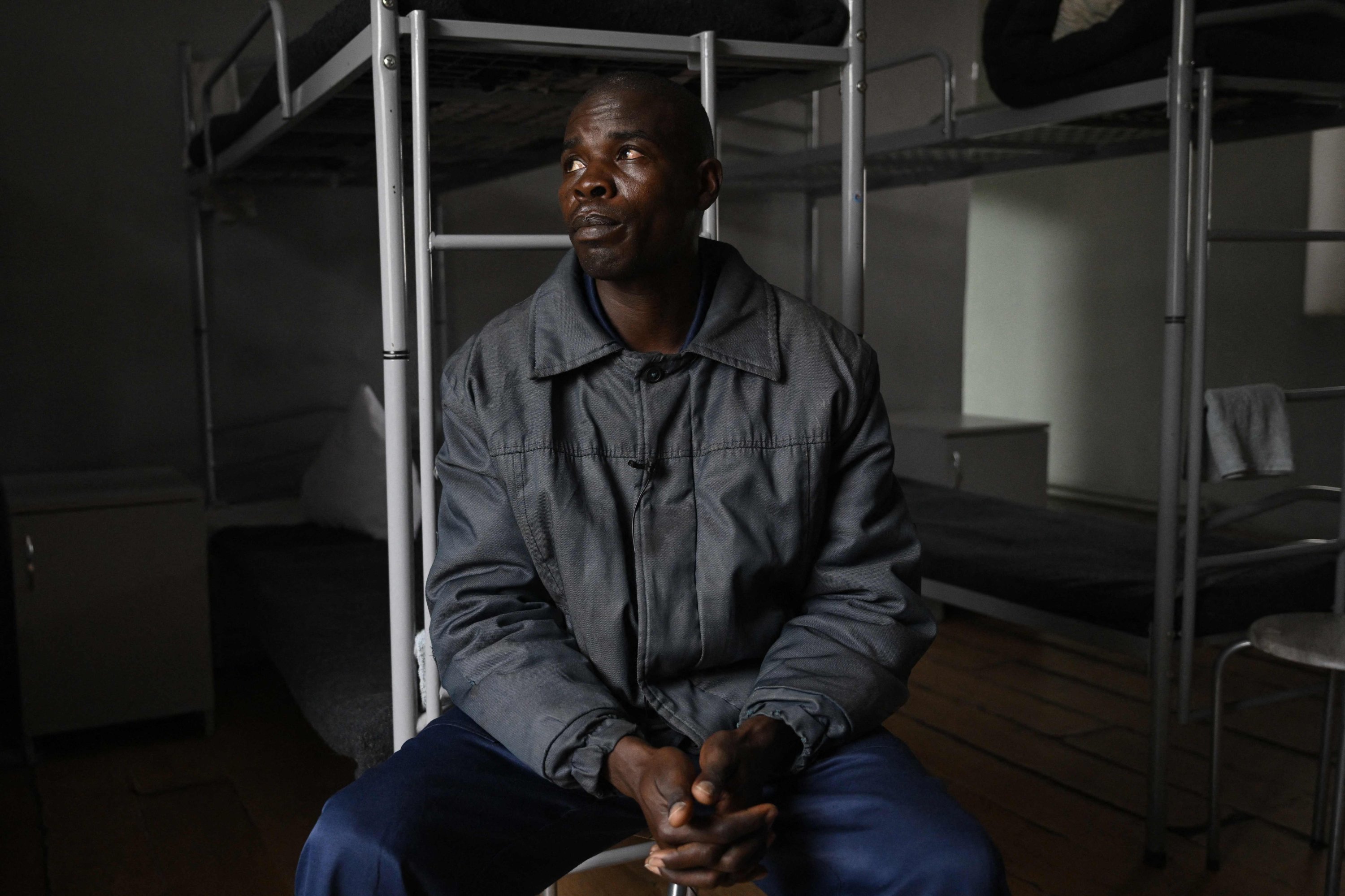
More videos of Kenyans recounting how they were duped into joining the war, while others appeared to have accepted their fate, elicited mixed reactions among netizens. However, the harrowing story that drew the most attention is that of Evans Kibet, an aspiring young Kenyan athlete who surrendered as a prisoner of war to a Ukrainian camp in September.
Kibet thought he was going to Russia for training. After his stay in Russia and the expiration of his visa, he was presented with documents in Russian to sign. Without understanding them or hesitating, he signed anyway. The next thing he knew, he was in a van that dropped him in the middle of a war zone and was ordered to put on a uniform to fight, or face being killed, according to a video on Facebook filmed by the Ukrainian 57th Infantry Brigade, which accused him of fighting on the enemy’s side.
Another Kenyan, 22-year-old David Kuloba, had believed he had secured a job as a guard in Russia, only to end up on the war front, where his life was tragically cut short. A recent video of a Kenyan in military attire emerged, showing him urging others not to enlist. Meanwhile, another video shared on X by @AfricanHub in October captured several Kenyans in military uniform in the forest speaking in Swahili: “Kazi iko aje? Kila kitu iko sawa ... kuna mtu analalamika huku? Nani anatupea unga? hakuna kazi poa kama hii...” This translates to: “How is work? Everything is alright ... are there any complaints? Who is feeding us? There is no better job like this.”
While this reflected many public concerns about whether it was voluntary or coercion, the government of Kenya, through the Prime Cabinet Secretary Musalia Mudavadi, acknowledged that more than 200 Kenyans had illegally been recruited in the Russian-Ukrainian war. Also, through a tweet by Kenya’s President William Ruto on Nov. 6, through a call with the Ukrainian president, he expressed concern about the illegal recruitment, pleading for the release of Kenyan prisoners of war while vowing to create awareness of the dangers of the recruitment.
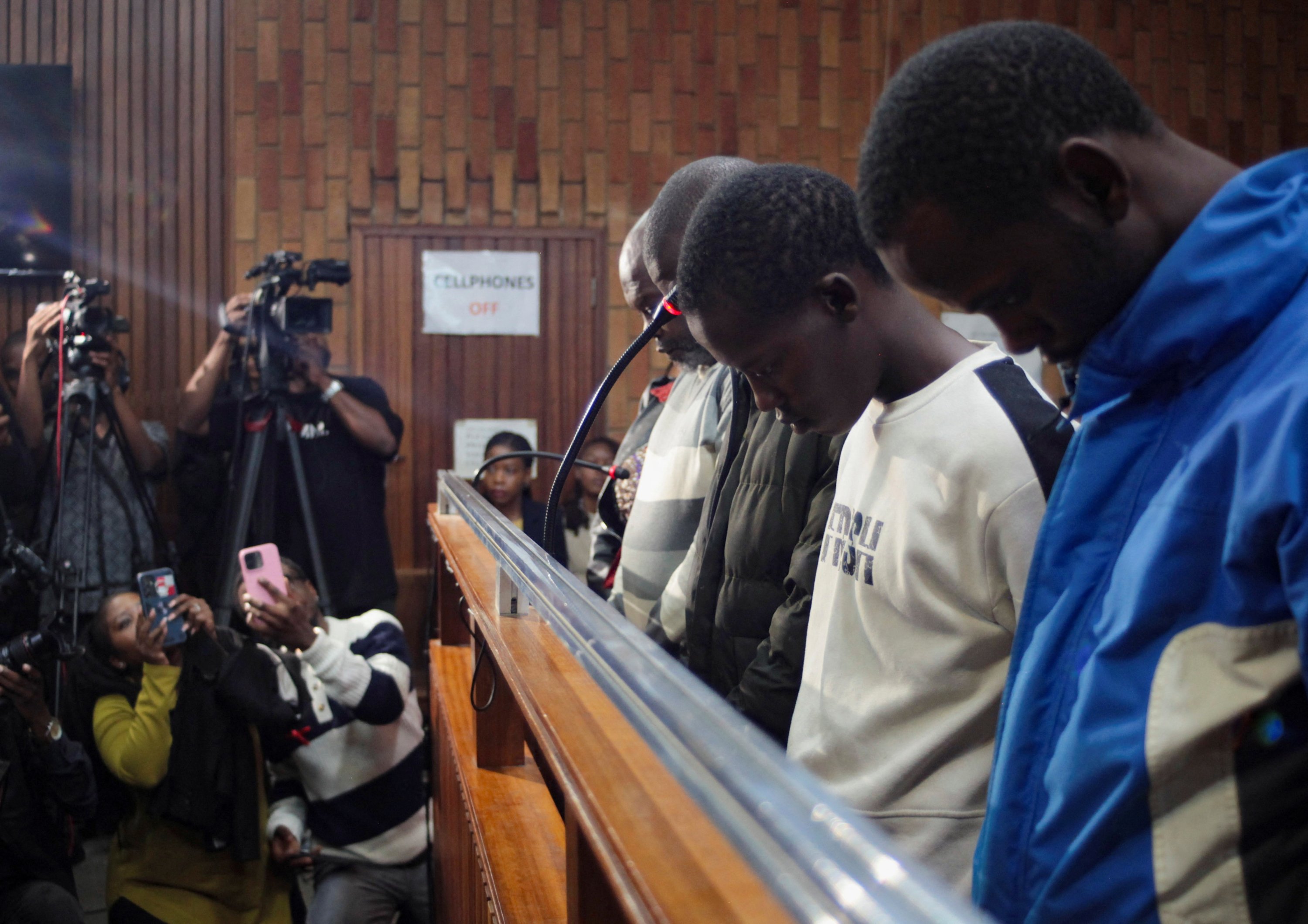
Earlier in November, South Africa opened an investigation probing the recruitment of its 17 citizens for the Russia-Ukraine war. The case allegedly tied former South African President Jacob Zuma’s daughter Duduzile Zuma-Sambudla to being part of the people who lured people to join the paramilitary in Russia. The accusations led her to resign as a member of Parliament while the case continues. The latest concerns with photos and some videos circulating on social media, especially X and Facebook, are of Ugandans, Ghanians, Nigerians, Cameroonians and Senegalese in Russian military regalia. One video from X dating February from @SIKAOFFICIAL1 showed a Ghanian and a Cameroonian in Russian regalia. Praising the Russian army, “I have always liked Russia, that’s why I am here,” said the Ghanian.
Unlike some African countries, many others do not have a mandatory military service; thus, many recruited in the Russia-Ukraine war die in the first week of the warfront. Out of 55 African countries, roughly 13 have compulsory military service, although nearly half of these apply it selectively. This may be attributed to the geopolitical environment and the limited global military engagement of many African states. Therefore, the core problem is not the absence of mandatory military service but rather poor governance across much of the continent. While ignorance may be bliss, weak systemic governance makes young people vulnerable to joining foreign wars due to a combination of factors, such as high unemployment and desperation to find meaning in life.
Foreign military recruitment is not an unfamiliar concept in international relations, as many argue the moral equivalence between Russia’s practices and those of the United States, albeit in a more structured manner. This raises the question of whether the ends always justify the means; perhaps not. Although there have always been rules governing warfare, how often have these rules been blatantly ignored by so-called superpowers? While this in no way justifies the illegal recruitment of Africans into the Russia-Ukraine war, Africa has long been used as a pawn in global power struggles, positioning the continent at the periphery of international politics. While others play chess, most African states are left playing checkers.
Since the era of proxy wars during the Cold War, following World War II, many African countries adopted a non-aligned stance. As the ideological rivalry between capitalism and communism intensified in global politics, most African states remained relatively passive, aligning themselves with whichever power engaged them. This ambiguity exposed their foreign policies to influence from both the East and the West. With the change from a unipolar to a multipolar world order, Africa continues to be treated as a pawn; despite the existence of blocs such as BRICS, many Africans can still be duped or may voluntarily enlist to fight in the Russia-Ukraine war without fully understanding its ramifications. Whether through voluntary enlistment or exploitation of governance loopholes, Africa may, in many ways, be its own Frankenstein.