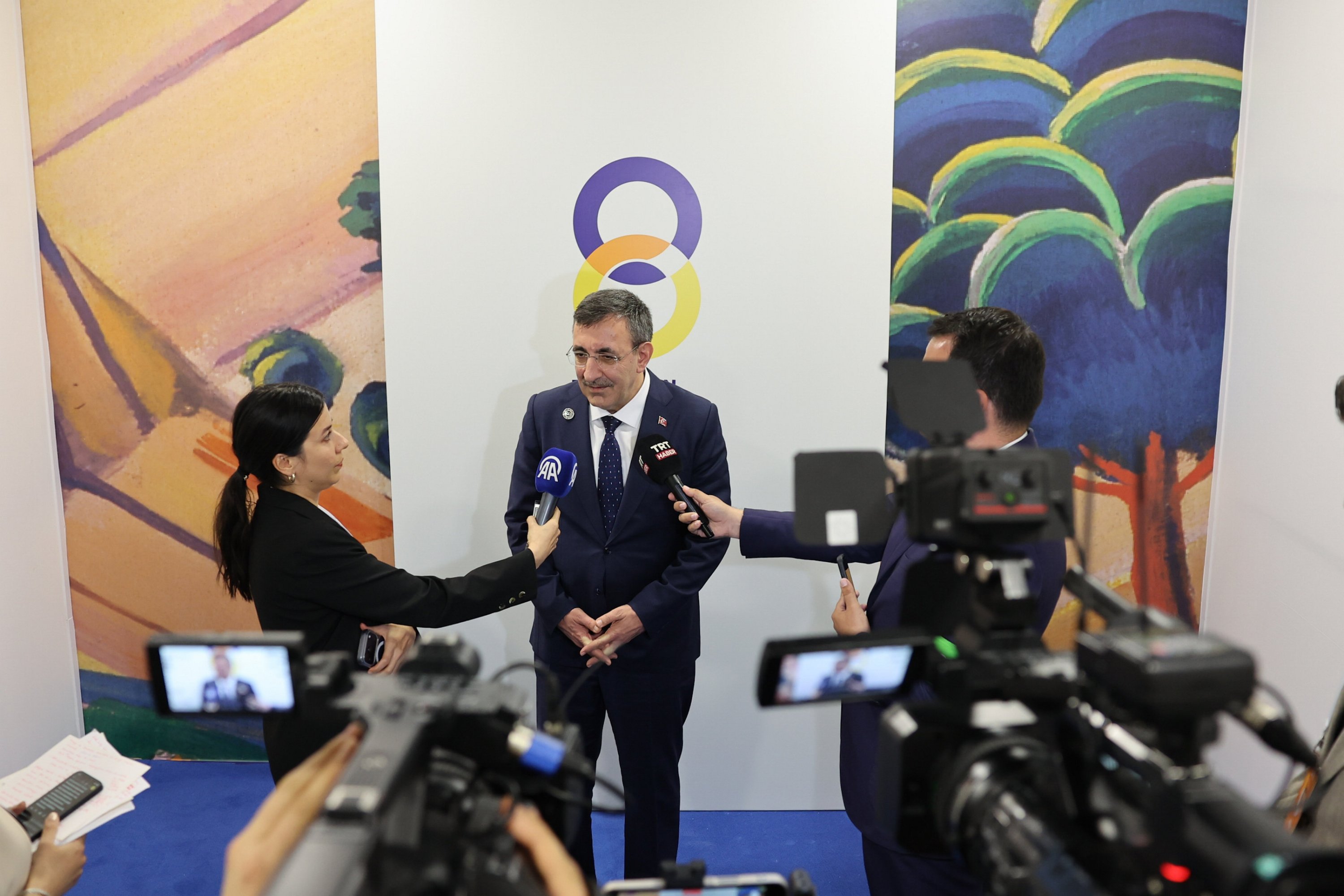
On May 4-5, 2026, Yerevan, the capital of Armenia, provided a geopolitical snapshot of the new European order. Around 50 leaders gathered at the Karen Demirchyan Complex for the 8th European Political Community (EPC) Summit, held under the motto “Building the Future: Unity and Stability in Europe.”
NATO allies, EU candidate countries, key figures from the former Soviet sphere, and, for the first time in the forum’s history, a non-European leader, Canadian Prime Minister Mark Carney, were all in the same room. Ankara was represented by Vice President Cevdet Yılmaz. The fact that this seat was occupied is of great significance. This presence in Yerevan is a concrete sign of a transformation in Türkiye’s approach to the regional agenda that is becoming increasingly evident.
The defining feature of this structure, which provides a platform for political and strategic dialogue across the continent, is that it has been detached from the EU accession process from the outset. For countries whose prospects of membership have become unclear, this situation represents a striking new opening.
The fundamental tension at the heart of Turkish foreign policy lies in the conflict between the goal of integration with Western institutions and the determination to remain an autonomous power in the region. The EU framework further sharpened this tension as the accession process required extensive domestic reforms and imposed a degree of alignment in foreign policy.
However, given that negotiations have effectively been on hold since 2016, this framework no longer provides a functional basis. Relations between Brussels and Ankara remain mired in the structural uncertainty created by a legal framework; both sides have grown accustomed to managing this situation, yet it is becoming increasingly clear that it is not sustainable.
The EPC fills this void precisely. Without any chapters, progress reports or conditionality mechanisms, it grants Ankara a say on the continent’s most critical issues such as energy supply, cyber security, migration management and transit routes. Türkiye sits at this table with a unique weight of influence. To put it more plainly: The EPC does not expect Ankara to reconcile its regional role with European aspirations; perhaps for the first time, the two can coexist in the same room without excluding one another.
This architectural difference is decisive in practice. The traditional logic of EU enlargement links progress to criteria set by member states and monitored by the commission. There is no such hierarchy in the structure of the EPC. Participants shape the agenda together; the positions taken in working groups derive their legitimacy from concrete contributions. Türkiye is well aware of this distinction: For over a decade of accession negotiations, the party setting the criteria has always sat on the opposite side of the table. The EPC structurally reverses this asymmetry.
Yılmaz’s level of representation in Yerevan is significant in this context. In the past, Türkiye had occasionally turned its participation in European forums into a tactical messaging tool. Consistent representation at successive summits can no longer be interpreted otherwise. This continuity allows Ankara to intervene as soon as agendas take shape.
The picture becomes clearer when examining the bilateral contacts in Yerevan: While the meetings with Georgian Prime Minister Kobakhidze laid the groundwork for the practical coordination of the Middle Corridor, the contacts established with Western European counterparts created space for the partial easing of accumulated tensions regarding defence industry and migration issues. For this reason, the summit was functionally effective from a diplomatic perspective.
The atmosphere in which the summit took place adds weight to this interpretation. The Armenia-Azerbaijan peace agreement signed in Washington in August 2025 has redrawn the South Caucasus in ways that directly concern Ankara. Baku has lifted transit restrictions; the “Trump Route,” extending through Armenian territory to Nakhchivan, is on track to become a critical link in the Middle Corridor. With Aliyev addressing the summit via video link and Georgian Prime Minister Kobakhidze present in the hall in person, the South Caucasus is now being addressed from the very heart of the European agenda. Türkiye, however, offers more than just a neighbor.
The transit route and infrastructure agenda highlighted in Yerevan aligns directly with a thesis Ankara has been articulating for years: Türkiye’s geographical position is a natural source of momentum for engagement with Europe. The Middle Corridor is the most concrete testing ground for this thesis.
The route, which aims to link China and Europe via the Caspian Sea, the Caucasus and Türkiye, has gained significant geopolitical value due to the logistical disruptions caused by the Russia-Ukraine war. However, the route’s operationalization depends on a coordinated political will. The discussions in Yerevan have clearly demonstrated that this will has not yet fully materialized but that it cannot be formed without Türkiye.
Turkish ports, railway capacity and energy transmission infrastructure form the final gateway to Europe along this route. When the container volumes of Mersin and Iskenderun are combined with the increased capacity on the Turkish section of the Baku-Tbilisi-Kars line, Ankara’s role in this corridor shifts from a technical detail to a strategic determinant.
Consequently, Ankara’s exclusion from negotiations would mean that decisions directly affecting its own interests would be taken by others. The discussions on infrastructure and standardization at the summit proceeded on a basis that could not be finalized without the Turkish side’s technical input. This situation transforms Ankara’s presence at the table from a diplomatic preference into a practical necessity.
When energy supply is added to this picture, the picture becomes even clearer. Following Russia’s attack on Ukraine, the Southern Gas Corridor and Trans-Anatolian Natural Gas Pipeline (TANAP) have once again become strategic priorities. The transit of Azerbaijani gas through Türkiye to Europe has moved beyond being a purely commercial equation and has become a direct matter of energy security. As the commission addresses these two issues alongside its green transition objectives, Ankara’s technical and physical role creates a foundation that cannot be sidelined in the negotiations.
The fact that the energy discussions in Yerevan extend beyond gas supplies to include the integration of renewable energy points to a structural shift that will consolidate Türkiye’s influence in this area in the medium term. Integration into the Southeast European electricity grid and undersea cable projects are still on the periphery of the agenda; however, once these issues mature, Ankara’s position at the negotiating table will make a decisive difference.
So what does Türkiye gain concretely from this process? This must be assessed under three separate headings. First, intervening at the early stages when agendas have not yet taken shape and being at the table before positions harden. Secondly, opportunities for high-level bilateral contacts outside the official calendar; discussions held in the corridors of summits sometimes yield diplomatic outcomes that go beyond the main agenda. Thirdly, a reservoir of credibility that operates independently of the accession process; this reservoir creates a quiet but enduring weight at bilateral tables.
Some experts believe the platform will not produce binding outcomes and question its true value. However, institutions should be assessed not by their current structure but by their transformative potential. The same question could have been asked during the G7’s formative years. That platform now shapes the course of global economic policy. Moreover, the binding nature is rooted not only in legal texts but also in the political expectations fostered by sustained participation over time. Türkiye’s stance in Yerevan indicates that Ankara has begun to make this calculation.
Ultimately, this summit is one of the visible steps in an increasingly clear direction. In a period where the framework of membership has lost its function, seeking the most efficient form of existing tools rather than resetting the relationship is a mature choice. The real test will lie beyond the summit photographs, in the working groups and the details of technical negotiations. How Ankara navigates this process will remain one of the most decisive foreign policy questions in the coming years.