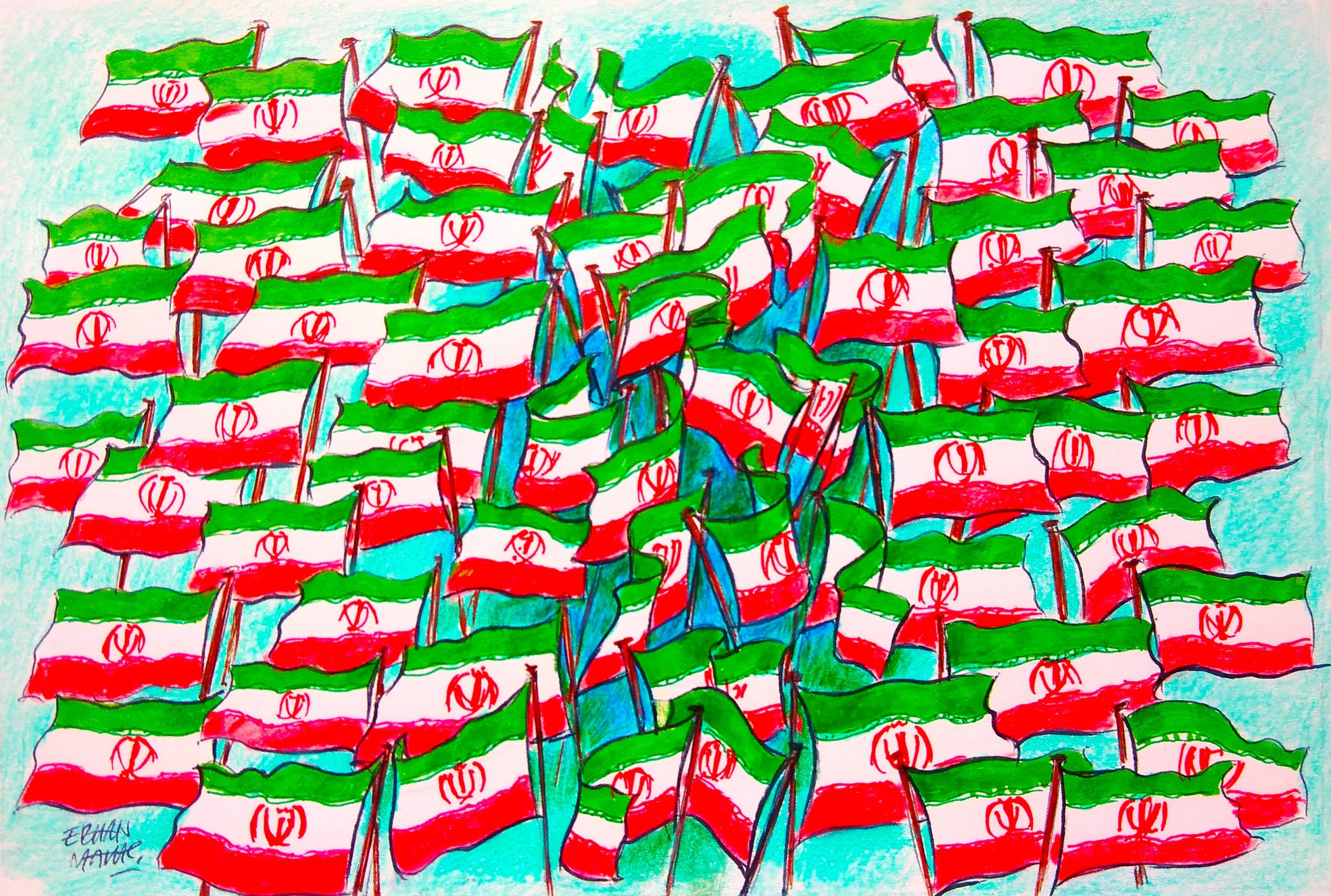
The protests that have been sweeping Iran for the past week have once again raised the question: "Is this the first step toward regime change?" However, posing such a question without grasping the background of events on the ground often leads to fundamentally flawed analyses.
To fully understand the nuances of the issue, the subject must be examined in layers. Iran has been in a state of crisis that has intensified since 2016 and escalated significantly after 2018, paralleling the "maximum pressure" policy during Trump's first term. This crisis is often misunderstood by Western analysts unfamiliar with the realities on the ground, requiring closer examination of the background.
Iran confronts a problem of unplanned urbanization that began in the 1960s and has intensified to this day. Rapid rural-to-urban migration has emptied villages and decimated the agriculture and livestock sectors, resulting in a massive population struggling to survive in the cities by cramming into shantytowns. The established elites label this internal migrant mass with the pejorative term "shahrestani" (provincial). While this exclusion deepens social fault lines, the chaotic growth of the urban periphery has been further intensified by the influx of millions of Afghan refugees since the 1980s. The cumulative result is a fragmented society marked by mutual distrust, resentment and deep unhappiness.
Urban infrastructure can no longer sustain this population load. Water, electricity and gas networks are collapsing, while rising poverty triggers serious public order issues. The country faces one of its worst housing crises. The most destructive dimension is the labor market: masses severed from rural production formed a massive unskilled labor army, creating a surplus population, which can be termed "human inflation," driving wages to starvation levels.
The most concrete reflection of this economic bottleneck is the housing crisis, which has been Iran’s No. 1 agenda item for years, and the erosion of teacher and retiree pensions. Especially in metropolises like Tehran, finding a rental home has become impossible due to astronomical rents and the demand by landlords for hefty deposits that nearly equal the property's value.
Consequently, an entire generation has shelved marriage dreams due to housing costs and low income. Youth either remain in family homes or share apartments in groups to afford rent. This economic dysfunction of marriage contradicts the cultural codes of a society that highly values marriage, triggering silent but violent social conflict.
On one side of this conflict is the generation born in the 1980s and after, and on the other are families and society with very strong cultural codes. The third party in this conflict is the Sharia laws imposed by the Islamic Republic. The government stands in direct opposition to this mass that cannot marry even if they wish to. Indeed, in a country where a mandatory course titled "Knowledge of Family and Population" is taught even in universities, there is immense pressure to "start a family" placed on youth at every level of society. And those who truly know Iran closely will appreciate just how critical this problem is.
The economic collapse is evident in purchasing power. While general inflation hovers above 50%, food inflation is grimmer: December 2025 data shows food prices increased 72% year-over-year. Dairy increased sixfold, basic foodstuffs more than tenfold, and potatoes 103%. Yet, salary increases remained at 20%, condemning fixed-income earners to starvation. A family of three in Tehran needs 550 million rials ($400) for basic needs, but current incomes cover less than a third.
The figures reveal a harrowing picture. Based on current market rates, the minimum wage in the country remains around 156 million rials ($113-114). The situation is no different for teachers, who form the backbone of society; the average teacher's salary is around 160 million rials. Consequently, the vast majority of teachers are forced to take on second or even third jobs to survive on this income, which falls well below the $200 threshold. For retirees, the most vulnerable group, the situation is an utter disaster; their monthly income is at the level of 140.4 million rials. This massive chasm between income and expenses has completely wiped out the Iranian middle class and reduced broad swathes of the population to the status of the "urban poor." Iranian newspapers are now reporting sores appearing on the bodies of children due to malnutrition, while also noting a rise in drug use within many families.
Therefore, Iran’s real problem goes beyond the hijab, petrol price hikes, water shortages or electricity cuts. These are all merely symptoms. The root cause is the chaos created by uncontrolled internal migration, urbanization and the proliferation of slums. When the social ground of the Iranian Islamic Revolution is carefully examined, this transformation is clearly visible as well. In fact, the underlying drivers of today’s political landscape in Iran can be traced back to these exact same structural shifts.
The protests in Iran began on Saturday, Dec. 28, 2025 – the first day of the working week in Iran – with the closure of shops in Tehran's Alaeddin Shopping Mall and Charsou Mall. This was no coincidence, as these centers are hubs for electronics retailers. The sudden spike in the dollar plunged shopkeepers, particularly in the technology sector, into a deadlock. Since every product they sell is imported, their pricing is entirely dependent on the exchange rate. When they opened their shops on the morning of Dec. 28, they faced a critical problem they had been grappling with for a long time: they could not calculate at what price to sell their existing stock or how much they would need to pay suppliers for new orders. Merchants stated that every transaction resulted in a loss.
In these shopping centers, where rents have reached 5-6 billion rials, commercial activity has become unsustainable in the face of collapsed purchasing power. To understand the terrifying gap, it must be remembered that the minimum wage in the country is only 156 million rials. In other words, the rent for an average shop is equivalent to approximately 35 months of a worker's salary.
Losing the ability to price goods or restock in the face of hyperinflation, the shopkeepers framed the strike as an act of "economic survival." This initial action quickly spread to the Tehran Grand Bazaar. This development carries a special symbolic meaning for the Tehran government, as the bazaar merchants are historically known as one of the staunchest support bases of the Islamic Republic. Security forces intervened with tear gas against demonstrators gathering around Lalezar, Charsouq and Jomhouri Avenue in front of the Alaeddin Shopping Mall. On the night of Dec. 29, protests spread to Isfahan, Shiraz, Mashhad, Qeshm Island, Zanjan and Hamedan.
Aware of the situation, the Pezeshkian government approached the issue with as much softness and understanding as possible. Statements followed one after another, expressing awareness of the economic difficulties, understanding the objections and striving to take steps accordingly. Although security forces particularly wanted to avoid harsh intervention, violence escalated in some districts. However, it should be noted that the rising violence in certain areas, such as Lordegan and Azna, is also related to the prevailing political culture in those localities and their distance from the state apparatus. In some places, incorrect police intervention triggered the violence. As events progressed, the supreme leader of Iran, Ayatollah Ali Khamenei, speaking for the first time on Saturday, made a distinguished statement: "One can talk to protesters, but there is no point in talking to rioters." Likewise, Iranian intelligence sent SMS messages to the public regarding the issue.
Israel's ultimate goal in the recent 12-day war was predicated on organically transforming the system by triggering a popular uprising. In this context, internal security mechanisms were specifically targeted throughout the conflict. It is no secret that a transformation was sought by increasing pressure on the country and eroding the mechanisms that could withstand this pressure. However, two critical points are often overlooked in analyses of Iran.
The first is the reality that Iranians, from secularists to conservatives, will unite under the common denominator of "Iran," even if they do not approve of the Islamic Republic. Just as no one desires a "failed state" plagued by internal strife and security issues, Iranian nationalist sentiments have generated anger among the public against Israeli attacks.
The second point involves the concepts of "Marja' al-Taqlid" (Source of Emulation) and the "Velayat-e Faqih" (Guardianship of the Jurist), which are often poorly understood by outsiders. An "Ayatollah" is not merely a simple cleric for a Shiite. The influence and power of Ali Sistani in Iraq, or the weight of the position held by Ali Khamenei in Iran, are not sufficiently grasped. Consequently, every act of rebellion by the public is misread from the outside as "an attempt to overthrow the Islamic Republic." While this may reflect the wishful thinking of certain groups within the Iranian diaspora, it does not reflect reality.
Nevertheless, it is evident that social anger has accumulated in Iran and that severe poverty prevails due to the reasons mentioned above. It is an undeniable fact that this poverty and crisis of governance are driving the country toward chaos. This is precisely why Masoud Pezeshkian and other key reformist figures persistently highlight governance issues. However, as long as the country's profound "institutional void" persists and the Islamic Revolutionary Guard Corps (IRGC) continues its economic hegemony, taking reformist steps seems unlikely at this stage. For this reason, it is difficult to say that the protest atmosphere in Iran will dissipate without radical reforms and steps toward institutionalization.