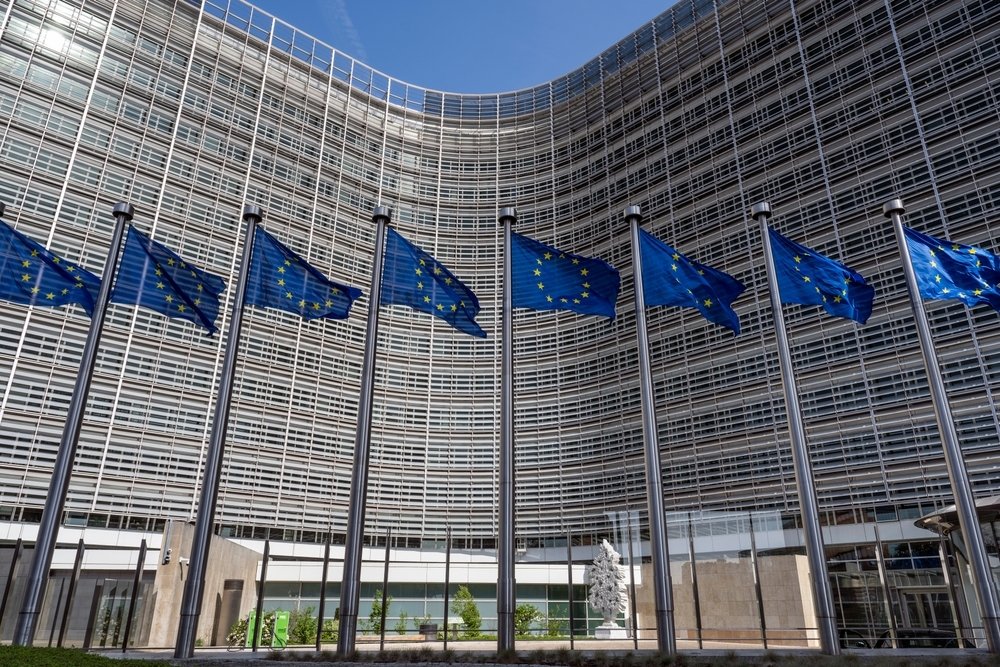
The EU’s reaction to Donald Trump’s Greenland takeover plans was unusually unified, but it also exposed that the bloc’s strategic reflex remains reactive rather than anticipatory.
In short, France, Germany, Italy, Poland, Sweden, Spain and others pushed back strongly against Trump’s idea of taking control over Greenland from Denmark. They reaffirmed principles of sovereignty and territorial integrity and emphasized the Arctic’s strategic importance to European security. In doing so, Europe also confronted an uncomfortable reality: even its closest ally may increasingly view the continent less as a partner and more as a space for strategic bargaining.
The EU has spent years hesitating while others, including Russia and China and now the United States, have acted and expanded their influence in regions the EU itself considers vital to its security. The bloc’s indecision on enlargement has become one of its greatest vulnerabilities. The last country to join was Croatia in 2013.
Russia’s full-scale invasion of Ukraine shattered the long-held assumption that economic interdependence and diplomatic caution were sufficient to guarantee peace. The EU imposed sanctions and provided military assistance, but its ability to protect Ukraine’s borders remained limited by internal divisions over defense, energy and strategic autonomy. Ukrainian civilians continue to die while defending Europe’s eastern flank, all while Ukraine remains outside the union.
For another group of countries waiting at Europe’s door, those in the Western Balkans, Serbia, Bosnia-Herzegovina, Montenegro, North Macedonia and Albania, the lesson from Ukraine is unsettling. Even existential security threats do not necessarily translate into political integration. Long described as one of Europe’s most volatile regions, the Balkans remain stuck in geopolitical limbo. The region is economically tied to the EU, aligned with much of its regulatory framework, and dependent on European security structures, yet still excluded from membership. It is, in effect, part of Europe without being protected by it.
A third and often politically uncomfortable case follows naturally from this logic: Türkiye. If enlargement is to function as a serious security strategy, Türkiye cannot remain permanently outside Europe’s strategic architecture. Türkiye is a NATO power with one of the alliance’s largest standing armies, controls access to the Black Sea through the Bosphorus, and sits at the crossroads of Europe, the Middle East, and the Caucasus. Over the past decade, Ankara has built a powerful and increasingly autonomous defense industry, producing advanced drones, naval platforms, armored vehicles, and missile systems that are now combat-tested and exported worldwide. Turkish drones have reshaped battlefield dynamics from Ukraine to the South Caucasus, highlighting Türkiye’s role as a security provider at a moment when Europe struggles to scale its own defense production.
Leaving Türkiye outside the European project does not create distance; it creates another gray zone. Strategic ambiguity weakens Europe’s leverage and invites external influence. Ankara will inevitably pursue partnerships that best serve its security interests. The Trump presidency would likely accelerate this trend, given the transactional logic that has historically defined Trump-Erdoğan relations and their shared preference for bilateral deals over institutional frameworks. For the EU, the risk is not that Türkiye chooses the U.S., but that Europe once again sidelines itself from a key regional power shaping the Black Sea, the Middle East, and Europe’s southeastern flank.
These gray zones are precisely where external powers thrive. Russian influence operations, disinformation campaigns and hybrid tactics exploit unresolved divisions in Bosnia and Kosovo, while China expands its footprint through infrastructure investment and economic leverage. In this changing landscape, keeping Türkiye strategically sidelined weakens Europe’s own security posture rather than protecting its political comfort.
Meanwhile, the Trump era politics have altered Eastern and Southeastern Europe’s assumptions about the U.S. Washington is no longer seen as a predictable or unconditional security guarantor. It is increasingly transactional, driven by interests that do not always align with European priorities.
With Greenland, the threat to Europe comes not only from the east but also from the north. The debate over closer integration with Greenland resurfaced as some EU lawmakers suggested that renewed EU ties could offer political and economic protection in a dramatically changed geopolitical landscape. Greenland, an overseas territory associated with the EU through Denmark, left the bloc in 1985. Any path back would be politically distant and legally complex.
Still, Trump’s Greenland ambitions should serve as a wake-up call for Brussels. The island has become strategically urgent not because it wants to join Europe, but because others may want to control it. This is not only about the Arctic. It is about Europe’s exposure.
Prolonged uncertainty over enlargement weakens reformers and empowers external actors. In strategic terms, indecision is not neutral. It shifts the balance of influence, and that shift is already underway.
If the EU is serious about its geopolitical future, it should begin with Ukraine. Bringing Ukraine into the EU would lock in Europe’s eastern frontier, reward sacrifice with security, and send a clear signal that Europe protects those who defend it. Reimagined enlargement could also help the EU regain leverage with the United States, Russia and China.
This is not an argument for reckless expansion, but for security-driven integration. Gradual access to markets, security frameworks and decision-making structures in exchange for alignment and reform would reduce geopolitical vacuums and strengthen Europe’s borders. Properly designed, enlargement would not dilute European power but multiply it. New members bring more than territory. They expand defensive depth, strengthen border control along exposed frontiers, and add manpower to overstretched security systems. Many also bring front line experience in hybrid warfare, cyber defense, disinformation resilience, and energy security, as well as growing pools of technical talent in artificial intelligence and digital infrastructure.
In an era where Trump reshapes the rules unilaterally, Europe’s only viable response is to build more power of its own, and enlargement remains its most effective and underused strategic tool.