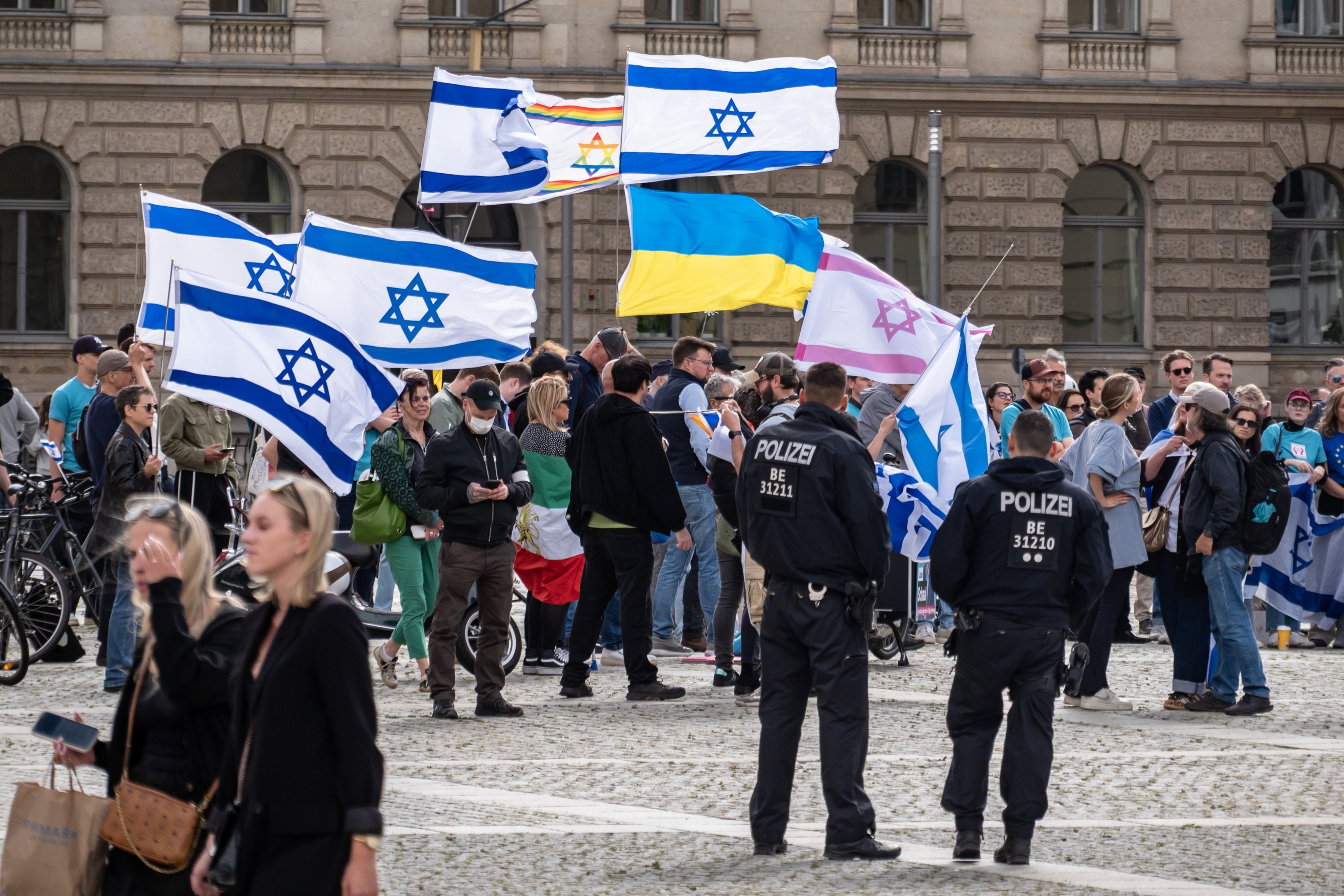
In the final quarter of the 20th century, the far-right was primarily associated with antisemitism and racism. By the end of the first quarter of the 21st century, however, its exclusionary rhetoric had increasingly shifted toward immigrants, while its traditional antisemitic positions had, in significant parts of the European radical right, been replaced or reframed through Islamophobic discourse. Zionism and pro-Americanism, once regarded as two major ideological enemies, increasingly became part of its own political identity.
The U.S.-Israel alignment that accompanied this sharp paradigm shift contributed to the transformation of the far-right from a marginal movement with limited electoral support into a significant actor in mainstream European politics.
To understand the transformation of the far-right and its contemporary political position, it is useful to examine the three major radical-right groups within the European Parliament.
The strongest and most influential of these is Patriots for Europe (PfE). It is an anti-immigration and strongly pro-Israel political group that frequently employs anti-Muslim rhetoric. France, Spain, Hungary, Italy and the Netherlands are among its principal national components, while Santiago Abascal, Marine Le Pen, Viktor Orban, Geert Wilders and Matteo Salvini are among its best-known political figures.
In 2025, Israeli Prime Minister Benjamin Netanyahu’s Likud party joined PfE as an observer, while in 2026 a PfE delegation visited Netanyahu in Jerusalem. These developments indicate that the relationship between Israel and Europe's far-right has increasingly acquired an institutional dimension at the party level.
The European Conservatives and Reformists (ECR) is a less prominent but influential right-wing political group. Among these three groups, it is the closest to the political center. It is broadly supportive of the U.S. and NATO and maintains close relations with Israel. Italy is a particularly prominent actor, with Prime Minister Giorgia Meloni as a leading figure. The Sweden Democrats and Poland’s Law and Justice (PiS), among others, are also important components of the group.
Europe of Sovereign Nations (ESN) is a more limited and marginal radical-right group. In Germany, Alternative for Germany (AfD) is its most prominent and electorally significant component, while the other member parties are less prominent political actors in their respective countries.
The AfD occupies a distinctive position even within the European radical right. Its leader, Alice Weidel, is openly in a same-sex relationship, despite the party’s strong opposition to many LGBT-related policies. At the same time, Weidel has been a vocal opponent of immigration and has faced criticism for positions characterized as racist or xenophobic. Her partner is of Sri Lankan origin, and together they are raising two children.
If AfD were to come to power, its political program would likely represent a significant departure from Germany’s established political norms. The party is pro-Israel, although traces of the antisemitic and fascist traditions historically associated with parts of the German radical right continue to be reported within the party.
In the 1970s, the European far-right was socially isolated and politically marginal. It was characterized by antisemitic, anti-communist, anti-American, anti-liberal, strongly nationalist and conservative rhetoric. It was also associated with opposition to supranational institutions such as NATO and the European Economic Community, while some movements retained elements of the fascist and Nazi political legacy.
By 2010, this transformation had become increasingly visible, and by 2015, more pronounced shifts were taking place. By 2023, the transformation had become particularly visible during the Gaza genocide.
By the end of the first quarter of the 21st century, the political orientation of significant segments of the radical right had shifted substantially. Parties and movements historically associated with antisemitic positions increasingly presented themselves as strongly pro-Israel and, in some cases, explicitly pro-Zionist. Alongside this transformation, a discourse portraying Israel as a front-line defender of European and Western security had become increasingly established. At the same time, traditional anti-Americanism had increasingly given way to political alignment with the U.S.
If this transformation can be captured through a few telling examples, France and Sweden offer the clearest starting points. From there, the rise of Spain’s newly established VOX and Portugal’s Chega provides a broader lens through which to understand the political forces driving this shift.
In France, National Rally (RN) was founded in 1972 by Jean-Marie Le Pen under the name National Front, emerging from the French far-right tradition.
Its ideological foundations included French nationalism, opposition to immigration, anti-communism, and antisemitism. It was also historically skeptical of NATO and European integration and associated with political currents that sought to preserve elements of France’s colonial legacy.
The party underwent a significant transformation when Marine Le Pen succeeded her father, Jean-Marie Le Pen, as party leader in 2011. The party’s name, logo, and political language were subsequently redesigned, while antisemitic rhetoric was increasingly rejected. Opposition to the EU increasingly became intertwined with opposition to Muslim immigration. In 2015, Marine Le Pen expelled her father from the party after he resisted this transformation. She also increasingly emphasized the party’s support for Israel.
Similarly, the Sweden Democrats (SD) emerged from circles with antisemitic and neo-Nazi links in 1988. Under the leadership of Jimmie Akesson, the party progressively distanced itself from these origins. Today, it is among Europe’s most strongly pro-Israel radical-right parties. It has advocated recognizing Jerusalem as Israel’s capital and supported moving the Swedish embassy to Jerusalem.
The striking question, therefore, is whether these parties were originally established to challenge the political system or whether their evolution ultimately reflects an effort to become legitimate actors within that system.
The relationship between the European right and Israel is not merely a matter of foreign-policy preference.
From Israel’s perspective, Europe’s rising right-wing parties can provide new political allies at a time when criticism of Israel has increased across Europe. When these parties enter government or gain influence over coalition formation, they can create political space capable of limiting or constraining common EU policies critical of Israel.
For Europe’s radical right, meanwhile, relations with Israel can provide access to political networks, money and lobbying support, assist efforts to distance the parties from their historical associations with antisemitism and extremism, enhance international legitimacy, and reinforce the message that they are no longer extremists outside the democratic system. For this reason, some researchers interpret the relationship as a process of mutual political legitimation.
Alongside the transformation of old-style far-right parties into this new political paradigm, a new generation of parties emerged in parallel.
As old parties adapted and new ones took root, a new radical-right bloc began to emerge across Europe – one increasingly aligned with Israel. At the same time, a parallel realignment was taking place on the American right, particularly around the political movement associated with Donald Trump. Together, these developments marked a broader transformation of the radical right on both sides of the Atlantic.
The Spanish far-right party VOX, founded in 2013, is an explicit representative of this new far-right vision in Europe. The party has maintained strong relations with opponents of the Iranian regime and a strongly pro-Israel position and is part of PfE in the European Parliament. Its political discourse is built in significant part around opposition to Islam and a form of Reconquista rhetoric
Alejo Vidal-Quadras, one of the founding figures of VOX, was involved in the European Parliament’s European Friends of Israel. When VOX was established in 2013, it positioned itself as a political party intersecting with conservative and neoconservative circles that maintained strategic ties with Israel. At this point, Rafael Bardaji emerged as a critical intermediary figure.
Bardaji, who was among the founding figures of the Spanish Friends of Israel Initiative in 2010 and maintained ties with pro-Israel Atlanticist and neoconservative circles, personally brought PR consultancy from Israel to VOX in 2014 from members of the team associated with Netanyahu’s successful election campaign, according to information he provided to the Washington Post. During the same period, he also had long-standing links to figures in the Trump administration and its foreign-policy network. Bardaji thus became not merely a party official within VOX, but a point of contact connecting the Spanish radical right with security-oriented nationalist right-wing circles in Israel and the U.S.
Another example within PfE is Portugal’s Chega, founded in 2019 and now part of the Portuguese governing coalition. Chega has taken a more openly pro-Israel position on the Gaza genocide than many European right-populist parties. Analyses of the 2024 European elections noted that Chega supported the Netanyahu government’s military operations against Hamas and was the only Portuguese parliamentary party that did not join calls for a cease-fire. More importantly, there have also been direct party-level contacts with Likud. Likud representatives have attended Chega party congresses and publicly thanked the party for its support for Israel.
In examining the far-right’s growing proximity to Israel, we should also consider the influence of the American networks behind this alignment.
U.S.-based alt-right networks, lobbying organizations connected to the Israeli right, and digital political-communication networks began to engage more closely with the European radical right after 2010. During this period, the far-right increasingly developed a new language of political exclusion and racialized identity that placed Islamophobia at the center rather than antisemitism. The economic crisis that began in 2008, combined with growing public dissatisfaction with immigration policies, also created political opportunities for the far-right.
The influence of the Mercer family was significant in this development. Billionaire Robert Mercer and his daughter Rebekah Mercer’s financial support contributed to strengthening a political network that extended through conservative think tanks and alternative media in the U.S. These include Breitbart News, which is a U.S.-based right-wing conservative news and commentary platform and, from there, Steve Bannon, an American political strategist and senior figure in Trump’s 2016 presidential campaign during its final phase.
Bannon’s connections with these circles helped bring the “America First” and “Make America Great Again” messages of Trump’s 2016 campaign into a broader political strategy centered on opposition to immigration, stronger border controls, nationalism directed against global elites, and opposition to radical Islam.
During this period, the security-oriented approach of the Friends of Israel Initiative (a pro-Israel international political advocacy initiative), which framed Iran and radical Islam as common threats, also intersected with this broader field of political discourse. Its founders included chosen politicians from different countries, including John Bolton from the U.S., Jose Maria Aznar from Spain, Marcello Pera from Italy, David Trimble from the U.K., and Alejandro Toledo from Peru.
Following Trump’s presidency, Bannon attempted to transfer this political communication model to Europe by establishing The Movement in 2018, which is a political network intended to provide political and campaign support to nationalist and right-populist parties in Europe. He established contacts with right-populist leaders such as Salvini from Italy, Le Pen from France, and Orban from Hungary.
Thus, the Mercer-Breitbart-Bannon-Cambridge Analytica-Trump network became an important channel through which political communication and campaign methods developed by the new right in the U.S. were promoted in Europe.
At the same time, this political model intersected with Israel’s "defender of the West" security-oriented discourse that frames Islam as a threat and associates it with irregular immigration, extremism and terrorism.
However, this should not be understood as a U.S.-Israeli project managed from a single center, but rather as a transatlantic political network developed by existing radical-right movements in Europe together with actors in the U.S. and Israel based on overlapping and mutual political interests.
All of this information clearly demonstrates the close relationship between the European far-right and Israel today. When we speak of the radical right in Europe today, we are not speaking of the same radical right that existed in the 20th century. It is essential to recognize that the radical right has undergone a profound transformation, producing a new political discourse. The changing relationship with antisemitism, as well as the transformation of its traditional opposition to supranational structures, has moved this ideology considerably beyond the point from which it originally emerged. At this juncture, understanding the structures, financial networks, and transatlantic connections that have contributed to this transformation is crucial. What has emerged is not simply a collection of national movements, but a broader political project and network extending across the U.S., Europe, Israel, and even Latin America.