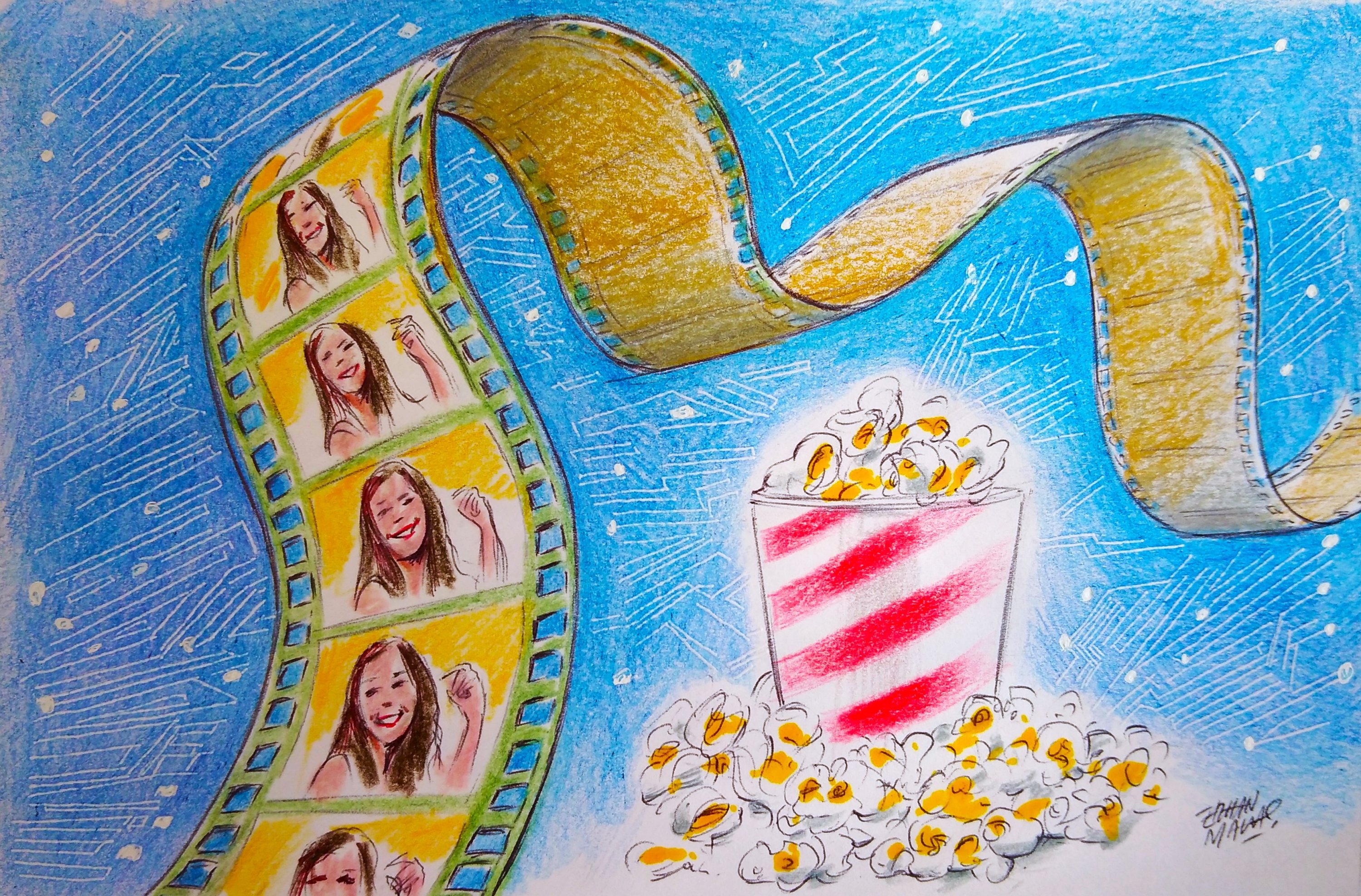
It all unfolded in just a few short years. First came the letters that assembled themselves into texts, surprising everyone. We encountered sentences in our own languages, yet written by no human hand. Soon after, we could make synthetic voices speak any words or sing any song we imagined. Image generation followed quickly: Artificial Intelligence began producing strikingly high-quality visuals and even bringing them to life through animation. Today, nearly everything can be created on a computer.
We can set up a scene, choose an actor and tell a story. So, are all these developments an opportunity or a threat? The film industry is also asking itself this question that everyone is curious about. No one knows the answer yet, but the impact of AI on the film industry is becoming more visible with each passing day.
Humans want to know the future. The unknown is always frightening, but it also arouses curiosity. That's why those who predict the future, write about it, or show it have always attracted attention. This curiosity, which began with science fiction novels, took on a whole new dimension with the visual power of cinema. Now we don't just imagine the future, we can watch it. Of course, it was only a guess, a prediction, but thanks to cinema, humans began to experience the future on screen. As these predictions came true over time, science fiction films rose to prominence, and scenarios pushing the boundaries of technology became reality. However, even then, one thing remained unchanged throughout the process: the human factor.
In every film, every scene, every dialogue, the human touch was felt. As technical capabilities improved, things became easier, but it was still humans who made the story meaningful. Now, there is a much greater force poised to take the place of that touch: AI.
AI has moved beyond being merely a tool that provides technical convenience; it has reached a position where it directly threatens the human factor. In 2024, the London premiere of The Last Screenwriter, a film with a script written by ChatGPT, was canceled due to public reaction.
The film's director, Peter Luisi, said they wanted to open up a discussion about the impact of AI on the film industry. "We are a small, independent Swiss production company. We are not a big studio, and we are not trying to make money from this. I think this is an important issue that everyone should look into," he said. According to Luisi, this film could even help screenwriters because people would be surprised to see that a film could be written without a human being, and perhaps they would realize its value again. But these words were not enough to appease the filmmakers' reaction.
The greatest opportunity that AI tools offered to the masses was text generation, and this feature spread so quickly that most people saw it as merely a technical innovation. However, in cinema, the issue was much more than a technical innovation. Putting a scene, a character's mood, or the intensity of an emotion into words was not just a matter of language; it was a reflection of being human. Perhaps this is why Luisi, who wanted to be a pioneer in technology, did not see the script written by AI as a problem. However, when the risk of screenwriters losing their jobs emerged, the first sign of danger in cinema appeared. This was no longer a matter of ease of production, but a struggle for existence.
While major studios tried to maintain their technical power, cinema production based on equipment, actors, and sets also began to change. Because AI made its next move in the realm of images. It was now possible to produce not only writing but also moving images. For filmmakers, this was as disruptive as a revolution. Everyone, from advertising films to short productions, began experimenting with this technology. However, recent developments have sparked a much deeper debate in cinema.
The script, check, visuals, check... But what about the actors?
In September, “Tilly Norwood,” who appeared onstage at the Zurich Film Festival, became a global subject of debate. Because Norwood was an actor entirely produced by AI. Her first line when she appeared on the cinema stage caused a huge stir: “I may have been created by AI, but I feel very real emotions.” This statement will be more of a reflection of an era than a character.
Norwood's creation by AI in the short film AI Commissioner, which was released in July, sparked an ethical debate in the cinema world. Real actors claimed that their performances and facial expressions were being used without permission. This is because these digital actors were developed by learning from the faces, voices, and movements of real people. In other words, human labor had been turned into data.
At this point, cinema's last bastion was also opened up for debate.
It became possible for a film to be written, produced, and acted out without any human involvement. This is not just a technological leap, but also brings with it a questioning of the nature of cinema. Because cinema is not just what a camera sees.
Perhaps AI can tell these stories faster and more flawlessly. But what makes a story “meaningful” is not its perfection, but the human element within it. If that human factor is lost, what remains is merely a flawless imitation. Yet cinema, with all its flaws, belongs to humans. Sometimes the camera shakes, sometimes the dialogue falters, sometimes a scene unexpectedly becomes emotional. This is what makes cinema, created through the choices of the screenwriter, actor, and director, so captivating.
Now the question is: AI can write films, shoot scenes and create characters. But can it tell a human story as naturally as a human? We will see this together.