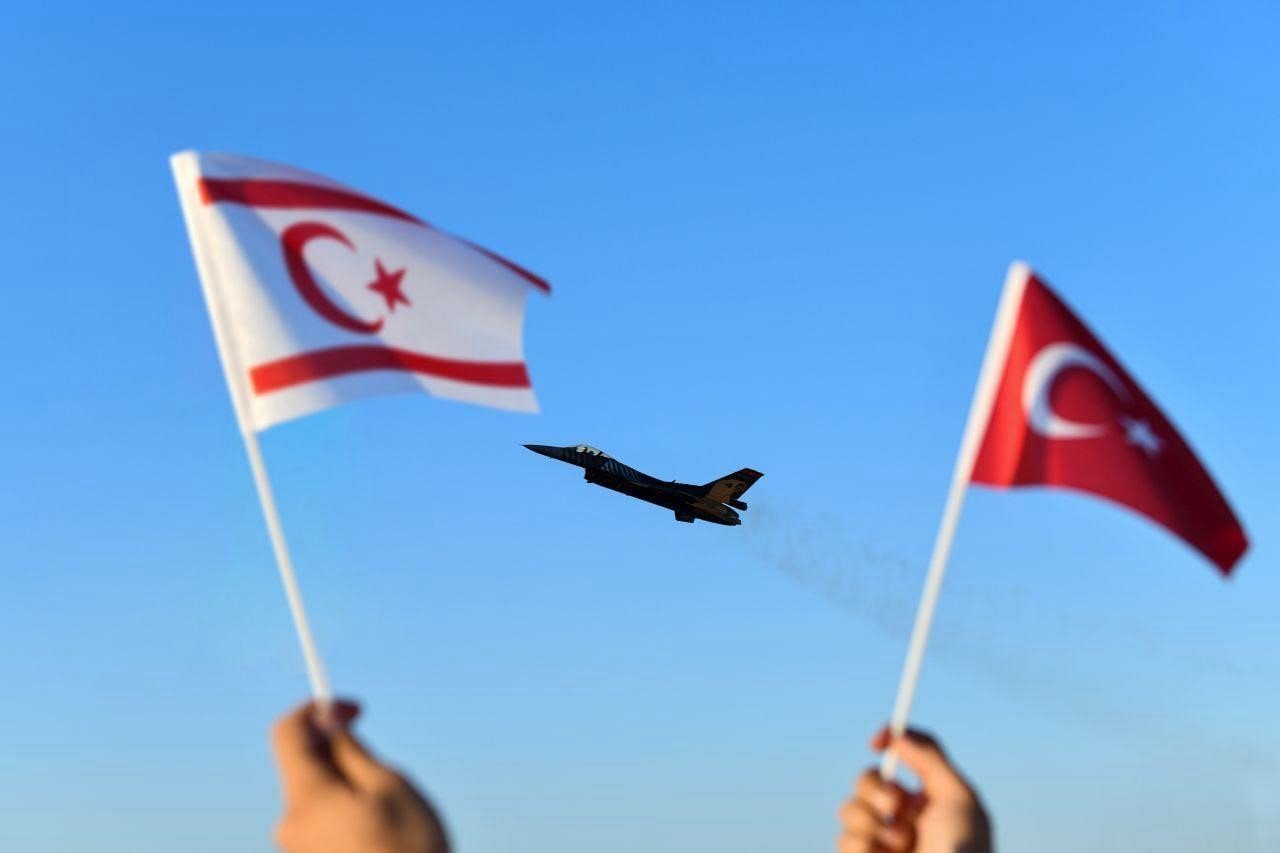
Cyprus has been militarized for years. Only now – thanks to Iran, aircraft carriers and a sudden rush of geopolitical curiosity – has the world bothered to notice.
For years, the Greek Cypriot administration cultivated an image that fit neatly into tourism brochures and diplomatic speeches: a peaceful Mediterranean island, a bridge between continents, a reassuring symbol of European stability on the edge of the Near East.
The image was comforting. It was also increasingly fictional.
While southern Cyprus was being advertised as a tranquil outpost of the European Union, a very different transformation was quietly taking shape on the ground. Foreign military cooperation agreements multiplied. Intelligence partnerships expanded. Western naval visits became routine. Israeli aircraft appeared with growing frequency in Cypriot airspace. Military exercises gradually stitched the island into the evolving security architecture of the eastern Mediterranean.
Anyone paying attention could see what was happening. Cyprus was no longer merely a divided island. It had become a strategic platform.
Only recently, however, has the wider world discovered this obvious fact. The reason is not subtle: aircraft carriers, new naval deployments and a sudden surge of international attention tied to tensions with Iran. A crisis that suddenly made the island visible.
The latest regional escalation, centered on confrontation between the U.S., Israel and Iran and the wider instability radiating across the Middle East, has drawn unprecedented military attention to the Eastern Mediterranean.
Western warships now crowd the waters surrounding Cyprus. American naval formations operate nearby. France has deployed major assets. Greece participates in joint security arrangements. Germany and Italy are increasingly involved in maritime operations. The Netherlands has now joined naval deployments, and Spain has sent vessels to the region as well.
The Mediterranean, once marketed as a postcard, increasingly resembles a parking lot for European navies.
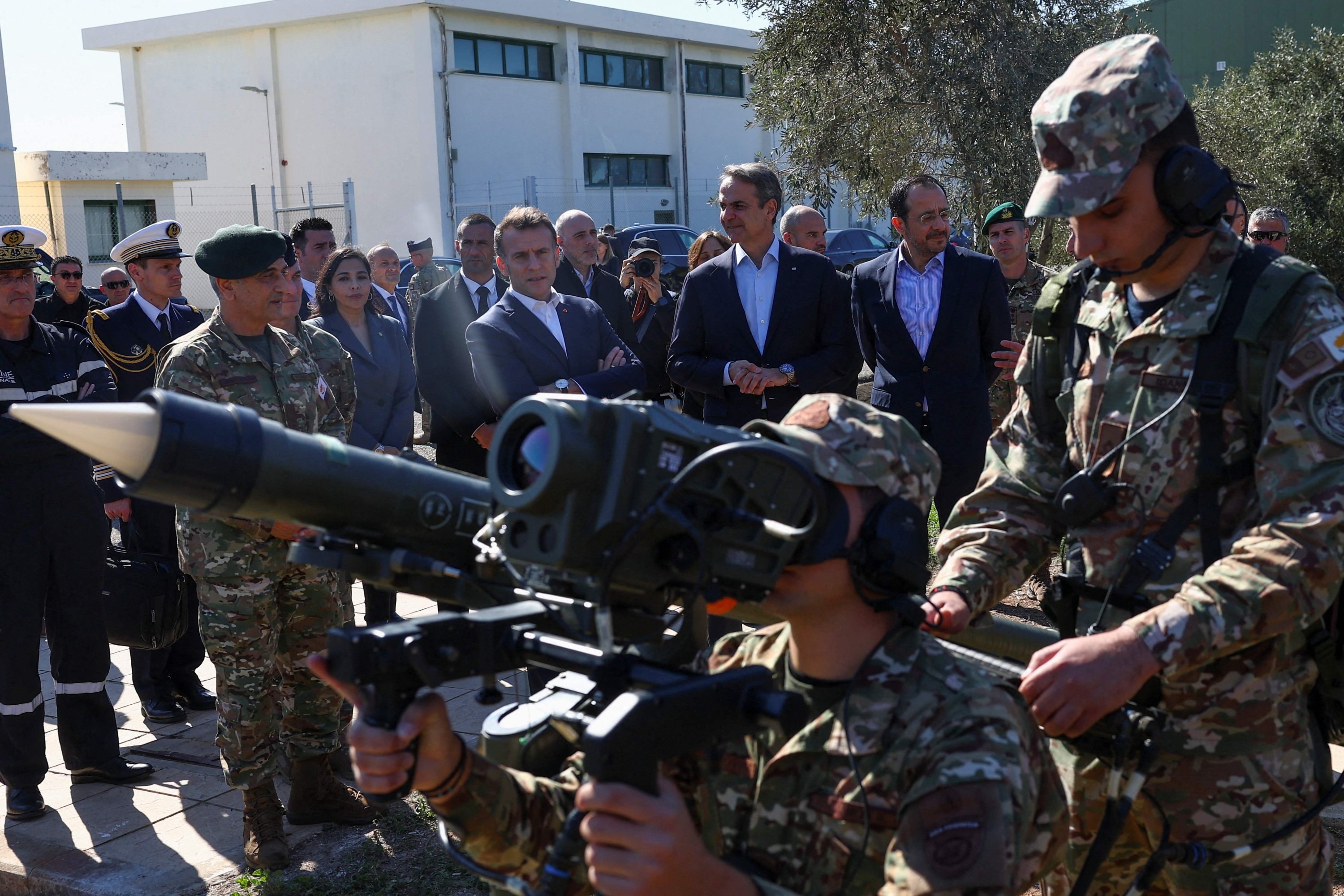
France, in particular, has made its intentions clear. French President Emmanuel Macron’s recent visit to the Greek Cypriot administration was widely interpreted as a signal that Paris intends to deepen its strategic presence in the Eastern Mediterranean. The message was hardly subtle: France wishes to counterbalance Türkiye’s expanding geopolitical reach from the Levant to parts of Africa where Ankara has steadily widened its diplomatic, economic and security footprint.
Cyprus thus becomes more than a Mediterranean island. It becomes a symbolic extension of a wider geopolitical rivalry between European and Turkish strategic visions stretching far beyond the Eastern Mediterranean.
The emerging narrative for the West is simple enough: Cyprus must be protected from Turkish influence and from the instability of the Middle East.
Yet the paradox is difficult to ignore.
The island is now being protected from a conflict that its own strategic transformation has gradually brought closer. Cyprus did not suddenly become relevant to Middle Eastern geopolitics because of Iran. It became relevant because it had already been woven into the region’s military architecture. Iran simply forced everyone to admit it.
Recent statements from Iranian officials have explicitly warned that the island could be targeted if the Greek Cypriot territory is used to support military operations against Iran or its allies.
For the first time in decades, Cyprus is being discussed in the language of Middle Eastern deterrence. The irony is difficult to miss.
For years, the island has been described, particularly in European political discourse, as a peaceful European frontier, a self-declared “island of peace.” Yet this comforting phrase increasingly functions less as a description than as a slogan, especially as military cooperation, intelligence activity and foreign deployments on the island have steadily expanded.
The gap between rhetoric and reality has grown harder to conceal.
Through its expanding military integration with Western powers and Israel, Cyprus has quietly placed itself inside the strategic calculations of actors far beyond the Mediterranean.
The island itself has not moved, but geopolitically, it has drifted much closer to the region’s conflicts.
One of the most visible consequences of the regional crisis has been the influx of Israeli civilians to the Greek Cypriot administration. Flights between Israeli cities and Greek Cypriot airports surged as tensions escalated. Hotels filled rapidly with families seeking temporary refuge from the insecurity of war.
For many residents of the island, the sudden influx produced mixed reactions.
Greek Cyprus has long maintained close relations with Israel, and humanitarian refuge is hardly controversial. Yet the sheer scale of the movement inevitably raised new anxieties.
Some voices on the island have also begun linking these developments to broader ideological debates within Israeli politics. In recent years, statements by Israeli Prime Minister Benjamin Netanyahu referring to historical and spiritual connections to lands across the region, promised to Jews, have fueled speculation and concern among critics about long-term regional ambitions.
The island, after all, lies less than an hour’s flight from Tel Aviv, and in geopolitics, proximity rarely remains neutral for long.
Security cooperation between Israel and the Greek Cypriot administration has expanded steadily over the past decade. Joint exercises have become routine. Israeli aircraft train in Cypriot airspace. They even used the airspace for genocidal operations in Gaza and illegitimate frontiers in neighboring countries. Intelligence coordination between the two sides has intensified as well, with reports of Mossad operations conducted in public locations such as the airports of Paphos and Larnaca.
Critics argue that this cooperation has effectively turned Cyprus into a strategic extension of Israel’s Eastern Mediterranean security environment. Supporters describe it more politely as a "natural partnership between two states" facing similar regional security concerns. Both interpretations circulate widely across the region.
What is beyond dispute is that Cyprus now plays a far more active role in regional security dynamics than it did a generation ago.
Much of this transformation revolves around two pieces of territory that technically are not even part of the Greek Cypriot administration.
The British sovereign bases at Akrotiri and Dhekelia remain under direct United Kingdom control as remnants of colonial rule, having evolved into crucial Western military infrastructure. These bases host surveillance aircraft, logistical hubs and coordination centers used for operations across the Middle East.
In recent weeks, they have become even more controversial amid reports that the U.S. could use them to support potential operations linked to Iran.
British officials insist that the bases are not intended to escalate conflict. However, critics respond with an obvious observation: if the bases support operations conducted by allied forces, the island inevitably becomes part of the strategic equation, whether it formally chooses to or not.
Spain recently declined to allow certain military operations from its territory, citing concerns about escalation. Cyprus, through the presence of British bases, does not enjoy that luxury.
History tends to limit one’s strategic options. A colonial legacy that still shapes the island. The continued presence of British sovereign bases reflects the island's complicated colonial past.
Britain assumed control of the island in the late 19th century, formally annexing it during World War I after centuries of Ottoman rule. The colonial period left deep political and demographic scars.
Many Turkish Cypriots argue that British administrative policies contributed to long-term imbalances on the island, including property transfers and migration patterns that reshaped the island’s social landscape.
The legacy of that era continues to influence debates over land ownership, historical rights and political legitimacy. Colonial history rarely disappears simply because the flags change.
Another powerful force drawing international attention to the island lies beneath the sea.
The Eastern Mediterranean’s natural gas reserves have transformed the region into a new energy frontier. For European governments searching for alternatives to Russian gas following the Ukraine war, the Eastern Mediterranean suddenly appears strategically irresistible.
Western energy companies have invested heavily in exploration projects around Cyprus. European policymakers view potential pipelines and energy infrastructure as part of the continent’s long-term diversification strategy.
Energy, in other words, is not merely an economic issue. It is also a geopolitical magnet. And the growing presence of European naval forces in the region cannot easily be separated from the strategic importance of these resources.
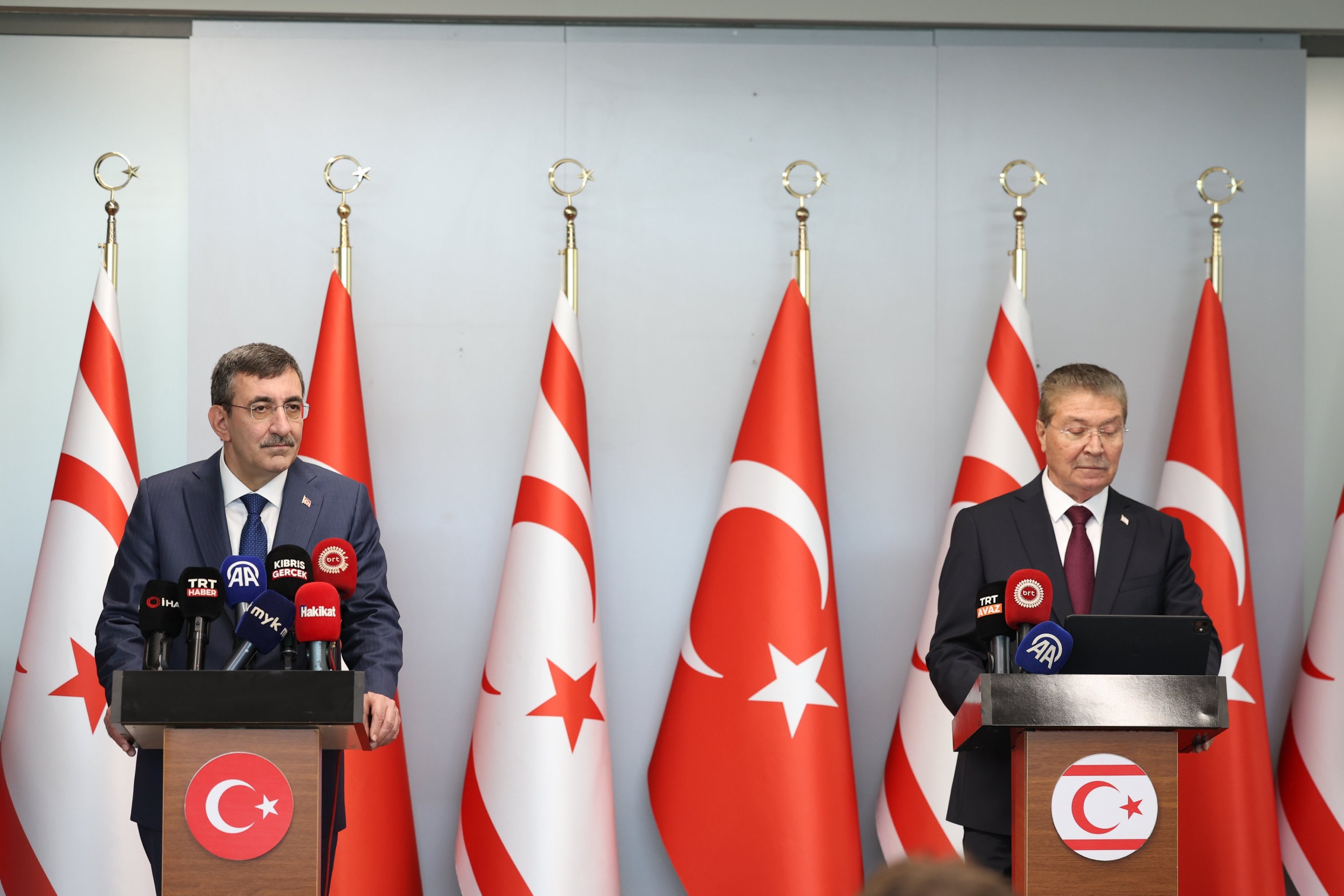
From Türkiye’s perspective, the rapid militarization of the Greek Cypriot side raises obvious security concerns.
The island lies only a short distance from the country’s southern coastline. Foreign military assets operating from the island inevitably shape Ankara’s security calculations and influence what Turkish strategists describe as Türkiye’s own security architecture in the Eastern Mediterranean.
In this sense, Ankara views developments around Cyprus through a lens familiar to great-power politics everywhere: when military infrastructure steadily approaches a nation’s borders, it eventually becomes a strategic concern.
Under the 1960 Treaty of Guarantee, Türkiye, along with Greece and the U.K., retains specific responsibilities regarding the constitutional order and the safety of the island’s communities. Importantly, the treaty refers not only to Turkish Cypriots but to the constitutional balance protecting all Cypriots.
From Ankara’s perspective, maintaining a presence in the Turkish Republic of Northern Cyprus (TRNC) is therefore not merely a matter of bilateral politics but part of the island’s original security framework.
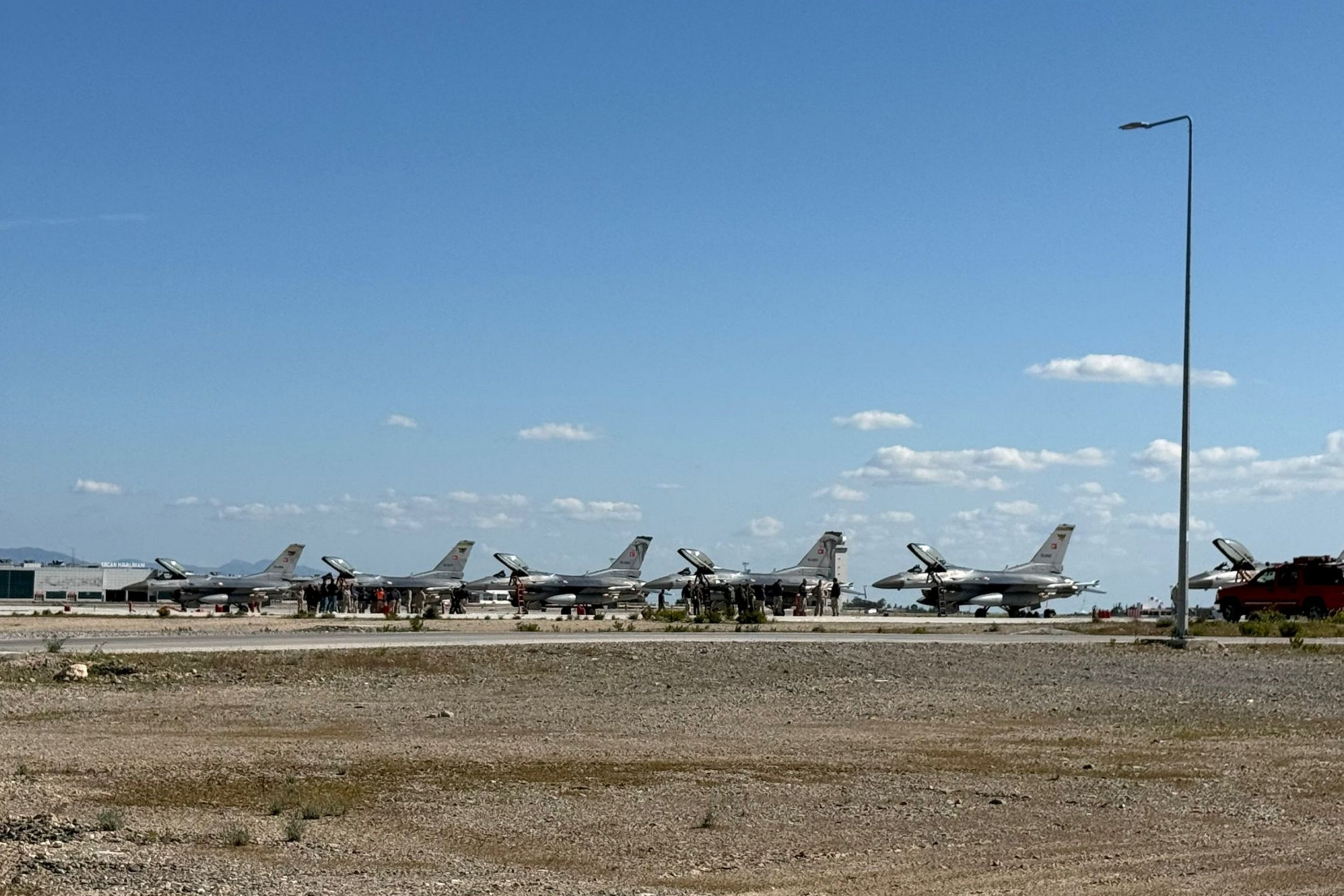
This helps explain why the recent deployment of several Turkish F-16 fighter jets to Ercan Airport in the TRNC provoked such intense international reactions.
The necessity has been further emphasized by increasingly sharp rhetoric in parts of Israeli political discourse regarding Türkiye’s regional role. Some Israeli commentators and former officials have described Türkiye as an emerging strategic rival and even as “the new Iran.” At the same time, Israeli political narratives have increasingly referred to the TRNC as “occupied territory,” a characterization that international law and Ankara strongly dispute. They framed the aircraft deployment as an escalation.
Turkish officials responded with a simpler question: Why should Türkiye require permission to deploy aircraft in a territory whose security it is formally obligated to guarantee?
In Ankara’s view, such actions fall squarely within a broader strategic doctrine often summarized by Mustafa Kemal Atatürk’s enduring principle: “Peace at home, peace in the world.”
The controversy exposes a deeper political tension. While foreign naval forces, intelligence operations and military exercises involving numerous Western states have expanded steadily in the southern part of the island, even limited Turkish deployments in the north tend to provoke far louder diplomatic outrage.
For many observers in Ankara and the TRNC, this contrast reflects what they see as a persistent double standard in the international approach to Cyprus.
For years, the militarization of southern Cyprus has been justified as a necessary counterweight to Turkish influence in the Eastern Mediterranean. Yet, the cumulative result has been something quite different. Instead of calming tensions, the island has become increasingly entangled in regional rivalries involving Israel, Iran, Western powers and competition over energy.
What was presented as a strategic balance has gradually turned Cyprus into a front-line observation post for several overlapping geopolitical contests. It is a classic paradox of deterrence. Military buildups intended to produce stability often produce the opposite.
The European Union now finds itself in a familiar but awkward position.
As the Greek Cypriot administration is an EU member, Brussels has expressed solidarity with it and emphasized the need to defend European territory. Yet the island’s political division complicates this posture.
Turkish Cypriots, who voted in favor of the United Nations-backed reunification plan in 2004, remain outside the union’s political structures despite living on the same island.
The episode remains one of the most striking contradictions in modern European diplomacy. The community that supported reunification remains politically isolated. The community that rejected it became the EU’s representative on the island.
Diplomatic logic can sometimes be remarkably flexible.
Cyprus was once described as a bridge between continents. Today, it sometimes resembles something closer to a geopolitical crossroads where every major actor insists on stopping at once.
One island. Two administrations. And an ever-growing number of external stakeholders.
If the island once had two political names, it now appears to host the strategic interests of a dozen nations.
The world may have only recently noticed. Cyprus, however, has been living with this reality for years.