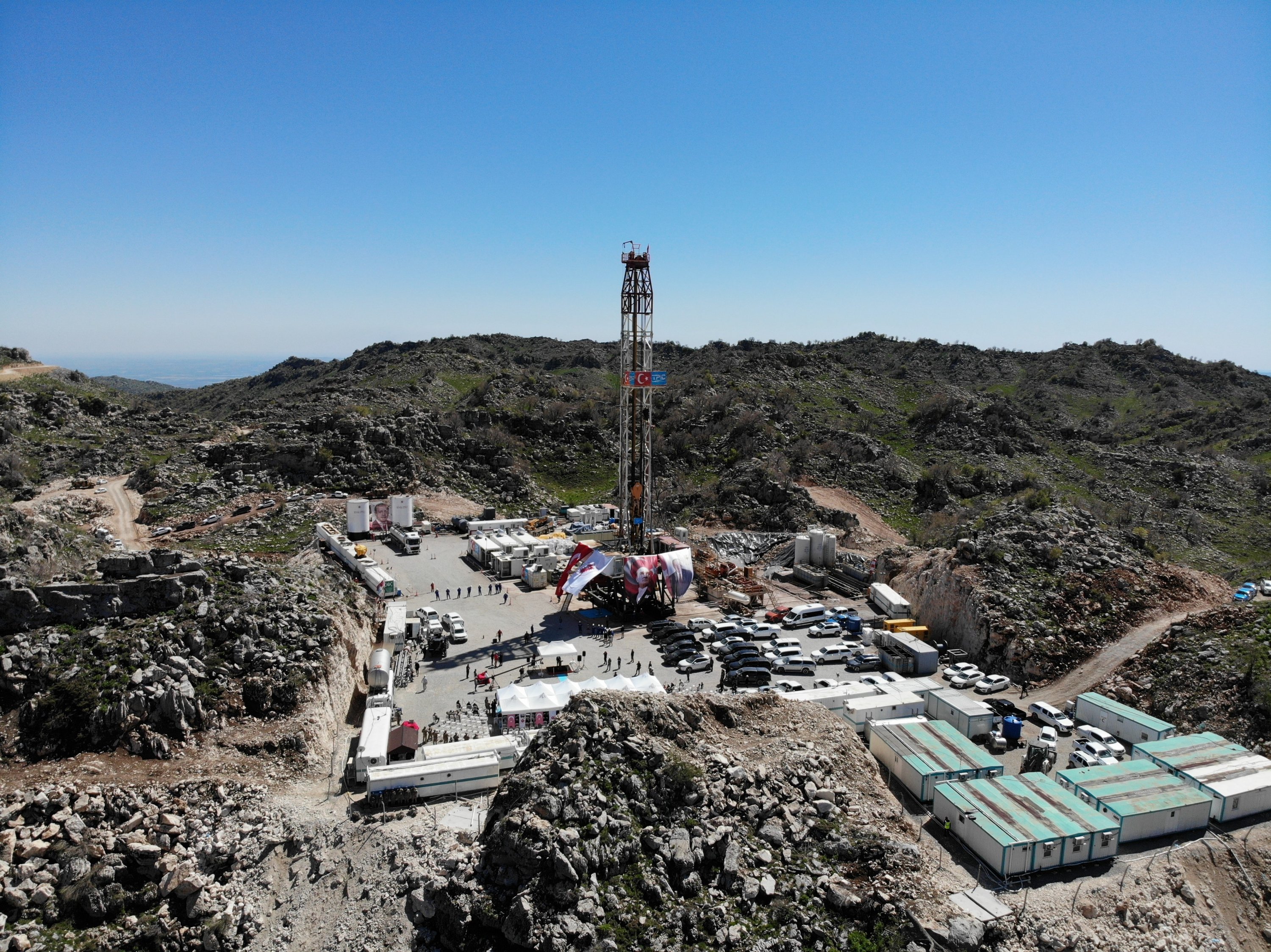
There are places on this earth where the soil carries more than roots; it carries memory. Not the kind etched in stone, nor the kind commemorated in flags or anthems, but memory stitched into whispers, into absences, into songs no longer sung.
Gabar, the majestic massif overlooking Şırnak’s western horizon, is one such place. For decades, it remained silent, not by choice but by circumstance. Quieted by years of security challenges, by the departures that left once-thriving villages still.
There was a time when Gabar evoked only the punctuation of conflict. Roads curved around it like unanswered questions. The mountain seemed to resist intrusion, wrapped in a historical standoff between visibility and neglect. Local mothers warned their sons, “Do not go near the ridge.” Not out of superstition, but from a shared understanding of peril, a place where maps blurred and memory thickened.
And yet, the land remembers. Beneath its hardened crust, something stirred. In 2021, the state returned, this time with drills and derricks. Black oil rose from the depths of a mountain that had, for too long, held its breath. By 2024, the Gabar Oil Field was producing 127,000 barrels per day, transforming this once-evacuated hinterland into the beating heart of Türkiye’s energy narrative.
The numbers are persuasive: a $2 billion reduction in annual energy imports, over 7,500 new jobs, roads where there were none and electricity where only kerosene once flickered. Children now walk to school on pavements that didn’t exist five years ago. But Gabar’s transformation is not merely statistical; it is existential.
For a country long dependent on foreign oil, Gabar is more than crude. It is autonomy measured in drops. Each barrel drawn is an assertion, a recalibration of dependency, a response to geopolitical vulnerabilities that have too often left Türkiye at the mercy of distant suppliers. In a world where energy policy is foreign policy, Gabar is Ankara’s affirmation.
Yet no story is ever just about policy. The villagers, the shepherds, the women launching home-based cooperatives; these are the footnotes history often forgets to write. Gabar’s ascent brings its own discontents. Cement rises where once there was soil. Cultural rhythms adjust to the tempo of modern industry. Asphalt paves over memory. Modernity, as always, arrives with collateral.
And yet, one senses a reckoning, a people refusing to be displaced by their own future. In the cafés of Şırnak, oil workers speak not only of salaries, but of return. Young men no longer flee to Adana or Istanbul; they stay. Women no longer whisper their grief; they register their businesses.
In this reawakening, there is something resembling reconciliation. The land, long spoken over, now speaks back with oil, with employment, with a stake in the national conversation. What was once a periphery has become a point of origin.
For decades, Türkiye’s energy policy has been guided by a central ambition: to reduce dependence on foreign resources and unlock domestic potential. The 2020s mark a critical juncture, not only in achieving energy security but in asserting economic and geopolitical autonomy. At the heart of this transformation stands one of Türkiye’s most consequential recent achievements: the discovery of oil in Gabar.
This breakthrough reflects Türkiye’s long-standing commitment to turning strategic geography into national advantage, a vision increasingly realized under its current energy roadmap.
Launched in 2021, intensive exploration in Gabar’s rugged foothills identified vast reserves. By 2024, production had reached 127,000 barrels per day, the largest onshore oil find in the Republic's history. This output not only strengthens national capacity but is projected to save Türkiye approximately $2 billion annually in energy imports.
With daily consumption hovering around 900,000 barrels, most of it imported, Türkiye stands to benefit strategically from this surge in domestic supply. Amid fluctuating global oil prices and fragile supply chains, Gabar offers more than economic relief; it provides leverage.
Yet Gabar’s importance extends well beyond the energy sector. The field has created more than 7,500 jobs, invigorating local economies long overlooked. New roads, power lines and logistics hubs are reshaping the landscape.
This is more than an oil project; it is a pillar of broader regional development aimed at narrowing disparities and fostering social cohesion. For the first time, energy policy is being used not just for production but also for inclusion.
Türkiye’s long-term roadmap, outlined in its Vision 2030 and Vision 2053 strategies, prioritizes local and renewable sources. Alongside major initiatives such as the Black Sea gas project, the Akkuyu nuclear plant and emerging green hydrogen technologies, Gabar has emerged as a cornerstone of the country’s onshore energy future.
Energy independence is not merely a financial aspiration; it is a strategic imperative. Every drop extracted from Gabar enhances Türkiye’s capacity for autonomous decision-making in diplomacy, in economics and in its broader national trajectory.
To conclude, Gabar is not an end, but a beginning. It represents more than a reservoir; it embodies a new strategic orientation rooted in self-reliance and forward-looking vision. Gabar is producing more than energy; it is producing confidence, coherence, and a renewed sense of national possibility.
Today, it stands as both a landmark on Türkiye’s energy map and a symbol of transformation, one that fuels not only current needs but the aspirations of generations to come.
Gabar reminds us that national strength is built not only on resources but also on resolve – the resolve to invest, believe in overlooked regions and build futures where once there were only frontiers.