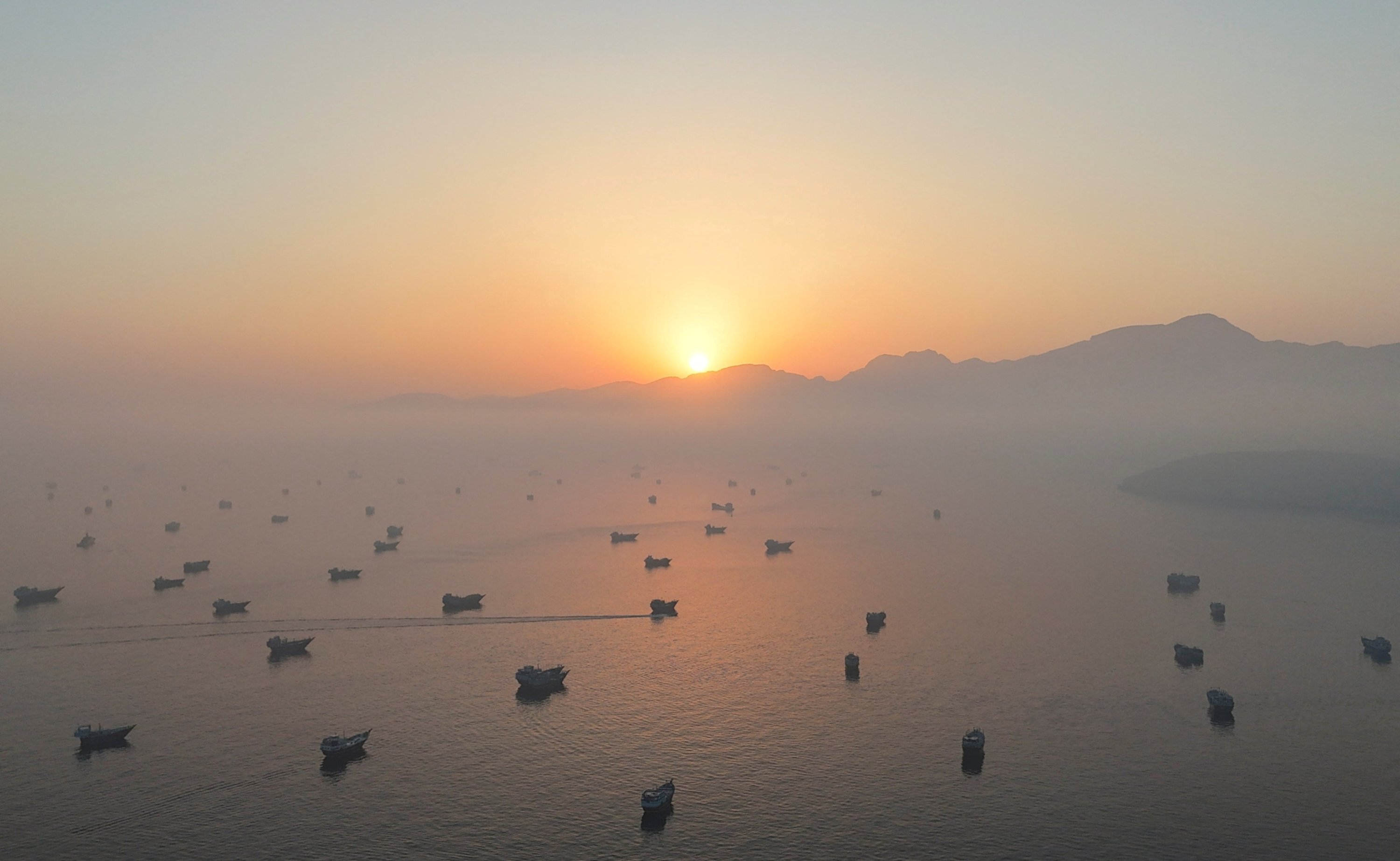
The Hormuz shock is not hitting everyone in the same way. After the fragile cease-fire in April, rising tensions around the Strait of Hormuz had entered a much more dangerous phase. Iran’s announcement that it would close the Strait changed the nature of the crisis once again. Yet as of today, the wind seems to be changing.
With the temporary understanding reached between the U.S. and Iran to reopen Hormuz, open confrontation is giving way, at least for now, to diplomatic bargaining. The issue was no longer only whether tankers could pass through the strait, but whether energy infrastructure in the region could operate safely at all.
With news of the temporary deal, Brent crude quickly fell below $83 per barrel. Yet the abnormality in vessel movements and the logistical paralysis have not disappeared. There is now a huge gap between the paper market and the physical market. At present, 98 crude oil tankers and 88 oil product tankers are waiting only inside the strait to exit. Together with other commercial vessels waiting at both ends of the passage, the number reaches around 600. This is not merely a queue. It is a logistical knot in global supply chains that may take weeks to untangle.
Major shipowners, especially Japanese and South Korean companies, do not see diplomatic handshakes as enough to move. Until there is clear confirmation that the waters have been fully cleared of mines, no one wants to put billion-dollar cargoes at risk.
The effective closure of Hormuz, which normally carries around one-fifth of global oil supply, created a tragic contradiction for Gulf producers. After the conflict broke out at the end of February, Brent climbed to nearly $125 per barrel by late April. Yet Iraq, Kuwait, Saudi Arabia and the United Arab Emirates' eastern terminals could not fully benefit from these astronomical prices because they could not physically deliver their oil to the market. According to international tanker-tracking systems, Gulf oil moving through risky “dark” passages reached 1.8 million barrels per day in the first 10 days of June. But this remains far below the massive flows seen under normal conditions.
The deeper shock, however, was felt in liquefied natural gas (LNG) markets. For Qatar, which exported around 81 million tons of LNG in 2025 and alone accounted for almost 20% of global seaborne LNG trade, the closure of Hormuz was a major structural shock. Oil is relatively flexible. LNG is not. It depends on special tankers, special terminals and strict loading schedules. At the peak of the crisis, disruptions at Ras Laffan and the closure of the strait removed around 1.5 million tons of LNG per week from the global market.
This directly hit price mechanisms. Qatar’s LNG exports fell sharply by 33% year-on-year in the first quarter of 2026, dropping to 14.7 million tons. The race by Asian and European buyers to pull LNG into their own markets amid Gulf uncertainty pushed Asian benchmark prices, or Japan-Korea-Marker (JKM), to a three-year high. Europe’s benchmark gas price, Title Transfer Facility (TTF), also climbed from pre-war levels of around 31 euros per megawatt-hour to above 56 euros.
As this shock reshaped the global supply map, two clear winners emerged. The first is the U.S., which has attracted buyers looking for barrels outside the Gulf and has reached historic highs in hydrocarbon production and exports. Compared with the same period last year, U.S. crude oil production increased from 12.9 million barrels per day to 13.5 million barrels per day, while exports rose from 4.1 million barrels per day to 4.8 million barrels per day. These figures summarize the direction of the crisis quite clearly.
The second winner is Russia, which has used the Hormuz shock almost as a lifeline despite Western sanctions. While Gulf producers watched $125 oil prices on screens, but kept their cargoes waiting at ports, Russia moved quickly to fill the supply gap in Asian markets. Major buyers such as China and India turned more heavily toward Russian oil to reduce Gulf-related risks and secure supply. Even if prices have eased with the temporary deal, Russia has already funded its budget over the past months and gained new market share.
In a war that has lasted 107 days, the parties may now be moving toward a temporary ceasefire or a long-term deal. But the next stage may be as difficult as the disruption itself. We are exactly at that point. Markets are not only pricing the possibility of peace, they are also trying to price the physical timing of normalization. Once the strait fully opens and delayed cargoes reach global markets, a sharp price movement in the opposite direction is possible.
Energy markets are not shaken only when supply disappears. They are also shaken when no one knows how safe the next cargo really is. Even if the 60-day negotiation period is completed, the geopolitical risk premium attached to every cargo passing through Hormuz will remain. For Asia and Europe, this means that the age of cheap energy is closing, and the effects of the crisis will stay with us for much longer.