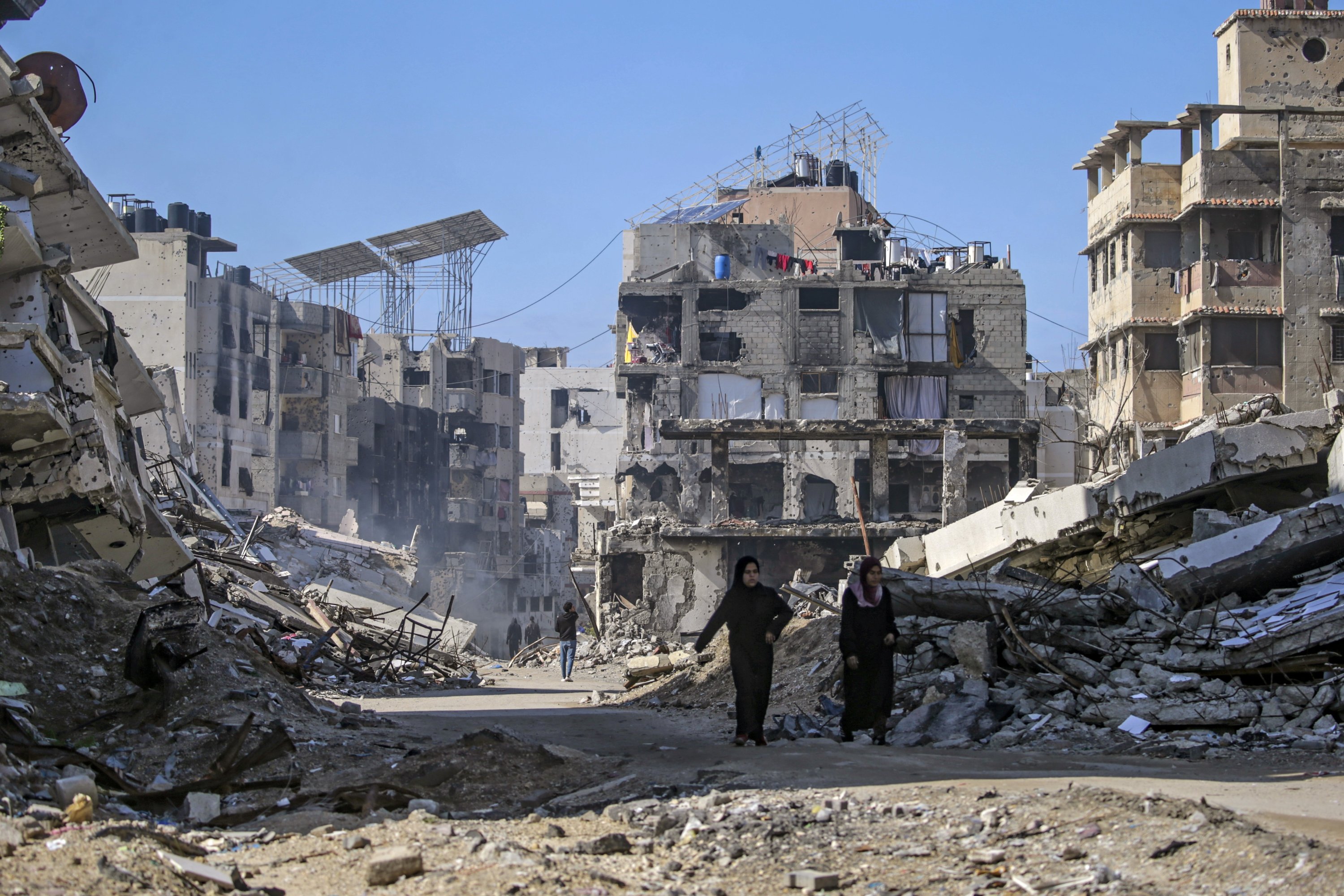
When it comes to the blood-soaked destruction of Gaza, European and Western diplomats have found a rehearsed refrain: first, the immediate release of all hostages. Then, perhaps, a cease-fire. Eventually, maybe, a political horizon in the form of a two-state solution. But this sequence is not a road map to peace. It is a formula to justify carnage.
What we are witnessing is not diplomacy; it is a collapse of conscience. A dangerous, calculated attempt to frame the annihilation of a people as regrettable but acceptable, so long as it is couched in the language of security and self-defense.
In this framework, Palestinian lives are reduced to bargaining chips. Their right to exist becomes contingent upon conditions imposed by the very powers that either arm Israel or shield it from accountability. The brutal bombardment of Gaza becomes background noise. The starvation of children becomes a technical issue. The flattening of entire cities becomes a tragic consequence. But the hostages, they remain at the center of every statement, every press conference, every show of concern.
And so we must ask: Did the moral awareness of these diplomats begin on Oct. 7? Were their memories, their ethics, their political frameworks reset on that date? Because the case of Gaza did not begin on Oct. 7. The occupation did not begin then. The siege, the blockades, the airstrikes, the checkpoints, the arbitrary arrests, the humiliations, the assassinations, the ethnic cleansing campaigns, none of these began that day. But the selective memory of Western diplomacy did.
They call, rightly, for the release of Israeli hostages. Every innocent life matters. But why does their concern stop there?
Where is the outrage for the thousands of Palestinians held in Israeli prisons? Where are the statements about the women dragged from their homes in the middle of the night? Where is the condemnation of the children beaten, blindfolded and thrown into military detention without trial? Where is the press release for the journalists, artists and lawmakers imprisoned not for violence, but for defying apartheid with their words?
As of August 2025, around 62,000 Palestinians have been killed since Israel’s assault began in October 2023. The majority are women and children. Whole neighborhoods have been turned to ash. Hospitals, schools, post offices and U.N. shelters have been deliberately targeted. Gaza is not just being bombed. It is being erased. Entire families have been wiped out from the civil registry. Famine has been weaponized. And now, even mass graves are appearing in the rubble of Rafah and Khan Younis.
Meanwhile, the prisons are overflowing. More than 10.000 Palestinians are currently incarcerated in Israeli jails, according to human rights monitors. Of these, over 3,600 are held in “administrative detention,” a euphemism for being imprisoned without charge, trial or due process. This includes teenagers, students, journalists and community leaders. Many have been tortured. Some have died in custody. Others have disappeared altogether.
In these cells, international law does not exist. The Geneva Conventions are void. Even the Red Cross has reported increasing obstruction to prison visits and humanitarian access. And yet, Western diplomats continue to speak only of Israeli hostages, as if Palestinian prisoners are somehow invisible, or worse, inhuman.
This is not simply a double standard. It is a deliberate political strategy: to dehumanize Palestinians, to strip them of narrative, and to justify a genocide in the language of legal defense.
When the International Court of Justice announced in May 2024 that it would seek arrest warrants for Israeli war criminals, alongside Hamas leaders, Western governments reacted not with respect for international law, but with outrage. Suddenly, the same institutions that were praised for issuing warrants in Ukraine were delegitimized for even daring to suggest that Palestinian lives are equally protected under the law.
Diplomacy, in this context, has become a facade. It is no longer a tool to prevent catastrophe but a public relations shield for power.
You cannot mediate peace while supplying weapons to one side. You cannot speak of humanity while ignoring mass graves. You cannot demand hostage releases while remaining silent on the thousands of Palestinians held behind bars without charge, without rights, without names on the news. And you cannot claim to support a two-state solution while watching one state systematically destroy the other’s ability to exist.
Israeli prisons are not side stories in this war; they are central. They are tools of control, of erasure, of colonial architecture. Inside them are not just individuals, but the soul of a people: youth, the elderly, artists, educators and parents. To call for hostages to be freed while ignoring these prisoners is not neutrality; it is propaganda.
History will not be kind to those who turned away. Just as it remembers the diplomats who stood silent during Rwanda, Srebrenica and South Africa, it will remember those who watched Gaza burn and said nothing of substance. It will remember those who helped bury international law under the rubble of security discourse. It will remember the moral emptiness of those who saw children starve and called it a complex situation.
To speak of hostages is to speak of all hostages. To speak of peace is to demand justice. To speak truth today requires courage and a refusal to be complicit in the annihilation of a people. Because when this war ends, and it will, what will remain is not just the ruins of Gaza, but the ruins of our moral order.