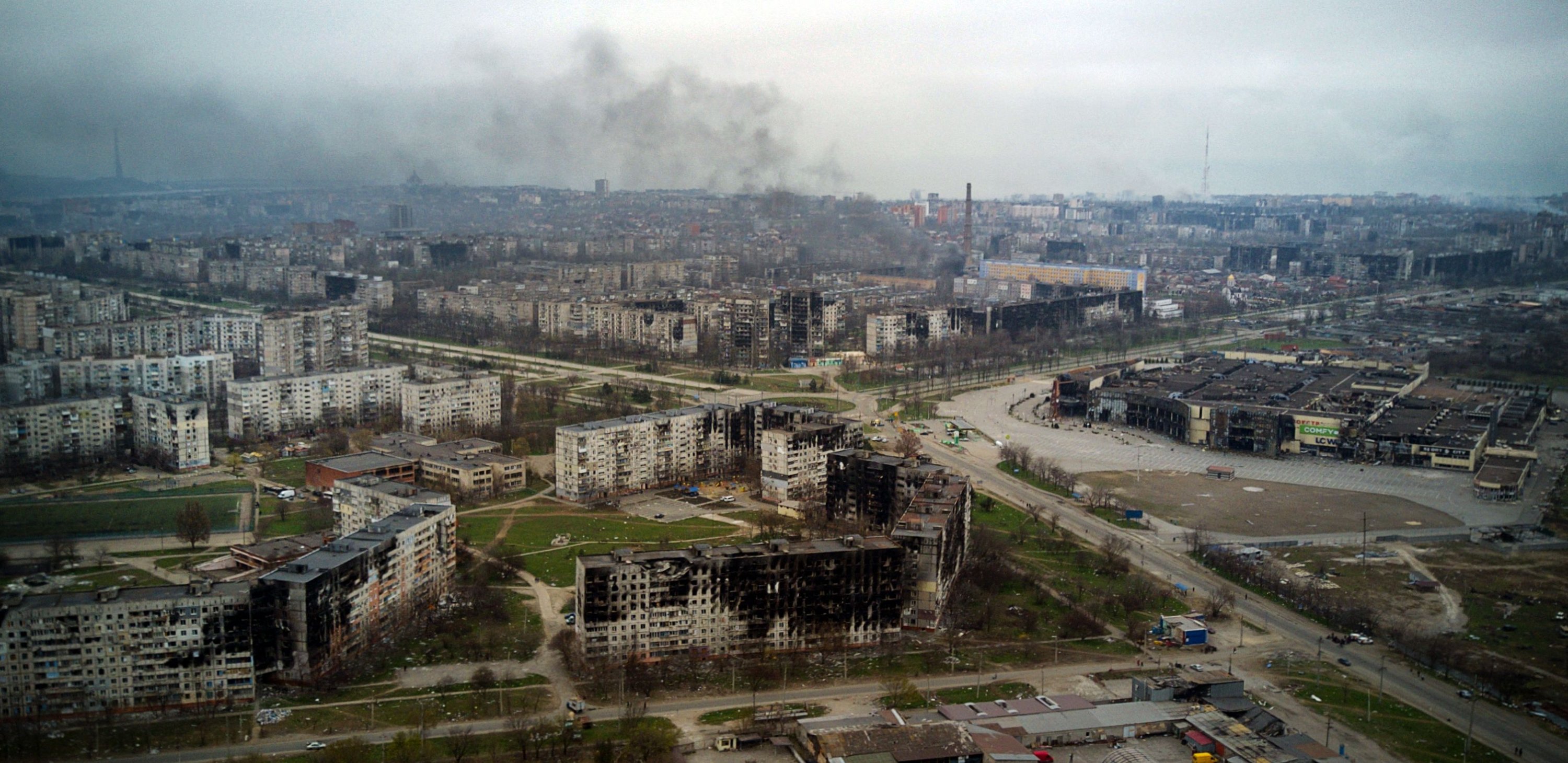
Russia launched the war on Ukraine in the name of a special military operation. There are many arguments about the Russian invasion of Ukraine. Some experts suggest that through this war, Russia is remaking and restructuring the former Soviet geographical space. The country is justifying its military operation on the pretext of “protecting the Russian ethnic group in Ukraine.” The world reacted differently according to their national interests and regional security commitment.
Central Asia is Russia's immediate neighbor. In the region, Russia traditionally holds a hegemony. As the region changes politically and socially, it has become a Russian priority. The country has military bases in the region and is considered a security and peace guarantor. It continues to train the region’s armed forces and provide border security and surveillance. The Russian commitment to the region was evident when it deployed its troops in Turkmenistan during the Taliban takeover of Kabul. Kazakhstan is Russia's largest neighbor, as the two countries share a 7,644-kilometer (4,750-mile) border. Nearly 20% of the Kazakh population is Russian, mainly concentrated in the northern part of Kazakhstan. As the Ukraine crisis erupted because of the ethnic Russian presence in Ukraine, Kazakhstan is cautious about its response regarding this. During the recent Kazakhstan riots, Russia, with other Collective Security Treaty Organization (CSTO) members, sent troops and helped Kazakhstan suppress rioters successfully. Russia is the principal architect and central force in the CSTO. It is facing tough competition from China as China is integrating the region economically through the Belt and Road Initiative (BRI).
Russian military presence is vital in the region, but historically its economic presence has been weak. Now Moscow is also working to fill this gap by investing in various areas. In the post-Soviet scenario, Russia created the Commonwealth of Independent States (CIS) to integrate the region politically and the Eurasian Economic Union (EAEU) along with the European Economic Community (EEC) to engage economically. In both economic initiatives, Kazakhstan was a founder member. Four of the five Central Asian states were part of the EEC, though Uzbekistan left the group in 2008. In the beginning, Russian economic activities were slow, but after 2000 Russia tried to pick up the pace. Though the EU is biggest trade partner of Kazakhstan, with 29.7% of total trade, but Russia is also a close trade partner. Both countries share a $25.6 billion trade and in the last 30 years Russia has invested $40 billion in Kazakhstan's energy sector. Kazakhstan is a member of the Russian-led CSTO. When the Ukraine crisis broke out, the country chose neutrality and appealed to resolving the issue with dialogue. During the voting in the U.N., it chose to abstain. Although it is the biggest trade and defense partner of Russia, it is searching for a reliable counterbalance partner.
China is also an emerging alternative, but China cannot help Kazakhstan come out of Russia's shadow. The Western response on Ukraine created a dilemma for Kazakhstan. How much can Kazakhstan trust the West during a crisis with Russia as it is also very far from the West? In the future, Kazakhstan may try to strengthen its relationship with Turkey as the country can help Kazakhstan through Azerbaijan and the Caspian Sea as Turkey is also supporting Ukraine in international forums. Despite its neutrality and abstaining from the vote, Kazakhstan not only denied the Russian request for its troops to join the offensive in Ukraine but also rejected the Russian demand to recognize the Donetsk and Luhansk republics.
Though Uzbekistan does not share a border with Russia, it is a prominent trade partner with $5 billion in bilateral annual trade. During the last visit of Russian President Vladimir President Putin both countries signed agreements worth $27 billion to boost economic ties. For the last 10 years, Uzbekistan has been modernizing its military, and Russia is actively cooperating, including providing training and advanced weapon systems with Mi-35M military helicopters, BTR-82A armored personnel carriers (APC) and the Tigr special purpose armored vehicle. Uzbekistan is also negotiating to purchase Sukhoi Su-30SM fighter jets and Sopka-2 radar systems. After the Taliban takeover of Afghanistan, Uzbekistan feels insecure at the Afghan border as many Uzbek militant groups can enter Uzbekistan; therefore, it needs Russian help in its war against terror as well. Both countries also signed a strategic partnership program in 2021 for the next five years (2021-25). China is already internally supporting Russia, so Uzbekistan also had no other option than to support Russia or remain neutral. The Western presence is nearly negligible in the region, and China is trying to dominate in the region; therefore, Uzbekistan also needs Russia to counterbalance China. Uzbekistan also showed its neutrality and abstained from voting in the U.N.
Turkmenistan is a very closed-off country, and it is challenging to know the public mood about any international problem. Traditionally Russia and China dominate the region, and Turkmenistan energy exports mostly depend on Russia and China. Turkmenistan shares a border with Afghanistan, and the Taliban taking over Kabul created a threat to the country. Turkmenistan depends on Russia for its security. Russia also promotes itself as a security guarantor in the region. When the Taliban was taking over Kabul, Russia organized military exercises with Turkmenistan and deployed its army at the Turkmenistan-Afghanistan border. Like Uzbekistan, Turkmenistan abstained from the U.N. vote.
Tajikistan on one of the poorest countries of Central Asia, and 27.68% of its gross domestic product (GDP) depends on remittances from Tajik migrant workers in Russia. If Tajikistan takes any anti-Russian stance, it will create a problem for Tajik workers in Russia. Russia also has a military base in Tajikistan that provides security to Tajikistan against regional security imbalance and militants. Tajikistan is also a member of the CSTO, which obliges it to cooperate with Russia on security issues. China shares a border with Tajikistan and has a military presence in the country, enhancing its grip on the region through the BRI and military engagements in the region. China is also engaging in Afghanistan, which makes Tajikistan more dependent on China. Therefore, Tajikistan needs Russian presence in its territory to reduce pressure from China. Tajikistan also abstained during the U.N. General Assembly (UNGA) session.
Kyrgyzstan also shares the border with China and is a member of the Russian-led CSTO. Russia also has a military base in Kyrgyzstan. Nearly 31.31% of the Kyrgyz GDP depends on the remittance of Kyrgyzstan laborers in Russia. Though China is the largest trade partner of Kyrgyzstan with 28.89% of total trade, Russia is its second-largest trade partner with 24.62% of total trade. China is dominating the region in security and economic issues, and Russia not only provides an alternative but connects to Kyrgyzstan thanks to the legacy of historical relations. Kyrgyzstan also abstained from voting to support Russia on Ukraine.
Though the Central Asian states did not criticize the Russian invasion of Ukraine, they are very much concerned about the Russian military approach in Ukraine as the West, the international community and institutes have totally failed to protect Ukraine. Because of the lack of any powerful alternative they had to support Russia or remain neutral on Ukraine. Surprisingly they chose to be neutral despite their close economic relations and dependency on Russia in terms of security. To protect their interests, they need an alternative approach and security infrastructure.
There are three options for the Central Asian states to create an alternative security structure. Historically, they are part of the ethnic Turkic nation and tied to Turkey, with which they can create an alternative economic and security structure in the future. Turkey is part of NATO and a close ally of European countries. Therefore it also can help connect them with the European economy. The second option is to develop strategic ties with Afghanistan, Pakistan, India and Iran, as they have historical and religious relations with these countries. They should gradually reduce their dependence on Russia and China and create more links with South Asia and West Asia. Third, they should improve their relations and drive toward single-border or integrated Central Asia with more social and economic inclusiveness. They can also create their own internal security structure for the Central Asian region.