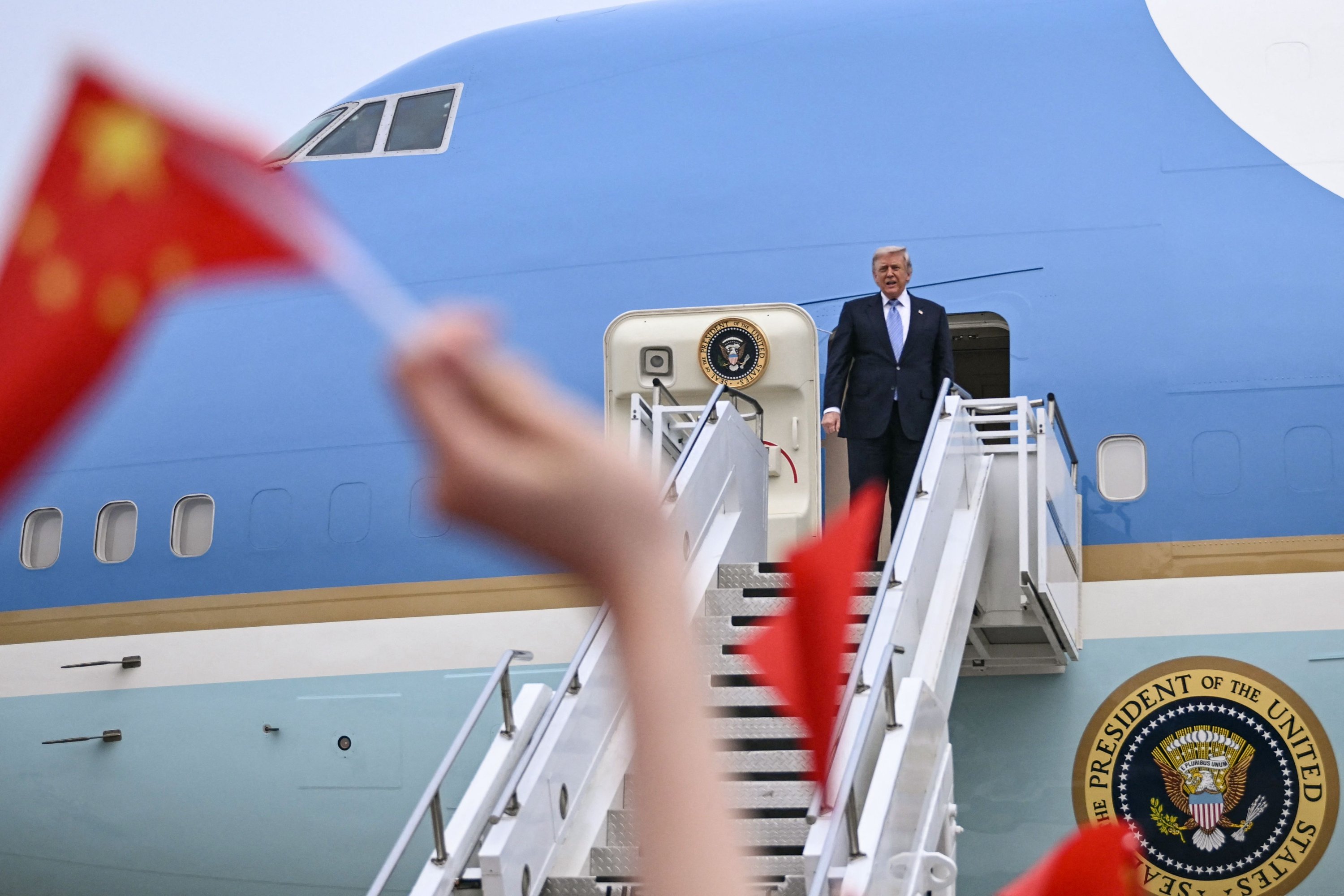
When Air Force One arrived at Beijing Capital International Airport on May 13, China put on a carefully choreographed display of state diplomacy: honor guards standing in perfect formation, students waving flags along the boulevards and the Temple of Heaven opened to an American president for the first time since Gerald Ford’s visit in 1975. Yet the visit's media footprint told a more nuanced story.
While U.S. President Donald Trump’s arrival did make the front page of China’s flagship state newspaper on May 14, it was far from dominating the broader Chinese media landscape. Not every major outlet led with the summit, and state television's coverage was measured rather than celebratory. The implicit message was clear: Beijing acknowledged the significance of the visit but stopped well short of treating it as a moment of historic urgency for China. That contrast says much about how Beijing appeared to understand this summit.
For decades, a visit to China by an American president carried an implicit message of recognition. It suggested that Washington was acknowledging Beijing’s growing weight in global affairs. Today, Chinese analysts increasingly present the relationship in different terms. From Beijing’s perspective, China no longer seeks validation from the U.S. in the way it once did. It sees itself as a central actor in global manufacturing, technology, trade and diplomacy, increasingly confident that its rise does not require external approval.
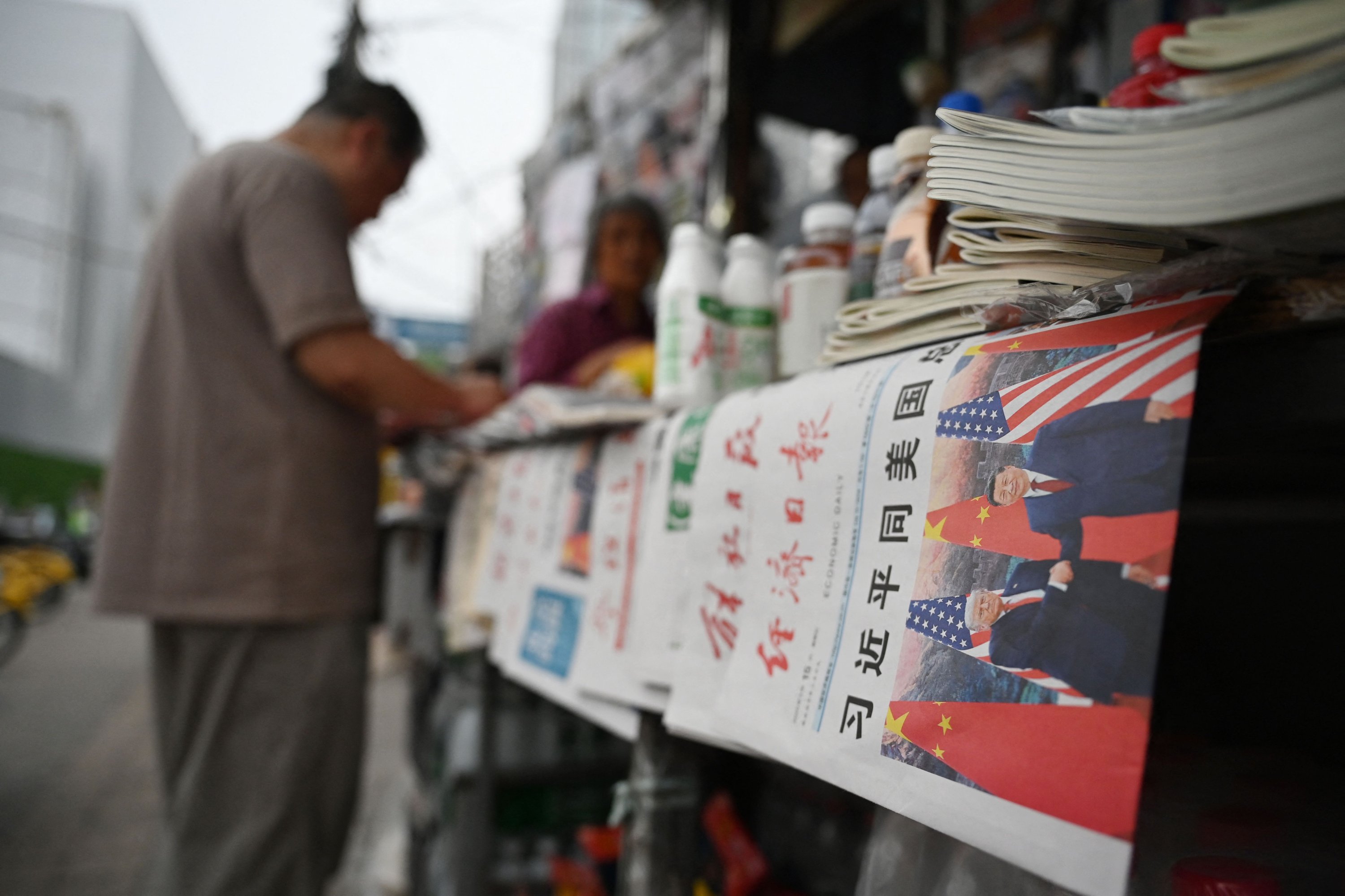
This sense of confidence shaped the Chinese reading of the three-day visit. The most important outcome, as Beijing framed it, was not a single trade figure or a signed commercial agreement, not as a rising power seeking recognition, but a diplomatic formulation: the commitment to build “a constructive China-U.S. relationship of strategic stability.” For Chinese commentators, this phrase mattered because it reflected Beijing’s preferred language for managing relations between the world’s two largest economies.
Chinese President Xi Jinping’s explanation of this concept was particularly significant. He described “constructive strategic stability” through four layers: stability in which cooperation remains the main current, competition is kept within reasonable limits, differences are manageable and peace remains a realistic prospect. In Chinese analyses of the summit, this was presented not merely as a slogan, but as a framework for moving China-U.S. relations away from confrontation and towards a more predictable form of coexistence.
That interpretation is important because Beijing has long objected to the way Washington has defined China primarily as a strategic competitor. In recent years, many in the U.S. have treated competition as the organizing principle of China policy, while debates over decoupling, supply-chain restrictions and technology containment have deepened Chinese suspicions. Against this backdrop, Chinese commentary viewed the summit as evidence that a purely confrontational approach has reached its limits. In this reading, the U.S. has not abandoned competition, but it has recognized that rivalry without guardrails is costly, unstable and increasingly difficult to sustain.
Taiwan formed the other central axis of the summit. On this issue, Beijing’s message was delivered with unmistakable clarity. In his formal talks with Trump at the Great Hall of the People, Xi warned that if the Taiwan question is mishandled, the two countries could face "clashes and even conflicts," putting the entire bilateral relationship in jeopardy. China's official account of the meeting placed Taiwan at the very center of its record of the discussions. On the contrary, the American readout did not mention Taiwan at all, focusing instead on trade. Secretary of State Marco Rubio told reporters that U.S. policy on Taiwan remained "unchanged," whilst Trump said he had not yet decided whether to proceed with a $14 billion arms sale to Taipei.
For Beijing, this difference in emphasis was itself meaningful. Chinese observers appeared to interpret Washington’s relative silence as a sign that the U.S. had heard China’s warning, even if it was not prepared to acknowledge it in explicit terms.
On trade, the picture was more mixed. Trump presented the visit as a success for American companies and farmers, referring to potential deals involving Boeing aircraft, energy purchases and agricultural exports. Beijing’s language was more restrained. Chinese officials described the economic discussions as broadly positive and balanced, while stressing the familiar principle of “mutual benefit and win-win cooperation.”
This difference in tone was revealing. The American side highlighted transactions, while the Chinese side highlighted structure. Beijing did not rush to confirm every commercial claim made by Trump. Instead, it emphasized that China would continue opening its market and that American companies were welcome to participate in the country’s ongoing reform and development. The message was subtle but clear: China sees access to its market not as a concession to Washington, but as a source of strategic leverage.
The wider international context also shaped Beijing’s reading of the visit. The Iran crisis and tensions around the Strait of Hormuz placed additional pressure on Washington. Trump hoped China might use its influence with Tehran to help reduce tensions and stabilise energy flows. Beijing, however, avoided taking sides. From a Chinese perspective, this caution was not passivity. It was a reminder that China’s diplomatic weight now gives it room to choose when, how and on what terms it becomes involved in crises that place the United States under pressure.
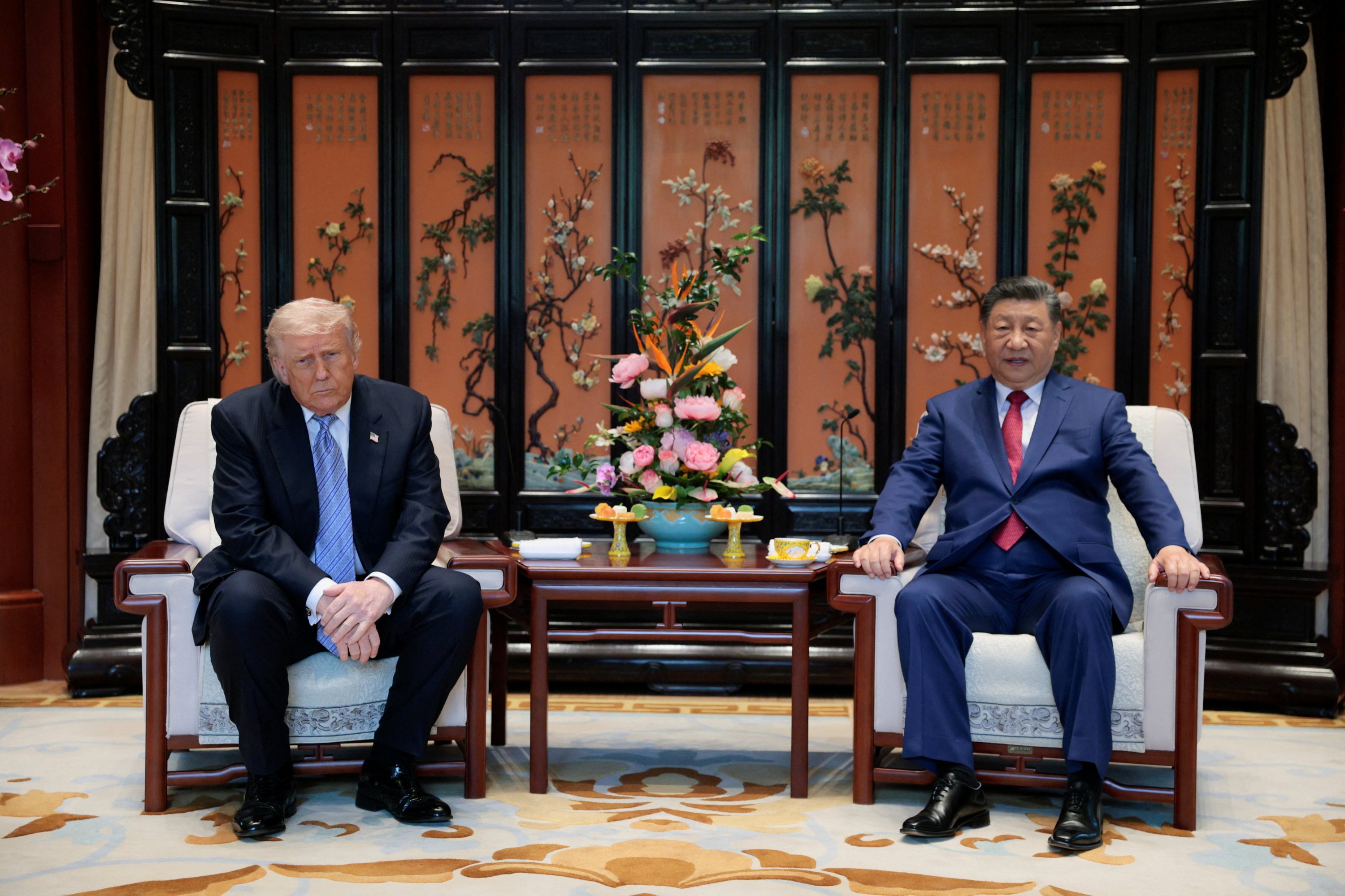
What emerges from the Chinese interpretation of the summit is not a simple declaration of victory, but a portrait of a country seeking to define the terms of engagement. Beijing presented the visit as confirmation that China-U.S. relations cannot be managed through pressure alone. It set out its preferred diplomatic framework, restated its core red line on Taiwan, treated trade outcomes with caution and linked the future of the relationship to Washington’s willingness to act with restraint.
This is why the summit should not be read only through the lens of Trump’s claims of success or the immediate commercial results of the visit. Its deeper importance lies in the competing narratives surrounding it. Washington wanted to show that Trump had secured tangible gains for the U.S. Beijing wanted to show that the U.S. had accepted, at least implicitly, the need for a more stable and less confrontational framework.
Chinese commentary after the summit reflected this conditional optimism. The idea of “constructive strategic stability,” one authoritative analysis argued, should not remain a slogan; it must become a shared objective translated into concrete actions by both sides. Beijing’s expectation is that Washington should demonstrate the responsibility of a major power not through rhetoric but through practical conduct.
That is the real test after the visit. China has offered a framework, but not a blank cheque. It has welcomed dialogue, but not at the expense of what it considers its core interests. It has signalled openness to economic cooperation, but without treating American approval as the measure of its own rise.
For Beijing, therefore, Trump’s visit was not simply a diplomatic event. It was a test of whether Washington is prepared to adjust to a China that sees itself not as a rising power seeking recognition, but as an established power demanding respect, predictability and restraint. The summit may have lowered the temperature for now, but the durability of this new language of stability will depend on whether it can survive the next dispute over Taiwan, technology, trade or global crises.
In that sense, the question is not only who gained more from the summit. The more important question is whether both sides can turn carefully chosen words into disciplined policy. From Beijing’s point of view, the answer will depend less on the ceremony of Trump’s visit than on Washington’s conduct after leaving China.