The long-standing geopolitical tension between Israel and Iran escalated into direct military confrontation on June 13, profoundly altering the security dynamics of the Middle East. This war is being closely monitored not only for its regional implications but also for the disruptions it has caused in the global energy supply chain. It highlights a critical shift. In moments of geopolitical fragility, the key issue is no longer merely possessing strategic commodities but being able to ensure their secure and uninterrupted delivery under global scrutiny.
In today’s world, the sustainability of energy supply security has taken precedence over energy sustainability itself. Attacks on energy infrastructure in both Israel and Iran have seriously compromised field security, disrupted production continuity, and hindered energy trade. Rising tensions in and around the Strait of Hormuz have intensified market uncertainty and caused volatility in oil and natural gas prices. Energy security has evolved beyond a technical or economic concern and is now a strategic and diplomatic imperative. Energy fields have effectively become modern battlegrounds.
Iran holds some of the world’s largest natural gas reserves and the fourth-largest proven oil reserves. One of the most strategic components of its energy sector is the South Pars gas field in the Persian Gulf, which it shares with Qatar. This field accounts for nearly 70% of Iran’s natural gas output and forms the backbone of its LNG production capacity. In terms of crude oil, the Ahvaz, Marun and Gachsaran fields in the Khuzestan region are vital to Iran’s export potential. Due to international sanctions, Iran exports its energy resources to only a handful of countries, with China as its primary buyer. India and other Asian nations have taken a more cautious approach.
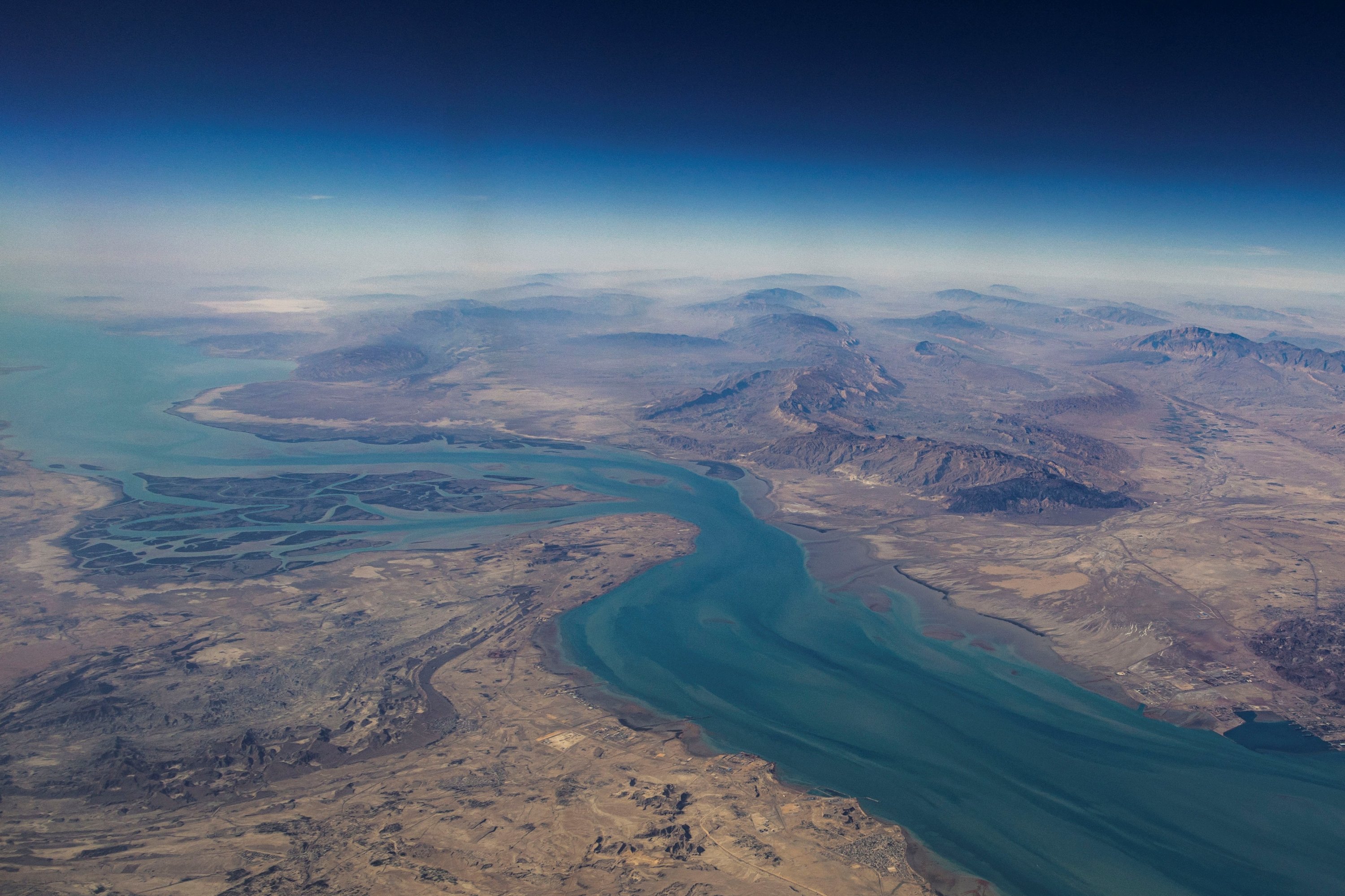
Since most of Iran’s oil and gas exports are shipped through the Strait of Hormuz, any security-related disruption in the region has immediate repercussions on the global energy supply chain. During the current war with Israel, Iran temporarily shut down several of its energy fields. Ironically, despite nearly two weeks of bombardment by Israel and the United States, Iran’s oil production has not declined; in fact, it has grown. While reliable figures are hard to obtain due to Iran’s efforts to obscure its oil exports, satellite imagery and tanker tracking data suggest that Iranian oil production could exceed 3.5 million barrels per day this month, marking its highest output in seven years and a slight rise over May levels. As the conflict escalated and concerns over the safety of tanker passage through the Strait of Hormuz intensified, fears of a potential closure influenced the oil markets even before any actual shutdown occurred.
This situation posed a direct threat to the energy supply security of major importers such as China and India and led to significant price fluctuations across Asian markets. Developments in the Strait of Hormuz were quickly reflected in global energy prices. After Iran’s Parliament approved a resolution to close the Strait on June 22, Brent crude prices surged past $77 per barrel. However, emerging signs of a cease-fire caused prices to ease back to the $67-$68 range.
In 2024, the majority of global liquefied natural gas (LNG) trade passed through the Strait of Hormuz, mostly from Qatar. Qatar exported around 9.3 billion cubic feet of LNG per day (Bcf/d) through the strait, while the United Arab Emirates (UAE) contributed about 0.7 Bcf/d. These shipments represented nearly all LNG flows from the Persian Gulf via the Strait. Approximately 83% of LNG transported through the strait in 2024 was delivered to Asian markets. The main importers were China, India and South Korea, which collectively accounted for 52% of these flows.
Disruptions to LNG routes via the Bab el-Mandeb Strait, which links the Red Sea to the Arabian Sea, combined with increased U.S. LNG exports to Europe, caused Qatar to redirect much of its LNG supply toward Asia. Kuwait and the UAE also began importing LNG from outside the Persian Gulf, including from the United States and West Africa. Bahrain launched an LNG import terminal in April 2025 and has since received shipments from sources including the U.S.
In the event of a full or partial closure of the Strait of Hormuz, a sharp rise in oil prices is widely anticipated. Forecasts suggest that Brent crude could reach $100 to $110 under a partial closure scenario and $130 to $150 in the case of a prolonged and complete shutdown. These outcomes are expected to trigger sustained price shocks. At present, Brent is fluctuating between $66 and $68 per barrel, while WTI is hovering around $64 to $66. A decline in U.S. crude inventories, softening macroeconomic indicators, a dovish stance by the Federal Reserve and tentative cease-fire prospects have helped stabilize prices. Nevertheless, uncertainty remains high, and geopolitical risk premiums continue to be priced into the market.
The echoes of the war continue to resonate on both sides. Israel’s energy portfolio is mainly based on offshore natural gas fields in the Eastern Mediterranean. The Leviathan, Tamar and Karish fields have enabled the country to achieve electricity self-sufficiency. However, the fields are not only central to Israel's domestic energy needs but also critical to its role as a regional energy exporter. Israel supplies gas primarily to Jordan and Egypt, and indirectly to Europe through Egypt’s LNG terminals. As such, its export infrastructure relies both on direct pipelines and on LNG liquefaction and re-export via third countries.
Following Israeli airstrikes on Iran, operations at two major gas fields, Leviathan and Karish, were temporarily suspended, especially after drone and missile attacks near the Karish field. In an effort to safeguard gas infrastructure and energy transit routes, Israel implemented both military and civilian protective measures. The government curtailed production at key terminals, reduced exports and prioritized domestic supply, leading to a significant disruption in exports. Israel’s gas exports through Jordan and Egypt have been reassessed due to both security concerns and diplomatic uncertainties. Egypt officially announced a suspension of Israeli gas imports as a result of intensified military activity in the region. In response, the Egyptian Ministry of Petroleum initiated an emergency strategy to stabilize the power grid by increasing diesel consumption in power generation. These interruptions forced Egypt to cut its LNG shipments to Europe. This development directly affected European energy security at a time when the continent is striving to diversify its supply sources in the wake of reduced Russian imports. Although Israel does not possess significant oil reserves, its discovery of offshore gas fields has transformed its energy landscape.
From the standpoint of international energy markets, the Israeli-Iranian conflict has once again exposed the vulnerability of global energy supply security. The war’s repercussions extend beyond production and exports. Regional energy projects and Eastern Mediterranean cooperation efforts have also been deeply affected. The reliability of energy flows is no longer determined solely by production volumes or infrastructure but is tightly linked to geopolitical stability. This war has demonstrated that energy producers must not only possess resources but must also prove their capacity to deliver them consistently and securely under volatile conditions.
A potential closure of the Strait of Hormuz would have deep and far-reaching consequences for global oil and gas markets. As one of the most strategically vital chokepoints in global energy logistics, the strait handles approximately 20 million barrels of oil per day, representing about one-fifth of the world’s oil trade. Any interruption would constitute a severe supply shock. For LNG, the impact would be equally disruptive, especially for Qatar, a global leader in LNG exports. A closure would likely trigger sharp price increases and widespread logistical complications. The consequences would extend beyond the physical interruption of supply and into the psychological landscape of markets, where expectations and strategic calculations drive volatility. Such a scenario would represent a full-scale energy crisis in which geopolitical tensions and resource security are inextricably linked.