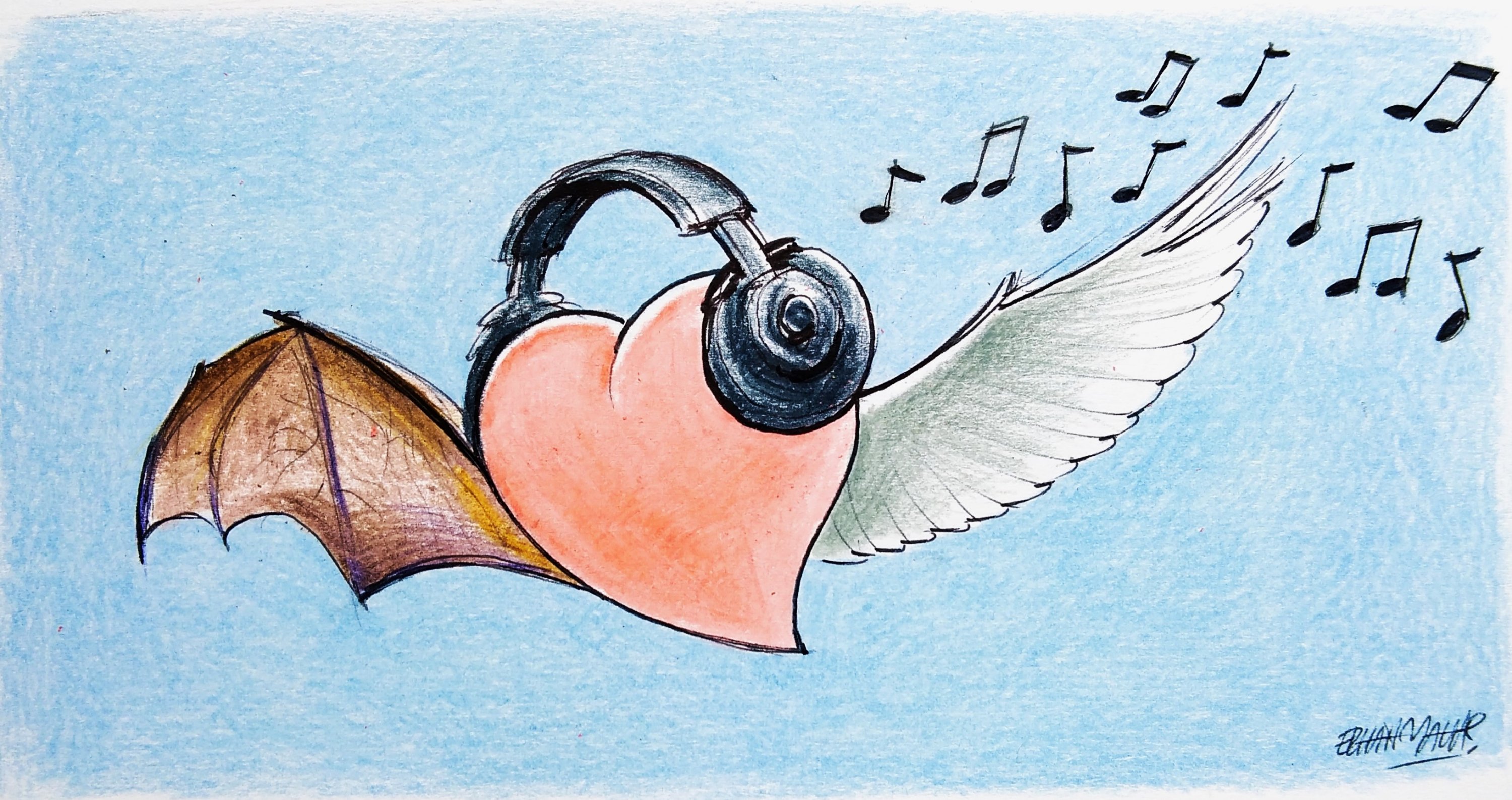
"Every person is inherently good." While this statement holds true, it falls short of expressing my complete opinion of individuals. As a reader of metaphysics, I believe that preemptive judgments about human existence or actions can be emotional shortcuts, diverting people from thoughtful contemplation. Employing labels of "good" and "evil" in such judgments often muddles conversations about individuals and beings, hindering a true understanding of the phenomenon.
First of all, although good and evil may appear as moral or metaphysical concepts, their discussion is seldom based on moral or metaphysical grounds, typically attributed such meaning by very exceptional individuals. In everyday language, these terms are often used in a limited and narrow sense, diverging from a true understanding influenced by simple impulses and cursory observations and largely under the pressure of memory. Before passing judgment, it is crucial to reflect on the foundation of these terms and precisely define what we mean when judging good or evil. In essence, what does it entail to label something as good or bad?
This is probably the first and fundamental question to pose. It appears that the mind's judgments of good and evil stem from a self-centered expression arising from the dichotomy of profit and loss, forming the primitive foundation in the mind's interaction with the world. Even if the surface is nuanced based on the relationships the mind establishes with the world, the outcome remains consistent. What is termed good and evil essentially signifies what is beneficial or harmful to us, with the scope of good limited to what is beneficial and evil confined to what is harmful. Then, we may have acted more honestly if we said that good is beneficial and evil is harmful. Furthermore, the significance of this benefit increases as it aligns with humanity and its surroundings, diminishing in value as it distances itself from us in a broader sense.
In this regard, prior to passing judgment on something, it is essential to recognize the boundaries of the terms good and evil, understanding that these limits are shaped by basic and primal motives. It is crucial to be aware of the mindset and constraints of the mind during the judgment. I do not perceive this as criticism; rather, the very acknowledgment that our mind asserts authority to judge, even in a state of limitation framed by profit and loss, signifies a positive state, demonstrating mankind's engagement with the world.
Hence, the mind's classifications of "good" and "evil" seldom transcend the moral and metaphysical realm, rather transforming into a language aligned with something's existence. On the other hand, the determinant of these judgments will persist as individual and societal benefit, specifically "interest," limiting our thinking by confining our minds within the boundaries of experiences drawn from daily life.
If thinking is the way for the mind to go beyond the profit-loss equation and seek existence, making a good-evil judgment will not help the mind at this level. At the very least, it is necessary to find a way to learn to think by postponing saying "good" and "evil." This is the main reason why the essential good and evil are considered relative; the fact that the idea of profit and loss varies from person to person, from society to society, makes an objective definition of good and evil impossible. To call any person or their deed good or bad, then, is the inadequate judgment of the mind narrowed by the relation of profit and loss in the experience of daily life. To engage in truthful thinking, it is necessary to take our relationship with the world beyond the boundaries of everyday experience, which is one of the tasks that will lead us to metaphysical thinking and to prepare ourselves by breaking away from language to try to understand what we want to think and know on a ground that we might term "its own reality."
We will get to that part of the issue later. Now, let's shift our focus from the question: If humans are inherently good, where does the evil in the world come from?
Another aspect to consider in this context pertains to the evolution in addressing the problem of evil. In earlier philosophies, the issue of evil predominantly centered around the external world, such as the absence of a conceivable realm, contradictions within that realm and afflictions that affect our soul through the body.
Philosophers' works in the genre of "elimination of sorrows" aimed to reduce the effect of this problem of deficiency in the possible world and the deficiencies it causes in human beings, such as mortality, disease, etc. In our contemporary age, when addressing the problem of evil, the prevalent issues that come to mind are human-made problems such as evils, injustices never rectified, irregularities, chaos and cruelty. Consequently, a natural question emerges: Why does so much evil exist if humans are inherently good?
Such a question arising from the problem of evil caused by humans does not genuinely and justifiably challenge our perspective on humanity. Surprisingly, the same reasons given to demonstrate that humans are inherently evil also apply to the human-made evils on Earth and they stem from the fundamental goodness – even the inherent excellence – of humans.
A person may feel constrained, perhaps driven by a passion for goodness, leading to confusion, hasty actions, anxiety and fear. Consequently, they may end up committing "bad" acts for others, driven by their idea of order, goodness or the "ideal" for both themselves and the world.
In this pursuit, the individual seeks to bring about change either in the world or their own life or at the very least, they engage in actions aligned with the idea of preserving their own existence. This aspect was previously mentioned when discussing the distinction between force and verb, highlighting that the inherent capability in humans – the state of power – compels them toward goals. Hence, individuals act with the desire to actualize their own existence and mature.
In this context, there is no inherent evil or malevolent intent directed explicitly at others.
So, where does the issue manifest?
The problem labeled as "evil" by people does not arise from the inherent malevolence of man but rather from conflicts emerging in the pursuit of goals or the incapacity of the possible realm to lead everyone toward goodness. Consequently, under the influence of fear, individuals rush, become impatient and resort to shortcuts, causing harm in their quest to reach their objectives.