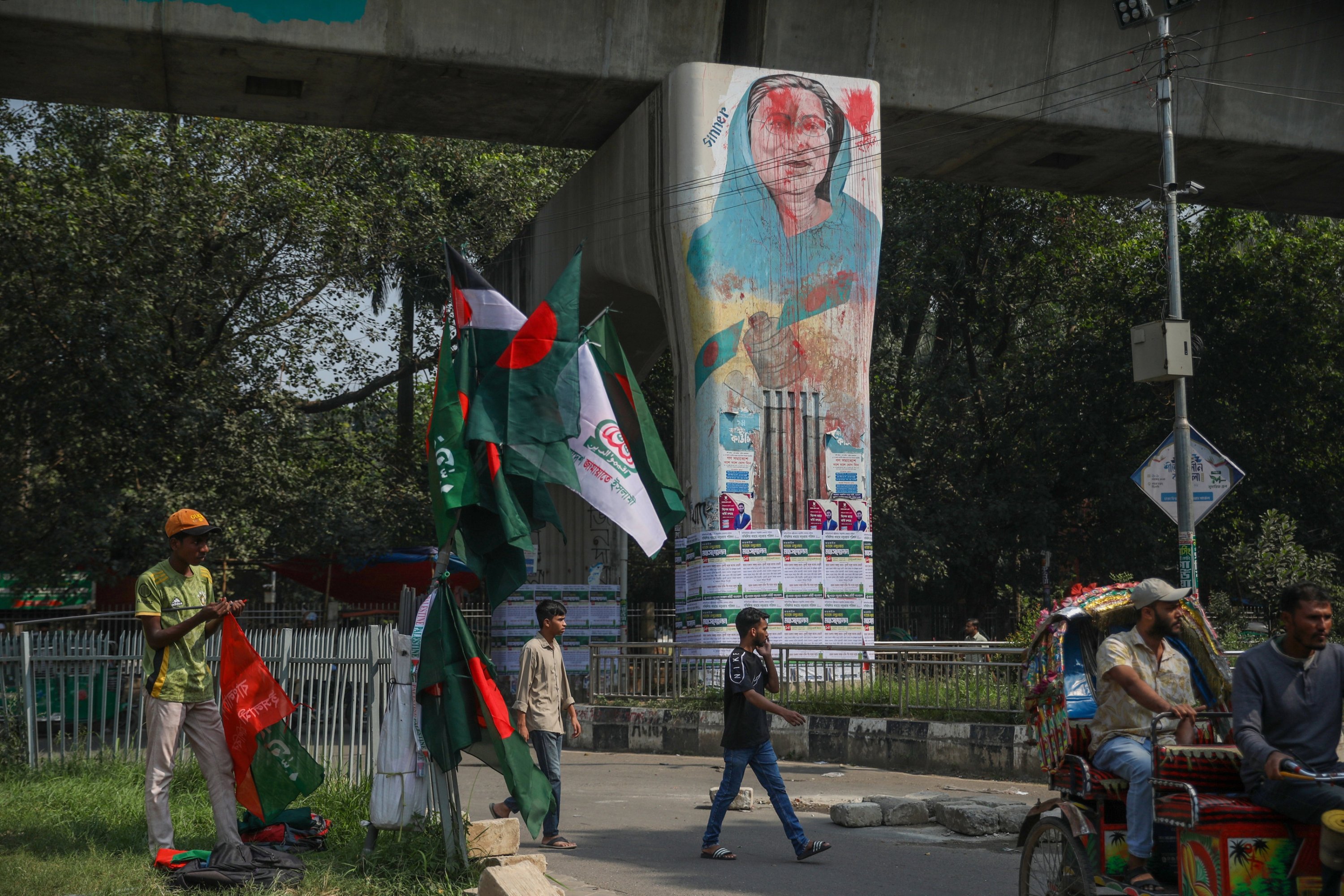
Bangladesh's International Crimes Tribunal (ICT), in its recent decision, has awarded a death sentence and life imprisonment on different accounts, including “crimes against humanity,” to the country’s former prime minister, Sheikh Hasina. This has been followed up by a formal request of Bangladesh’s interim government to India for the extradition of the convicted, as she has been in exile in India since the popular uprising against her government last year. While India has not commented clearly on the request, it is likely to respond negatively. This is not only because India may invoke specific clauses within the India-Bangladesh Extradition Treaty (2013) that allow a state to deny extradition on political grounds, but also because of its deliberate foreign policy and strategic cultural choices.
While Bangladesh will be left with the option of building political pressure at multilateral forums, this may also not yield the expected results, as the interim administration of Bangladesh lacks democratic legitimacy. This situation, however, has created a serious rift between the two neighbors and has put New Delhi in a challenging position. It will not only have long-term impacts on the future trajectory of Dhaka-Delhi relations but also have regional implications and consequences for India’s "neighborhood first" policy.
India’s current hesitation toward political change in Bangladesh also echoes an earlier pattern visible in its approach to Nepal’s political transitions. When Nepal moved from monarchy to republicanism, segments of the Indian strategic establishment were seen as sympathetic to maintaining close ties with the last Hindu-led monarchy, viewing it as a stable and India-friendly political order along a sensitive frontier. Although New Delhi officially supported Nepal’s democratic process, its complex and sometimes hesitant posture during the transition was widely interpreted as an attempt to preserve a familiar, predictable leadership that aligned with India’s security interests. The Hasina episode in Bangladesh, therefore, fits into a broader pattern where India becomes visibly uneasy when domestic shifts in adjacent countries threaten established security arrangements or open doors for rival powers, particularly China.
Additionally, Hasina was one of the most trusted allies in the region. Her ouster has already damaged India’s capability to influence the region, and if it cannot rescue her at this crucial juncture, it may signal further weakness of India, which will make it less reliable as a partner in the future. This will provide China with extra leverage in the region to further strengthen its footprint in South Asia.
On the other hand, Bangladesh may try to build political pressure at multilateral forums to mitigate the anti-Hasina sentiments domestically. Still, it may not get enough support due to a lack of political legitimacy. Additionally, the legality of the decision is also challenged by certain relevant quarters as Hasina was tried in absentia by the International Crimes Tribunal (ICT) and was assigned a state-appointed lawyer, raising questions about due process and fairness. Global rights watchdogs such as Amnesty International and Human Rights Watch criticized the trial as unfair and unjust.
India thus will consider this window of opportunity while making its decision and may act patiently for the results of the February 2026 general elections to be held in Dhaka. If a weak coalition government comes to power, it may have the space to maneuver things into its favor. However, if a government emerges that is less aligned with India or openly critical of India’s perceived interference in domestic politics, New Delhi may find itself confronting a Dhaka that seeks greater diversification through China, Pakistan and Türkiye.
Furthermore, the regional stakes are equally significant. Bangladesh is central to India’s Neighborhood First and Act East policies, serving as a linchpin for connectivity projects, energy cooperation, and maritime security in the Bay of Bengal. A deterioration in relations could disrupt key initiatives such as the Bay of Bengal Initiative for Multi-Sectoral Technical and Economic Cooperation (BIMSTEC), sub-regional power grids, and India’s northeastern transit corridors. It may also create openings for China to strengthen its strategic presence through infrastructure, defense sales, and diplomatic initiatives, tilting the balance of power in the Indian Ocean.
The policymakers in New Delhi may also be facing the fear of managing the long porous border (4096 km) with Bangladesh. The Bangladesh-India border has historically remained vulnerable to terrorism, human trafficking, illegal migration, smuggling and other crimes. Under Hasina’s government, India enjoyed security and intelligence cooperation that had helped India to minimize the cross-border militancy and maintain stability. However, a rise of anti-India political sentiment could not only embolden dormant insurgent groups in India’s Northeast but may also lead to issues like increased illegal migrations and smuggling.
In essence, the Hasina verdict and its extradition fallout represent more than a legal confrontation; they signal a moment of strategic uncertainty. As Dhaka navigates its turbulent political transition and New Delhi analyses the situation, the choices made today will shape the trajectory of India–Bangladesh relations for at least a few years to come. The crisis thus underscores the fragility of regional politics in South Asia and India’s foreign and strategic policy choices.