Understanding today’s Iran requires looking beyond its borders, toward the Iranian diaspora in the West. The political struggles shaping Iran today did not emerge overnight, nor are they confined to the country’s borders. They are the product of a long and unfinished power struggle that began with the 1979 Revolution.
The revolution itself was carried out by a broad coalition of conservatives, leftists and liberals who, at least initially, shared a common goal: overthrowing the Shah. Yet, this alliance proved short-lived. Once in power, Shiite clergy consolidated control, sidelining and criminalizing their former partners. Those who had helped pave the way for Ayatollah Ruhollah Khomenei’s rise were either imprisoned, eliminated or forced into exile.
Exile, however, did not mean political irrelevance. On the contrary, these groups reorganized abroad, forming ideologically driven and well-connected diaspora networks. Over time, they built powerful lobbying structures in Europe and the United States, aiming not only to oppose the Islamic Republic but ultimately to reclaim Iran itself. As their political, economic and intellectual capital expanded, so did their influence on Western policy debates surrounding Iran.
For Iran, the diaspora has functioned as both an opportunity and a threat. While the Iranian state has attempted to instrumentalize the diaspora ideologically and economically, it has also been forced to defend and redefine itself against the international struggle carried out by regime-opposition diaspora groups. This dynamic has pushed Iran into a constant process of legitimacy production, both domestically and internationally. Therefore, Iran appears not merely as an actor that seeks to control its diaspora, but also as a political entity that struggles to sustain itself within ongoing diaspora confrontations.
Uprisings in Iran and diaspora-driven narratives are widespread. This is not coincidental. The diaspora consists of actors who once overthrew the Shah and possess direct experience in coups and regime change, as well as accumulated resentment and ambition. Consequently, the diaspora is crucial for understanding today’s protests in Iran.
Iran has three politically powerful core diasporas, alongside liberal groups with comparatively narrower influence. So who are these three dominant diasporas, and who stands behind them?
Contrary to common assumptions about Middle Eastern diasporas, the Iranian diaspora is exceptionally strong in lobbying capacity, economic power, social status and intellectual capital. For nearly half a century, three main groups – sometimes engaging in armed struggle and at times in direct conflict with one another – have shaped this diaspora landscape: Iranian nationalists (monarchists), the MEK (leftists), and Khamenei-aligned regime loyalists. Despite their ideological differences, all three are deeply integrated into Western political systems. Let us examine them more closely.
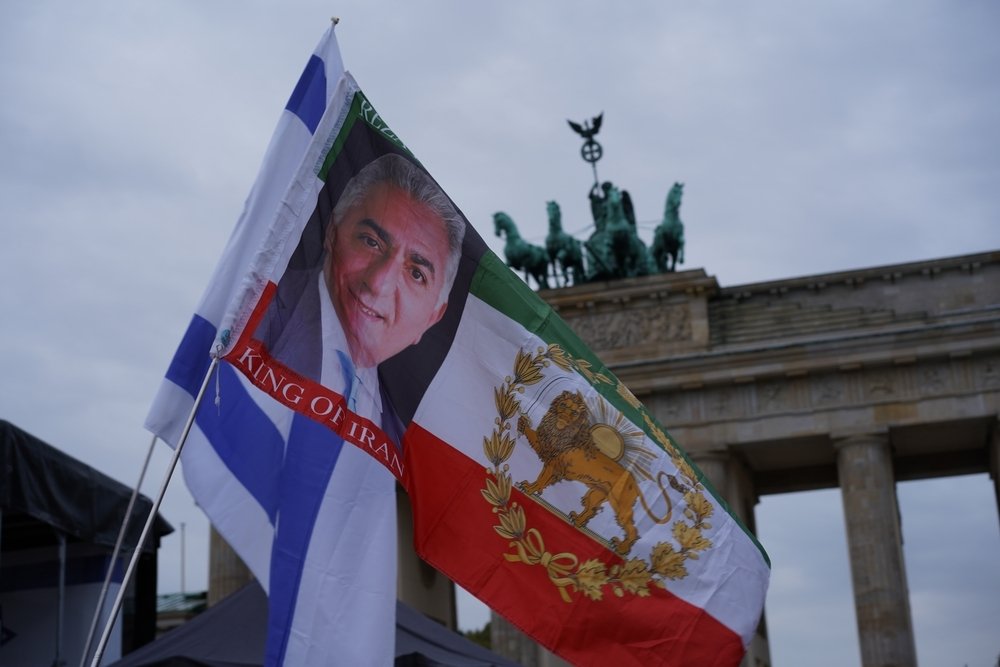
The first group is antiregime and Iranian nationalist, led symbolically by the exiled Pahlavi family. Highly integrated into Western elite circles, their objective is a secular Iran. This group constitutes a large population, generally wealthy and elite, living in Europe and numbering over 1.5 million in the U.S. They cooperate closely with Israeli lobbies and wield significant political influence in the West. In the U.S., through close connections with numerous senators, this group ensures that the Iranian threat narrative, Iran’s human rights violations and Israel’s security concerns remain on the Congressional agenda. Due to this deep penetration into the U.S. legislature alongside Israel, Iran has remained a permanent issue in Congress regardless of changes in the presidency. This diaspora is one of the primary driving forces behind sanctions and interventionist rhetoric toward Iran.
The second major diaspora group is the leftist opposition, namely the Mojahedin-e Khalq (MEK). The MEK, which was once listed as a terrorist organization, played an active role in the Iranian Revolution and later collaborated with Saddam Hussein’s regime in Iraq, receiving financial support through this channel. Subsequently, it cooperated with the U.S. and assisted in the overthrow of Saddam. The organization has carried out numerous armed actions and has been supported by Saudi Arabia against Iran, as well as by Israel.
Israel’s foreign intelligence service, Mossad, has maintained relations with the MEK since the 1990s. Due to Israeli state backing, the MEK has also received support from powerful pro-Israel lobbies in the U.S. and has built close ties with American neoconservatives in Congress. It is widely known that behind the assassination of prominent Iranian nuclear scientist Mohsen Fakhrizadeh on Nov. 27, 2020, stood the MEK and Israel.
In 2012, NBC News reported, citing U.S. officials, that the MEK had been financed, trained and armed by Israeli intelligence to assassinate Iranian nuclear scientists. In Europe, the Dutch General Intelligence and Security Service (AIVD) revealed in 2003 that a Dutch charity claiming to support “children suffering under the Iranian regime” was in fact collecting donations for the MEK, demonstrating the flow of funds from Iran-opposition and pro-Israel networks to the organization. France has long served as the central hub of the MEK diaspora, with Auvers-sur-Oise near Paris functioning as the group’s headquarters for many years.
In Iraq, the MEK assisted Saddam Hussein’s government in suppressing Shiites and Kurds and provided “security services” until the U.S.-led overthrow of the regime. Although the U.S. government later distanced itself from the organization, the MEK did not oppose the 2003 invasion of Iraq. Today, the MEK is supported primarily by pro-Israel advocates, proponents of regime change in Iran and American neoconservatives.
Previously designated as a terrorist organization and blacklisted by the European Union, the MEK was removed from the EU terror list largely through the efforts of Spain’s far-right Vox party. This demonstrates the MEK’s influence within the European Parliament. Notably, the MEK was also a founding financier of Vox, highlighting the depth of this relationship. Similar influence can be observed in other parliaments. The United Kingdom removed the MEK from its terrorist list in 2008, followed by the U.S. in 2012, where lobbying and financial contributions to members of Congress and officials played a decisive role.
The third diaspora is the regime-aligned Iranian diaspora, which can be referred to as the “local” diaspora of the Iranian state itself. This network mobilizes political action through religious ties centered on loyalty to the Ayatollah, the Shiite imamate doctrine, and the discourse of resistance. This is significant because within Shiite theology, accepting the Ayatollah as a guide resembles accepting a prophetic representative, obligating followers to obey his commands. In this framework, Ali Khamenei, as the Ayatollah, possesses religious authority, and if he were to issue a call for war or uprising, his followers, regardless of national borders, would feel compelled to act on his behalf.
This dynamic is particularly influential in Shiite-populated regions such as Lebanon, Yemen and Bahrain. Azerbaijan, with its significant Shiite population, can also be affected by this religious allegiance. Khamenei utilizes this mechanism within the framework of the so-called Axis of Resistance.
The influence of Iran’s regime-aligned diaspora in European politics can be illustrated through the Spanish case. In Spain, the acquisition of HispanTV by the Iranian regime and the channel’s support for the far-left Podemos party under the leadership of Pablo Iglesias demonstrate Iran’s influence within the Spanish Parliament.
Compared to other ideological diasporas, the Iranian liberal diaspora has less influence; however, they were an actor in the 1979 revolution. They are concentrated in the U.S., and the liberal-democratic Iranian diaspora typically exerts its influence through advocacy and political lobbying activities in Washington. Organizations such as the National Union for Democracy in Iran (NUFDI) employ mechanisms such as drawing attention to human rights violations, generating public opinion in favor of democratic reforms in Iran, and engaging with members of Congress. This diaspora tends to create a more organic alignment with the Democratic Party's foreign policy orientation, which is based on human rights and democracy.
The ideologically competing Iranian diasporas in the West represent the democratic reflections of the Middle East’s historical trajectory over the past 50 years. The 1979 Iranian Revolution, the collapse of Saddam Hussein’s regime in 2003, and the uprisings of the 2011 Arab Spring led to the empowerment of armed groups across the Middle East, a process that simultaneously reshaped Iranian diasporas abroad.
Groups that either directly supported armed organizations or operated on their behalf also entered into struggles for influence within diaspora communities. Consequently, ideological conflicts among Iranian diasporas are not merely a product of political competition in the West, but an extension of power struggles unfolding in the Middle East itself.
Parallel to this development, Iran sought to expand its regional influence by constructing armed networks across the Middle East. Following the fall of Saddam Hussein and the descent of Iraq into chaos, Tehran attempted to consolidate political and military influence through the Popular Mobilization Forces (PMF). In Lebanon, it established a permanent armed and ideological structure through Hezbollah. In Yemen, Iran leveraged the Houthis both as an asymmetric pressure tool against Saudi Arabia and as a strategic asset capable of influencing regional and global trade routes through the Red Sea and the Bab al-Mandab Strait.
The current developments in Iran will not only determine the fragile structure of Iran’s domestic political order but also the future of Iranian diasporas in the West.