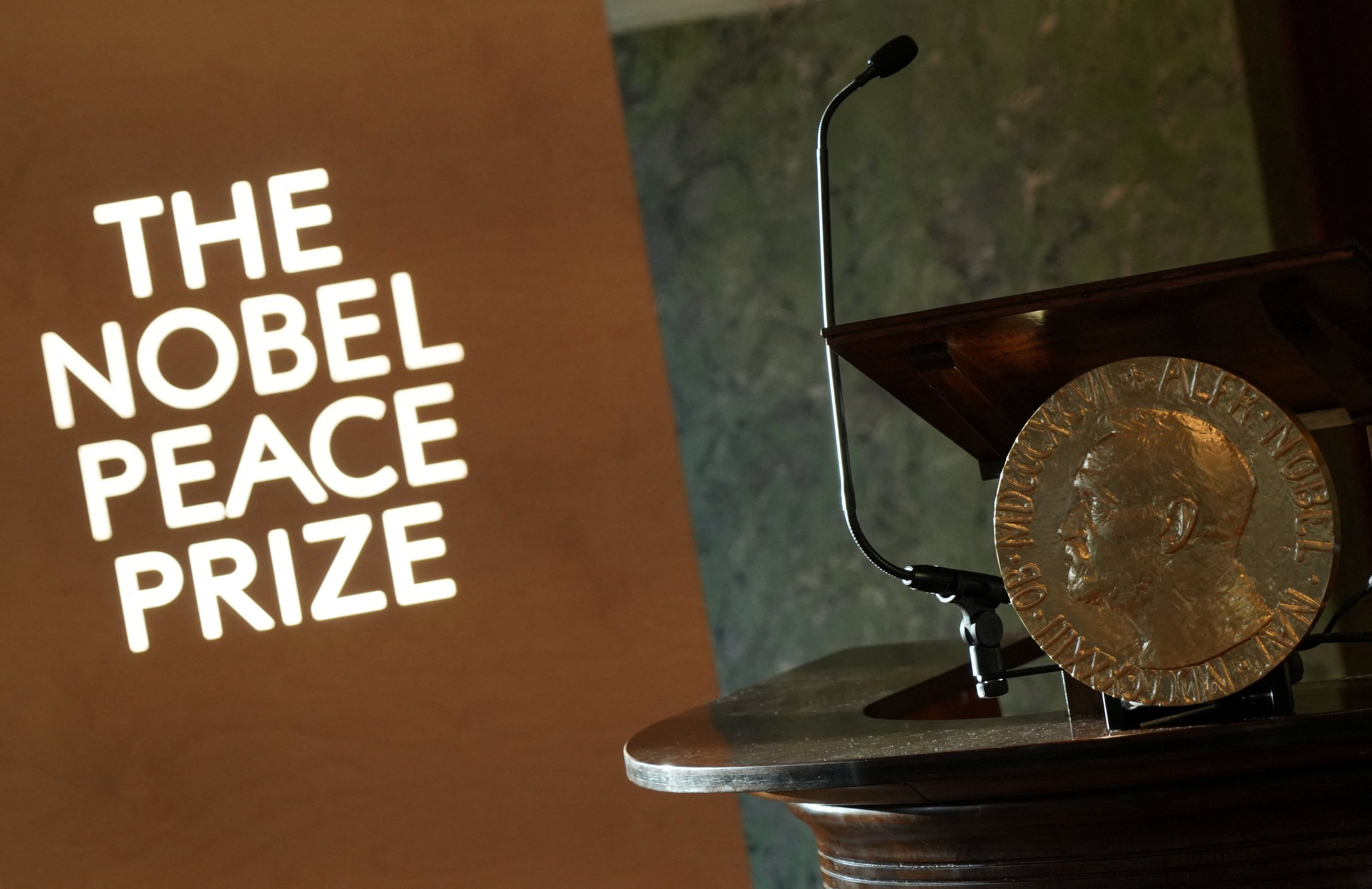
The Nobel Peace Prize stands as one of the world’s most prestigious honors, yet its moral purpose and political reality have long drifted apart. What was meant to celebrate selfless devotion to peace has, in many cases, rewarded those whose actions conveniently align with Western geopolitical interests. Today, the prize speaks less of universal harmony and more of selective morality.
The recently awarded 2025 Nobel Peace Prize, like several controversial cases before it, has once again reignited debates about the integrity and impartiality of the award. The prize is meant to honor those who make unprecedented, selfless sacrifices for peace. Yet a question arises: Do the actions of an opposition leader – motivated by political ambition rather than genuine humanitarian sacrifice – truly merit such a global honor? To understand this debate, we may recall a few significant precedents before turning to the 2025 case.
When the 1973 Nobel Peace Prize was jointly awarded to Henry Kissinger and Le Duc Tho, global public opinion was stunned. Kissinger, as U.S. National Security Advisor, had been one of the chief architects of the secret bombings of Cambodia and Laos during the Vietnam War. He also supported the military coup in Chile and was responsible for policies that cost thousands of civilian lives in Southeast Asia. Nevertheless, he received the award “for his contributions to peace negotiations.”
This decision was described by many scholars of the time as the “Nobel War Prize.” Two members of the Nobel Committee resigned in protest, illustrating how the award was being distributed not for peace, but according to global power balances. Throughout the Cold War, the Nobel Committee maintained this posture that aligned with the ideological frontiers of the Western bloc.
In 1975, awarding the prize to Andrei Sakharov carried an explicit anti-Soviet message. Meanwhile, U.S.-backed coups in Latin America and the atrocities of the Vietnam War were largely ignored. This reinforced the perception that the prize had become not a universal emblem of peace, but a political propaganda mechanism.
After the Cold War, the Nobel Peace Prize evolved from a moral recognition into an instrument of soft power. The West began to use the discourse of “democracy,” “human rights” and “freedom” not as universal values but as tools to justify its geopolitical interests. In this era, the Nobel Peace Prize acquired a symbolic propaganda function, helping to legitimize Western ideology under the guise of humanitarianism.
In 2009, U.S. President Barack Obama was awarded the Nobel Peace Prize only nine months after taking office. At that time, the wars in Afghanistan and Iraq were still ongoing, Guantanamo Bay remained open and drone strikes were intensifying. Rather than recognizing tangible achievements for peace, the award served as a strategic communication tool aimed at strengthening the image of liberal international leadership and renewing Western moral authority. Once again, the Nobel Peace Prize functioned as a means of refreshing the West’s self-image and reinforcing its moral dominance. The prize rewarded the image rather than peace.
For decades, the Western world has placed the notion of “exporting democracy” at the center of its foreign policy. Yet this narrative often contradicts its own strategic interests, Venezuela being one of the clearest examples.
After Nicolas Maduro won the 2019 elections, Western governments refused to recognize his legitimacy and instead declared opposition leader Juan Guaido the “interim president.” The U.S. officially recognized him, allowed ambassadorial appointments and even received him as Venezuela’s head of state in several capitals. This step symbolized not the promotion of democratic values but the legitimization of Western interests.
However, that international diplomatic coup failed: Maduro remains in power and the U.S. continues to lose influence in Venezuela. Facing this stalemate, Washington now seeks to pave the way for renewed intervention, sending naval vessels and reviving media narratives about “restoring democracy.” And once again, the Nobel Peace Prize enters the scene, not as an award for peace, but as an instrument to heroize Western-aligned opposition and create moral justification for potential U.S. intervention or a U.S.-backed coup.
The 2025 Nobel Peace Prize awarded to Venezuelan opposition leader Maria Corina Machado represents a continuation of this controversial tradition. Machado, a staunchly pro-Western politician aligned with the far-right Patriots EU and a vocal supporter of Israel despite its committing a genocide in Gaza, has been endorsed by the U.S. and EU as an “ideal opposition leader.” Yet her activism reflects not a peaceful mission but an extension of the U.S. strategic agenda in Venezuela.
She is accused by pro-government circles and independent observers alike of laying the groundwork for U.S. intervention, fomenting internal unrest and serving Western economic and political interests. Machado’s rhetoric does not embody the spirit of a self-sacrificing peace advocate but rather that of an ambitious politician seeking international legitimacy. She has made no tangible contribution to peace, only maintained political alignment with external powers. Thus, this award is widely interpreted as a reward for serving Western interests rather than advancing peace.
Through such awards, the West sends a clear message: “Those who serve Western interests are the true symbols of peace.” In doing so, it elevates compliant leaders as “heroes” while branding those who resist as “authoritarian.” The Nobel Peace Prize thus becomes a moral weapon, legitimizing one side while silencing the other. But the essential question remains: “Peace for whom, with whom, and at whose expense?”
A genuine Nobel Peace Prize should be granted to those who sacrifice personal comfort and life itself for humanity. One such example is Aaron Bushnell, a 24-year-old member of the U.S. Air Force, who set himself on fire while shouting “Free Palestine,” protesting the ongoing attacks on Gaza.
Unlike politically motivated figures, Bushnell had nothing to gain, no ambition, no political office but only a moral cry against injustice. His act epitomized the spirit Alfred Nobel envisioned: selfless dedication to peace.
If, however, the Nobel Peace Prize continues to ignore humanitarian catastrophes in conflict zones around the world, such as Gaza, Sudan and the Democratic Republic of the Congo, while glorifying those who prepare the ground for U.S. intervention in Venezuela, it no longer represents a universal moral value, but rather a Western-centric propaganda apparatus.
Unfortunately, the award, once a symbol of humanity’s highest ideals and a testament to impartiality, has now become merely a token of Western approval, detached from the genuine pursuit of peace.