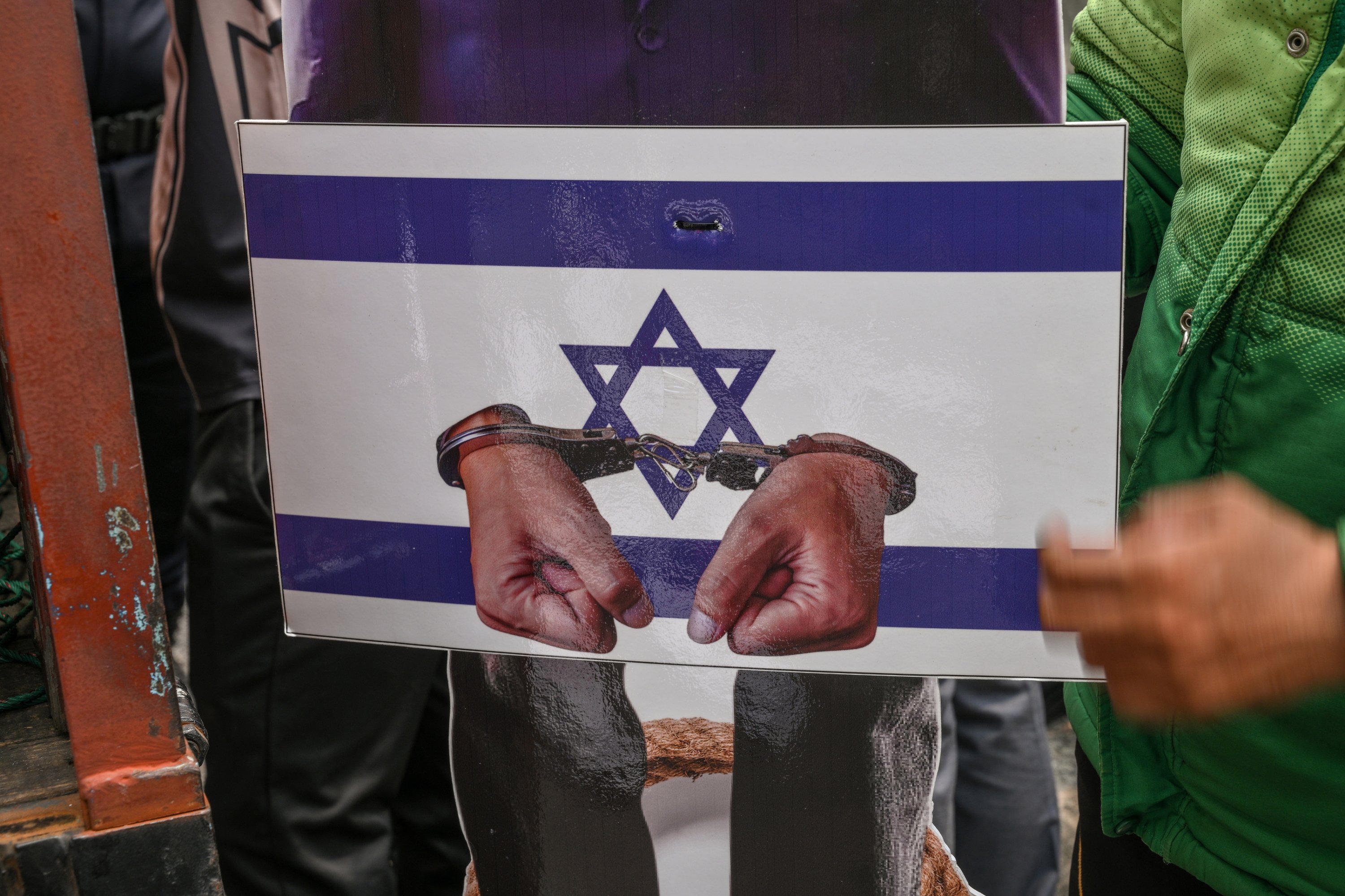
In recent years, it has become undeniably clear just how powerful media platforms are in shaping public opinion and steering it toward a particular cause. The ability to frame narratives, select which stories to amplify and which to bury, and determine the language through which events are understood has made media one of the most potent tools in the hands of those who seek to direct the public opinion toward a certain issue. Media can inform, but it can also deform, and in times of war, the difference between these two functions can mean the difference between accountability and impunity, between justice and genocide.
Realizing this fact all too well, Israeli Channel 14 has emerged as one of the most extreme voices in the Israeli media landscape, advancing a radical editorial agenda that blatantly dehumanizes the Palestinian people. Rather than subjecting Israel's military operations to any meaningful scrutiny, the channel has instead taken upon itself the task of justifying and defending the Israeli war crimes in Gaza and Lebanon. Its coverage is far beyond journalism; it is propaganda that is committed to the narrative of the state, and in some cases steering the government toward more radical policies against the Palestinian people.
The recent incident involving the video of National Security Minister Itamar Ben-Gvir threatening Palestinian resistance leader Hassan Salameh with execution – a video that Channel 14 broadcast and framed in a highly positive and supportive manner – is not an anomaly. It is the logical product of a media outlet that has systematically transformed itself into a factory of hatred, producing and normalizing incitement against Palestinians on a daily basis. Rather than offering critical commentary or raising ethical questions about a government minister threatening a helpless prisoner with death, the channel chose to celebrate it. And in doing so, it revealed its true function: not to inform the Israeli public, but normalize the Israeli public – and beyond – with such acts as acceptable and justified.
The alignment between Channel 14 and Prime Minister Benjamin Netanyahu’s far-right government is neither accidental nor subtle; it is a mutually beneficial partnership built on political convenience and propaganda. It is viewed by critics as Israel's equivalent to Fox News, Channel 14 has functioned as the primary megaphone for the ruling coalition’s political narrative. In return for its loyalty, the network has enjoyed extraordinary privileges, regulatory leniency, and unprecedented access to government officials.
Since the outbreak of the war following Oct. 7, 2023, Netanyahu has largely boycotted main public and commercial media outlets, avoiding critical interviews with Israeli reporters. Channel 14, however, became his primary destination. By granting exclusive sit-downs to the channel’s friendly interviewers, Netanyahu secured a safe platform to project his government's war aims without facing rigorous questioning or accountability. In turn, Channel 14 leveraged this exclusive access to boost its viewership and solidify its position as the premier media voice of the Israeli right.
This dynamic goes beyond mere editorial bias; it represents the political weaponization of a commercial broadcast frequency to mobilize the public around hardline Zionist doctrine and sustain domestic support for protracted military operations, the government’s expansionist agenda, and a voice to justify and celebrate its policies without any scrutiny as in any normal media coverage.
Central to Channel 14’s daily editorial policy is the systematic dehumanization of the Palestinian population. Through calculated terminology, inflammatory commentary, and curated visual framing, the channel routinely depicts Palestinians not as a civilian population living under military occupation or enduring severe human suffering, but as a collective enemy. For example, Shimon Riklin, a prominent Channel 14 commentator, explicitly stated that “Gaza is Amalek and we must destroy the Amalekites. It’s a commandment to destroy Gaza because there’s evil there. Expel the people.”
This rhetoric has played a pivotal role in justifying the scale of destruction in the Gaza Strip and military operations in Lebanon. As international legal bodies and human rights organizations raise alarms over grave human rights violations, war crimes, and crimes of genocide, Channel 14 operates as an ideological shield against such scrutiny.
In one stark example of the channel’s standpoint regarding the Gaza genocide while it was taking place, the channel’s host Yinon Magal openly mocked international red lines, joking on air that “Biden has set a red line for us and that is 30,000 Palestinians ... Twenty-nine thousand and ninety nine passes,” making clear that the mass killing of Palestinians is understood and treated with mockery and complete disregard. The same notorious host in March 2024 gave space for an Israeli singer, Kobi Peretz, to defend his genocidal song against Palestinians, “May your village burn.”
On-air commentators and invited pundits frequently advocate for total destruction, total siege, and the complete removal of humanitarian safeguards, framing any expression of empathy for civilian casualties as treasonous. By presenting the conflict through a black-and-white lens of existential survival where normal laws of war do not apply, the channel normalizes its audience to accept widespread destruction and loss of life as both necessary and desirable.
Channel 14’s campaign of incitement extends directly into the prisons, targeting Palestinian detainees and prisoners. Palestinian prisoners hold significant political and symbolic weight within Palestinian society, representing decades of struggle and resistance. For Channel 14, however, they serve as a primary topic for incitement and intimidation, and as a tool exploited in the electoral campaigns between Israeli extremist politicians, as in the case of Ben-Gvir.
The network consistently champions harsher conditions, the deprivation of basic medical care, denial of family visits, and physical humiliation within detention facilities. In a documentary broadcast on the channel in February 2026, a prison official explicitly admitted to the systematic ill-treatment of Palestinian prisoners, stating that the policy had radically changed after Oct. 7: “The policy has changed and I am happy about it. No one dares to look at us anymore.” Tel Aviv University Professor Uzi Rabi, interviewed in the same broadcast, added: “You should work quietly and methodically to turn the prison experience of such murderers into real suffering.”
By framing systemic abuse and the denial of fundamental legal rights as appropriate state policy, Channel 14 works to legitimize violations of international humanitarian standards, portraying any attempt to uphold international conventions regarding prisoners of war or security detainees as a sign of national weakness. In doing so, Channel 14 effectively normalizes hate speech within Israel's public discourse and functions as a factory of hatred against an entire population.