

Daily Sabah logo

Politics
Diplomacy Legislation War On Terror EU Affairs Elections News Analysis
TÜRKİYE
Istanbul Education Investigations Minorities Expat Corner Diaspora
World
Mid-East Europe Americas Asia Pacific Africa Syrian Crisis Islamophobia
Business
Automotive Economy Energy Finance Tourism Tech Defense Transportation News Analysis
Lifestyle
Health Environment Travel Food Fashion Science Religion History Feature Expat Corner
Arts
Cinema Music Events Portrait Reviews Performing Arts
Sports
Football Basketball Motorsports Tennis
Opinion
Columns Op-Ed Reader's Corner Editorial
PHOTO GALLERY
JOBS ABOUT US RSS PRIVACY CONTACT US
© Turkuvaz Haberleşme ve Yayıncılık 2026

Daily Sabah - Latest & Breaking News from Turkey | Istanbul

  • Politics
    • Diplomacy
    • Legislation
    • War On Terror
    • EU Affairs
    • Elections
    • News Analysis
  • TÜRKİYE
    • Istanbul
    • Education
    • Investigations
    • Minorities
    • Expat Corner
    • Diaspora
  • World
    • Mid-East
    • Europe
    • Americas
    • Asia Pacific
    • Africa
    • Syrian Crisis
    • Islamophobia
  • Business
    • Automotive
    • Economy
    • Energy
    • Finance
    • Tourism
    • Tech
    • Defense
    • Transportation
    • News Analysis
  • Lifestyle
    • Health
    • Environment
    • Travel
    • Food
    • Fashion
    • Science
    • Religion
    • History
    • Feature
    • Expat Corner
  • Arts
    • Cinema
    • Music
    • Events
    • Portrait
    • Reviews
    • Performing Arts
  • Sports
    • Football
    • Basketball
    • Motorsports
    • Tennis
  • Gallery
  • Opinion
    • Columns
    • Op-Ed
    • Reader's Corner
    • Editorial
  • TV
  • Opinion
  • Columns
  • Op-Ed
  • Reader's Corner
  • Editorial

Japan is rewriting its identity, not just its Constitution

by Umar Tasleem

Apr 09, 2026 - 12:05 am GMT+3
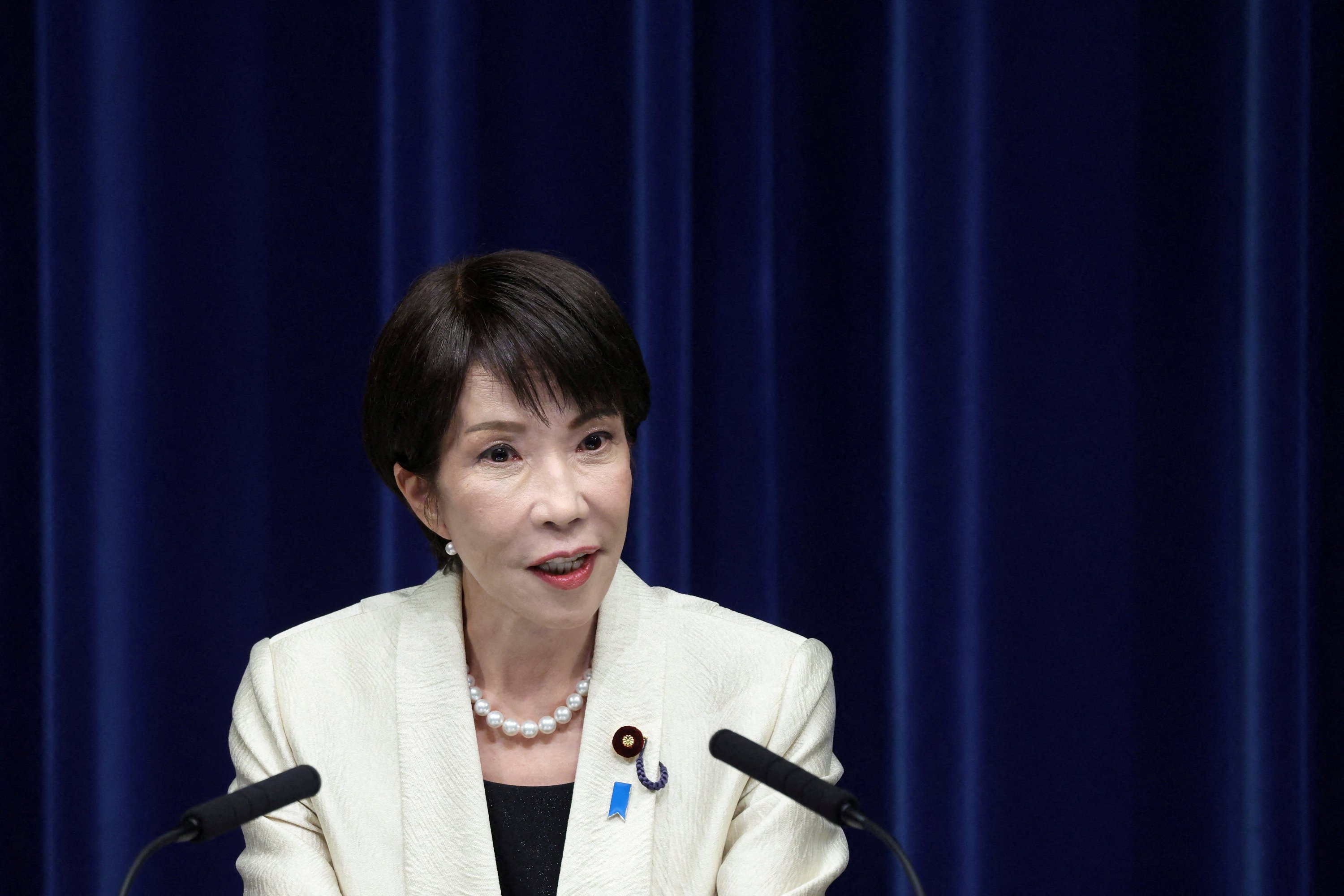
Sanae Takaichi, Japan’s prime minister, speaks during a press conference at the Prime Minister’s Office, Tokyo, Japan, Feb. 18, 2026. (Reuters File Photo)
by Umar Tasleem Apr 09, 2026 12:05 am

Japan weighs identity and security against a decadeslong status quo as calls grow to revise its pacifist Constitution

For nearly 80 years, a single article in Japan's Constitution has defined what kind of country it wants to be. Article 9 renounces war as a sovereign right. It says Japan will never maintain military forces. It was written into the Constitution in 1947, after a devastating world war that Japan helped start, and it has never once been changed.

Prime Minister Sanae Takaichi wants to change that. And after winning a landslide election in February 2026, she is closer to doing so than any Japanese leader since Shinzo Abe.

This is not simply a legal debate. It is a question about identity, memory, and the kind of future Japan is choosing for itself.

Modest proposal

Takaichi's argument is, on the surface, a modest one. She says she wants the Self-Defense Forces to be explicitly written into the Constitution, giving them formal legal recognition. The Self-Defense Forces already exist. They already have a budget that rivals many of the world's top militaries. Japan has already doubled its defense spending in recent years. So the formal amendment, her supporters argue, is little more than bringing the Constitution into line with reality.

But this argument misses the larger picture. The Constitution has never been amended precisely because Japanese society has treated its pacifist principles as something worth protecting, not just as a legal technicality. Revising Article 9, even in a limited way, opens a door that cannot easily be closed.

Inside Takaichi's own government, senior officials understand this. One described the prospect of constitutional amendment as opening a Pandora's Box, warning that once the process begins, opposition parties will use it to demand their own changes, from same-sex marriage to voter parity. The LDP, which benefits from Japan's rural vote imbalance, would rather not have that conversation. The push for constitutional revision carries political risks even for those who want it.

The obstacles are also considerable. Takaichi's coalition holds a supermajority in the lower house of parliament after the February election, but it falls short in the upper house. That chamber's composition will not change until 2028. Any amendment also requires a national referendum, and while Takaichi's party won 316 seats, its share of the national vote was only 37%. Winning a referendum is a very different challenge from winning a parliamentary election.

History not forgotten

There are also regional reactions. China and South Korea have both watched Japan's constitutional debate with deep unease for decades, and their concern is not irrational. Japan's wartime history has never been fully resolved in the region. Takaichi herself has repeatedly visited the Yasukuni Shrine throughout her career, a site which honours war criminals among its dead, and has questioned how much longer Japan needs to apologise for World War II. That context makes her push for constitutional revision far more charged than a narrow legal discussion would suggest.

There is a legitimate argument that Japan faces real security threats. China is a more assertive military power than it was 20 years ago. The situation in Taiwan is genuinely uncertain. North Korea continues to develop its weapons. It is reasonable for Japan to think seriously about its own defense.

But updating security legislation, as previous governments have done, is not the same as rewriting the Constitution. Japan can and does respond to security realities through its laws without touching the fundamental document that defines its national character.

What Takaichi is really proposing is a Japan that is comfortable describing itself as a military power. That is a significant shift, and the procedural hurdles she faces are not just bureaucratic nuisances. They exist because the Japanese Constitution was designed to make radical change difficult. That design was intentional. It was meant to make sure that the kind of country Japan became in the 1930s and 1940s could never simply return through the quiet work of a parliamentary majority.

The Constitution has held for nearly 80 years. The argument for changing it should be much stronger than the one currently being made.

About the author
Senior editor at A News and host of Türkiye’s Diplomacy, a show covering regional and global affairs
The views and opinions expressed in this article are solely those of the author. They do not necessarily reflect the editorial stance, values or position of Daily Sabah. The newspaper provides space for diverse perspectives as part of its commitment to open and informed public discussion.
  • shortlink copied
  • KEYWORDS
    japan sanae takaichi ldp japanese constitution far east
    The Daily Sabah Newsletter
    Keep up to date with what’s happening in Turkey, it’s region and the world.
    You can unsubscribe at any time. By signing up you are agreeing to our Terms of Use and Privacy Policy. This site is protected by reCAPTCHA and the Google Privacy Policy and Terms of Service apply.
    No Image
    Turkish mother-of-pearl inlay motifs for Barbarossa Pasha Mosque
    PHOTOGALLERY
    • POLITICS
    • Diplomacy
    • Legislation
    • War On Terror
    • EU Affairs
    • News Analysis
    • TÜRKİYE
    • Istanbul
    • Education
    • Investigations
    • Minorities
    • Diaspora
    • World
    • Mid-East
    • Europe
    • Americas
    • Asia Pacific
    • Africa
    • Syrian Crisis
    • İslamophobia
    • Business
    • Automotive
    • Economy
    • Energy
    • Finance
    • Tourism
    • Tech
    • Defense
    • Transportation
    • News Analysis
    • Lifestyle
    • Health
    • Environment
    • Travel
    • Food
    • Fashion
    • Science
    • Religion
    • History
    • Feature
    • Expat Corner
    • Arts
    • Cinema
    • Music
    • Events
    • Portrait
    • Performing Arts
    • Reviews
    • Sports
    • Football
    • Basketball
    • Motorsports
    • Tennis
    • Opinion
    • Columns
    • Op-Ed
    • Reader's Corner
    • Editorial
    • Photo gallery
    • DS TV
    • Jobs
    • privacy
    • about us
    • contact us
    • RSS
    © Turkuvaz Haberleşme ve Yayıncılık 2021