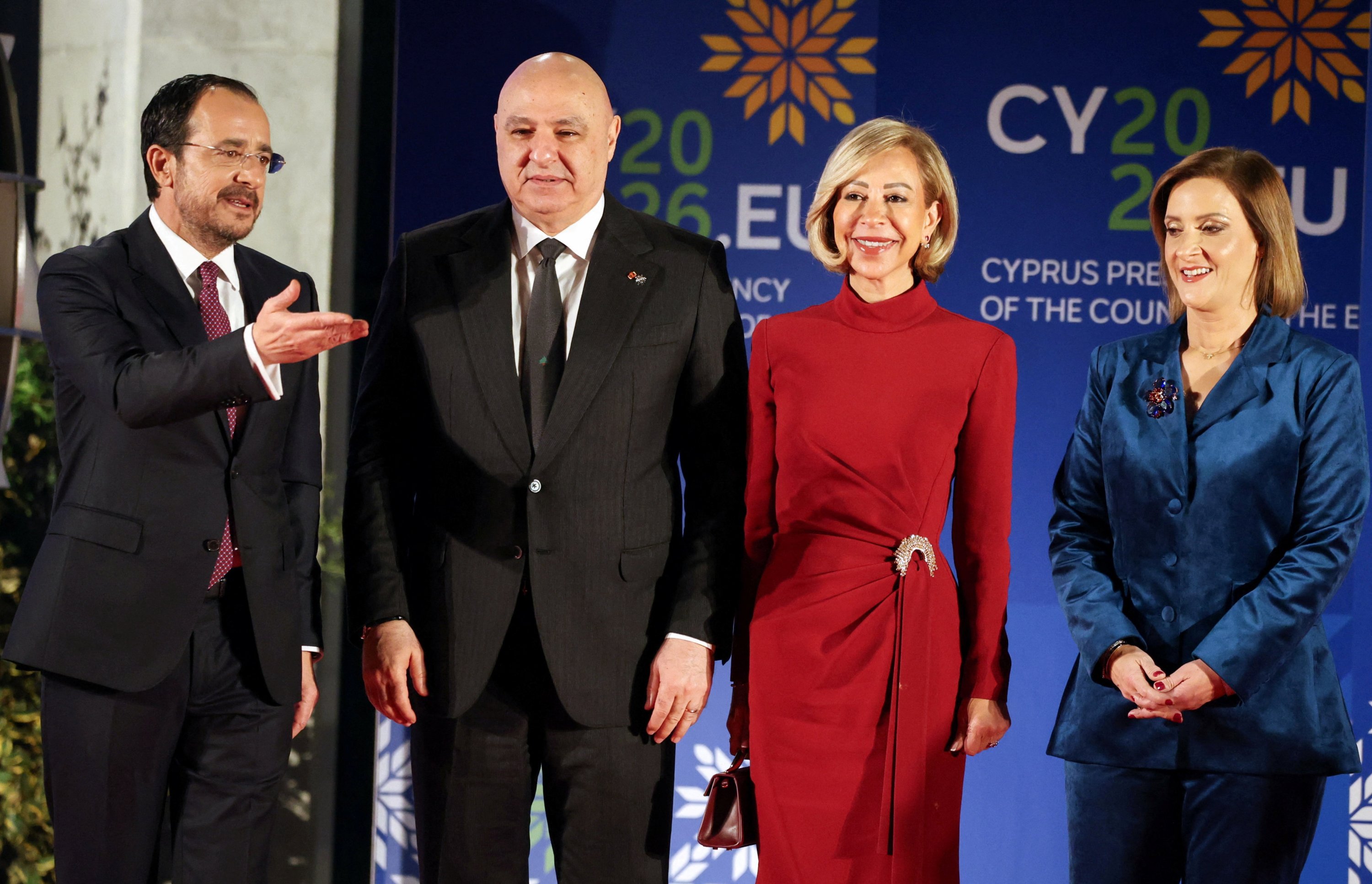
When Lebanese President Joseph Aoun traveled to the Greek Cypriot administration on Jan. 7, 2026, the visit was presented as a routine diplomatic engagement reflecting growing bilateral ties. The meetings took place shortly after the Greek Cypriot administration assumed the rotating presidency of the European Union Council, and the symbolism was carefully managed. Lebanese officials spoke of friendship, cooperation and renewed engagement with Europe.
Yet this visit, and the maritime agreement signed weeks earlier between Lebanon and the Greek Cypriot side, point to a bigger and more consequential change in Lebanon's diplomatic relations. Lebanon is not merely settling a technical dispute or opening a door to energy exploration. It is slowly repositioning itself within a regional order shaped by Western priorities and Israeli security interests, at a time when its own political and economic weakness limits its room for maneuver.
This transition accelerated after the presidential change in January 2025 and the formation of a new Cabinet that quickly established close working relations with Washington and European capitals. In this new political environment, decisions that once required long internal debate are now framed as urgent necessities.
The maritime agreement between Lebanon and the Greek Cypriot administration defines a boundary at sea and clarifies where each side can license offshore exploration. Supporters of the deal argue that this clarity is essential to attract international energy companies and to give Lebanon a chance to benefit from its offshore resources.
There is no doubt that Lebanon needs economic relief. The collapse of public services, the electricity crisis and the erosion of state capacity have left policymakers searching for any credible recovery path. Energy exploration, therefore, appears attractive, not because it guarantees success, but because few alternatives remain.
However, the economic narrative surrounding the agreement obscures important political realities. Lebanon approved the deal through a cabinet decision in October 2025 without completing a full parliamentary ratification process. This has fueled domestic criticism and revived long-standing concerns about constitutional procedure and the protection of sovereign rights. Some Lebanese political figures argue that the agreement may limit future claims over potential maritime areas, while others focus on the precedent of rushing strategic decisions under financial pressure.
More importantly, even optimistic energy scenarios do not promise quick results. Exploration takes years, commercial discoveries are uncertain, and revenues are distant. The political and strategic consequences of alignment, in contrast, materialize immediately.
The Cyprus file must be read alongside the broader political transition that followed January 2025. Western governments and Gulf capitals widely welcomed Aoun and the Cabinet formed in the weeks that followed as a corrective to years of paralysis. This support was not unconditional. It came with clear expectations regarding governance, security policy and regional alignment.
In this context, the Greek Cypriots assumed a special role. Having just taken over the EU Council presidency, the Greek Cypriot administration positioned itself as Lebanon’s main European gateway. Statements from the Greek Cypriot administration openly framed closer EU-Lebanon engagement as a priority of this presidency. The message was subtle but clear. Economic support and political backing would flow more easily if Lebanon aligned itself with the prevailing European and Western vision for the Eastern Mediterranean.
This is where the maritime agreement becomes more than a legal instrument. It becomes a political signal. The new Lebanese leadership is demonstrating its willingness to integrate into a framework dominated by the Greek Cypriot administration, Greece and Israel, and supported by the U.S. and the EU.
From a Turkish perspective, the concern is less about the technical substance of the agreement than about the strategic environment it reinforces. The agreement was concluded without the involvement of the Turkish Republic of Northern Cyprus (TRNC), reinforcing a regional framework in which the rights of Turkish Cypriots are effectively sidelined. In this sense, energy cooperation in the Eastern Mediterranean continues to function as a mechanism of geopolitical alignment rather than inclusive regional governance.
By formalizing its maritime boundary with the Greek Cypriot side, Lebanon becomes part of this evolving structure. Even if Beirut insists that it does not seek confrontation or exclusion, the practical effect is to strengthen an order in which Türkiye has limited influence. This inevitably complicates Lebanon’s relations with a regional actor that remains economically, politically and strategically significant.
For Lebanon, the challenge lies in balancing economic necessity with regional equilibrium. Deepening engagement with one side of an already polarized Eastern Mediterranean risks narrowing diplomatic options rather than expanding them. While the agreement may improve Lebanon’s standing in European capitals, it also embeds the country more firmly within a contested geopolitical map.
The Greek Cypriot agreement is unfolding alongside another sensitive development. In December 2025, Lebanese and Israeli civilian representatives met under U.S. mediation in Naqoura, a coastal town in southern Lebanon near the Blue Line. These talks were described as technical and limited, focusing on practical issues rather than political recognition.
Viewed in isolation, such meetings can be framed as crisis management. Viewed together with the Greek Cypriot agreement, they suggest a gradual process of integration into an Israel-centered regional system. This process does not rely on formal normalization or public declarations. It advances through infrastructure, energy coordination and multilateral frameworks.
For Lebanon, this trajectory is particularly risky. Legal arrangements and economic cooperation do not neutralize the underlying security imbalance with Israel. European involvement does not guarantee restraint if regional escalation returns. Instead, Lebanon risks becoming more exposed, with strategic decisions increasingly shaped by external actors.
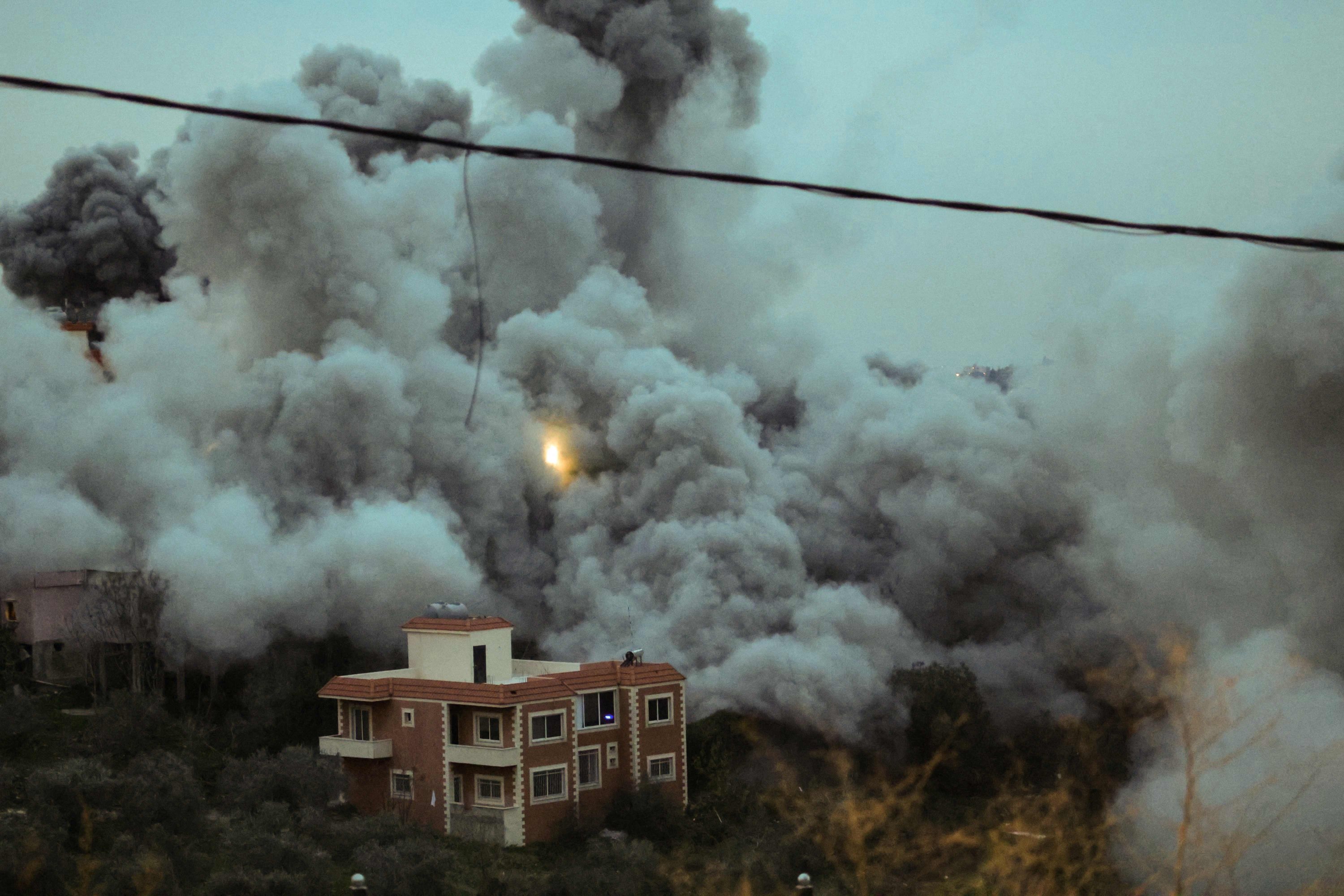

Hezbollah has not openly opposed the Greek Cypriot agreement, nor has it publicly blocked the December 2025 civilian talks. This restraint should not be mistaken for endorsement. It reflects a calculated effort to preserve internal stability and political space during a period of intense pressure.
The movement is acutely aware of Lebanon’s economic collapse and understands that overt obstruction would deepen public resentment. Remaining silent allows Hezbollah to avoid being portrayed as the primary obstacle to recovery while maintaining its focus on more immediate challenges, particularly the expanding disarmament agenda.
At the same time, Hezbollah views the island of Cyprus through a security lens. The island is not only an energy actor but also part of a Western military environment. Past warnings issued by Hezbollah regarding the potential role of the Greek Cypriot administration in a future conflict underline the depth of this concern.
Silence, therefore, should be read as a tactical pause. Hezbollah is buying time to consolidate its position within a rapidly changing Lebanese political order, not signaling acceptance of a strategic shift that could ultimately undermine its deterrence posture.
Supporters of Lebanon’s Greek Cypriot turn emphasize potential investment, closer EU engagement and long-term energy prospects. These opportunities exist, but they are conditional and uncertain. The risks are more immediate and structural.
Lebanon risks constraining its future options by committing to arrangements shaped under economic duress. It risks deepening Eastern Mediterranean polarization by aligning more closely with a contested regional bloc. It risks facilitating indirect normalization with Israel through infrastructure and technical cooperation. And it risks internal tension as external alignment feeds into the unresolved debate over security and disarmament.
At the same time, the new Lebanese leadership is operating under severe constraints. Choices made under crisis are rarely ideal. The question is whether short-term economic calculations are being allowed to override long-term strategic balance.
Aoun’s visit to the Greek Cypriot administration was intended to signal that Lebanon is re-engaging with the region and with Europe. The challenge ahead is ensuring that this re-engagement does not once again reduce Lebanon to a space shaped by external agendas rather than a state capable of shaping its own.
In the Eastern Mediterranean, energy cooperation can offer opportunity, but it can also lock fragile states into asymmetric relationships. Lebanon now faces the difficult task of extracting economic benefit without surrendering strategic autonomy. Whether it can manage this balance remains an open question.