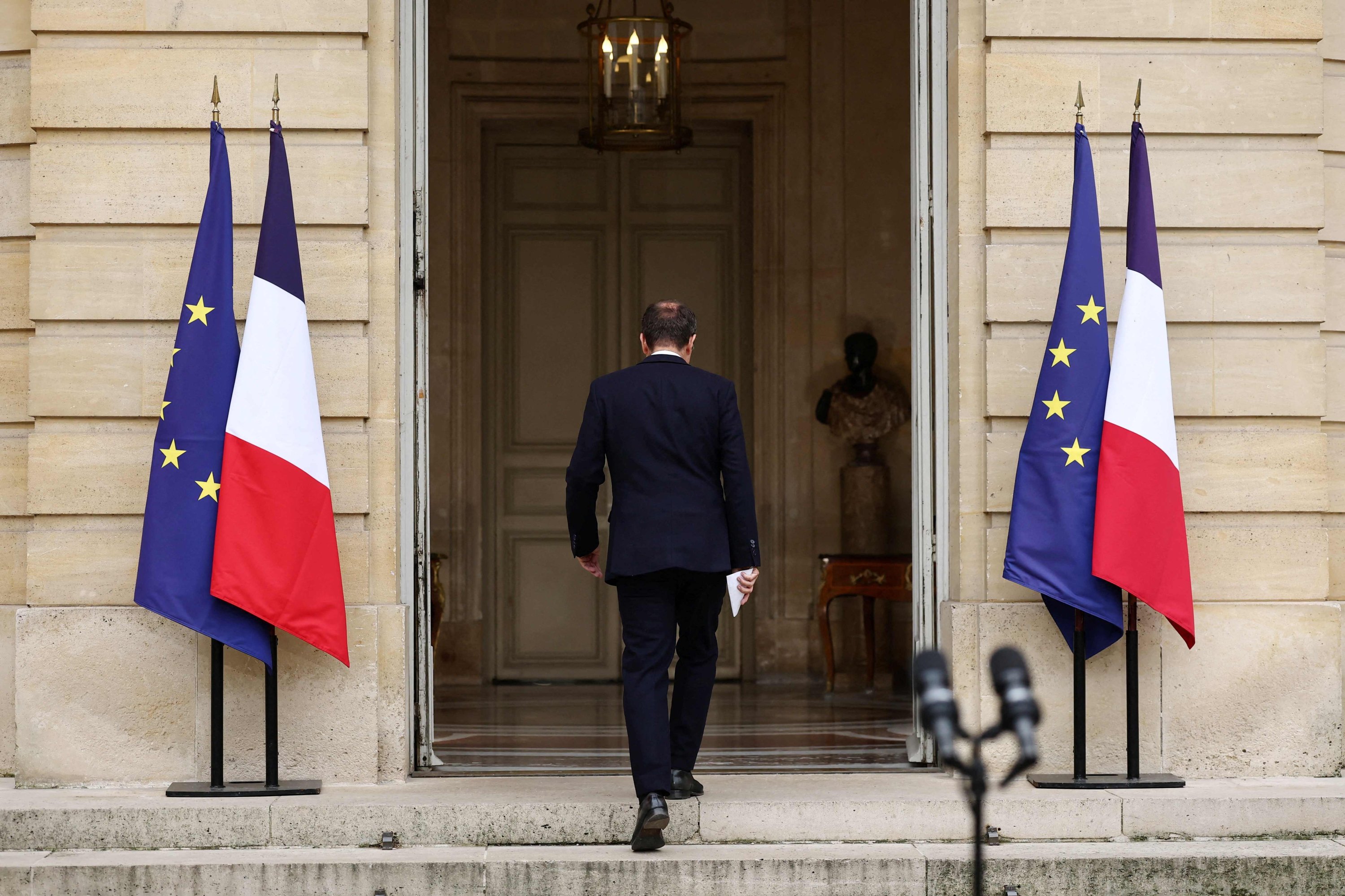
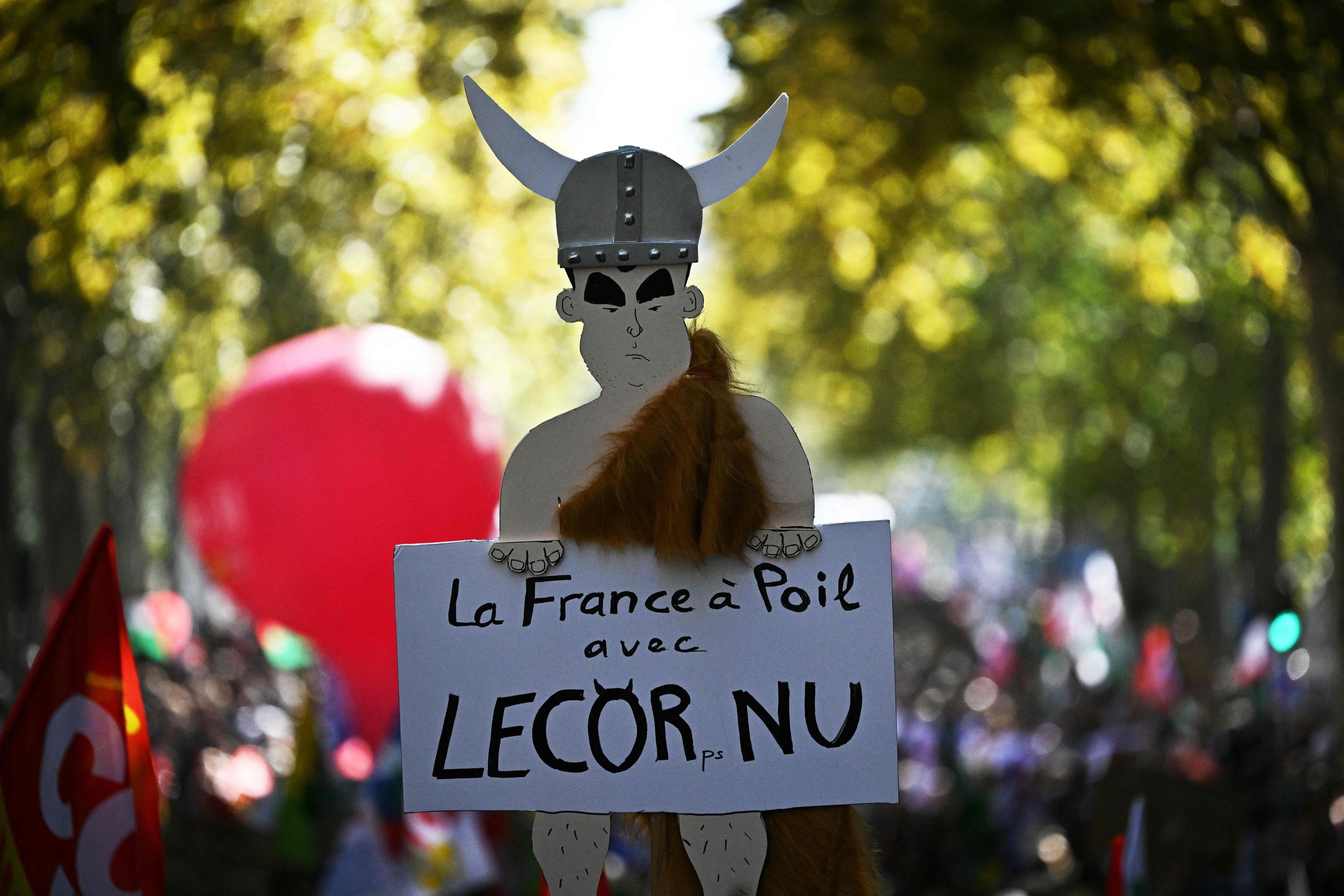
France is experiencing a crisis of empathy, much like on the eve of the Revolution. President Emmanuel Macron’s political authority is rapidly waning, while Prime Minister Sebastien Lecornu, who served for only 26 days, went down in history as the first premier to resign without even setting foot in the National Assembly or facing a confidence vote. What is even more striking is that every intervention by Macron, each appointment of a new prime minister, has shortened the country’s political shelf life and deepened the crisis. The three-way parliamentary split following the June elections has pushed decision-making processes to the brink of paralysis. Budget cuts and the scaling back of energy subsidies are generating a surge of economic frustration and a void of representation, particularly among rural communities and the lower-middle classes in urban areas. The technocratic language of Parisian politics can no longer translate the daily realities of citizens; the emotional distance between the government and the people has become a governance crisis more profound than even France’s most pressing economic problems.
In this environment, Marine Le Pen and the far-right are no longer merely an alternative political force; they have become an inevitable societal reflex responding to the country’s deepening social fissures. The far-right National Rally (RN), speaking for the “forgotten French,” fuels class and cultural divides, while Macron’s management has made the drift of society away from centrist politics increasingly apparent. The core issue is no longer the magnitude of the economic challenges, but France’s eroded capacity to enact meaningful reform. The state has lost the courage to act on taxation, pensions and production policies, and each new political crisis suspends the critical decisions the country desperately needs. If this gridlock persists, the phrase “Let them eat cake” may once again serve as a prophetic reflection of France’s political soul. In such a stifling environment, the only path forward may not be superficial tweaks, but a radical, revolutionary restructuring.
Political turmoil continues in France, and recent developments have created historic uncertainty under President Emmanuel Macron’s leadership. On the night the European Parliament elections were announced, favoring the RN, Macron dissolved the National Assembly, prompting the early general elections of June 2024. No party secured an absolute majority, resulting in a three-way parliamentary split. This fragmentation, coupled with the short and unstable tenures of the prime ministers appointed by Macron, has deepened the government crisis. Within a single year, the Michel Barnier and François Bayrou administrations fell over budget disagreements.
On Sept. 9, 2025, Defense Minister Sebastien Lecornu was appointed prime minister. He announced his government on Oct. 5 and resigned the following day. Lecornu’s resignation came after the Republicans (LR) voiced objections to certain Cabinet appointments and amid high prospects of a no-confidence motion.
Despite Lecornu’s resignation, Macron instructed him to continue provisional government negotiations, with National Assembly President Yael Braun-Pivet and Senate President Gerard Larcher mediating. Following discussions at the Elysee Palace on Oct. 8, Lecornu stated, “There are a few possible solutions on the table; a new prime minister could be appointed within 48 hours,” signaling the process could conclude swiftly and that his mission was complete. Lecornu also noted that political parties showed willingness to approve the 2026 budget before year-end and to reduce the public debt-to-GDP ratio below 5%, though consensus on the approach remained elusive.
Meanwhile, opposition attempts to initiate Macron’s impeachment were rejected by the National Assembly Bureau as “inadmissible.” This simultaneous deadlock at both executive and legislative levels coincided with Macron’s statement, “I will assume responsibility,” indirectly addressing speculation about his resignation. Yet, with three prime ministers replaced in the past year and no single party holding a majority, the governance crisis in France has taken on structural dimensions.
Resolving the current government crisis could take weeks. Macron’s appointment of a new prime minister is caught in a negotiation gridlock among the three parliamentary blocs, significantly slowing the formation of a functional administration. Should the process extend to dissolution of the assembly and early elections, polls suggest the RN would increase its seat count, yet still fall short of an absolute majority.
This scenario underscores that France’s political deadlock risks suspending not only executive authority but also legislative decision-making, budget approval and critical reforms for weeks. Economic matters, including public debt and the budget deficit, remain unresolved, leaving the country exposed both domestically and on the international stage.
France is deepening its fiscal vulnerability with high public debt and a substantial budget deficit. Public debt stands above 116% of GDP, the budget deficit hovers around 5.4%, and social spending remains well above the European average. Economic growth is sluggish, with 2025 projected at 0.6% and 2026 expected to reach only 0.8%, below the European average. This situation leaves the country exposed, weighing on both domestic demand and investor confidence.
Following Bayrou’s resignation, Fitch Ratings downgraded France’s credit rating from AA− to A+ on Sept. 12, 2025, and on Sept. 19, Morningstar DBRS lowered its long-term rating from AA (high) to AA, revising the outlook to stable. The downgrade cited political instability, rising public deficits and the government’s inability to secure parliamentary approval for budget plans. In this scenario, borrowing costs were expected to rise, the 2026 budget to be delayed, and reform efforts temporarily stalled. Lecornu’s resignation has further deepened the crisis.
The political deadlock is now paralyzing fiscal planning. The likelihood of the 2026 budget being approved before year-end is diminishing, making it highly probable that France will start the new year under an extension of the 2025 budget. This not only constrains new spending initiatives but also limits reform and fiscal consolidation efforts. This trajectory positions France as the most financially fragile EU member and increases pressure from the European Commission.
The economic repercussions are stark: businesses and households have adopted a “wait-and-see” approach, with growth lagging at 0.6% in 2025 and a modest 0.8% in 2026, below the European average. Following Lecornu’s resignation, the euro fell roughly half a percent against the dollar; while likely a one-off reaction, prolonged political uncertainty could weigh on France’s economic stability for months to come.
Polls indicate that in the event of early elections, the far-right RN would increase its seat share, though it would still fall short of an outright majority. This scenario underscores how economic and political uncertainty in France is feeding into a self-reinforcing vicious cycle.