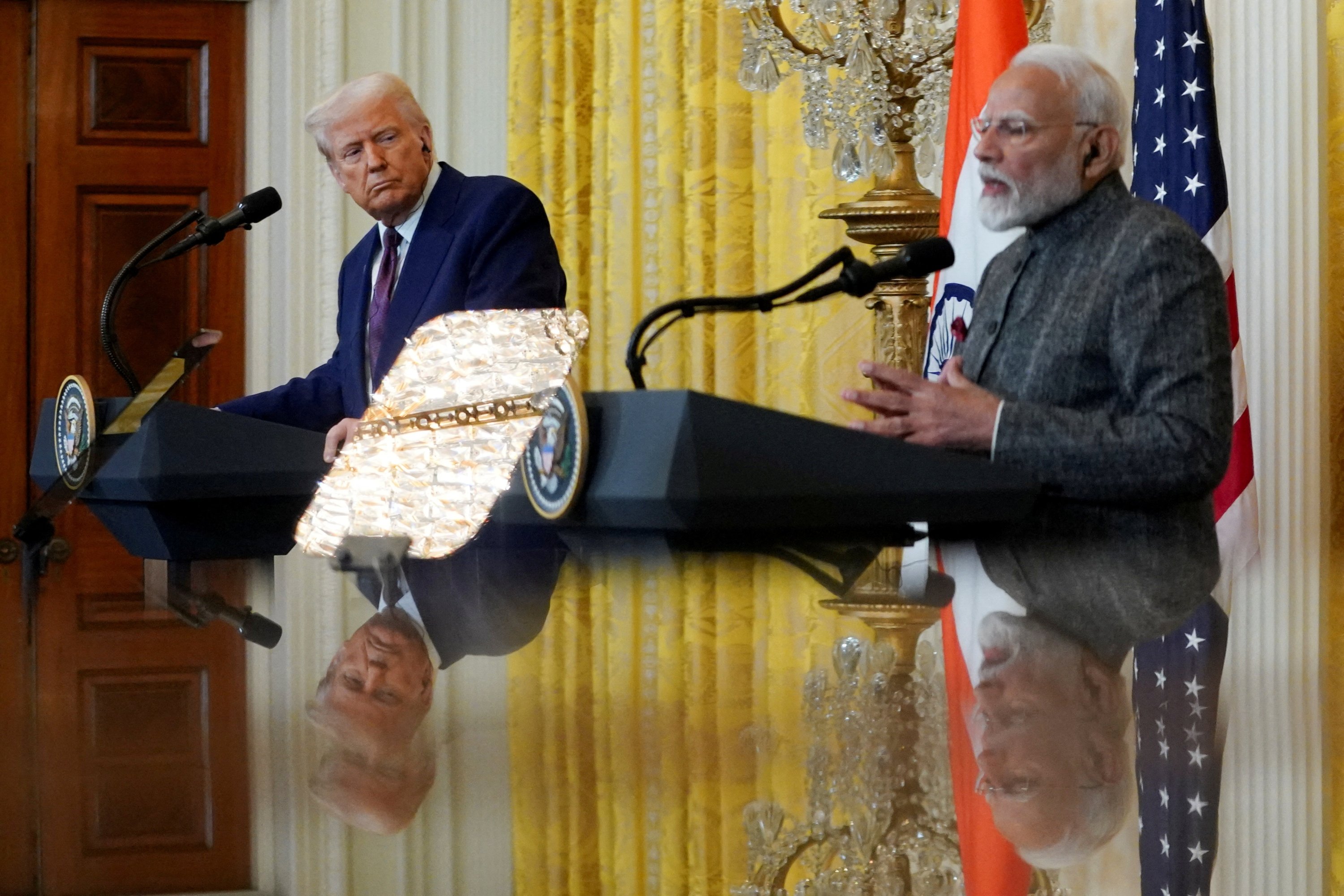
Indian Prime Minister Narendra Modi decided to stay away from the recently held Association of Southeast Asian Nations (ASEAN) Summit in Kuala Lumpur, where U.S. President Donald Trump made a grand appearance. Modi chose the low-key option of participating in the regional summit virtually.
It was speculated for weeks that Modi and Trump would meet in Malaysia and try to bridge U.S.-India differences regarding a host of issues. Modi's rather late decision to skip the summit suggested India did not see benefits in a Trump meeting. Trump's tendency to make bold statements about India is viewed with concern in India's foreign policy establishment. It also became apparent that the two countries had unresolved issues in their ongoing talks to have a bilateral trade agreement, which is likely to bring relief to India from Trump's punitive tariffs.
India has faced serious U.S. pressure to stop buying Russian oil. This basically means that the U.S. wants India to join Western efforts to strangulate Moscow economically over the Ukraine war. Indian goods entering the U.S. are subjected to 50% tariffs, including a 25% penalty for India's energy trade with Russia.
A long delay in reaching a trade deal with the U.S. will hurt the bilateral economic partnership, which was worth $128.9 billion in merchandise trade and $83.4 billion in services trade in 2024, as per U.S. data.
The U.S. wants India to open up its dairy and agriculture sectors to American exporters as it seeks to cut its $45.8 billion goods trade deficit with India. However, the issue for India is politically, economically and electorally sensitive due to the millions of jobs that these two sectors provide. There is also an element of economic nationalism.
U.S. Commerce Secretary Howard Lutnick, in September, complained that India, despite its large population, does not buy even a small amount of American corn.
"Why won't 1.4 billion people buy one bushel of U.S. corn? Doesn't that rub you the wrong way that they sell everything to us, and they won't buy our corn? They put tariffs on everything," Lutnick said.
That kind of tough talk has been missing in recent weeks as the U.S. and India have tried to be more conciliatory toward each other in public.
Modi and Trump have spoken over the phone and underlined the strength of U.S.-India bilateral relations, but Trump's outspokenness on various issues, including the May military clash between India and Pakistan, makes Indian officials uneasy.
Trump has recently said that India will stop buying Russian oil soon. India has not confirmed such an eventuality or lent credence to Trump's claim. Modi "has assured me that there will be no oil purchase from Russia," Trump told the media at the White House on Oct. 15. Trump said if India stops buying Russian oil, it will help him in his efforts to achieve peace between Russia and Ukraine. Modi could have discussed the energy trade as well as the Russia-Ukraine war with Trump had he traveled to the ASEAN meeting.
Other major issues that have created headaches for the Indian government are Trump's imposition of massive fees for new H-1B visas and the U.S. president's repeated assertions that he brokered the May cease-fire between India and Pakistan.
About 70% of those hired under the H-1B visa program, a category used by U.S. employers to recruit foreigners for specialized jobs for which American workers are not available, are Indians. This visa category offers a route for Indian professionals to settle in the U.S.
Trump's penchant for taking credit for the swift end to the May clash between the two nuclear-armed South Asian countries dents India's narrative on the matter. Trump has said many times, at home and on foreign tours, that he used the threat of tariffs to tell India and Pakistan to stop the fight. India disagrees with the assertions. Pakistan, on the other hand, wholeheartedly praises Trump for averting a "catastrophic war" with his timely intervention. To India's displeasure, Trump has publicly praised Pakistan Prime Minister Shehbaz Sharif and army chief Field Marshal Syed Asim Munir.
While its relations with the U.S. are in a difficult phase, India has used a bit of semiotic diplomatic display as if to send a message that it is not isolated due to differences with the U.S.
While participating in the recent Shanghai Cooperation Organisation (SCO) summit in China, Modi had well-publicized meetings with Chinese President Xi Jinping and Russian President Vladimir Putin. He also enjoys the limelight on foreign visits, and the high-profile Malaysia gathering of foreign leaders would surely have produced excellent optics for him. However, being in Trump’s presence without breakthroughs on trade, tariffs and energy would have only created awkwardness for the Indian leader.