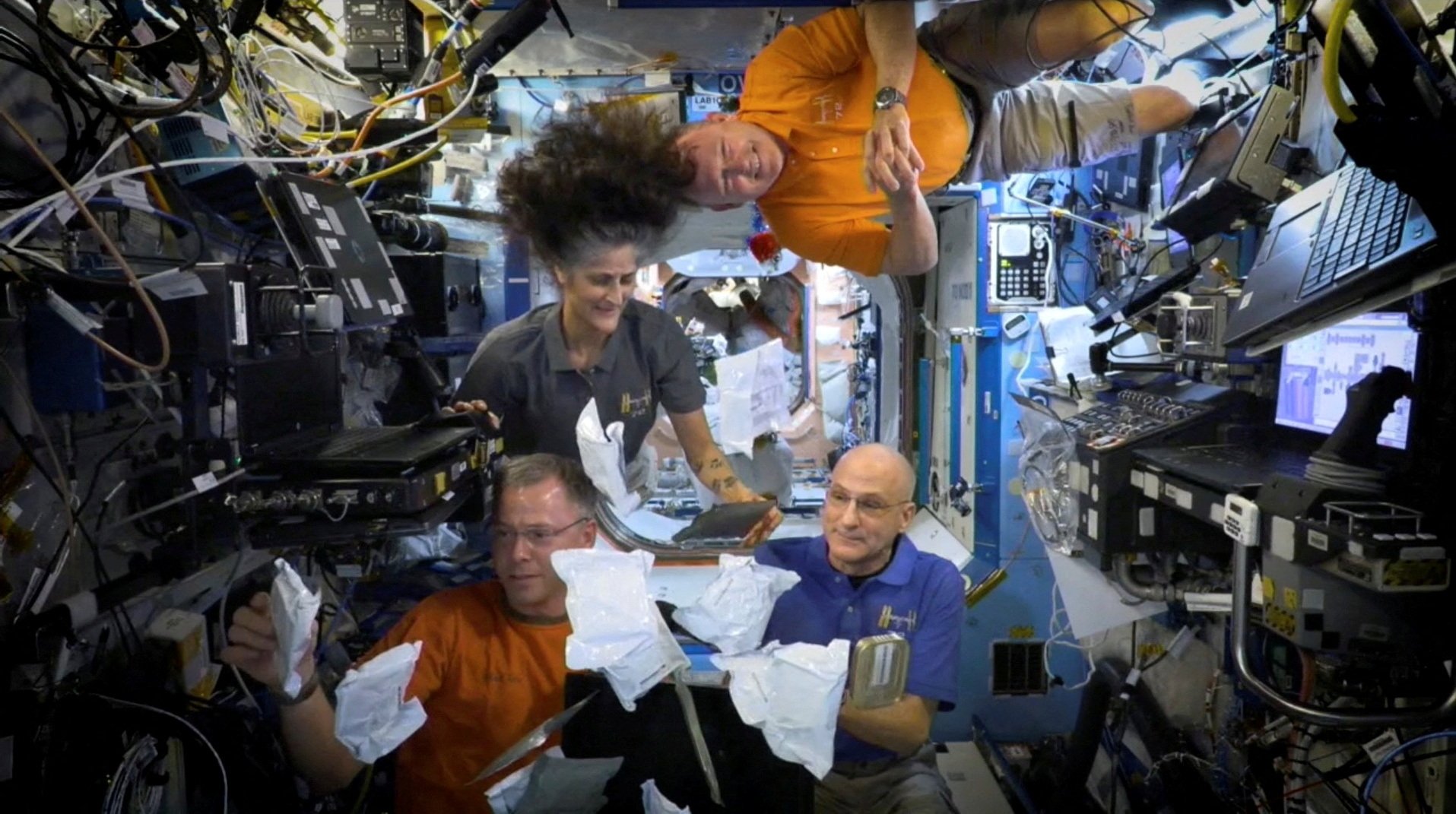
Billionaire and owner of SpaceX, Elon Musk’s recent call to deorbit the International Space Station (ISS) ahead of its planned retirement has sparked a heated debate in the space community. His argument is straightforward: The ISS has served its purpose and provides diminishing scientific returns, so it is time to redirect resources to more ambitious goals, such as Mars colonization. But is this a viable course of action?
NASA and its international partners have extended ISS operations until 2030, citing its vital role in scientific research, technology testing and international collaboration. The station has been humanity’s home in orbit for over two decades, providing invaluable data on long-duration spaceflight and microgravity research. Moreover, the transition to commercial space stations, expected to replace the ISS, is still in its infancy and may not be ready by 2030.
Musk’s stance echoes past U.S. policy discussions, particularly during the Trump administration, which floated the idea of privatizing the ISS to shift focus toward deep space exploration. However, the political landscape has since changed, and current U.S. policy supports maintaining ISS operations through the decade's end. Abruptly ending the program, as Musk suggests, could create a gap in low Earth orbit presence, ceding strategic advantage to other nations, particularly China, with its Tiangong space station.
In June 2024, NASA selected SpaceX to develop the U.S. Deorbit Vehicle (USDV) to deorbit the ISS safely. This spacecraft will dock with the ISS and control its descent at the end of its mission. The contract is valued at $843 million, and NASA will oversee the final deorbiting process. This move ensures that the United States has complete control over the station’s safe disposal, reducing dependence on Russian modules for orbital adjustments.
NASA’s long-term vision includes commercial space stations taking over ISS functions, but these projects are still in development. Rushing the ISS’s retirement could jeopardize the transition, leaving a void in space-based research and human presence in orbit. While Musk’s vision of interplanetary expansion is laudable, dismantling existing infrastructure without a straightforward replacement could be a setback rather than progress.
Additionally, the ISS plays a crucial role in astronaut training and deep space mission preparation. The research conducted aboard the station provides essential data on human health in microgravity, radiation exposure, and closed-loop life support systems – critical for future missions to Mars. By ending ISS operations prematurely, NASA risks losing a vital testing ground for future deep space exploration.
Roger Launius, a NASA historian, has also warned against an early withdrawal from the ISS, stating, "Turning off the lights at our only advanced outpost in space and walking away makes no sense." According to Launius, the ISS is not just an American asset but a global infrastructure, and abandoning it could harm U.S. leadership in space. Many analysts also emphasize that long-term experiments on the ISS, such as those on human health, material science and astrobiology, require as much time as possible to yield meaningful results.
Russia confirmed its participation in ISS operations until at least 2028, delaying previous concerns of an early withdrawal. However, aging Russian modules, including the Zvezda module, have experienced air leaks and technical failures, emphasizing the growing maintenance costs of the ISS. This raises concerns about whether NASA and its partners must accelerate deorbit plans if technical issues worsen.
NASA’s long-term vision includes commercial space stations taking over ISS functions, but these projects are still in development. Axiom Space plans to launch its first independent space station module in 2027, which will initially attach to the ISS before detaching as a free-flying station. Blue Origin’s Orbital Reef and Voyager’s Starlab continue to progress, with NASA funding three separate commercial LEO station concepts to replace the ISS. However, none of these stations will be fully operational before the ISS retires, raising concerns about a potential research and human spaceflight gap in low Earth orbit.
This debate has also taken on political overtones. Recently, NASA was forced to respond to an email sent by former President Donald Trump’s campaign to federal employees, in which Trump criticized the agency’s current leadership and space priorities. The email also reportedly asked NASA employees to submit reports detailing their weekly activities and accomplishments. In response, NASA Administrator Bill Nelson reaffirmed the agency’s commitment to scientific research, deep space exploration and international collaboration. The timing of Musk’s ISS remarks, alongside these political developments, raises questions about how space policy will be shaped in the coming years and whether partisan politics will influence decisions about ISS’s future.
NASA’s budget now prioritizes ISS deorbit and transition, allocating more than $180 million toward deorbit vehicle development and over $100 million annually for private station projects. U.S. officials are worried that if the ISS deorbits before a replacement is fully functional, China’s Tiangong station could become the only human-occupied space station in orbit.
A more pragmatic approach would be a phased transition, allowing private companies like SpaceX, Axiom and Blue Origin to integrate their modules into ISS operations before a complete shift to independent commercial stations. The goal should be continuity, ensuring that the momentum built over decades is not lost in a premature exit.
Ultimately, the ISS’s fate is a matter of international cooperation, strategic planning and technological readiness. While Musk’s bold statements stir necessary conversations, the decision must balance ambition with pragmatism. A gradual phase-out with careful planning would be more beneficial for all stakeholders, ensuring a seamless transition to a new era of space exploration.