Beyond the immediate anger, the streets of Iran carry the weight of a half-century stalemate. What’s unfolding now is a decisive rupture in an authority that demands endless sacrifice to fund proxies abroad while failing to deliver the basic functions of a state at home.
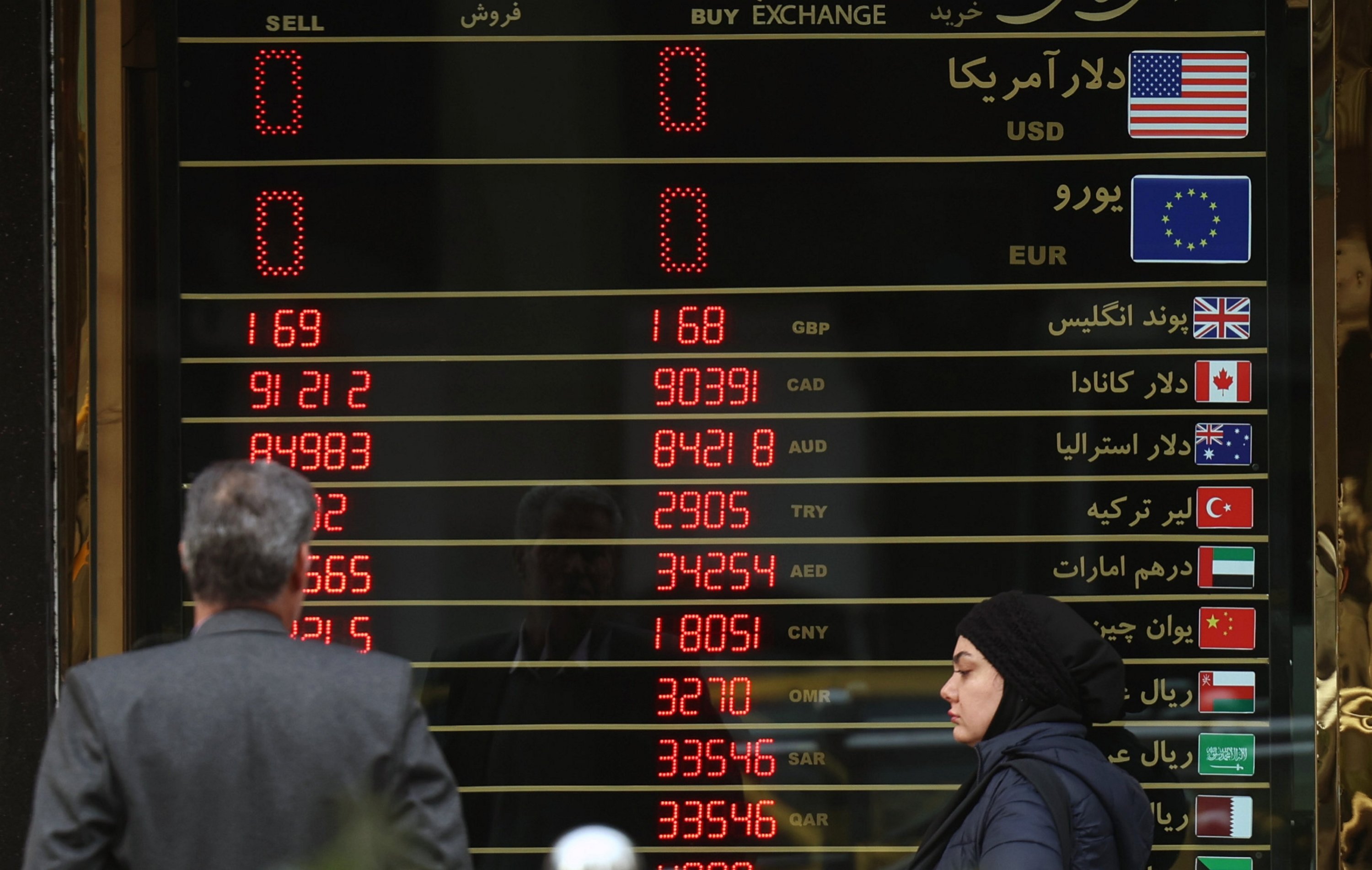
By mid-January 2026, the Iranian rial had reached a functional zero: so depleted that it no longer functioned as money in daily life. In that space, barter, dollarization and survival pricing replace normal economic life. With open-market rates now in the seven-figure range per dollar, pricing has become a matter of guesswork, and savings have turned to ashes. Trump’s Jan. 12 announcement of a 25% tariff targeting Iran’s trading partners arrived late to the story. The economy was already collapsing under its own weight.
This wave of unrest began where the Islamic Republic had long expected obedience: the marketplace. When the Grand Bazaar shuttered its doors in late December amid currency collapse, rising prices and economic despair, the regime lost its most vital pillar of legitimacy. That origin point changes the regime’s focus. A protest born in lecture halls can be dismissed as elite agitation or packaged as foreign-backed provocation. But when it courses through the commercial arteries of Mashhad and Kermanshah, it signals a cross-class alignment. Reported chants calling for “Neither Mullah nor Trump” capture a working-class realism: the theocracy has emptied pockets at home, yet externally imposed solutions, such as a Pahlavi restoration or a Multilateral Investment Guarantee Agency (MIGA)-style U.S.-backed intervention, risk trading one form of dependency for another.
At the center of this crisis is a structural deception that the public has finally outgrown. In Tehran, the "elected" leaders, like the president and Parliament, are mere administrators. They are tasked with managing the inflation and the optics, but they hold little power over policy compared to the appointed rulers of the regime. Real authority resides in the appointed clerical elite and the Islamic Revolutionary Guard Corps (IRGC). While President Pezeshkian offers rhetorical empathy, the IRGC’s "Tharallah Headquarters" dictates the street response.
The tragedy of the Iranian voter is that they are permitted to choose the face of the government, but never the hands that squeeze the trigger. This disparity between the powerless elected and the absolute appointed is the friction point where the protests are gaining heat. And as the regime’s trust in ordinary coercion erodes, it reaches for harder instruments.
Reports of Iraqi Shiite militias moving into Iran in mid-January point to a leadership pushing down harder. Analysts have tracked reported deliveries of Russian-made armored vehicles and other security hardware recently, a signal that Tehran is preparing for a prolonged internal siege. While estimates remain fiercely disputed under the blackout, rights groups cite verified figures in the thousands. A recent Sunday Times investigation cites medical networks that claim far higher numbers that cannot be independently confirmed. The internet blackout is also a time-buying tactic. Tehran is betting that isolation can interrupt mobilization and blunt the 40-day mourning cycle that has historically turned funerals into political momentum.
On Jan. 8, the state severed the national internet, attempting to turn a proto-revolution into a silent massacre. Now, by labeling protesters as participants in an internal war, the appointed judiciary, which answers only to the Supreme Leader, has moved the crisis into the realm of the gallows. This is how the regime closes an argument it can no longer win: arrests that turn into disappearances, forced confessions that reappear on state television, and verdicts delivered as swift justice.
Yet, within the system, hedging is underway. Latest reports say a senior Iranian diplomat at the United Nations office in Geneva has sought asylum in Switzerland, and opposition-linked reporting claims senior figures and privileged networks are shifting assets abroad, including large sums routed through Dubai. Whether every figure is accurate or not, the direction of travel is the point: the state is tightening the door with one hand while the elite tests exit routes with the other. In short, there is one rule for the street, another for the state.
A joint E3 condemnation from Germany, France and the United Kingdom, plus German Chancellor Friedrich Merz’s remark about the regime’s “final days and weeks,” signals that the era of critical engagement is over. Europe is shifting because Tehran has left it little to work with. While exporting crises through its proxy network, it governs less and coerces more.
For decades, the regime treated “Revolution” as identity and “governance” as a secondary task. That hierarchy is now visible in what the state chooses to sustain. While households endured the hardship, Tehran kept financing its “Axis of Resistance.” From Hezbollah and the Houthis to Hamas, the regional project has been fed with a reflexive intensity. The logic was to externalize conflict to justify domestic repression as national defense. However, the main issue with that logic hits a wall when the citizen is asked to absorb deprivation so a militia in a distant capital can maintain a front line. Eventually, the public stops hearing “resistance” and starts protesting as the gap widens between ordinary citizens and the appointed elite.
A ready-made figure, Reza Pahlavi, the exiled son of Iran’s last shah, has increased his public presence as the crisis unfolds. The significance of this remains contested. Exile politics can amplify recognizable figures even when the on-the-ground organization is limited. The U.S. president adds another layer of risk by telling protesters to “hold the line,” repeating that “help is on the way,” and keeping “all options” rhetorically alive. But slogans do not shield bodies. Loud messaging without protection widens the gap between expectation and reality, and the bill is paid in arrests, disappearances and hangings.
One Iranian I spoke to argued that Pahlavi’s usefulness – if the regime falls – may be transitional rather than monarchical: a recognizable catalyst who can keep regional channels open, speak to leaders like President Recep Tayyip Erdoğan and U.S. President Donald Trump, and buy time until democratic elections are organized. In that reading, his Jan. 14 contact with figures close to the Trump administration fits less as a restoration bid and more as contingency diplomacy aimed at avoiding a Libya-style vacuum.
Consistent with that posture, Pahlavi has also proposed a strategic roadmap he calls the “Cyrus Accords.” Framed as a reply to the regime’s proxy wars, it promises to expand the Abraham Accords to include a free Iran and normalize relations with Israel and the West. Supporters argue it also gestures toward a different export model: not drones and coercion, but energy, infrastructure, and water and energy cooperation that could plug a post-regime Iran into a more rules-based regional order. To some, this signals monarchical restoration, to others, pragmatic diplomacy.
The 2026 protests look like the most consequential because they are driven by the collapse of basic reality. A regime can survive being unpopular, but it cannot survive a currency that stops working and core constituencies that stop obeying. Trump’s tariff threat is built to contaminate global boardrooms, forcing neighbors like Türkiye to choose between trade with Iran and U.S. market access. From Washington, the posture remains performative but strategically unsettling: the 25% move is a pressure tactic meant to keep Tehran in diplomatic alarm and domestic tension at a boil.
On the ground, people are trapped between a regime that spends their savings on proxies and crowd control, and a superpower that treats their pain as leverage. That is the meaning of “Neither Mullah nor Trump.” It is a sovereignty demand against clerical rule at home and patrons abroad.