Türkiye and Hungary have emerged as two prominent mediating and diplomatic actors in the Russia-Ukraine War, which has become the most significant security crisis in the international system since 2022. From the very beginning of the conflict, both countries took consistent and meaningful steps to bring the parties back to the negotiation table, and today they remain among the few actors still pursuing diplomatic channels.
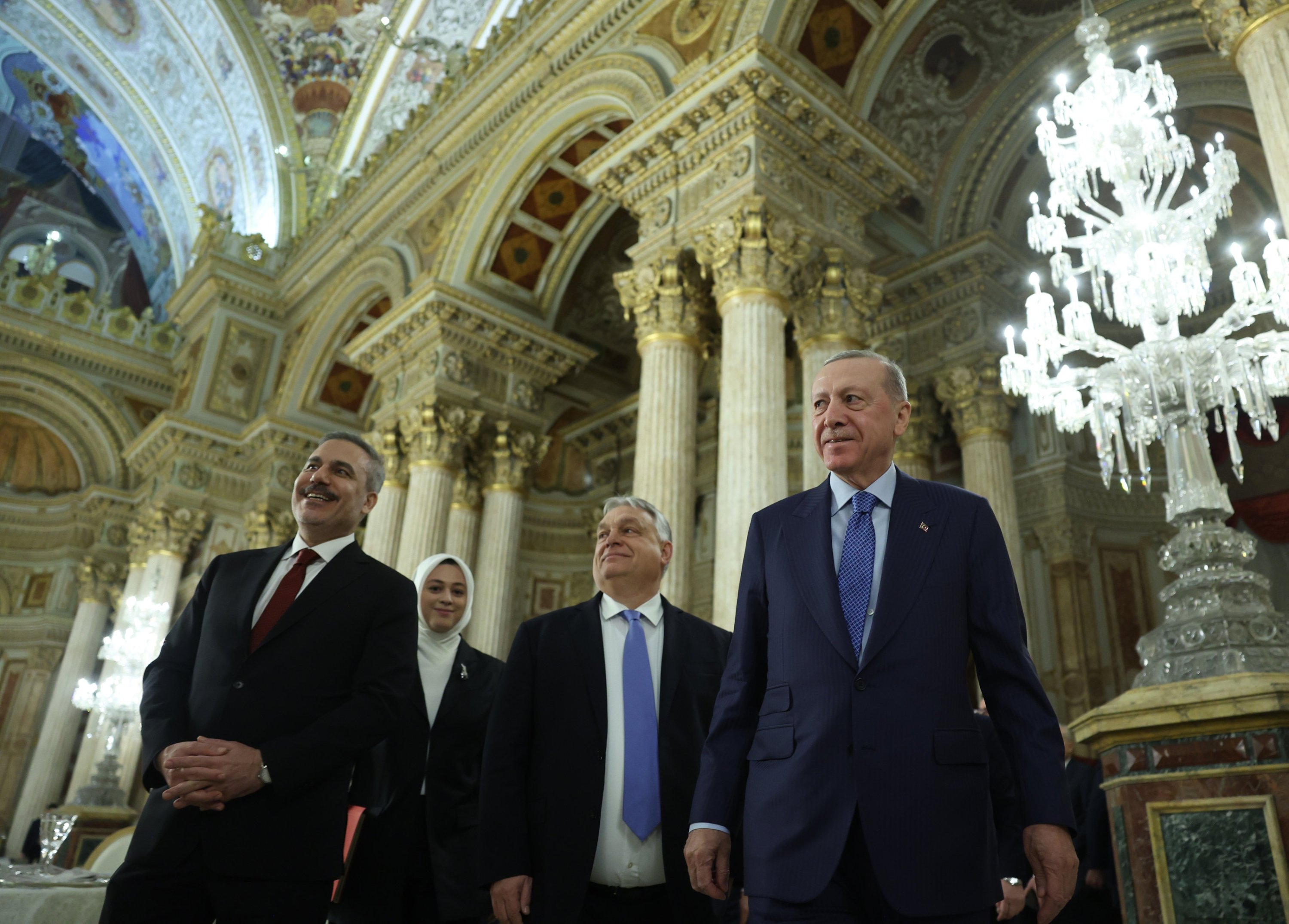
Most recently, during the seventh meeting of the Türkiye-Hungary High-Level Strategic Cooperation Council, President Recep Tayyip Erdoğan and Hungarian Prime Minister Viktor Orban met in Istanbul. In light of recent developments, this meeting, particularly its timing and location, stands out as remarkably significant. The leaders’ choice to convene at Dolmabahçe reflects not only the articulation of a forward-looking vision for Türkiye-Hungary relations but also a diplomatic move grounded in a realistic reading of the current international environment. In this regard, the meeting should be interpreted not simply as a step to strengthen bilateral relations, but as a reflection of the deepening security crisis caused by the protracted war, the fragility of Europe’s energy architecture, and the structural shifts associated with the transition toward a multipolar global order. The Dolmabahçe meeting, therefore, represents a critical step, both affirming the peace-oriented strategic alignment of Türkiye and Hungary and marking the starting point of a broader geopolitical assessment.
The establishment of the Türkiye-Hungary Strategic Cooperation Council in 2013 and its steady continuation since then is highly telling, and the timing is far from coincidental.
The year 2013 represents a turning point in Russia-Ukraine relations. Following the 2008 Bucharest Summit, NATO’s gradual expansion toward former Soviet regions, especially Ukraine and Georgia, alongside the EU’s eastward economic and political enlargement triggered alarm bells in Moscow over its red lines. This tension escalated in 2013-2014, culminating in Russia’s annexation of Crimea, the first major territorial confrontation between the two countries.
Thus, the enhancement and systematization of Türkiye-Hungary cooperation during this period were not merely the natural evolution of bilateral relations; they were also a strategic response to the transformations taking place in the global system. Although the future in international relations can change within 24 hours, it is evident that Russia’s next moves, particularly in the Eurasian context, require close monitoring. In this sense, the Türkiye-Hungary axis may be seen as one of the earliest building blocks of a reshaped regional security architecture.
Türkiye-Hungary relations serve not only bilateral interests but also carry strategic importance for the broader Turkic world-Europe interface. Deepening cooperation in energy security, defense industry partnerships and peace diplomacy positions the bilateral relationship as a crucial bridge, enhancing the visibility and influence of the Turkic world within Europe. Within this framework, deciphering the diplomatic signals of the recent meeting requires attention to several key dimensions.
The choice of Dolmabahçe was not a mere technical or protocol-related decision. Instead, it reflects Türkiye’s symbolic spatial strategy in diplomacy, particularly in the context of its recent mediation efforts. Dolmabahçe is a space that carries the institutional memory of Türkiye’s international peace initiatives and serves as a strategic stage that reinforces the Ankara-Budapest partnership. Hungary’s and Türkiye’s shared pro-peace approach underscores the continuity of stability and peace diplomacy.
Like Türkiye, Hungary has been the only EU member state that consistently opposes escalating the war. Both countries have kept diplomatic channels open since the outbreak of the conflict and are among the very few NATO members insisting on dialogue. Thus, the choice of Dolmabahçe carries a powerful message: it is a symbolic reactivation of the peace process.
As the war approaches its fourth year, both Türkiye and Hungary stand out in Europe for their insistence on diplomatic solutions in the face of increasingly militarized rhetoric. This issue reflects their shared conviction that peace is indispensable for Europe’s long-term security. Türkiye’s early mediation efforts in 2022 established a diplomatic baseline, while Hungary’s position within the EU has sustained a pro-peace discourse that aligns closely with Ankara's.
A third central theme highlighted in the 16-article cooperation agreements is energy. Since 2022, most European states have imposed restrictions on Russian energy imports. Hungary, however, continues to receive Russian energy under exemption clauses. This continuity stems from Hungary’s structural dependence on Russian energy and the lack of viable alternatives that can be deployed rapidly or cost-effectively. The risks and financial burdens of redirecting energy flows further constrain Budapest’s options.
In this regard, Hungary’s collaboration with Türkiye through projects such as the Trans-Anatolian Natural Gas Pipeline (TANAP) is crucial. Increasing the number of such initiatives will not only diversify Hungary’s supply routes but also create new, reliable and sustainable energy corridors extending through Türkiye. This positions Türkiye as a key actor in Europe’s long-term energy security architecture.
A fourth dimension of the partnership is the defense sector. Türkiye and Hungary are two NATO members capable of producing complementary defense capacity. Türkiye’s rise as a global defense supplier has opened a new area of cooperation with Hungary based on mutual trust. Hungary’s modernization goals, aligned with NATO’s 2030 vision, including unmanned aerial vehicles (UAVs), armored vehicles, and advanced security systems, make cooperation with Türkiye a highly rational and strategic choice. The proven performance of Turkish defense firms in global markets reinforces this synergy.
Consequently, this multidimensional cooperation provides Europe with a peace-oriented platform and an energy-security axis at a time when militarization is intensifying across the continent. Deepening Türkiye-Hungary coordination will therefore continue to serve as an important stabilizing force in the regional security environment.