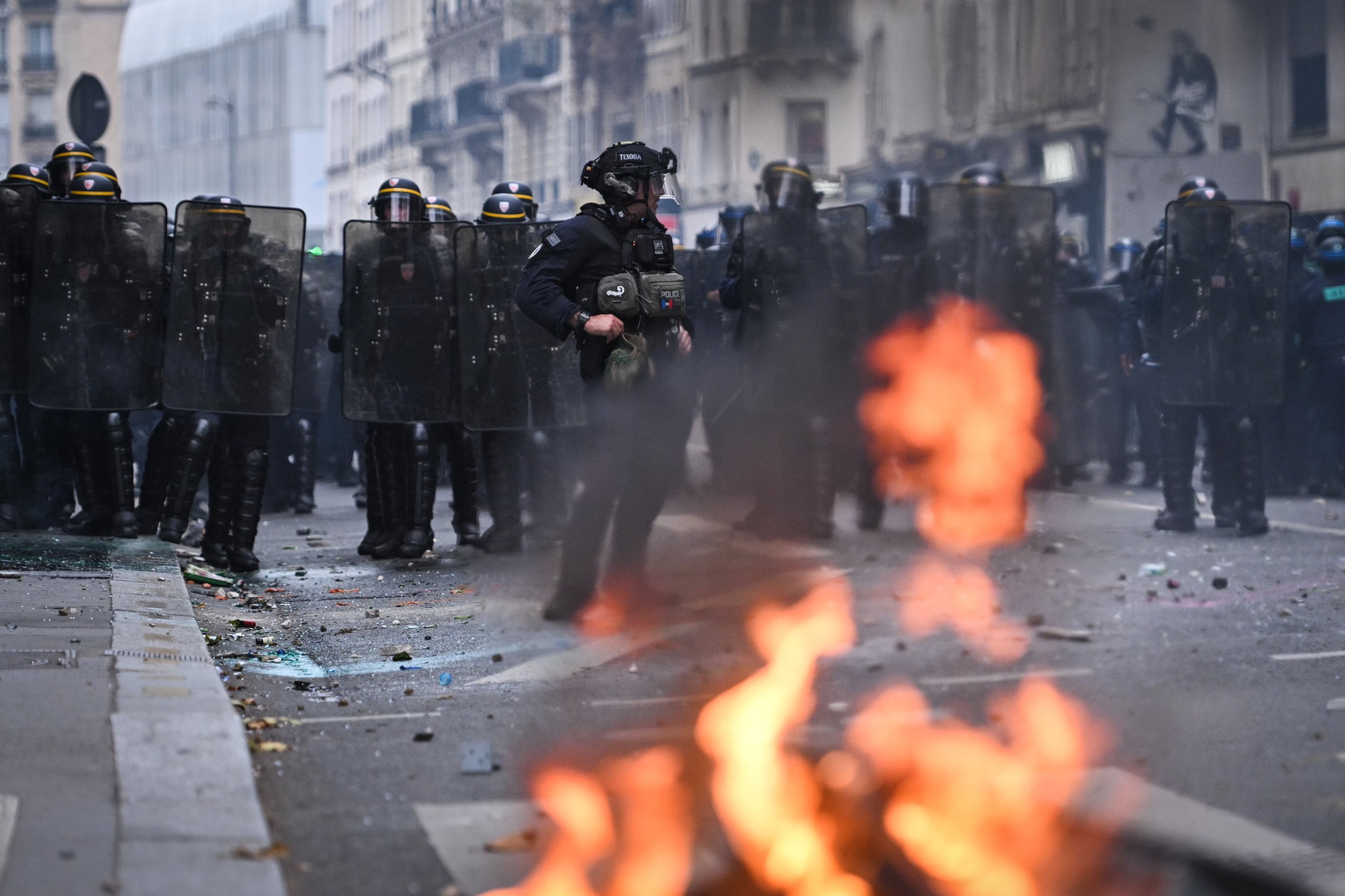
European actors have experienced the bitter taste of overlapping crises. The ongoing protests by high-school and university students in France are the latest to prompt analysis of the serious challenges facing Europeans. However, France is not alone. Last week, Spain was shaken by protests following the eviction of an elderly woman amid an ongoing housing crisis. Both crises have affected the electoral process in France and Spain, respectively, and some argue that widespread resentment and anger may strengthen support for anti-establishment, populist right-wing parties.
The rise of far-right parties across much of Europe shows that the search for anti-establishment solutions is no longer confined to small groups or specific regions of the continent. Instead, growing segments of European society appear increasingly drawn to radical alternatives in response to persistent social, economic and political challenges.
Observers are hardly surprised by the rise in social unrest and the increasingly risky political maneuvering between establishment and anti-establishment forces. Public anger is understandably alarming, and since the 1990s, both established political actors and their radical challengers have exploited this fear to advance their agendas. It is an old political game in which both sides benefit from deepening polarization.
Over time, anti-establishment movements have become genuine political alternatives, while the establishment has weakened social rights and the position of the middle class, and introduced strict anti-immigration measures as a supposed remedy for middle-class anxieties. These measures have targeted mainly irregular migration, but at times also regular migrants and other forms of movement within Europe.
The argument that “people want this; otherwise, they will vote for the radical right” has become a key justification for creating new categories of “outsiders.” These include not only immigrants, but also people at the bottom of the social ladder, residents of deprived neighborhoods, and those perceived as losers. It is a vicious circle, but anti-establishment right-wing parties have benefited the most from it. They also call for a reassertion of authority by the powerful center to put an end to what they portray as the “anarchy” of the sans-culottes. We saw a similar response from far-right parties during the recent student protests in France. Far-right leader Marine Le Pen called for expanding police powers to deal with rioters.
The economic and social crises facing the middle class cannot, of course, be explained solely by the co-optation of establishment and anti-establishment forces. Since the 1990s, Europe has gradually lost competitiveness against its rivals amid changing consumption patterns and the rise of new technologies. Trump-style protectionism and pragmatism have further narrowed the room for maneuver available to European actors and economies. Meanwhile, “Make Europe Great Again” (MEGA), and similar political slogans and narratives, have promoted an illiberal, revisionist agenda rather than offering redistributive justice as a response to public anger.
In light of these developments, observers warn that public anger must this time be taken seriously. Europe as a whole is now facing a critically important geopolitical and geoeconomic crisis. This is why the win-win formula between establishment and anti-establishment forces may no longer work.
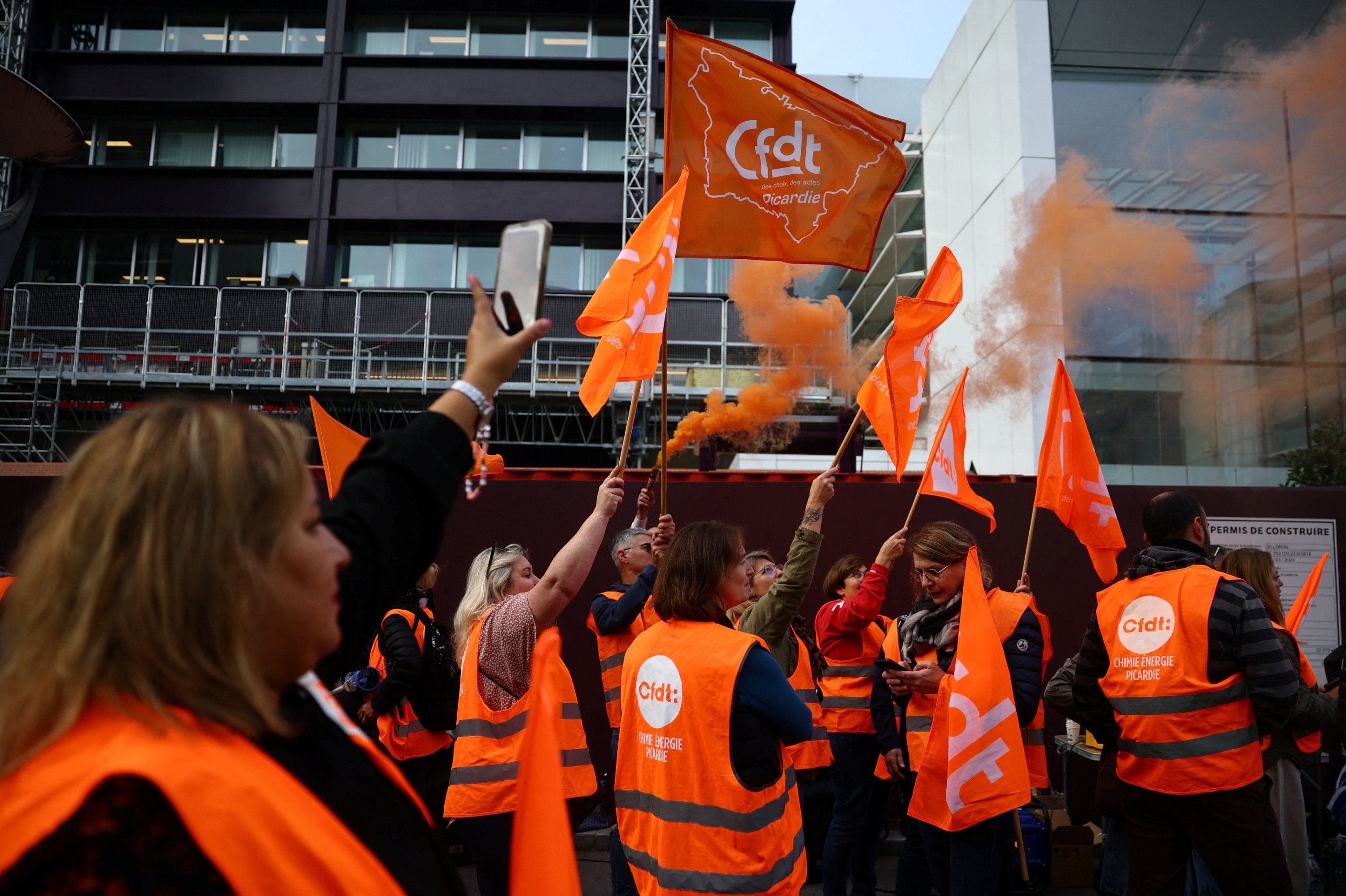

Europe’s geoeconomic crisis stems from profound changes in production and consumption patterns, as well as the need to restructure key industries in response to shifting global market dynamics. At the same time, the cost of social policies in areas such as health care, education, housing and pensions has risen considerably. The geopolitical crisis has placed an additional burden on already strained economies.
The challenge goes far beyond rising diesel prices. Europeans increasingly recognize that the new geoeconomic realities demand structural responses, prompting efforts to reshape the continent’s industrial base and trade relations. Some advocate “Made in Europe” policies, while others seek to regroup countries outside Europe according to their own interests and priorities. Still others are building protectionist barriers to shield domestic industries from foreign competition. None of these strategies will be straightforward or cost-free for European actors.
The most important geopolitical crisis is the war in Ukraine, which is turning into a frightening, seemingly endless conflict. Most of the anti-establishment movements in Europe have described the war as unnecessary, despite their differing views and positions on Russia. However, a reassessment of relations between Europe and Russia seems impossible. The "Russian threat," invoked by both EU elites and European centrist parties, may be partly constructed, but its effect as a self-fulfilling prophecy, creating a security dilemma and a trap of escalation, is very real.
Europeans must spend millions of euros on conventional defense and stronger armed forces. They must also invest in redesigning European industry, while Chinese and American producers may still enjoy market advantages. This leaves very little room to meet the social and economic demands of the less privileged middle class. We hear their voices on the streets, but their fears and anger are being exploited by establishment and anti-establishment political forces alike. The game of co-option has not changed: the radical right either adopts a pragmatic stance or enjoys the ease of being in opposition. But caution is needed: anti-establishment forces are stronger now than they were ten years ago, and this trend seems not reversible.