Daily Sabah logo

Politics
Diplomacy Legislation War On Terror EU Affairs Elections News Analysis
TÜRKİYE
Istanbul Education Investigations Minorities Expat Corner Diaspora
World
Mid-East Europe Americas Asia Pacific Africa Syrian Crisis Islamophobia
Business
Automotive Economy Energy Finance Tourism Tech Defense Transportation News Analysis
Lifestyle
Health Environment Travel Food Fashion Science Religion History Feature Expat Corner
Arts
Cinema Music Events Portrait Reviews Performing Arts
Sports
Football Basketball Motorsports Tennis
Opinion
Columns Op-Ed Reader's Corner Editorial
PHOTO GALLERY
JOBS ABOUT US RSS PRIVACY CONTACT US
© Turkuvaz Haberleşme ve Yayıncılık 2025

Daily Sabah - Latest & Breaking News from Turkey | Istanbul

  • Politics
    • Diplomacy
    • Legislation
    • War On Terror
    • EU Affairs
    • Elections
    • News Analysis
  • TÜRKİYE
    • Istanbul
    • Education
    • Investigations
    • Minorities
    • Expat Corner
    • Diaspora
  • World
    • Mid-East
    • Europe
    • Americas
    • Asia Pacific
    • Africa
    • Syrian Crisis
    • Islamophobia
  • Business
    • Automotive
    • Economy
    • Energy
    • Finance
    • Tourism
    • Tech
    • Defense
    • Transportation
    • News Analysis
  • Lifestyle
    • Health
    • Environment
    • Travel
    • Food
    • Fashion
    • Science
    • Religion
    • History
    • Feature
    • Expat Corner
  • Arts
    • Cinema
    • Music
    • Events
    • Portrait
    • Reviews
    • Performing Arts
  • Sports
    • Football
    • Basketball
    • Motorsports
    • Tennis
  • Gallery
  • Opinion
    • Columns
    • Op-Ed
    • Reader's Corner
    • Editorial
  • TV
  • Opinion
  • Columns
  • Op-Ed
  • Reader's Corner
  • Editorial

Powering the seas: Offshore wind energy

by Büşra Zeynep Özdemir

Sep 22, 2025 - 12:05 am GMT+3
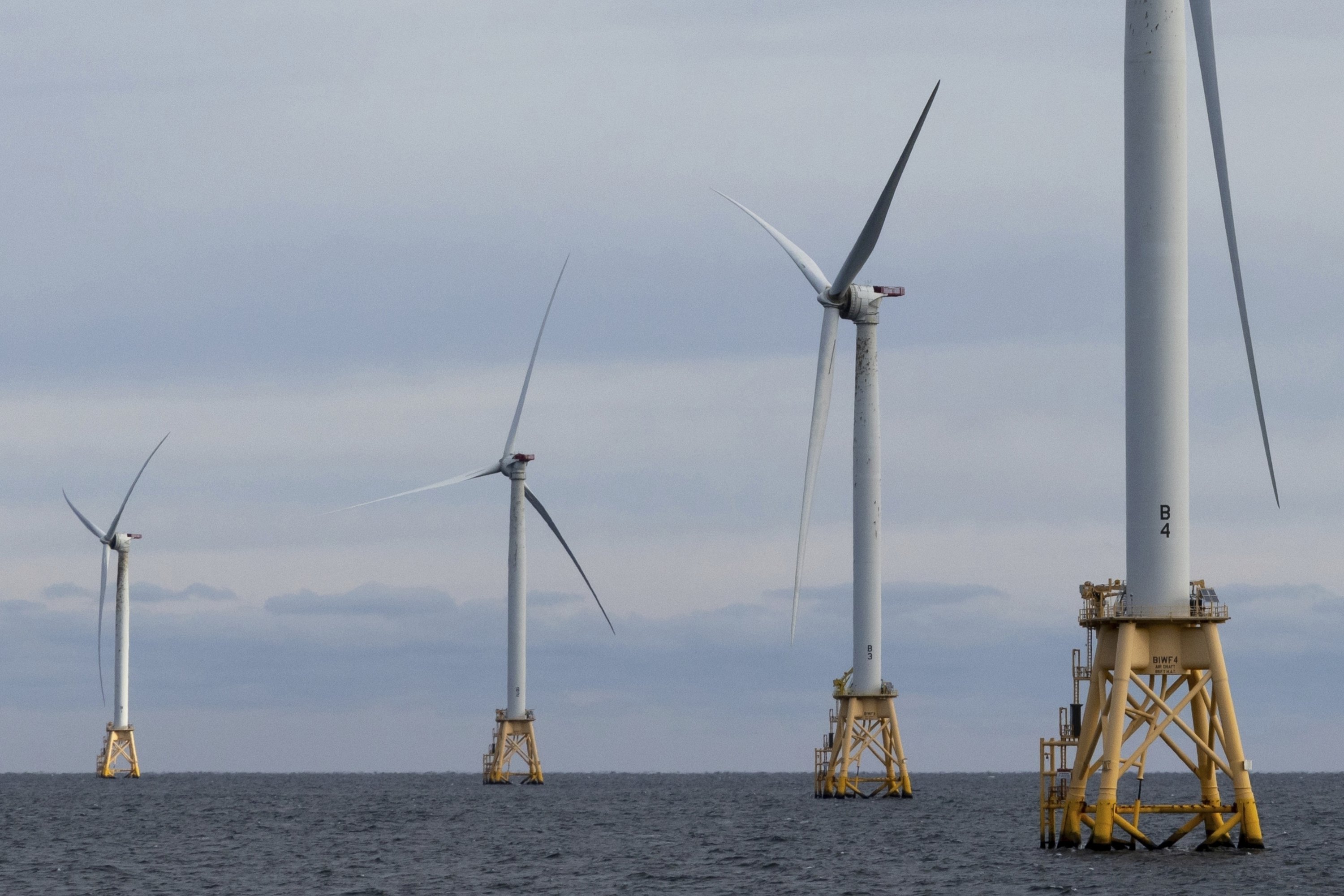
Offshore wind turbines operate at the Block Island Wind Farm, Oregon, U.S., Dec. 7, 2023. (AP Photo)
by Büşra Zeynep Özdemir Sep 22, 2025 12:05 am

Türkiye must act now to harness offshore wind and lead in the clean energy future

Growing concerns about global warming and climate change have steadily increased the role of renewable energy sources in national energy formulas over the past two decades. Among these, offshore wind stands out as one of the fastest-growing and most attractive fields for global investment. With its high technical potential and steady output, it offers opportunities that go beyond climate policy, shaping energy security, industry and employment.

The world’s first offshore wind farm was built in 1991 off the coast of Vindeby, Denmark. With 11 turbines and a capacity of just 5 megawatts (MW), it could power around 2,000 households. By 2000, offshore wind was present in only three European countries with a total of 67 MW installed capacity.

Since then, the technology has advanced at a remarkable speed. Larger turbines now sweep wider areas at greater heights, capturing stronger winds and producing far more electricity. By 2010, a single 3 MW turbine could already outproduce the entire Vindeby plant. Today, offshore turbines can reach up to 25 MW capacity, symbolizing how rapidly the sector has matured.

Opportunities, challenges

Offshore wind offers multiple advantages: It diversifies energy supply, reduces greenhouse gas emissions, delivers more consistent electricity than onshore wind, and creates new industries and jobs. At the same time, challenges remain. Projects require high upfront financing, must navigate environmental and seasonal constraints, and sometimes clash with coastal uses like fishing and tourism. Like other renewables, offshore wind also carries ecological costs in the production and recycling of equipment.

Perhaps the most decisive factor is not technology but regulation. Studies show that 80% of projects worldwide are shaped directly by government policies. The number of institutions involved, the length and transparency of permitting processes and the availability of incentives all influence investor confidence. European countries, having pioneered the sector, now benefit from mature frameworks: one-stop permitting systems, clear purchase guarantees, and publicly funded technical studies that lower barriers for investors.

Türkiye in the global race

China today leads in both installed capacity and industrial production, producing the world’s largest turbines and accounting for more than half of global investment. However, its exports remain limited as it focuses mainly on meeting domestic demand.

Denmark, the Netherlands and Germany, meanwhile, continue to invest heavily both at home and abroad, capitalizing on decades of experience. The United States entered the game later, expanding capacity more cautiously and still struggling with political headwinds that sometimes undermine investor certainty.

These dynamics underline a key point: offshore wind flourishes where governments provide long-term stability and falters where policies shift unpredictably.

Türkiye has been an active player in onshore wind for over two decades, successfully expanding capacity while fostering domestic industry. Regulations such as the Renewable Energy Support Mechanism (YEKDEM) and Renewable Energy Resource Area (YEKA) have provided purchase guarantees, encouraged investors and helped to build a supply chain that creates both jobs and technology. Today, more than 61% of Türkiye’s installed capacity comes from renewables, an achievement that places the country ahead of many peers.

Yet offshore wind remains an untapped frontier. The first YEKA tender in 2018 ended without bids, largely due to insufficient data on the designated sites. Since then, Türkiye has sought to close this gap. With technical support from the World Bank and financial backing through cooperation with the EU, studies have mapped the country’s offshore wind potential. The results are striking. Türkiye’s seas offer an estimated 12 GW potential in shallow waters up to 50 meters and 57 GW in deeper waters up to 1,000 meters.

While the Aegean Sea shows promise, constraints such as narrow inland waters, dense tourism activity, fishing grounds and military zones make development difficult. The Marmara Sea, in contrast, appears the most suitable for offshore projects.

Why Türkiye should act

Türkiye’s National Energy Plan sets the goal of 5 GW installed offshore capacity by 2035, aligned with its 2053 Net Zero Emissions target. Reaching this objective would not only support climate policy but also reduce import dependence, enhance energy security, and strengthen Türkiye’s hand in regional energy competition.

Three factors make offshore wind especially strategic for Türkiye. First, by harnessing its own wind resources, Türkiye can cut reliance on imported oil and gas, improve resilience to global market volatility and increase its energy security. Second, offshore wind would provide economic opportunity by driving investment in ports, shipyards and turbine manufacturing, creating skilled jobs and industrial upgrading. Third, early movers in offshore wind will shape regional supply chains. Türkiye, as a proven actor in onshore wind with its already developed industry and electricity capacity, has the chance to become not just a user but a supplier of clean energy technology.

For Türkiye, the main challenge is not the potential but the policy design. A more transparent permitting process, mature legal procedure, and simplified tendering process will be essential to attract investors. Public institutions can play a key role by conducting geotechnical surveys and environmental assessments, reducing risks for private developers.

The global energy transition is already underway, and offshore wind plays a key role. Türkiye has proven its ability to deliver ambitious energy projects and has already built a strong capacity for renewables. Now, it is time for Ankara to seize the opportunity and turn the power of the seas into sustainable development. With political will and decisive action, the country can capture it.

About the author
Researcher with expertise in energy studies at the SETA Foundation
The views and opinions expressed in this article are solely those of the author. They do not necessarily reflect the editorial stance, values or position of Daily Sabah. The newspaper provides space for diverse perspectives as part of its commitment to open and informed public discussion.
  • shortlink copied
  • KEYWORDS
    wind energy green energy offshore wind energy
    The Daily Sabah Newsletter
    Keep up to date with what’s happening in Turkey, it’s region and the world.
    You can unsubscribe at any time. By signing up you are agreeing to our Terms of Use and Privacy Policy. This site is protected by reCAPTCHA and the Google Privacy Policy and Terms of Service apply.
    No Image
    Many regions in Turkey experience this year's first snowfall
    PHOTOGALLERY
    • POLITICS
    • Diplomacy
    • Legislation
    • War On Terror
    • EU Affairs
    • News Analysis
    • TÜRKİYE
    • Istanbul
    • Education
    • Investigations
    • Minorities
    • Diaspora
    • World
    • Mid-East
    • Europe
    • Americas
    • Asia Pacific
    • Africa
    • Syrian Crisis
    • İslamophobia
    • Business
    • Automotive
    • Economy
    • Energy
    • Finance
    • Tourism
    • Tech
    • Defense
    • Transportation
    • News Analysis
    • Lifestyle
    • Health
    • Environment
    • Travel
    • Food
    • Fashion
    • Science
    • Religion
    • History
    • Feature
    • Expat Corner
    • Arts
    • Cinema
    • Music
    • Events
    • Portrait
    • Performing Arts
    • Reviews
    • Sports
    • Football
    • Basketball
    • Motorsports
    • Tennis
    • Opinion
    • Columns
    • Op-Ed
    • Reader's Corner
    • Editorial
    • Photo gallery
    • DS TV
    • Jobs
    • privacy
    • about us
    • contact us
    • RSS
    © Turkuvaz Haberleşme ve Yayıncılık 2021