If we were to identify the three most persistent issues in Türkiye’s football history, frequent coaching changes would rank first, the foreign player rule second, and inconsistent performances in European competitions third.
Türkiye has achieved significant victories. However, as of 2026, we need to ask ourselves an important question: As football evolves, has Türkiye adapted its approach to the game itself, or has it merely changed the players? When we talk about playing a match every three days, we often focus on the schedule's demands. Yet in Europe’s top leagues, a packed fixture schedule is not an exception but a competitive reality that teams must learn to manage.
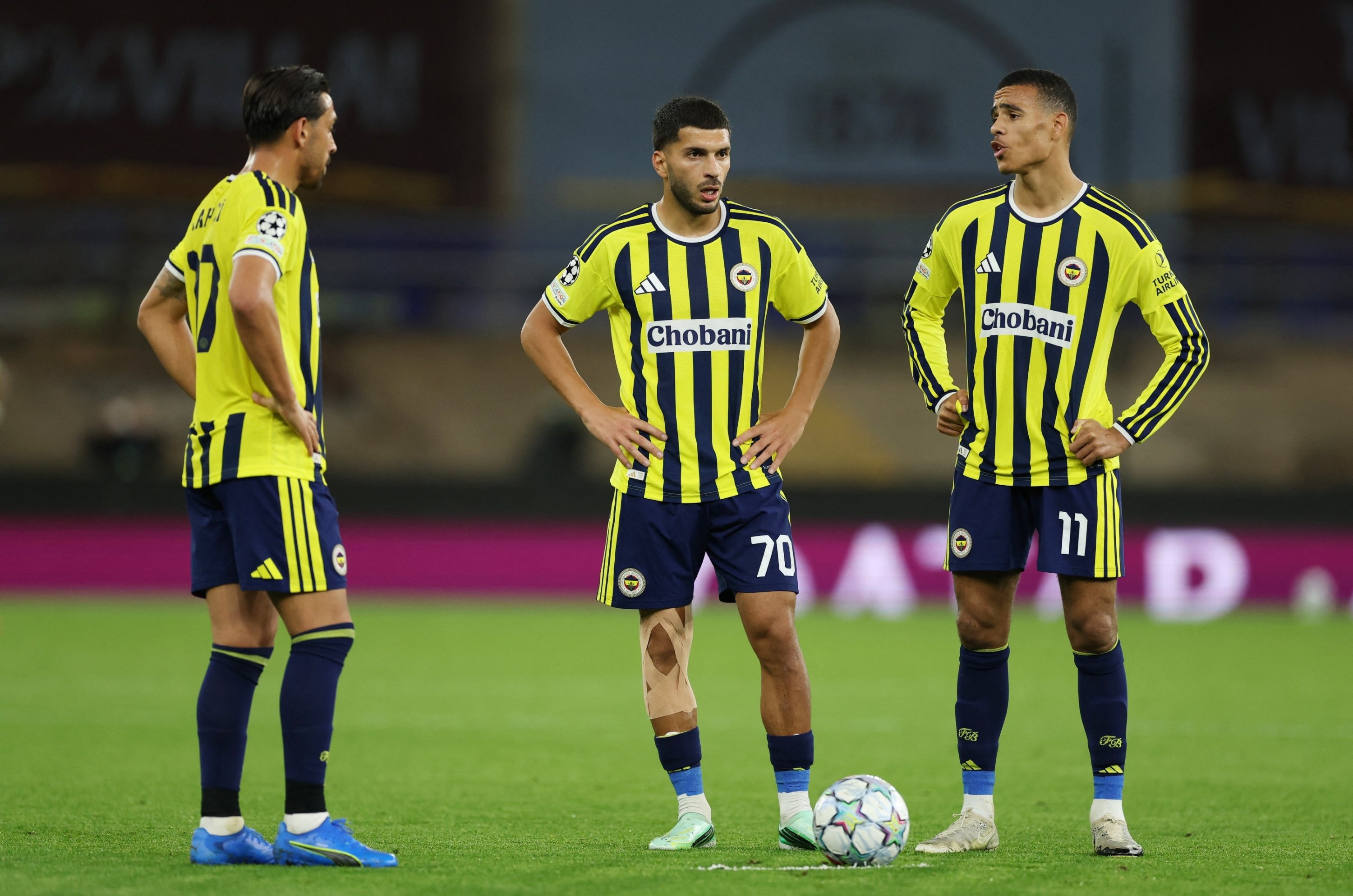
Despite Beşiktaş and Trabzonspor fielding heavily rotated lineups and still securing victories in their league matches, Aston Villa’s 6-0 defeat of Fenerbahçe has reignited this debate.
A single score does not measure the physical capabilities of two nations. Rather, it prompts us to investigate the origins of that gap.
Scientific research offers the first clue. Barnes and his colleagues analyzed 14,700 performance observations from the Premier League and found that, over eight seasons, high-intensity running distance increased by approximately 30%, sprint distance by 35%, and the number of sprints by 85%. Total running distance, however, increased by only around 2%. Football's evolution, therefore, has been less about covering more ground and more about maintaining technical precision at higher intensities.
Another study, published in 2025 and based on 125 Champions League matches, found that wingers and forwards on winning teams covered approximately 20% more high-intensity running distance than they did in matches they lost. In contrast, defenders covered approximately 15% more high-intensity running distance in losses. This suggests that running more is not always an advantage; sometimes, it is a sign that the opposition is forcing you to work harder. The real question is when, where, and why players accelerate.
Of course, Türkiye has made progress as well. Scientific data from Turkish football also indicates that players have become faster and their physical performance has improved. Therefore, it would be inaccurate to say that we are standing still. The question is whether the pace of our development is keeping up with the demands of European competition.
What about playing a match every three days? In a study by Dupont and his colleagues, which tracked 32 players from a Champions League team, the injury rate increased from 4.1 per 1,000 hours during periods with one match per week to 25.6 per 1,000 hours during periods with two matches per week. The solution is not to complain about the schedule but to manage training loads, squad rotation, sleep, nutrition, and sports science within a single, integrated plan.
Moreover, the challenge extends beyond physical performance. We also need to bring our decision-making speed up to the level required in European competition. UEFA’s analysis of the 2024-25 Champions League group stage, which found that 53% of goals were scored with a single touch and 88% originated in the penalty area, highlights the importance of making quick decisions in situations where time and space are limited. A good player is not simply someone who can control the ball; it is someone who can consistently make the right decision under pressure. Underlying all these scientific findings, however, is a fundamental question of management.
Among the 48 leagues analyzed by CIES in 2023, the Turkish Super League had the highest percentage of players who had been with their teams for less than a year, at 56.7%. Constantly changing the squad is easy; building a shared vision of the game, developing collective instincts, and preserving institutional knowledge are much more difficult. This continuity is essential if physical development is to translate into results on the pitch.
In Europe, talent can win you a single match. But sustained competitive success requires physical capacity, technical execution, mental resilience, and institutional intelligence to work together within the same system. What Turkish football needs is not to win the next transfer window, but to build the competitive culture that European football demands.
Following Fenerbahçe’s 6-0 loss, sports figures and fans called for head coach İsmail Kartal to resign. After Galatasaray’s 4-1 defeat to Barcelona, similar calls for Okan Buruk’s resignation also appeared on social media.
Perhaps one of the most persistent problems in Turkish football is how we explain and manage failure. Whenever results fall short of expectations, the first response is almost always to change the coach. Yet the fundamental question we need to ask is whether a managerial intervention is merely visible or genuinely effective.
A 2026 study in the Journal of Sports Sciences challenges the assumption that changing coaches midseason is an effective solution.
Analyzing 331 coaching changes across the top two divisions of Europe’s five major football leagues, the researchers compared clubs that changed coaches with those that kept theirs despite similarly poor results. This approach allowed them to assess whether any subsequent improvement was actually caused by the coaching change or simply reflected natural fluctuations in performance over time.
The findings are striking: In the 10 matches after a coaching change, teams did not perform significantly better than similar teams that kept their coaches. This suggests that a team’s recovery after a poor run of results may not necessarily be due to a new coach. Sometimes, results improve naturally over time. In other words, a change in results does not always mean a change in leadership was the reason.
Our own 2025 study also examined how coaching changes affect team performance. Analyzing five seasons of data from the Turkish Super League and major European leagues, we identified 100 coaching changes in the Turkish Super League alone. In Türkiye, teams’ average points per game increased from 1.05 before a coaching change to 1.17 afterward. However, the difference was not statistically significant. This means that, although results improved slightly, there was not enough evidence to conclude that changing coaches is a reliable way to achieve success.
Of course, these findings do not mean that changing coaches is never necessary or beneficial. However, especially in European competition, focusing only on the head coach when evaluating results can lead us to overlook the bigger picture. The research suggests that we should question not just the decision to change coaches, but also the institutional mindset behind it. Because if the real problems lie in squad planning, physical and mental preparation, player development, or the club’s overall management philosophy, changing the head coach addresses the symptoms rather than the root causes. Moreover, each coaching change risks disrupting the club’s playing style, squad selection and sporting priorities.
For this reason, Turkish football needs to shift the conversation away from how long head coaches remain in their positions and toward how clubs can maintain sporting continuity regardless of who is in charge. In a well-structured football organization, the head coach does not own the club’s sporting vision; rather, he implements it on the field. Clubs in Türkiye that operate differently need to adopt the principles of modern football. When success depends on individuals rather than established systems, the same problems are likely to resurface whenever those individuals leave.
Perhaps the most fundamental management paradox in Turkish football is this: We treat constant change as the solution while leaving the underlying system largely untouched. Replacing a head coach is a decision; addressing the root causes of failure is a test of management capability.