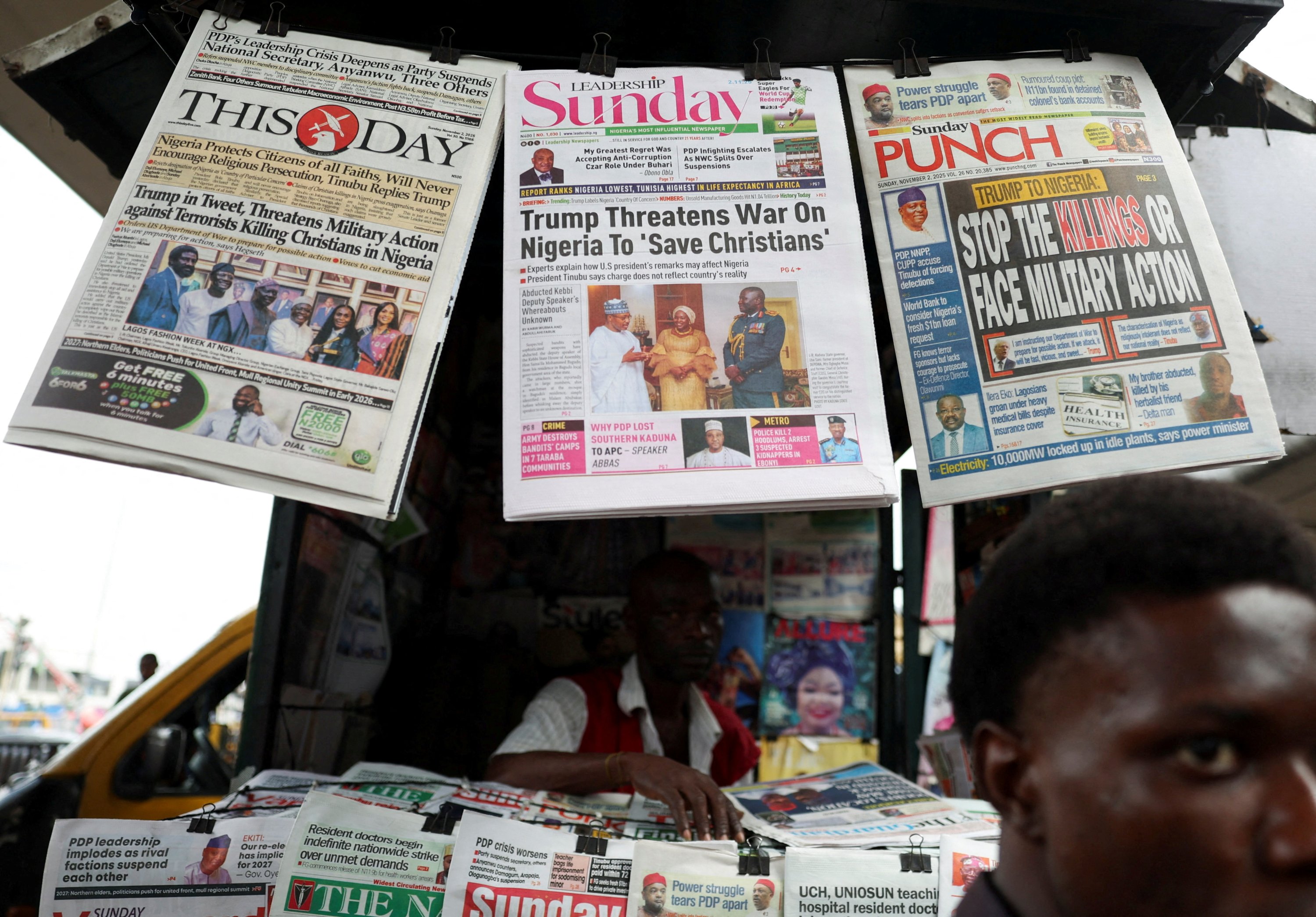
On Christmas Day, U.S. Navy vessels in the Gulf of Guinea fired more than a dozen Tomahawk cruise missiles at targets in Sokoto State, located in Nigeria’s northwest. U.S. President Donald Trump had previously designated Nigeria as a “Country of Particular Concern” (CPC) for “systematic violations of religious freedom” and threatened to cut all aid and take military action on Oct. 31.
Trump stated that the attack was against Daesh and justified it on Truth Social as follows: “They have been targeting and viciously killing, primarily, innocent Christians, at levels not seen for many years, and even centuries!”
The Nigerian government also stated that the attack was carried out in cooperation and was aimed at dismantling terrorist cells in the country.
However, Trump's statement has been viewed with skepticism for several reasons.
Firstly, he not only does not oppose Israel's massacre of Christians and bombing of churches in Palestine, but he also supports the perpetrators of genocide. Does he perhaps not consider Christians who are critical of Israel’s genocidal acts to be “innocent?” Most likely.
Secondly, the targeted Sokoto region is described as a Muslim-majority area where Muslims are primarily persecuted. The group targeted here is believed to be Lakurawa, and according to Al Jazeera, their primary victims are Muslim civilians, not Christians. Whereas, as many people state, the “Christian genocide” narrative, often championed by U.S. evangelicals, usually centers on the “Middle Belt” region of Nigeria. Moreover, it is noted that Lakurawa is a relatively newly formed group and not yet fully established. Researcher Femi Owolade explains the main source of violence in Sokoto on Al Jazeera as follows: “Security concerns in this region are rooted in banditry, the collapse of rural economies, and competition for land. Armed groups here are fragmented and motivated largely by profit.”
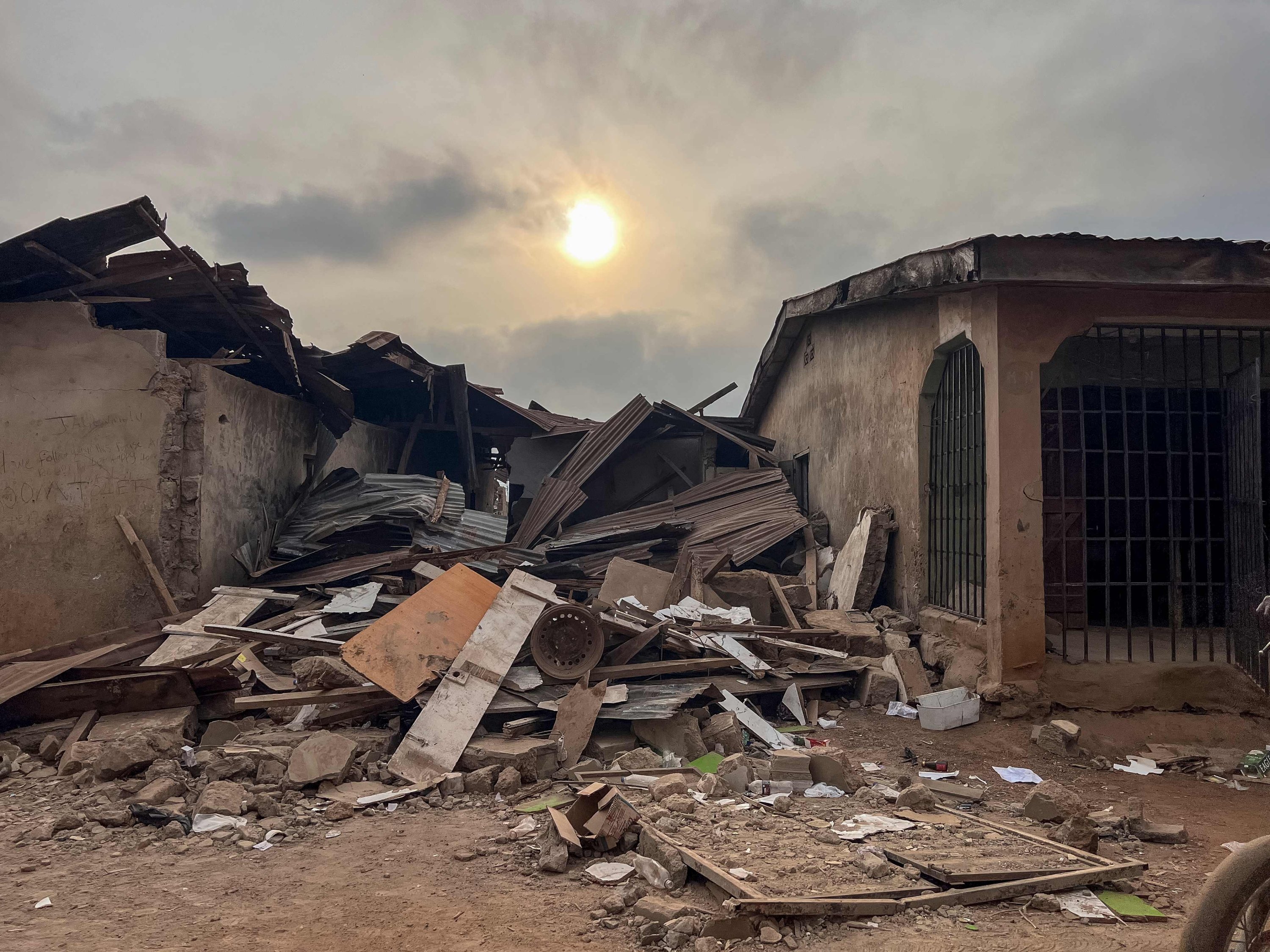
Aside from the strangeness of Sokoto being chosen as a target, it's not even clear if there were any casualties. There's no evidence to suggest who the U.S. intended to target with this attack, or if anyone was killed.
In Nigeria, there were religious leaders and various writers who supported the U.S. bombing of their country, and some even celebrated it enthusiastically. It seems this stems partly from a loss of hope in their own government, a perception of Nigeria as helpless and dependent on foreign aid, and partly from a sense of Christian solidarity.
The Church of Nigeria, the Anglican Communion and the Pentecostal Fellowship of Nigeria have commended the U.S. and Trump. Nwankwo Tony Nwaezeigwe, president of the International Coalition against Christian Genocide, said, “There is no better Christmas gift than this wonderful action coming from the president of the U.S.,” whom he described as the “indomitable global defender of Christianity.” Gazzette Nigeria writer Abdul Mahmud, like a U.S. evangelist priest, claimed “Christians in Nigeria face existential threats” and implicitly encouraged more strikes.
On the other hand, some argued that these attacks would not bring a solution, and that the real problem was not extremists but bad governance and underdevelopment.
Bishop Matthew Hassan Kukah of Sokoto opposed the strikes: “Violence cannot defeat violence ... Put your sword back in its place.” He also called the attackers a product of northern Nigeria’s low level of development and years of miseducation that have turned innocent children into “demons full of hatred,” in a region with the highest rates of poverty, illiteracy and disease. According to him, “the men of evil” aren't the outcome of religious hatred but the product of Nigeria's “toxic” politics.
Augustine Ikenna Anwuchie, a Nigerian Fidei Donum priest, emphasized bad governance and said, “Nigeria’s insecurity has become an industry, interwoven with politics, power struggles, religious extremism and the control of rich mineral resources in the North.”
Writer David Bumgardner also makes the following observation, which is very important: “Currently, Nigeria also has more than 10 million children outside of school, with many of them roaming the streets and being subjected (and even pulled into) criminality, especially in urban areas.” It is also indicated that heavily armed criminal gangs are mostly composed of teenagers and young adults, that they attack both Christian and Muslim villages, and that they run a huge kidnapping industry for ransom.
As for the villagers, the commentators I listened to on both the Al Jazeera Podcast and TVC News Nigeria reported that the majority of them held the view of, “If Trump is going to save us, then so be it,” as they were fed up with the aggressive groups.
Looking at everything Trump has done, it is possible to say he is pursuing a Christian cause in his own way. However, considering his stance on the Israel issue, we can say that acting for the good of Christians is not his main motivation. In this case, it's worth considering other factors as well.
Shanta Premawardhana thinks that “he may be targeting Nigeria’s oil – Africa’s second-largest reserve." This commentary seems legit, as Trump has already intervened in Venezuela, which has the world's largest oil reserves, capturing President Nicolas Maduro and declaring that from now on, the U.S. will "run" the country.
Indeed, Nigeria’s economy is dependent on oil, which accounts for 90% of exports and typically half of the revenues that fund its national budget. Nigerian National Petroleum Company (NNPC) is the Nigerian state-owned company that dominates the country's oil industry. NNPC is also considered the largest national oil company in Africa. CNBC Africa wrote last April: “Nigeria produces around 1.75 million barrels of oil per day mostly through NNPC’s joint ventures with international partners Shell, ExxonMobil, TotalEnergies, Chevron and Eni.”
As can be seen, this company, which plays a vital role in the Nigerian economy, has partnerships with Western powers, primarily with the U.S. And then, on Dec. 30, the following news dropped: “Nigerian President Bola Tinubu has approved the cancellation of $1.42 billion and 5.57 trillion naira ($3.85 billion) in debts owed by state oil firm NNPC Ltd to the government.” Another news story that came out on the same day was: “NNPC Ltd. launches bid to sell stakes in oil and gas assets.” These things may not benefit Americans (or Zionist oligarchs) at all and may have no connection to the recent attacks. However, in this shady situation, it's worth thinking and trying to read them together.
Another possibility Premawardhana lays out is that “he may be establishing a West African base responding to rising populist revolutions in Burkina Faso, Mali and Niger.”
At this point, China specifically comes to mind. According to Statista, in the first quarter of 2024, Nigeria's main import partner was China. In that period, China accounted for about 23.2% of the total imports. India and the U.S followed with roughly 8.5% and 8%, respectively.
Last November, China and Nigeria joined forces to launch Africa’s largest poultry project. In the same month, they held a dialogue in Lagos. Then, Chinese Ambassador to Nigeria Yu Dunhai published a signed article titled “Persistent Dedication: China’s 15th Five-Year Plan to Continue the Development Miracle” in The Voice of Nigeria. Chinese modernization will provide important references and practical opportunities for Nigeria and other African countries to achieve economic transformation, advance industrialization and enhance self-reliant development capacity. Within the framework of the Forum on China-Africa Cooperation (FOCAC) and of the Belt and Road Initiative (BRI), China is willing to strengthen governance experience-sharing and development strategy alignment with Nigeria, deepen practical cooperation between the two countries across various fields,” he wrote.
It is also known that China supplies Nigeria with a significant amount of military equipment. Nigeria imported from China arms, ammunition, parts and accessories worth $197.16 million in 2023, according to the United Nations COMTRADE database on international trade, The Sun Nigeria reports. The second was India with only $46.7 million, while the U.S. lagged far behind with $4.63 million. The importance and influence of China on Nigeria are evident even in these figures alone. Moreover, they continue to deepen their relationship. Last May, China signed a deal with Nigeria to establish a military hardware production facility, boosting its defense relations with Africa.
In summary, Trump may be seeking to make the U.S. more influential and provide some degree of balance in this important West African country where China is gaining significant influence.
It’s also reported that Israel wants to establish close relations with Nigeria. Indeed, Israeli Prime Minister Benjamin Netanyahu supported the attack by saying, "persecution of Christians in Nigeria would no longer be tolerated." It could be argued that they want to shed the “genocidal” image from themselves and instead attach it to Muslims.
The very choice of Sokoto as a target may be related to this. As Olowade points out, there was a Sokoto Caliphate there in the 19th century, and the region holds significance for Nigerian Muslims. Bombing such a place on Christmas Day is symbolically significant and could be linked to hostility toward Islam. For Trump, another motivation might be fulfilling the desire and interest of Israel.
What is certain is that Trump, who deceived even his own supporters with promises to end wars and then issued war threats on a scale not seen in any recent presidency, cannot offer security to the Nigerian people.