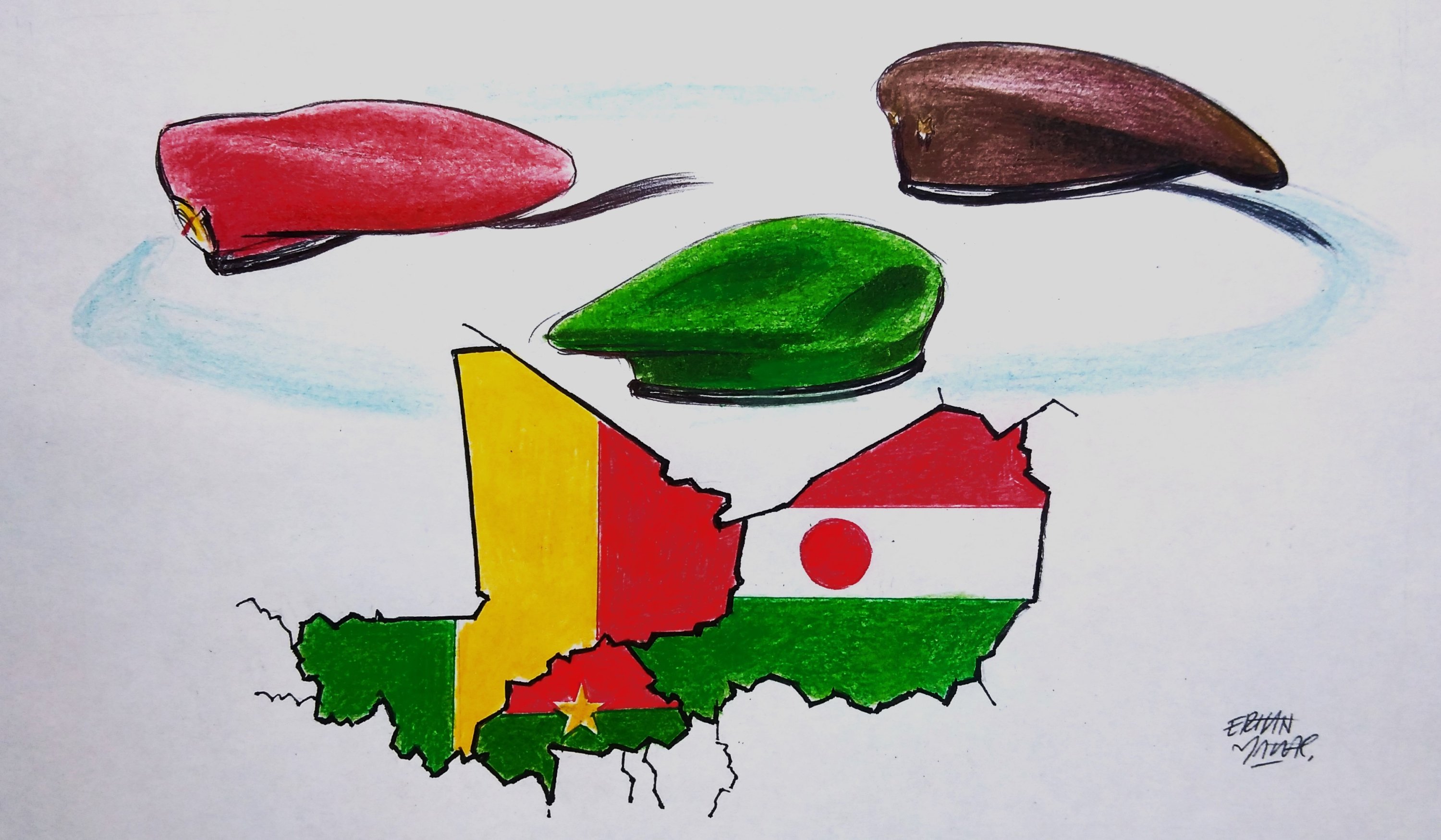
In a decisive move, the military councils of Niger, Mali and Burkina Faso officially severed ties with the Economic Community of West African States (ECOWAS) on July 6, 2024. At their inaugural summit, they signed a treaty to form the Sahel Confederation, a new geopolitical entity to strengthen regional cooperation. This bold step, coming just before ECOWAS introduced the "Eco" currency, underscores their quest for autonomy and signals a significant shift in West African geopolitics.
The formation of the Sahel Confederation is a strategic response to the trio's discontent with ECOWAS. By establishing this alliance, they are not just distancing themselves from ECOWAS’s economic influence but are also challenging existing regional power structures. This move holds profound geopolitical implications, marking a pivotal moment that could redefine their international relations and regional dynamics in West Africa.
Confederations in Africa have a complex history, often serving as mechanisms for political and economic integration amidst colonial legacies. Notable precedents include the Union of African States among Mali, Ghana and Guinea, and the Senegambia Confederation between Senegal and The Gambia. These alliances, while aimed at fostering solidarity and cooperation, frequently encountered challenges leading to their dissolution, primarily due to conflicts over sovereignty and governance approaches.
The inception of the Sahel Confederation can be traced back to escalating regional pressures and a series of military coups within its member states. These coups, symptomatic of more profound political and security instability, catalyzed the three nations – Niger, Mali and Burkina Faso – to pursue a collective strategy for regional autonomy. Each country's military leadership viewed an alliance as a means to fortify against external influences and internal insurgencies, increasingly perceived as exacerbated by external interventions.
The timing of the Sahel Confederation’s establishment is particularly significant. Announced shortly before an ECOWAS summit where the new "Eco" currency was to be discussed, the confederation clearly positions itself as an alternative bloc within a shifting geopolitical landscape. This strategic decision highlights a growing rift with ECOWAS and, by extension, France – whose historical and ongoing influence in the region has been a point of contention. The Sahel Confederation thus emerges not merely as a new political entity but as a statement of self-determination in the face of regional and international tensions.
The Sahel Confederation represents a significant stride toward strategic autonomy for Niger, Mali and Burkina Faso. This alliance empowers them to collectively navigate away from Western influences that have historically shaped their geopolitical and economic landscapes. These nations assert a more robust, unified voice in international affairs by uniting, allowing them to pursue policies that better reflect their regional interests and developmental aspirations.
Economically, the confederation offers a platform for leveraging the complementary assets of its member states. The regions have agricultural productivity, mineral resources and untapped infrastructural potential. A coordinated approach can stimulate economic development by enhancing resource management, facilitating cross-border trade and optimizing sectoral investments. This integration not only promises to bolster the domestic economies of the member states but also aims to position the Sahel region as a more formidable economic bloc on the global stage.
On the security front, the Sahel Confederation is a proactive response to the pervasive threats of terrorism and regional instability that have long hampered development efforts. The alliance enables a unified military strategy, enhancing the capacity of member states to secure their territories and protect their citizens. This joint military effort is crucial for establishing a stable environment, the bedrock for sustainable economic growth and social progress. Through this collaborative security framework, the confederation seeks to transform the region into a bastion of peace and a beacon of cooperative resilience.
While the Sahel Confederation marks a bold initiative, it faces significant counterpoints and challenges that could impact its success. A primary concern is the legal and political legitimacy of the confederation, especially given that it was established by military-led governments. These governments, transitional in nature, often lack the constitutional mandate to enact binding international agreements. This raises questions about the legal foundation of the confederation and its ability to enact durable, legally sound policies.
Economically, the confederation’s withdrawal from ECOWAS may lead to potential isolation. ECOWAS, being a major economic bloc, facilitates trade and financial integration among its member states. By exiting this community, the Sahel Confederation risks losing access to larger markets and may face trade barriers that could impede economic growth. This isolation could be further exacerbated by sanctions or trade embargoes from displeased neighboring states or international communities reacting to the unconventional exit or the military nature of the governance.
Maintaining healthy regional and international relations presents another hurdle on the diplomatic front. The confederation’s formation might strain relationships with neighboring countries still aligned with ECOWAS, potentially leading to diplomatic isolation. Furthermore, international bodies and foreign investors may view the military-led confederation with skepticism, complicating efforts to attract foreign investment and aid, which are crucial for the region's development. The confederation must navigate these intricate diplomatic waters carefully to establish itself as a viable and respected entity on the international stage.
The establishment of the Sahel Confederation and its dynamics with ECOWAS unfold as a series of reactive and seemingly improvised decisions by both parties. Each entity appears to be in a wait-and-see mode, responding more to immediate pressures than executing a well-thought-out strategic plan. This ad hoc approach raises questions about such decisions' long-term viability and effectiveness.
The military regimes in Mali, Burkina Faso and Niger, despite having significant time to enact meaningful changes, have so far struggled to deliver tangible improvements to the lives of their citizens. Mali, in particular, exemplifies the broader challenge – military leadership has not yet fulfilled the high expectations of socio-economic transformation its people anticipate. This scenario prompts a critical examination: Do these nations take the actions merely justifications for their relative failures or genuine attempts to break free from the external constraints imposed by more dominant regional and international actors?
The Sahel Confederation, while presenting potential benefits such as strategic autonomy, economic synergies and enhanced security, also faces substantial hurdles. These include questions about legal legitimacy, economic isolation and the complexities of regional and international diplomacy. The success of such a confederation will depend heavily on its ability to forge a clear, coherent strategy that addresses these challenges while capitalizing on the inherent strengths of its member states.
Regional alliances like the Sahel Confederation could play a pivotal role in reshaping Africa's geopolitical landscape. They have the potential to redefine relationships within and beyond the continent, offering a new model of regional integration that is more reflective of and responsive to the unique contexts and needs of African nations. Whether these alliances will lead to more effective governance and improved living standards or whether they will succumb to the same challenges that have historically plagued such efforts remains to be seen. This dynamic will be crucial in determining the future political and economic trajectory of the Sahel region and Africa at large.