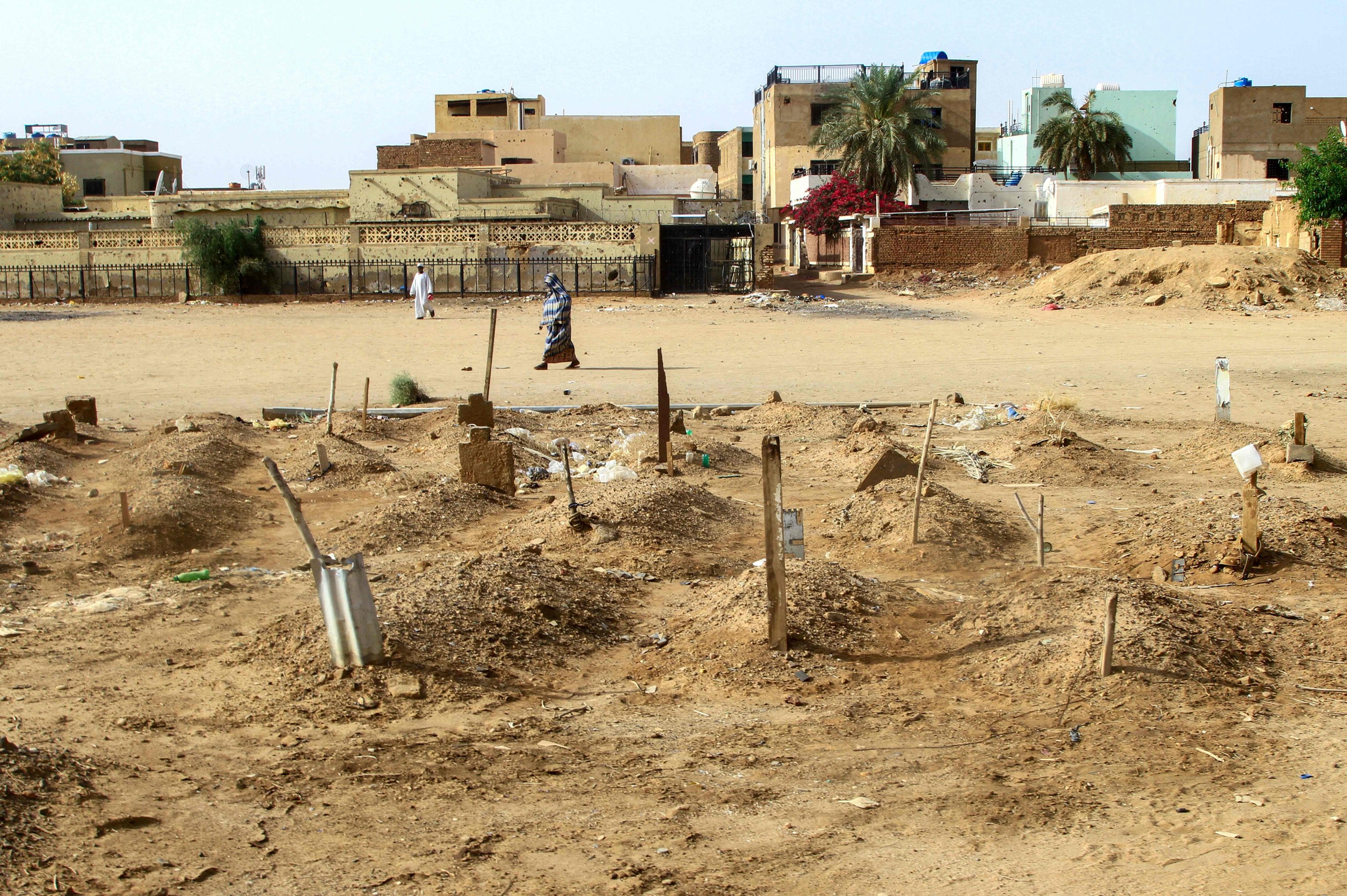
The clashes that began in Khartoum on April 15, 2023, are already in their fourth year, having left behind a devastated country. Initially presented as a simple power struggle between two generals, this crisis has evolved into a multi-layered proxy war where state capacity has largely eroded, social fabric has been shattered, with regional and global actors directly involved.
The fact that the conflict in Sudan has remained unresolved for over three years is not merely a result of the deadlock caused by military balances on the ground. This situation is a direct consequence of the structural inaction of the international system, the hypocrisy of Western powers aligned with their financial interests and the perception of regional actors, who view Sudan as a geopolitical battleground.
The international community’s indifference to the crimes committed by the Rapid Support Forces (RSF) militias in Sudan over the past three years stands as the most concrete evidence of the failure of global conscience and multilateral mechanisms. Sudan, sidelined in the shadow of other geopolitical crises centered on Ukraine, Gaza and the war in Iran, is effectively being treated as a "forgotten war," despite being designated by the United Nations as the world’s largest humanitarian and displacement crisis.
The horrific scale of the devastation in the country and the international indifference are evident in the war-torn states, where the siege of cities by RSF militias, use of starvation as a weapon of war, systematic sexual violence and the deliberate targeting of civilian infrastructure have become routine practices for the militias.
The deep distrust the Sudanese state and people feel toward Western powers is rooted not in historical prejudice but in concrete practices experienced firsthand during the current war.
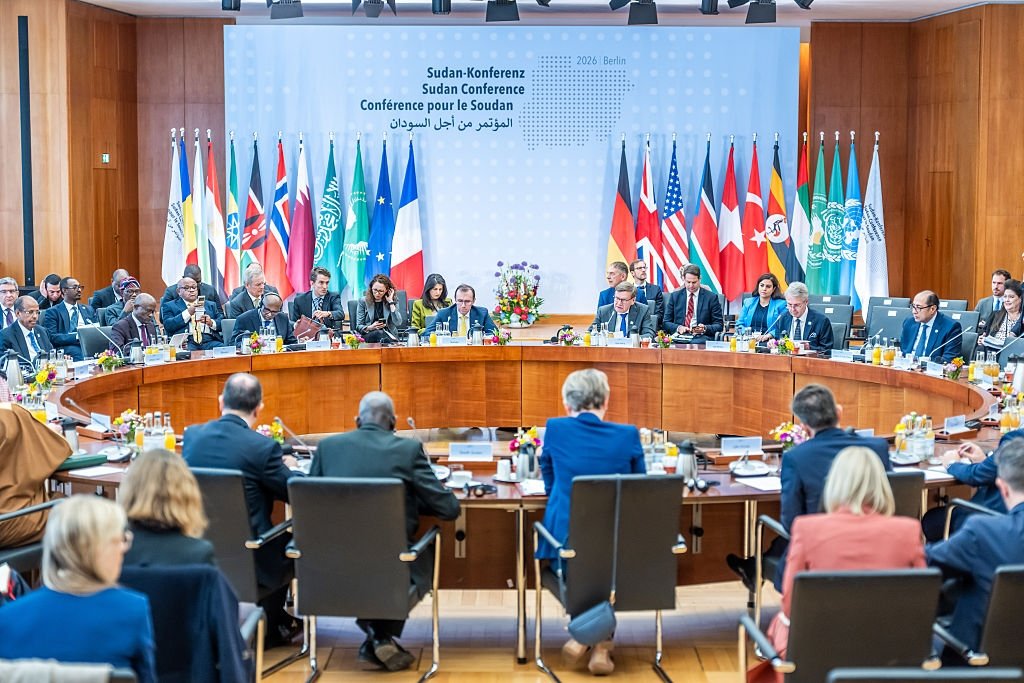
The most recent and striking example of this distrust was evident at the Berlin Sudan Conference held in April 2026, jointly hosted by Germany, France, the United Kingdom, the United States, the European Union and the African Union.
By failing to directly involve the official government and military leadership, which are Sudan’s legitimate representatives, in the process, the conference organizers adopted a biased stance that "disregarded the legitimacy" of the Sudanese government. The Sudanese Foreign Ministry and Prime Minister Kamil Idris officially protested this approach, boycotted the conference and characterized the exclusionary format as a "colonial tutelage approach" and a "fatal mistake."
The argument put forward by Western powers to justify excluding the Sudanese government, namely, "staying out of legitimacy wars," is, in reality, a diplomatic smokescreen designed to protect the actors directly financing atrocities on the ground.
While a parallel peace roadmap was signed at the Berlin Conference under the leadership of Abdalla Hamdok’s "Somoud" civil coalition, the United Arab Emirates (UAE), a reported backer of the RSF, was also welcomed at the table. This situation has rightly reinforced the perception within Sudan’s public sphere that the West is attempting to impose a "top-down solution" through its own civilian proxies.
The Sudanese government has accused the UAE of complicity in genocide before the International Criminal Court and the U.N. Security Council, while the Abu Dhabi administration denies these allegations.
Meanwhile, Western governments have issued hollow, generic statements, such as "foreign intervention must end," without explicitly naming who these "foreign powers" are that aid the RSF. For the Sudanese state, this situation is a clear demonstration of how international law and the defense of human rights are instrumentalized in the interests of global capital.
The most concrete asymmetric reason for the conflict in Sudan, remaining unresolved for over three years, is the provision of an uninterrupted military and logistical supply line to the paramilitary RSF militias.
The sheer scale of this supply network proves that the RSF is not merely a rebel group, but an international consortium of companies with a regional imperialist agenda. The interest in Sudan stems from a strategy to establish an "archipelago of influence" over ports on the Red Sea, control agricultural lands, and maintain its financial hegemony through Sudanese gold.
As the current war enters its fourth year, the military reality on the ground indicates that the paramilitary structure is undergoing deep internal erosion and disintegration. The RSF, which relies on the logic of mercenary forces, expectations of rapid looting and heterogeneous tribal alliances, has begun to show structural cracks due to the war's prolongation and the army’s strategic attrition campaign.
The most significant turning point in this disintegration was the surrender of Abu Agla Keikel, the RSF’s most important operational leader in al-Jazira state, in October 2024, under the army’s guarantee of amnesty. Keikel’s defection not only collapsed the militias’ military defense structure in the region but also enabled the army to rapidly retake strategic areas.
In April 2026, Maj. Gen. Al-Nour Ahmed Adam "al-Qubba," one of the RSF’s most prestigious founding commanders, sought refuge with the army along with over 50 fully equipped combat vehicles, confirming the end of unity of purpose within the paramilitary structure’s command echelon.
This was immediately followed in May 2026 by the defection of Brig. Gen. Ali Rizqallah "Al-Savannah," one of the most ruthless commanders on the Khartoum and Kordofan fronts, who accused the militia leadership of "lack of vision, resource exploitation, racism, and indiscipline" before seeking refuge with the army.
The fundamental dynamic behind these fractures is the breaking of tribal fault lines. The Rizeigat tribal alliance, which formed the founding core of the RSF, suffered a fatal blow when militias attacked Mustariha, the historic stronghold of the Mahamid tribe and targeted tribal leader Musa Hilal.
This fracture at the tribal level has begun to dry up the RSF’s largest source of manpower on the ground. Intelligence provided by surrendered commanders has enhanced the army’s ability to conduct precision operations on the militias’ supply lines, secret hideouts and external support networks.
The fact that Sudan's army chief Abdel Fattah al-Burhan personally accepts these individuals and uses them as a psychological warfare tool is further accelerating the trend of desertions within the militia's ranks.
The greatest obstacle to resolving the Sudan crisis is the fragmentation and insincerity of global and regional diplomatic platforms. Multi-party mediation mechanisms active in Sudan, such as the Troika and the Quad, entirely lack a common strategy and coordination.
The Quad platform, which consists of the U.S., Egypt, Saudi Arabia and the UAE, is structurally paralyzed because it includes actors that support different parties in the war. International organizations such as the U.N., the African Union, and the Intergovernmental Authority on Development (IGAD), rather than implementing concrete sanctions mechanisms, have contented themselves with repeatedly reiterating hollow rhetoric like the "Berlin Principles."
So, what are international organizations and global powers waiting for in Sudan?
The answer to this question lies in the international system’s "wait-and-see" policy. Global powers are waiting for Sudan’s state institutions and military to be completely worn down, for the state’s capacity for sovereignty to drop to a minimum. The aim is to force the country into an artificial power-sharing formula where both sides are weakened and can only survive through external aid. Thus, Sudan will be transformed into a federal structure devoid of central authority, one that can be easily manipulated and that offers its resources, such as gold and ports, to global markets cheaply and without oversight.
The claim that "there is no military solution to the war" is, in fact, a geopolitical trap designed to prevent the Sudanese army from completely dismantling the paramilitary militias and to keep the militia structure at the negotiating table as a legitimate counterpart.
The most fundamental and uncompromising assessment of Sudan’s future is this: Sudan’s survival as a state is possible not through artificial formulas like a Western-centric "humanitarian cease-fire" or "power-sharing," but solely through the unconditional restoration of state sovereignty by the official military and the complete dismantling of paramilitary structures.
Therefore, the recipe for stability in Sudan must be built on three fundamental pillars.
First, the sole guarantee of peace in Sudan is the integration of all armed groups under a single, national army. Public order cannot be established in Sudan under any scenario in which the RSF continues to exist as a sovereign entity.
Second, the international community’s test of sincerity regarding Sudan lies in the concrete sanctions it will impose to cut off the air bridges and arms flows provided by the countries to militia forces. As long as external support continues, proxy wars waged by regional actors will persist.
Third, Sudan must establish a new security and development pact with regional partners, such as Türkiye, Egypt and Saudi Arabia, that respect its sovereignty and territorial integrity, rather than Western-centric "Berlin formats" aimed at dividing and colonizing the country.
Türkiye’s principled stance, shaped by "moral realism," aimed at preserving state capacity and asserting that "the solution for Sudan must be left to the Sudanese," must be at the center of this new framework for a solution.