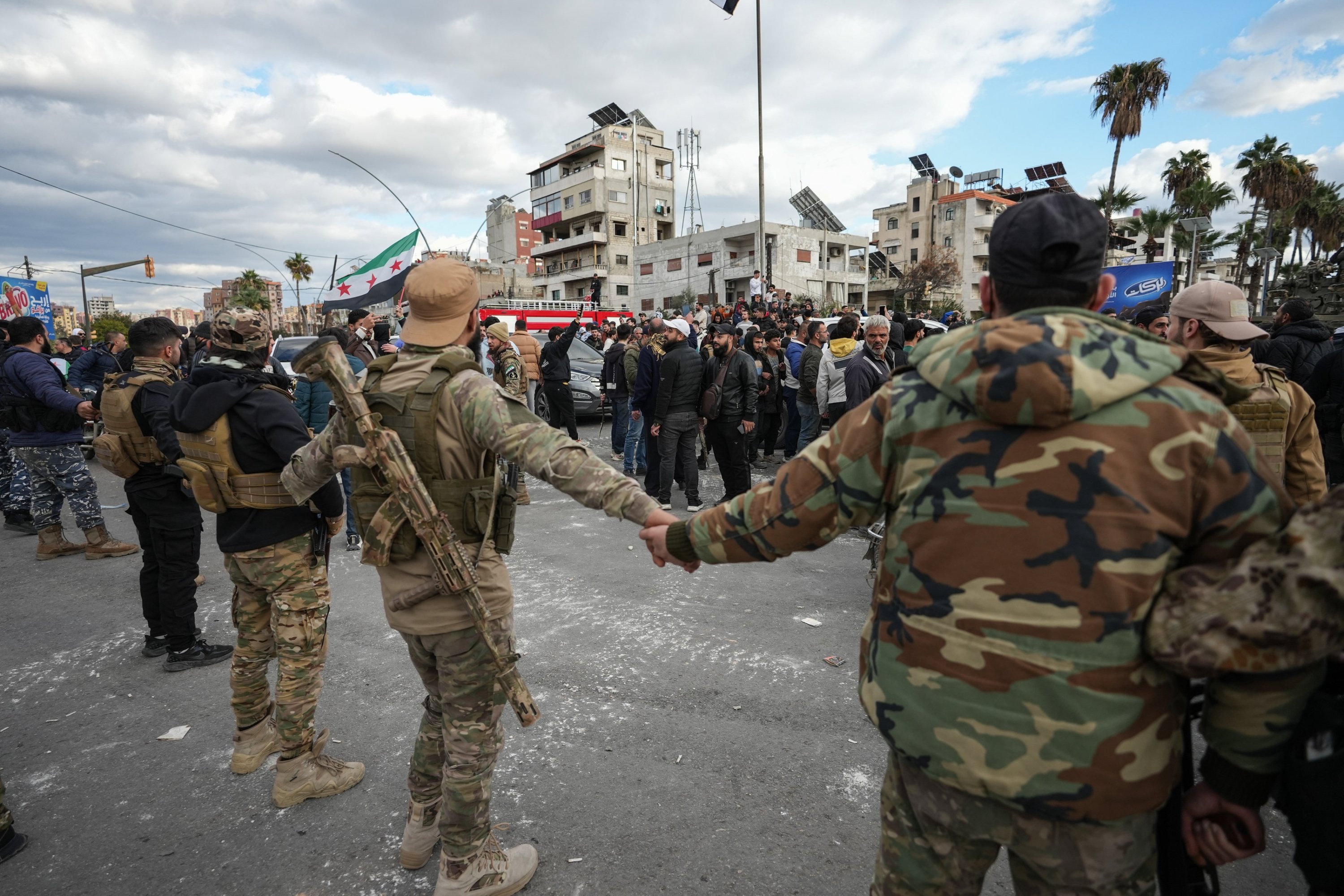
The year 2025 marked a critical turning point for Türkiye and its immediate neighborhood, as counterterrorism ceased to be merely a military issue and evolved into a broader problem of regional order. The political transition triggered by the collapse of the Assad regime in Syria, combined with the new equilibrium created by the reduction of the U.S. military footprint in Iraq, clearly demonstrated that degrading armed groups on the battlefield alone is insufficient. In this sense, 2025 was not a “year of cleansing,” but rather a preparatory phase in which the contours of the post-conflict order, and the actors who would shape it, were negotiated. The year 2026 will test whether this preparation can yield sustainable outcomes.
Entering 2025, the prevailing expectation was that intensified military pressure would accelerate the disintegration of terrorist organizations in Syria and Iraq. By the end of the year, however, it became evident that the erosion of military capabilities does not automatically translate into political dismantlement. On the contrary, where governance vacuums were poorly managed, former threats re-emerged in altered and adaptive forms.
In Syria, the new administration, led by Ahmed al-Shaara, rapidly gained international legitimacy. The lifting of Caesar sanctions, diplomatic normalization, and Syria’s return to the United Nations podium were among the most notable achievements of the post-Assad period. These gains, however, did not mean that the state had consolidated undisputed authority across the country. Most notably, the continued presence of the YPG east of the Euphrates and the protracted integration process emerged as the most critical vulnerability of the new Syrian order.
Throughout 2025, the gap between rhetoric and practice regarding the integration of the YPG became increasingly apparent. While YPG ringleader Ferhat Abdi Şahin, code-named Mazloum Kobani, portrayed integration as a “starting point for the reconstruction of North and East Syria,” developments on the ground suggested that this discourse had yet to materialize. For integration to constitute a genuine foundation for reconstruction, it would require the establishment of a unified chain of command, the construction of a centralized security architecture and the effective transfer of sovereignty to Damascus. Despite the signed agreements, however, the YPG continued to advance demands evocative of a separatist agenda, maintaining maximalist positions on security arrangements, local governance and resource sharing. This reinforced assessments that the integration narrative functioned less as an expression of political will for resolution and more as a strategy to buy time and entrench de facto autonomy.
The experience of 2025 is therefore unambiguous: the rhetorical endorsement of integration, coupled with its practical postponement, weakened Syria’s state-building process and deepened security vacuums. Throughout the year, it became clear that the simultaneous existence of two armed authorities within a single country undermines sovereignty and prevents international legitimacy from translating into effective territorial control.
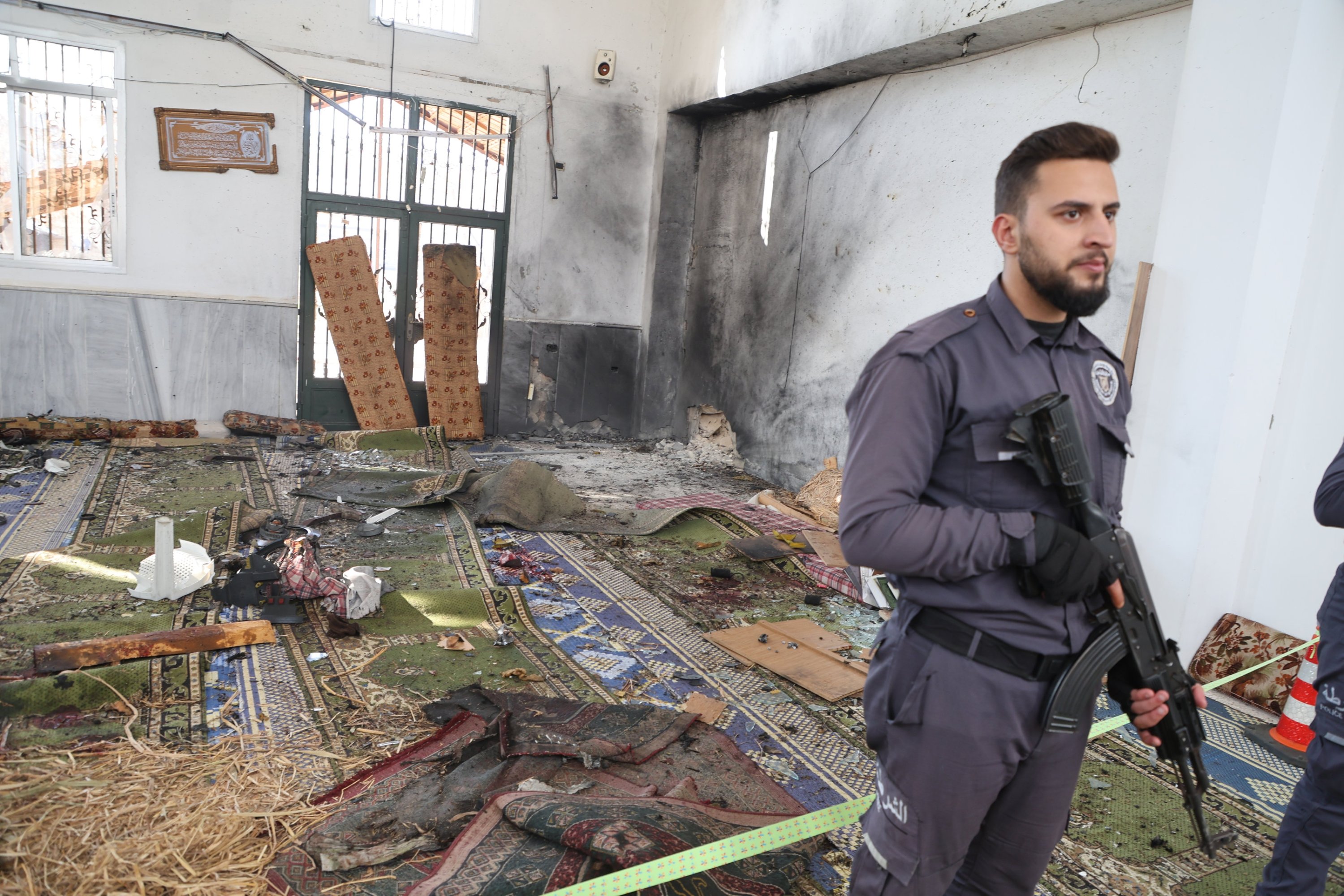
In this context, one of the most striking indicators of 2025 was a series of attacks demonstrating that the Daesh threat is not “defeated,” but rather highly capable of regeneration under permissive conditions. In December 2025, during an operation in Syria, a Daesh militant killed two U.S. soldiers and one U.S. civilian. This incident confirmed the persistence of a Daesh threat characterized not by organized front-line warfare, but by decentralized cells exploiting security gaps. More importantly, the timing of the attack, amid delayed integration and fragmented security governance, was not coincidental. The implication is clear: as state consolidation is postponed, terrorism does not disappear; it mutates. Where military pressure proves insufficient, governance vacuums become opportunity structures not only for local spoilers but also for transnational terrorist networks.
Iraq in 2025 produced a different, yet similarly fragile, picture. Elections and the U.S. withdrawal process revealed the continued dominance of Iran-aligned political and armed networks within the system. The space vacated by Washington was filled less by Baghdad’s institutional capacity than by militia balances. This confirmed that stability in Iraq is being maintained not through reform, but through a form of managed stagnation. The state is not collapsing, yet state-building is not advancing either.
Taken together, these two theaters underscore the central lesson of 2025: De-terrorization is not merely about weakening armed groups, but about constructing a legitimate, functional and singular authority to replace them. When this construction is delayed, the resulting vacuum is filled either by Daesh-style cellular networks or by proxy actors embedded in regional power struggles.
Throughout 2025, the actors that disrupted the process shared a common characteristic: They all benefited from weak or fragmented state structures. Although driven by different ideological motivations, their effects converged. Daesh sustained its presence through opportunistic, cell-based attacks exploiting security gaps in Syria and Iraq. The PKK and its affiliates, particularly in Syria, sought to preserve de facto autonomous zones by delaying integration. In Iraq, Iran-aligned militias limited reforms within the Popular Mobilization Forces (PMF) to safeguard their influence. Israel, viewing a strong, centralized Syrian government aligned with Türkiye as a strategic risk, sought to generate new fault lines in the south through Druze militias.
None of these actors pursues direct state-building projects. On the contrary, they operate as structures that derive strategic advantage from constraining state capacity. The fact that these actors were not fully eliminated in 2025 does not signify failure; rather, it reflects a transformation like the struggle itself.
For Türkiye, 2025 was not a year that exposed the limits of military power in counterterrorism, but one that highlighted the necessity of aligning military capabilities with political objectives. Rather than prioritizing direct military intervention in Syria and Iraq, Ankara pursued a multilayered strategy consistent with its “terror-free Türkiye” vision, emphasizing diplomacy and regional ownership. This approach sought to enhance the international legitimacy of the Damascus government, strengthen institutional security mechanisms with Baghdad, and further constrain the PKK at the regional level.
Military options remained on the table throughout 2025; however, priority was given to testing the capacity for political solutions to generate durable outcomes.
The experience of 2025 demonstrated that de-terrorization is militarily achievable but politically arduous. The year 2026 will determine whether this process can evolve into a sustainable regional order. For Türkiye, the strategic logic is clear: effective counterterrorism requires strong and sovereign neighboring states. Fragmented governance structures may appear manageable in the short term, but they generate long-term instability. The year 2026 will be remembered either as the point at which managed chaos became entrenched or as the moment when state-building regained momentum. A genuinely de-terrorized region is possible only if the latter path is chosen.