The LNG market is being reshaped as one of the most critical components of global energy security. The high sensitivity of supply to regional shocks, rising price volatility and deepening geopolitical risks clearly demonstrate that LNG has become not only a traded commodity but also a strategic one. In this landscape, long-term contracts stand out as a fundamental instrument that reduces uncertainty for both producing and consuming countries, strengthens market stability and reinforces energy supply security in a concrete way.
In recent years, extreme price fluctuations in the spot market have become more visible due to competitive pressures, particularly in the Asia and Europe-centered supply race. Europe’s rapid shift to LNG after Russian gas and Asia’s growing demand have caused sharp spikes in spot prices. In this environment, long-term contracts provide price predictability, facilitate portfolio management for buyers and offer an important buffer mechanism for budget planning. For producers, long-term sales guarantees contribute to accelerating investment decisions because increasing liquefaction capacity is a capital-intensive process, and investors seek assurance of sustainable demand.
Another critical role of long-term contracts in LNG trade is ensuring continuity of supply security. In the spot market, cargoes can shift rapidly based on regional price differentials, which increases supply risks, especially during winter demand peaks. In long-term contracts, delivery volumes, destination rights and pricing mechanisms are predefined, meaning that consuming countries are less affected by sudden market shocks. This makes long-term contracts an important policy tool for countries seeking to strengthen their energy mix.
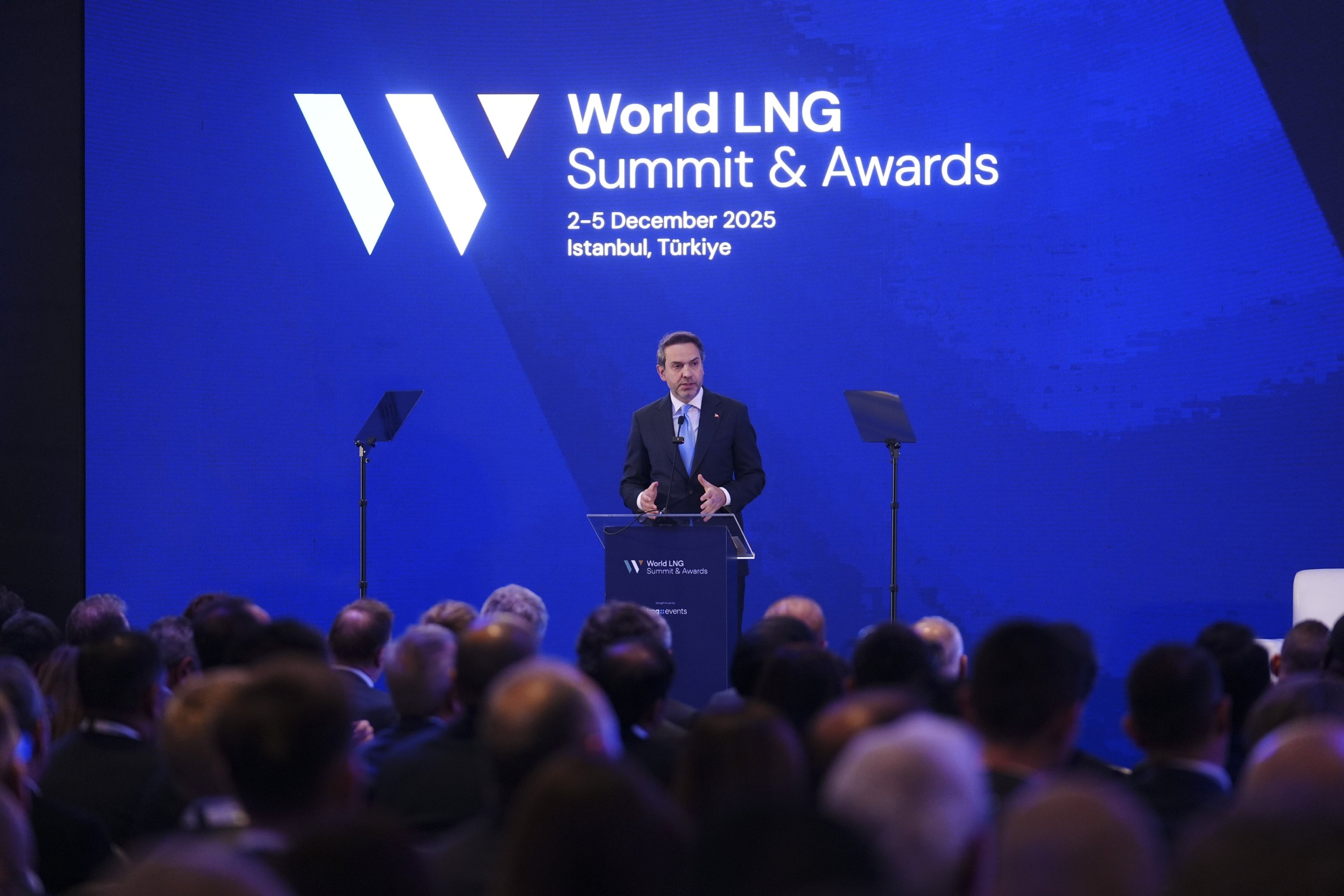
My discussions and panel engagements at the World LNG Summit and Awards, hosted this year by Turkish Petroleum Pipeline Corporation (BOTAŞ), clearly revealed that the global LNG market is undergoing a significant transformation by the mid-2020s. In this period of fragile supply security, the core priority of consumer countries is to limit price volatility, maintain supply continuity and make market risks manageable. For this reason, long-term contracts are moving beyond being a commercial preference and are becoming central to the architecture of strategic energy security. Evaluations at the summit emphasized that the volatile structure of the LNG market is no longer temporary but structural. It was noted that competition between Asia and Europe has become permanent and that price movements in the spot market constitute an unpredictable risk factor for both suppliers and buyers. Participants agreed that excessive dependence on the spot market makes energy policy increasingly vulnerable.
Europe’s rapidly rising LNG imports after 2022 have fundamentally changed the region’s approach to long-term contracts. Throughout my discussions at the summit, I observed that many actors who previously favored flexible supply and short-term transactions are now moving toward securing larger portions of their portfolios with long-term agreements. It was stated that this trend aligns with the long-standing strategy of major Asian buyers and that contract durations in global LNG trade are once again extending.
In my individual conversations with supplier companies, the critical role of long-term contracts in investment viability emerged once again. It was frequently emphasized that long-term sales and purchase agreements are indispensable for securing financing for new liquefaction capacity and that large-scale projects cannot progress without this assurance. These dynamics were described as particularly decisive for projects based in the United States and Qatar.
Another important topic highlighted at the summit was the diversification of price formulas. Brent, Henry Hub, and hybrid indexation methods are no longer merely pricing tools but have become fundamental components of risk management strategies. A balanced distribution of different indices allows buyers to optimize procurement costs and limit volatility. Concrete examples were presented of the vulnerability experienced by countries with weak portfolio diversification during the post-2022 price shocks.
During the panel in which I participated, Mikayil Yusifov emphasized that pipeline gas and LNG are not alternatives to one another but two complementary components. In his speech, he noted that Europe needs a dual structure and stated the following: “Europe needs both flexibility for its economic prosperity and independence and also stability, because stability gives more opportunities and more chances for looking for other opportunities.”
In this context, he cited the Azerbaijan-Türkiye energy partnership as an example and explained the structural impact of pipeline projects on Europe’s energy security as follows: “Azerbaijan and Turkey came together and decided to do TANAP ... it was not only a solution for Azerbaijan to sell its gas, not only for Turkey to receive additional gas, but also for Europe, especially small countries, to have that energy security.”
In his remarks, Yusifov also underlined that Türkiye has strengthened its system in recent years by increasing its flexibility capacity. Highlighting Türkiye’s LNG infrastructure development and expanded storage capacity, he stated: “Turkey started from scratch ... because of the storage system Turkey has built, because of the LNG options prepared for crises.” This assessment indicated that Türkiye has become not only a transit country but also a regional energy platform thanks to its growing capacity.
Another important contribution at the summit came from Vladimir Malinov of Bulgaria. Malinov stated that regional competition pushes countries to seek isolated solutions, whereas energy security can only be achieved through collective action. He cautioned with the following statement. “We should stop thinking selfish, on a country-by-country basis ... we should start to think much more regionally, all market participants walking into a single room to find a common solution.”
Malinov emphasized that regional aggregation of demand is essential for the future of the LNG market and stated: “Aggregation of demand and working on a regional basis is essential, because security of supply has its own price, but households still need affordable gas.”
Regarding the role of natural gas in electricity generation, he noted that Bulgaria will undergo a major transformation in its transition from coal to gas and added: “Switching from coal to gas and turning gas into power is the future ... the Bulgarian market demand in the upcoming five years will increase by 20% to 30%.”
Meanwhile, the evaluations made by Maria Rita Galli on the World LNG Summit and Awards stage were valuable, particularly as they underscore the renewed importance of long-term contracts in the LNG market and energy security. I want to emphasize that energy security is no longer only an economic debate but has become a central component of the strategic priorities of states. Galli’s remarks clearly show that after the 2022 energy crisis, geopolitical risks have overtaken market dynamics, and the renewed prominence of long-term contracts should be interpreted exactly within this context.
Galli said that: “Security, much more than in the past, is now the top line priority and the concern of every country, every government and every player. In the past, energy was not very much associated with security; it was more associated with market-driven, price-driven signals. But now we have the proof, after the 2022 crisis, of how critical energy has become to ensure the security of the gas and general energy market. An important shift that I personally hope to see more and more of is the re-emergence of some long-term contracts for energy, because for both sellers and buyers, this is critical. Producers want a stable buyer to take investment decisions, buyers need the certainty of receiving energy constantly and not facing the risk of being exposed to more competitive price markets.”
This assessment offers an important framework for understanding why the search for stable supply has once again become decisive in LNG trade because market-based price signals do not guarantee supply security during crisis periods. In the continuation of her remarks, Galli noted that the sustainability dimension has become increasingly complex and emphasized the role of storage capacity, flexible infrastructure and quickly accessible LNG in maintaining system balance.
“When it comes to sustainability, the availability of energy in storage and in tanks is crucial to guarantee the stability of systems increasingly influenced by renewable volatility. We have days when renewables provide 60% of supply and the next day only 15%. This delta is covered by gas, but not by gas storage alone; it can only be supplied by energy in tanks. Availability through committed quantities, combined with flexibility through fast infrastructure such as regasification, is essential for an energy transition that integrates more renewables while guaranteeing system stability,” she said.
This emphasis is highly relevant considering the fluctuations observed in Mediterranean and European energy systems. As Galli pointed out, natural gas remains the element that maintains system stability today. In a period when LNG stands out as an instrument that provides both security and flexibility in the face of renewable volatility, long-term contracts are once again becoming a strategic necessity for both producers and consumers.
In light of all these assessments, the World LNG Summit and Awards demonstrated once again that the defining feature of the new era in the LNG market is the search for predictability. Geopolitical fluctuations, supply constraints and uncertainty in global financing conditions make long-term contracts indispensable instruments for both investors and consumer countries. Today, the main axis of the search for stability in the LNG market is shaped precisely around this approach.