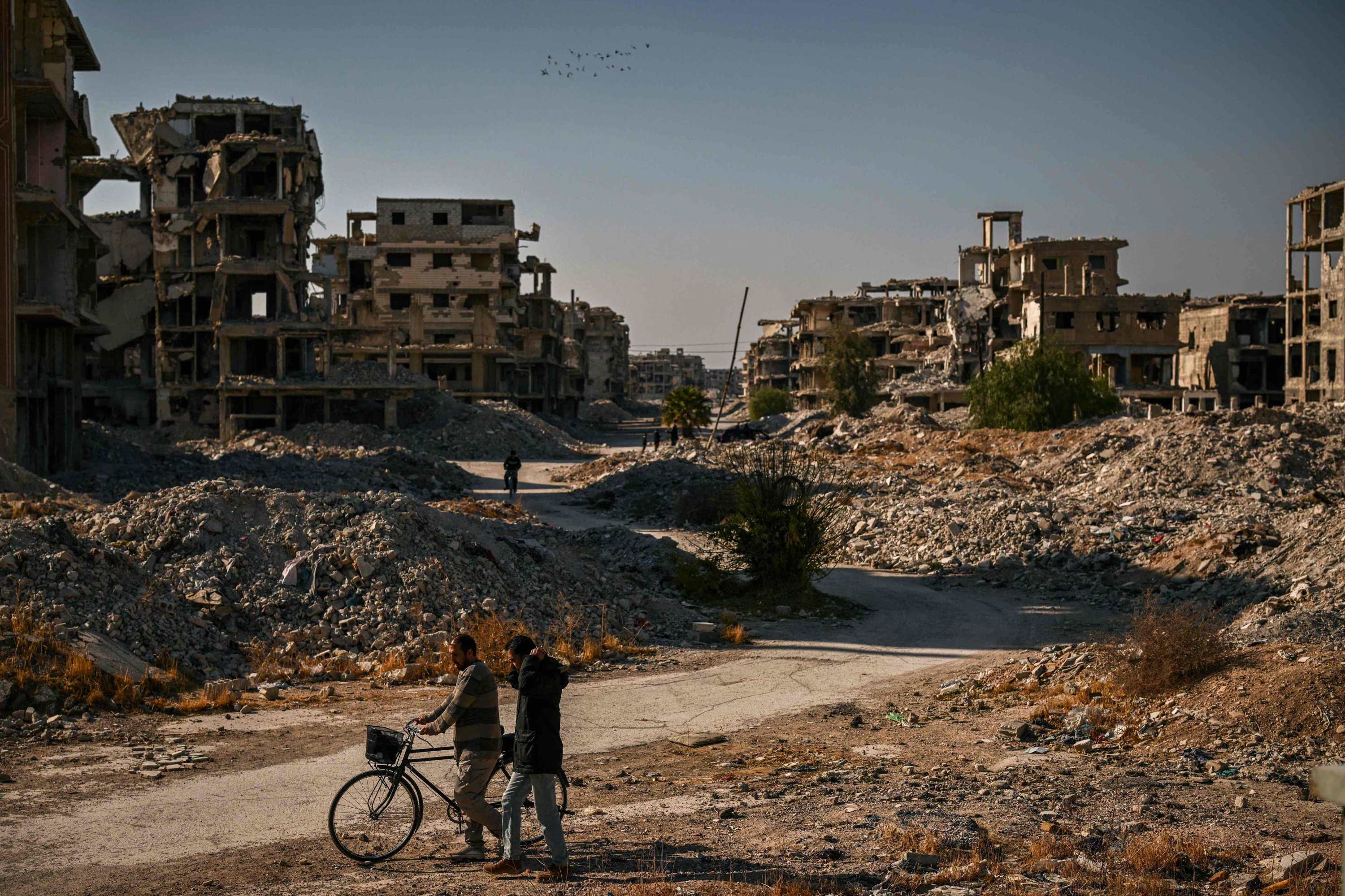
The gradual “opening” of Syria after 14 difficult years has begun to reshape regional calculations. This shift is occurring at a time when many countries are trying to balance caution with opportunity, while economic hardship, security concerns and institutional rebuilding all converge. In such a sensitive environment, developments in Syria naturally attract attention across the wider region. For countries with historic, geographic and social ties to Syria, these shifts carry both responsibility and potential.
Syria’s new leadership under President Ahmed al-Sharaa has expressed a clear interest in widening its engagement with international business circles. Large American companies, as well as firms from Türkiye, the Gulf region and parts of Europe, have already explored possible areas of cooperation, particularly in energy, infrastructure, logistics and technology. Yet for all the enthusiasm, two obstacles continue to stand out: On the Syrian side, state capacity still remains weak after many years of conflict. Ministries do not always communicate effectively, as reported, and the institutional habits required for orderly contracting and project oversight are still developing.
On the American side, the Caesar Act remains the main barrier. Formally the Caesar Syria Civilian Protection Act of 2019, the U.S. legislation sanctions the former Syrian government, including the former leader Bashar Assad, for war crimes against civilians. In fact, it authorized sanctions even for non-American companies that worked in Syria, and although partially suspended, it has not been repealed. This makes many corporations hesitant to take risks. No other country has a sanctions regime regarding Syria as far-reaching as the Caesar Act, although many firms outside the U.S. remain cautious due to indirect exposure to the American financial system. Consequently, without certainty, banks hesitate and when banks hesitate, major investments do not flow.
Even so, the economic needs of Syria are substantial. Cities require reconstruction. Energy infrastructure must be stabilized and expanded. Health care facilities need equipment. Transport networks must be repaired. Construction and manufacturing sectors require new machinery. Some exploratory steps have been taken by firms in the energy field, and memorandums of understanding worth billions have been signed by various countries in the Gulf. Yet most of these remain on paper until a more predictable financial and legal climate emerges. Any future investment would benefit not only external companies but also Syria’s own population, many of whom have endured years of hardship.
As experience has shown across many countries recovering from conflict, economic ambition cannot be separated from broader institutional questions. A functioning legal structure, transparent administrative habits and social coherence are essential. In the case of Syria, this is even more pronounced. It is a predominantly Muslim country where social norms have many parallels with Türkiye. If stability continues to grow and if a predictable framework develops, cooperation programs rooted in social references familiar to both societies may find strong resonance.
Yet economic possibility cannot be separated from legal and political uncertainty. Since law is the foundation of any stable state, it is necessary to underline that this subject carries special importance. At the same time, the security dimension cannot be ignored. As Türkiye has repeatedly emphasized, the structure of the PKK terrorist group's Syrian wing, YPG, poses risks not only to Türkiye’s national security but also to Syria's territorial unity. It is widely accepted and highlighted that the PKK/YPG uses the acronym SDF in Syria as a cover for receiving Western support.
No reconstruction effort can progress effectively if armed formations continue to operate outside legitimate state authority. Regional actors recognize that a stable Syria must be free of such pressures.
In the legal field, Türkiye brings decades of experience within the institutional framework of the Council of Europe. This public international organization has long provided cooperation programs not only for its member states but also for non-members that seek support in judicial reform, human rights documentation, training for public officials and democratic standards. These programs have helped many countries integrate more firmly into the wider international system.
Similar technical cooperation, focusing on judicial practice, rights-based procedures and good administrative habits, could be proposed for Syria if the political climate allows. Such cooperation would strengthen institutional culture and help Syria reestablish itself within international legal expectations. It is important to note that Türkiye has also contributed to development projects through the Turkish Cooperation and Coordination Agency (TIKA) in many regions, and similar practical work in health, education and basic services could assist Syria’s social recovery.
In this new period, Türkiye’s decision to appoint Nuh Yılmaz as the new ambassador to Damascus is also quite noteworthy. As a senior figure who has served in sensitive and strategic roles, and with whom a personal acquaintance has existed for some two decades, his appointment at such a critical moment reflects institutional confidence and a deliberate diplomatic opening. The Turkish Embassy in Damascus had suspended activities in March 2012. After its reopening last year, the charge d’affaires role had been held by Ambassador Burhan Köroğlu, who had been assigned temporarily. The new appointment marks the first full ambassadorial representation of Türkiye in Damascus in over a decade.
This diplomatic renewal aligns with Türkiye’s long-standing view that Syria’s stability requires both territorial integrity and functioning state institutions. From Türkiye’s perspective, partnerships built on trust, legal clarity and shared regional interests can support Syria’s reconstruction while also contributing to wider regional stability.
Syria’s new landscape is still taking shape. The coming years will show whether political intent, economic opportunity and institutional rebuilding can converge into a stable path. For countries in the region, including Türkiye, this period will require careful balance, patient diplomacy and a steady commitment to principles that support both peace and long-term cooperation.