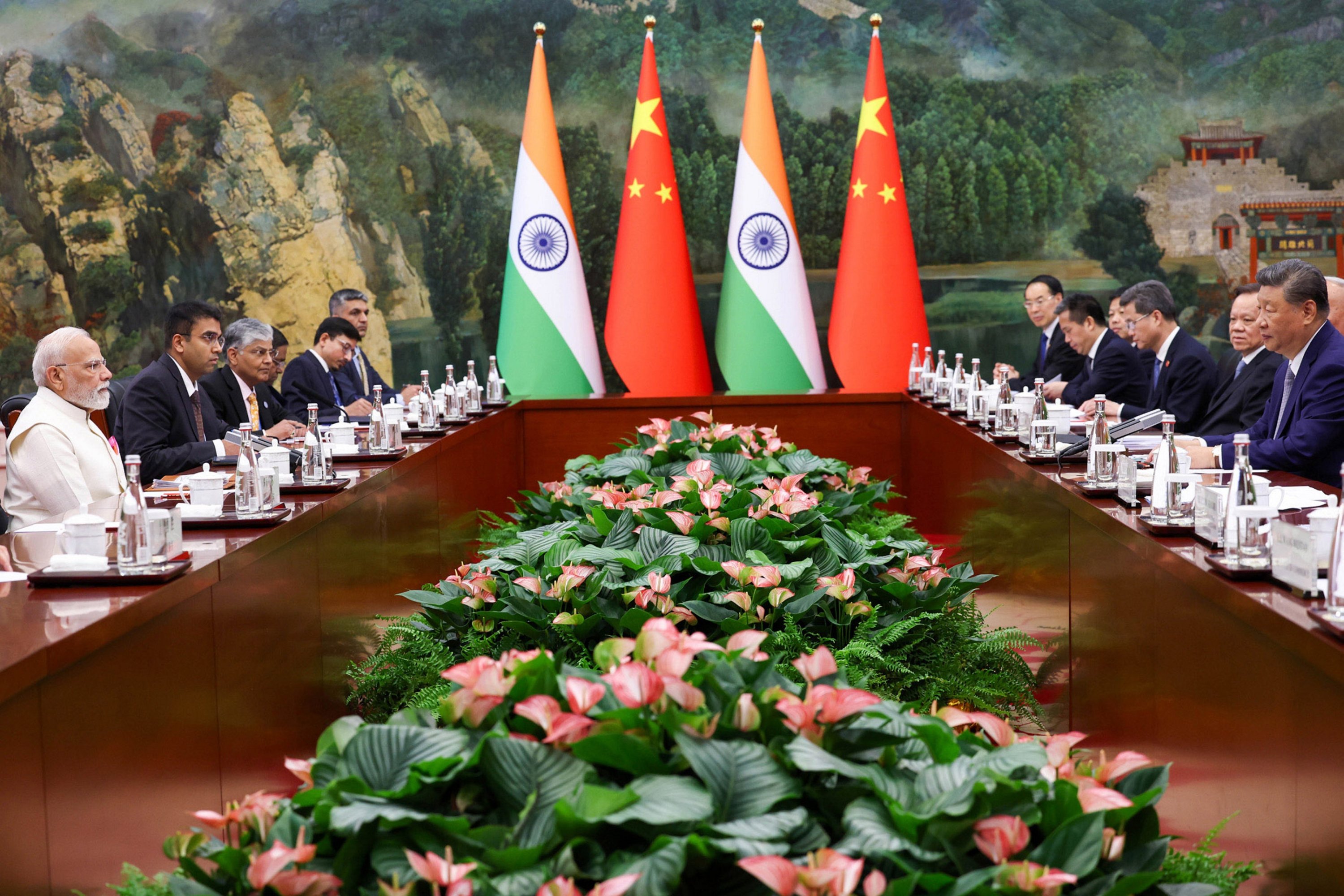
What began as a security mechanism in 1996 to resolve border issues comprising its six founding members – China, Russia, Kazakhstan, Kyrgyzstan, Tajikistan and Uzbekistan – the Shanghai Cooperation Organization (SCO) has burgeoned today into a bloc embracing 26 countries across Asia, Europe and Africa, including observer states Mongolia and Afghanistan and 14 dialogue partners: Sri Lanka, Türkiye, Cambodia, Azerbaijan, Nepal, Armenia, Egypt, Qatar, Saudi Arabia, Bahrain, Kuwait, Myanmar, the Maldives and the United Arab Emirates (UAE). Archrivals India and Pakistan are also full-fledged SCO members.
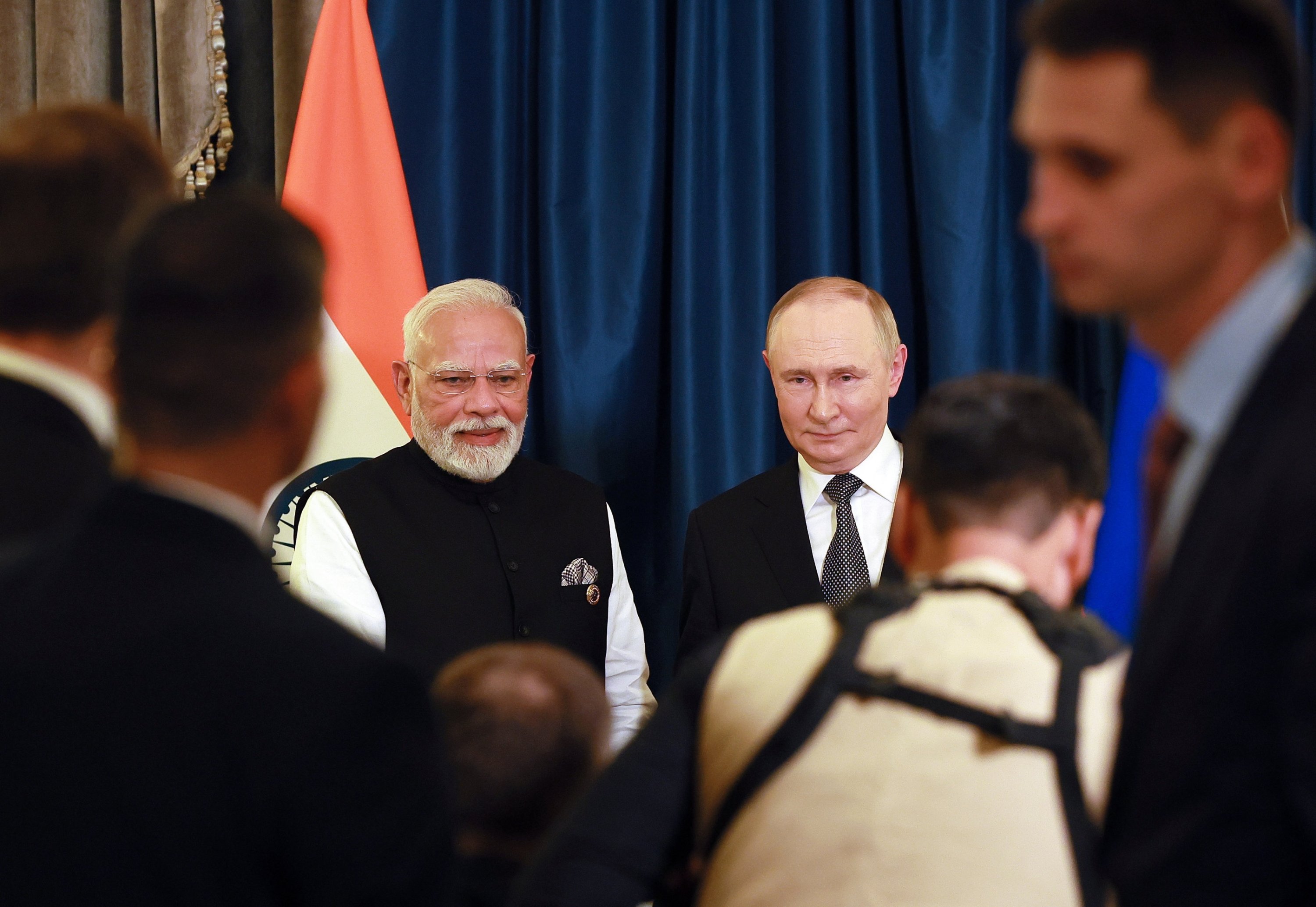
The just-concluded SCO summit in Tianjin, China, received extensive global media attention, and was portrayed as a counterweight to U.S. domination in a unipolar world; the presence of the three leaders of Russia, India and China – Vladimir Putin, Narendra Modi and Xi Jinping respectively – holding hands and engaging in jovial conversations, irked some U.S. experts who were, particularly, struck by Indian Prime Minister’s presence in Tianjin after U.S. President Donald Trump’s severe criticism of India and Modi. Trump’s trade adviser, Peter Navarro, launched a diatribe against Modi, calling the Ukraine-Russia war “Modi’s war” and even talking about “Brahmins” (a reference to India’s upper caste), which angered not only Indians but also many U.S. strategists who criticized the U.S. administration for alienating Modi with Trump’s controversial 50% tariffs on Indian goods. Even India’s pro-U.S. media changed its tone and said that the severe criticism would damage the painstakingly built India-U.S. strategic partnership established by past administrations.
But images flashed from China’s Victory Day Parade in Beijing two days after the SCO summit, further angered Trump who spoke about a “conspiracy” against America by the trio, Putin, Xi and North Korea’s Kim Jong Un at the parade; he also criticized China for not mentioning the sacrifices made by Americans for China’s freedom from the then common enemy Japan.
Modi, however, did not attend the parade due to India’s border issues with China and its close ties with Japan – Tokyo criticized the parade as anti-Japanese – and returned home after the SCO summit. Some American defense experts tried to play down the military display in Beijing by reminding that it was customary for autocratic countries like China, North Korea, Russia and others to display their military might by organizing such events. But Gen. Kevin Schneider, U.S. Pacific Air Forces commander, during a recent online talk, emphasized that the “takeaway (from the parade) is that we are not deterred.”
Trump’s second term seems to have started with the president’s inconsistent comments and actions – the tariff imposition is the latest act that could alienate friends and allies, not to mention his somewhat incomprehensible comments of Canada being the 51st U.S. state or taking back Greenland from Denmark – with many seasoned U.S. diplomats trying to do damage control and extinguish the fire caused by Trump’s reckless comments and behavior.
The realization does not seem to have dawned on some U.S. politicians that hegemony is difficult to sustain in today’s world, particularly amid rising populous nations – once branded, with prejudice, as the “Third World” – as is currently visible with the emergence of China as a competitor to America, or India, the world’s largest democracy. Like-minded democracies, despite their cultural differences, should collaborate, but as one American analyst aptly put it, “if you tread on my toes with your heavy boots, I will push you away,” to describe India’s reaction to Trump’s high-handed approach.
After failing to get China to kowtow to his demand to stop buying Russian oil, Beijing’s control of large rare earth mineral resources, which America’s industry needs for survival, checkmated Trump’s threat. Trump lashed out at Modi, who seemed to have struck, at least optically, a rare bonhomie with Putin and Xi in Tianjin. His verbal attack against Modi, whom he once hailed as a “dear friend,” may have both personal and political reasons. One reason may have been Modi denying Trump’s mediatory role in ending the four-day conflict with Pakistan, thus reducing Trump’s chances of getting a Nobel Peace Prize; another reason may have been his interest in tapping Pakistan’s oil and rare mineral reserves, for which no scientific evidence exists, or his business involvement in a cryptocurrency deal in Pakistan. Modi, who was riding jointly in Putin’s special limousine and engaging in an hourlong conversation with the two, also seemed to irritate Trump. Many Indian and American experts had expected Trump, in his second term, to bring India even closer to the U.S. Instead, India, a Quad member along with Australia, Japan and the U.S., seems to be gradually drifting, though not willingly, into China’s orbit.
Nonetheless, the cordiality displayed among the SCO leaders should not cloud the differences between them, particularly between China and India, which had a border clash in the Himalayan Galway Valley in 2020 and had a frosty relationship until last year, when some signs of a thaw started to appear. Modi and Xi also met, for the first time in five years, in Kazan on the sidelines of the 16th BRICS summit in October 2024. Trump’s tariffs and his criticism of India accelerated the pace of the India-China talks to resolve their problems. Shortly before the SCO summit, Chinese Foreign Minister Wang Yi had visited New Delhi, where he met Indian Foreign Minister Dr. Jaishankar and security adviser Ajit Doval.
India and China have also taken “baby steps” in confidence-building between them, including people-to-people contacts, air connectivity between the two, India’s removal of certain restrictions on trade and investment in China, etc. The border dispute still remains unresolved and will continue to be raised in all future bilateral talks.
Meanwhile, the future of the four-power Quad alliance seems to have come under a cloud, with many experts predicting that the ongoing India-U.S. tiff could possibly affect the Quad’s future. President Trump, who was invited to attend the Quad summit in India later this year, has not yet confirmed his participation; on the other hand, India has also kept quiet about its future role in the Quad. China, which perceives the Quad as an anti-China alliance, is closely watching the developments among the Quad members.
The Tianjin optics may have created the mistaken impression that India has moved into China’s orbit. Not quite so. India’s ties with the U.S. are – and will continue to be – very strong, notwithstanding Trump. The U.S. is a huge market and a source of investment for India. On the other hand, India’s non-oil trade with Russia has been declining. And as far as China is concerned, India will remain skeptical because the border issue may not be resolved in our lifetime.
Though, as German professor Karl Schumacher, a political scientist, once said, “everything is possible now,” especially after the sudden fall of the Berlin Wall and the equally sudden collapse of the once-mighty Soviet Union.
Trump’s misguided tariff policies could cost the U.S. the friendship with India, a 1.4 billion-strong democracy. The U.S. also recognizes that India possesses tremendous soft power globally, an asset that China clearly lacks, despite its economic and military might.
The feeling in the U.S. is that losing India would be a big foreign policy blunder and that Trump should act fast to repair ties with India. Many U.S. strategic experts believe that Modi might not have visited Tianjin if Trump had not imposed the harsh tariffs. Modi’s absence at the SCO summit would have conveyed India’s anger at China’s economic, military and diplomatic support for Pakistan in the recent four-day conflict with Pakistan following the Pahalgam attack, not to forget China’s aggressive land grabs of Indian territory and the border clashes.
India and the U.S. should take steps to normalize their relations and prevent further escalation of tensions. An opportunity would soon present itself when Modi visits the U.S. to attend the upcoming United Nations General Assembly session. Modi and Trump could meet and mend fences.