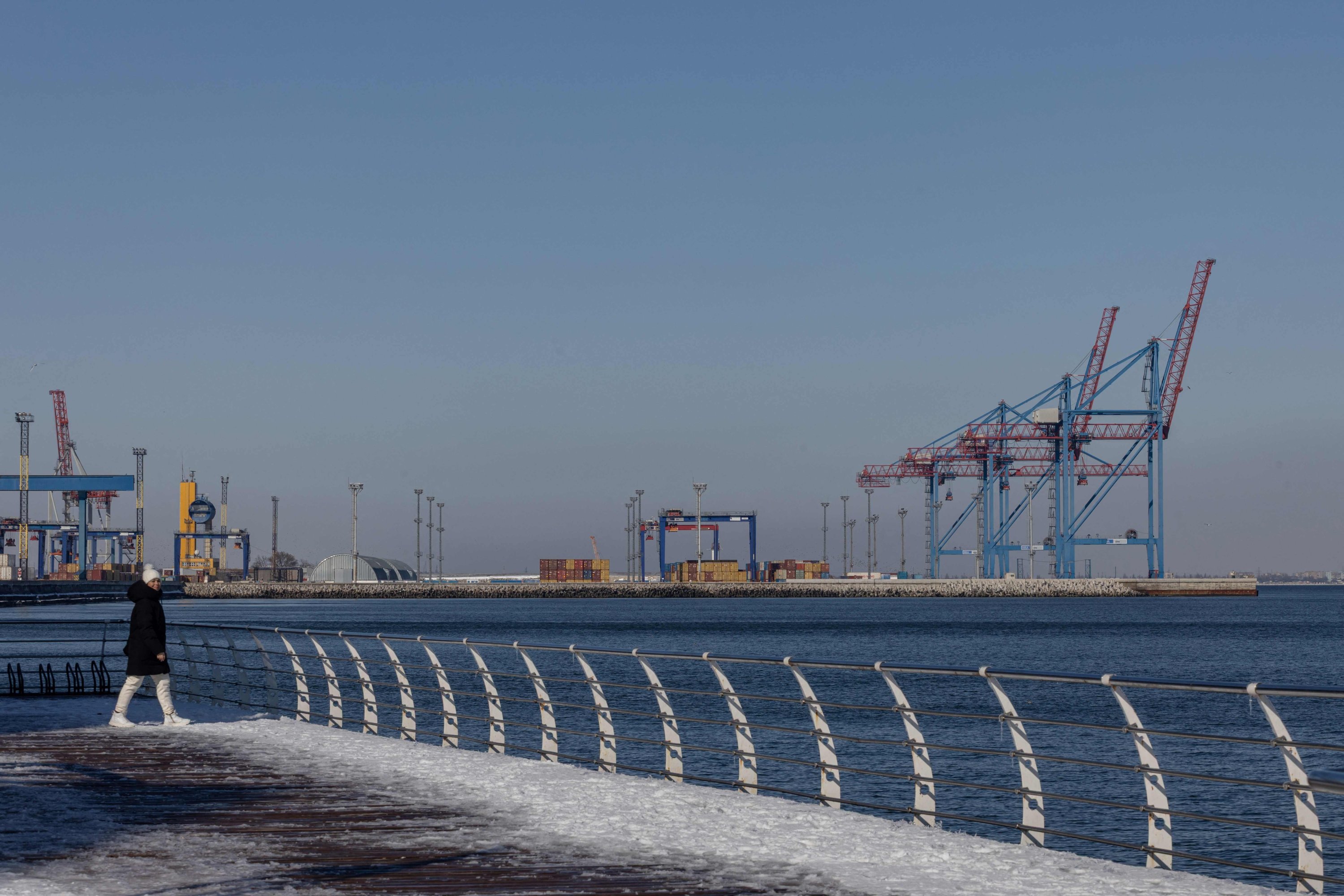
It has now been four years since Russia launched its full-scale invasion of Ukraine. In February 2022, many observers predicted a short conflict. Instead, the war has become one of the defining geopolitical crises of our time. Ukraine has demonstrated remarkable resilience in defending its sovereignty and territorial integrity. Yet the consequences of this war extend far beyond Ukraine’s borders, reshaping regional and global security in profound ways.
The conflict has fundamentally altered Europe’s security architecture. It has tested international law, challenged multilateral institutions, and placed trans-Atlantic solidarity under significant strain. NATO has adapted its posture, European states have increased defense spending, and strategic autonomy has reemerged as a central debate within the European Union. What began as a regional war has become a global inflection point
The ripple effects have been felt worldwide. Energy markets were disrupted, accelerating Europe’s search for alternative suppliers and reshaping global energy flows. Food security became an urgent international concern as grain exports from the Black Sea were interrupted. Defense policies across continents were revisited. Alliances were reassessed. The war has revealed the fragility of global interdependence and the speed with which regional instability can generate global consequences.
For Türkiye, this is not a distant conflict. The stakes are immediate and strategic: As a Black Sea country, a NATO ally and a regional power maintaining dialogue with all relevant actors, Türkiye occupies a unique and delicate position. Geography has placed our country at the center of an evolving security environment. Developments in the Black Sea directly affect our national security, economic interests and diplomatic posture.
The Black Sea is not merely a geographical feature. It is a strategic corridor. It connects Europe to the Caucasus and Central Asia. It is vital for trade routes, energy transit and grain shipments. Any disruption there reverberates across markets and supply chains. The increasing militarization of the Black Sea since 2022 has therefore raised serious concerns about long-term regional stability.
Naval deployments, missile systems and contested maritime routes have turned the basin into a key arena of strategic competition. The balance between deterrence and dialogue in this region will shape not only the future of Black Sea security but also broader European stability. For Türkiye, preserving equilibrium in this maritime space is both a necessity and a responsibility.
At the same time, the war has underscored the importance of diplomacy. The Black Sea Grain Initiative, facilitated with Türkiye’s active involvement, demonstrated that even amid armed conflict, pragmatic cooperation is possible. By helping ensure the continuation of grain exports, Türkiye contributed not only to regional stability but also to global food security. This effort illustrated the constructive role Ankara can play when tensions run high.
Türkiye’s approach has been defined by strategic balance. As a NATO ally, Türkiye supports the principles of sovereignty and territorial integrity. At the same time, it has maintained open channels of communication with Russia. This dual-track policy reflects neither ambiguity nor inconsistency. Rather, it is rooted in realism and an understanding of Türkiye’s geographic and economic realities.
Dialogue is not endorsement. It is an instrument of diplomacy. In an increasingly polarized international environment, the ability to communicate with multiple actors enhances Türkiye’s strategic relevance and offers potential pathways toward de-escalation.
Meanwhile, Türkiye-Ukraine relations have steadily deepened over the years. Cooperation in defense industries, trade and political dialogue reflects shared interests in regional stability and economic partnership. These ties are not temporary reactions to crisis; they are part of a broader framework of cooperation grounded in mutual respect.
Beyond the immediate military dimension, the war has raised fundamental questions about the future of the international order. If territorial integrity can be challenged by force, the implications extend far beyond Eastern Europe. For countries like Türkiye, which depend on predictable rules and stable balances of power, the erosion of international norms carries long-term risks.
The coming years will determine whether the Black Sea becomes a permanently militarized zone of rivalry or a space where managed competition and diplomatic engagement can coexist. Achieving the latter will require deterrence, dialogue and sustained diplomatic effort.
In this evolving landscape, Türkiye’s strategic responsibility is clear: to safeguard its national interests, to contribute to regional stability and to uphold the principles that underpin international order. This requires careful calibration, harmonizing alliance commitments with geographic realities, balancing deterrence with diplomacy, and maintaining strategic flexibility in a rapidly changing world.
Four years into the war, the lessons are sobering. Peace and stability in our region cannot be taken for granted. They demand vigilance, preparedness and active engagement. For Türkiye, the stakes are not abstract. They lie along our shores, in our trade routes, and within our broader regional environment.
The war in Ukraine has reshaped our neighborhood. How we respond to its long-term consequences will shape the future of regional and global security.