The Balkans remain neither in a general security crisis nor in a state of durable peace. Political polarization, fragile institutions, unresolved disputes and economic insecurity continue to expose the region to renewed tensions. The challenge is not simply to prevent the next crisis, but to build a region where political differences are resolved peacefully, prosperity is shared, and stability becomes sustainable.
Türkiye has an important role in this endeavor. Its geographical position, NATO membership, diplomatic relationships and economic presence give it substantial regional influence. Centuries of historical interaction, cultural exchange and migration have also created enduring connections between Türkiye and the peoples of Southeast Europe. For Ankara, stability in the Balkans is both a strategic priority and a matter of close societal ties.
Developments in Serbia and Bosnia-Herzegovina illustrate the region’s continuing vulnerabilities. Recent political developments in Belgrade may create opportunities for change, but their significance will depend on accountable government, functioning institutions and a constructive approach to regional relations. Given Serbia’s regional influence and unresolved disputes with neighbouring countries, its political trajectory will also shape the prospects for stability.
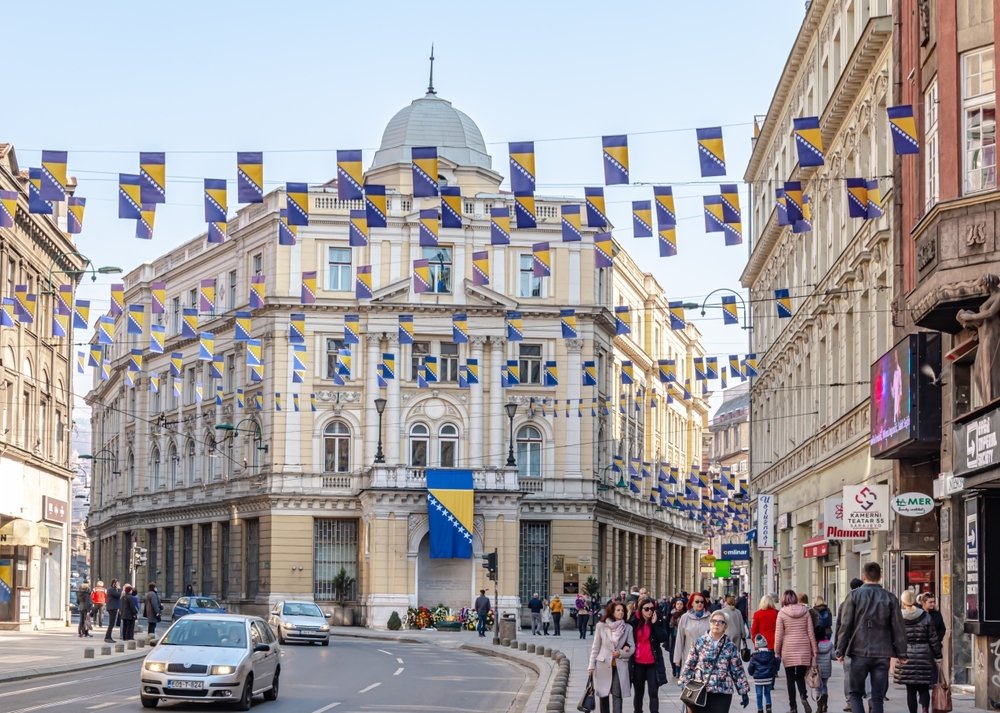
Bosnia-Herzegovina faces a different challenge. The Dayton Peace Agreement has preserved peace since the war, yet institutional complexity and persistent political divisions continue to constrain governance. Challenges to state-level authority underscore the need for consistent support for the country’s constitutional order, the rule of law, and binding judicial decisions.
These cases demonstrate that military deterrence alone cannot guarantee lasting peace. International security missions remain important, but their effectiveness ultimately depends on political dialogue, democratic accountability and institutions capable of managing disputes peacefully.
The European Union’s enlargement policy is central to this process. Reforms must be substantive, while the prospect of membership must remain credible. Türkiye cannot replace the EU’s role in institutional reform, but it can complement international efforts through security cooperation and diplomacy.
Türkiye’s engagement combines strategic interests with historical and societal connections. The Balkan diaspora in Türkiye, alongside family ties, educational exchanges and commercial networks, provides channels for communication that extend beyond formal diplomacy.
These connections are most valuable when they promote inclusion rather than favor particular ethnic, religious or political communities. Türkiye’s approach supports sovereignty and territorial integrity, equality among citizens, minority rights and peaceful coexistence.
Security cooperation is another important dimension. Türkiye’s participation in NATO’s Kosovo Force (KFOR) and the EU-led EUFOR Althea mission in Bosnia-Herzegovina contributes to international efforts to maintain a safe environment and deter escalation. Although these missions cannot settle political disputes, they help preserve the conditions necessary for dialogue.
Türkiye’s diplomatic relationships can similarly reduce misunderstandings and support practical agreements. An important example is the Balkan Peace Platform, launched under Türkiye’s leadership in 2025. Bringing together Türkiye and six Western Balkan countries, the initiative seeks to strengthen regional dialogue, trust and practical engagement. It provides an additional channel for addressing shared challenges and complements existing international mechanisms.
Coordination with the EU, NATO, the United States and other partners can further reinforce these efforts, even where priorities differ.
Economic insecurity can encourage emigration, weaken productive capacity and undermine confidence in political institutions. Trade, investment and regional connectivity are therefore essential components of a sustainable peace agenda.
Türkiye’s trade with the Balkans amounted to approximately $35 billion. Estimates of Turkish investment vary according to geographical coverage and methodology, ranging from approximately $8.6 billion across six Western Balkan economies to broader regional estimates approaching $24.6 billion.
Turkish commercial engagement can support employment, local businesses, manufacturing, skills development and regional supply chains. Its contribution depends on responsible investment, transparent regulation and effective local partnerships that strengthen productive capacity in host economies.
Transport infrastructure, energy security and trade facilitation offer promising areas for further progress. Better regional connections can reduce commercial costs, facilitate investment and improve access to European markets. Education, workforce development and disaster preparedness can also generate practical benefits for regional societies.
Economic engagement cannot substitute for political reform. Its value lies in creating opportunities, strengthening interdependence and giving regional governments and businesses tangible incentives to pursue common interests.
Türkiye’s role in the Balkans should also be understood within the wider context of its regional security policy, particularly developments in the Black Sea. Although the two regions have distinct political dynamics, they are connected through maritime security, energy infrastructure, transport corridors and access to European markets.
As I have discussed in Daily Sabah before, the Russia-Ukraine war has underscored the importance of maritime security, critical infrastructure and the regional strategic order. Türkiye’s approach combines NATO commitments, diplomatic engagement and the implementation of the Montreux Convention, while protecting its security and economic interests.
These developments affect the Balkans through trade routes, energy security and supply chains. Closer engagement among Türkiye, Romania, Bulgaria and other partners can strengthen maritime security and economic resilience.
Türkiye can help connect these strategic priorities through practical initiatives in security, transport, energy and trade. Such efforts would complement, rather than replace, the political reforms and regional reconciliation necessary for lasting stability in southeastern Europe.
Türkiye and its international partners should consistently support state sovereignty, constitutional order and the peaceful resolution of disputes. In Bosnia-Herzegovina, this requires support for the Dayton framework and constitutional institutions. Political transitions elsewhere should be opportunities to strengthen accountability and public trust.
The EU should combine requests for reform with a tangible prospect of enlargement. Türkiye can complement this process through diplomacy, economic engagement and regional connectivity without challenging the EU’s accession responsibilities.
Ultimately, Türkiye’s strategic position, security commitments, diplomatic relationships and economic ties give it meaningful capacity to contribute to peace and prosperity in the Balkans. But these advantages do not automatically translate into results. Historical ties must encourage inclusion rather than partiality; security participation must preserve space for political solutions; and economic engagement must generate sustainable benefits.
Ankara’s long-term interests are best served by a Balkans where institutions function effectively, political disputes are managed peacefully, and economic opportunities are broadly shared.
By combining security engagement, inclusive diplomacy and economic connectivity, Türkiye can help create the conditions for a more resilient Balkans, working alongside its European and transatlantic allies and, above all, the countries and societies of the region.