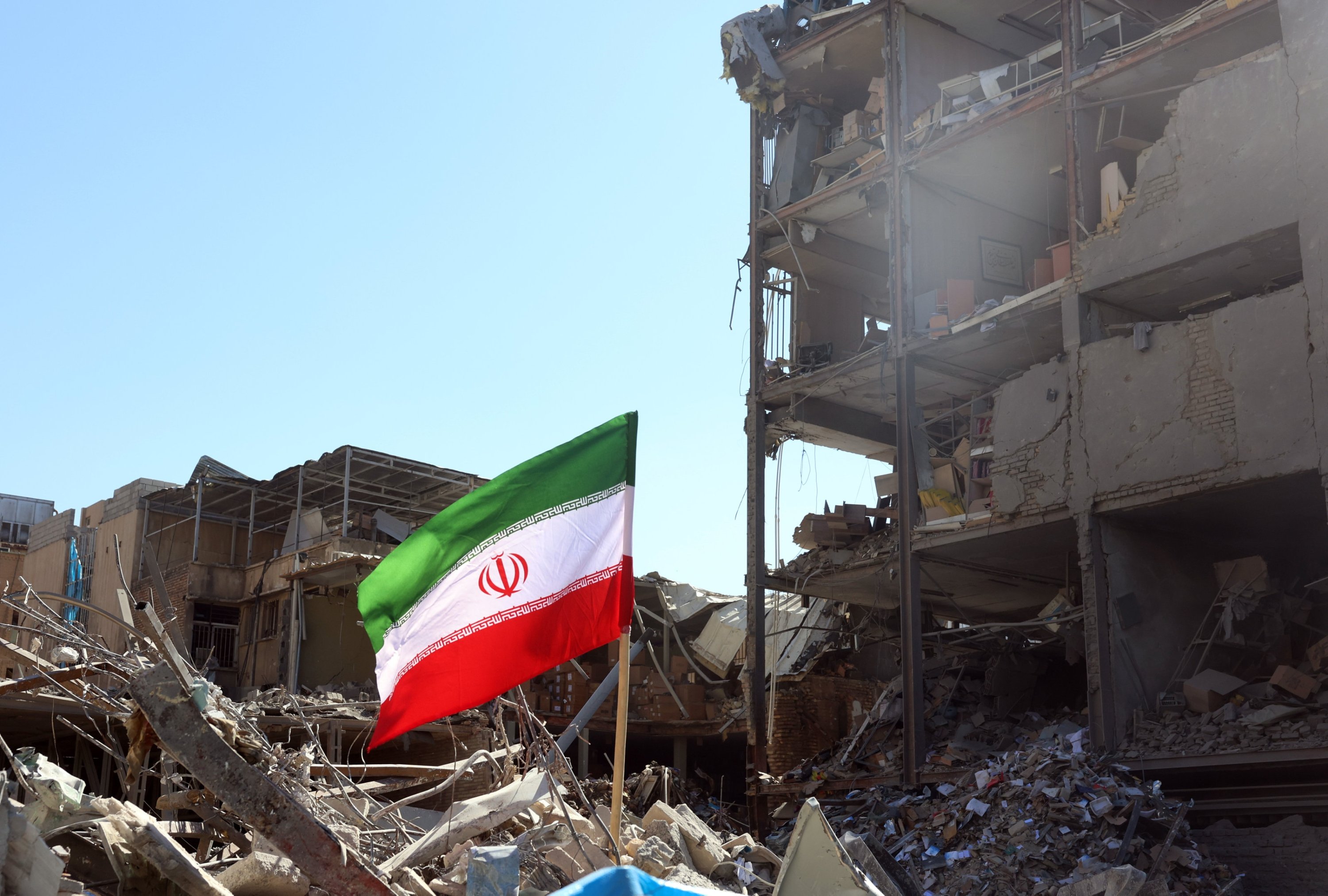
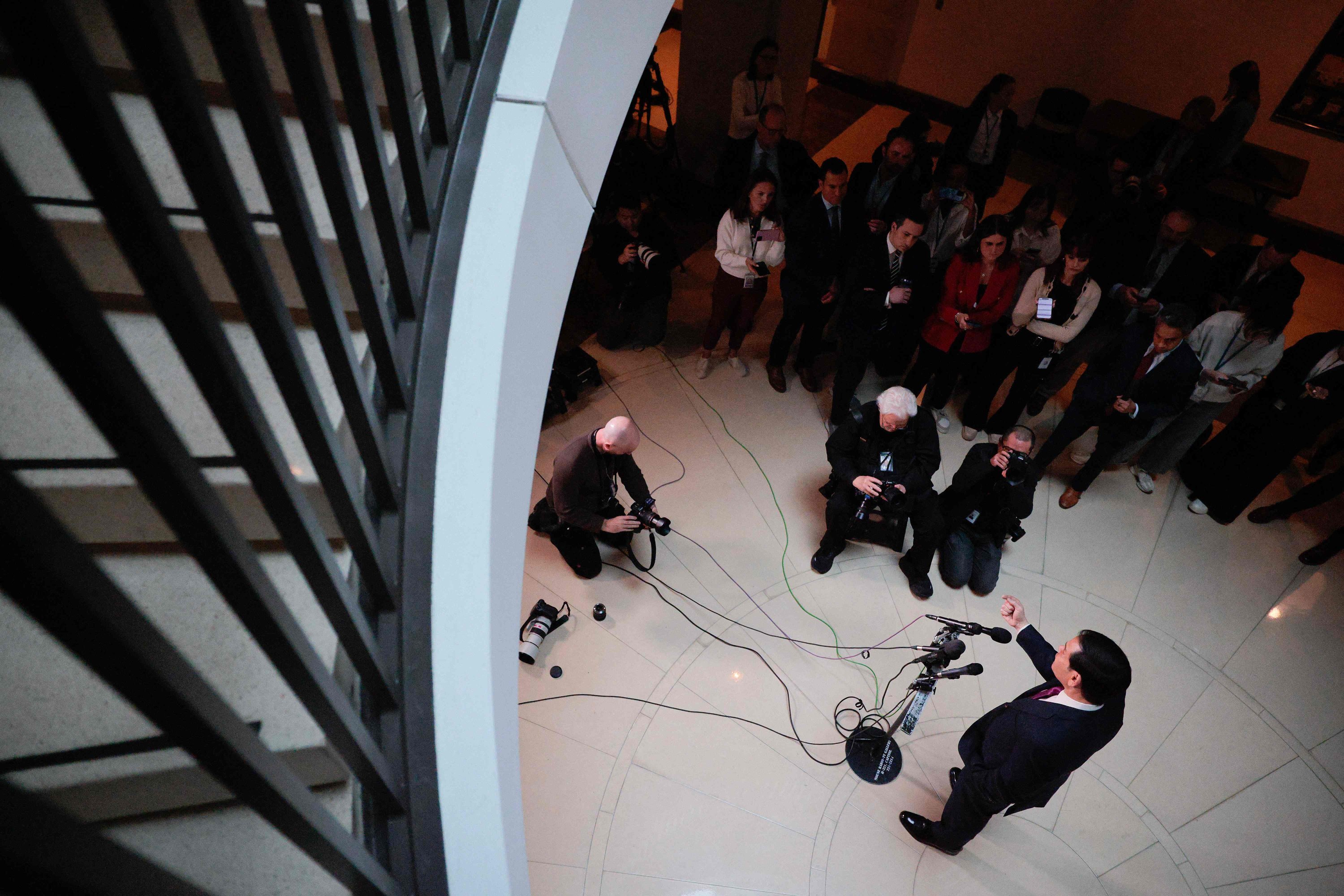
Following the meeting between Omani Foreign Minister Badr bin Hamad Al Busaidi and U.S. Vice President JD Vance in Washington on Feb. 27, parties monitoring the U.S.-Iran negotiations were hopeful about the possibility of peace and reconciliation. The Omani Minister had announced that Iran had accepted several severe conditions and was ready for an agreement, suggesting that a diplomatic solution was within reach. However, only hours after this statement, the U.S. and Israel launched an attack on Iran, commencing one of the most intense bombardments in history. It was as if they were unsettled by the prospect of peace appearing on the horizon, as if they had little time left to thwart the plan of the isolationist JD Vance, who opposed military intervention in Iran.
The onset of this attack was more or less anticipated. The U.S. had spent months building up the necessary military presence in the Gulf for a sustained war. This buildup was far too extensive to be interpreted merely as a move to strengthen their hand in diplomatic talks. For such a massive military mobilization to be reversed, Iran would have had to wave the white flag of surrender. Yet, it has become clear that no matter how many harsh conditions Iran accepted, the decision for war had already been made, and the negotiations were nothing more than a tactic to buy time for military preparations.
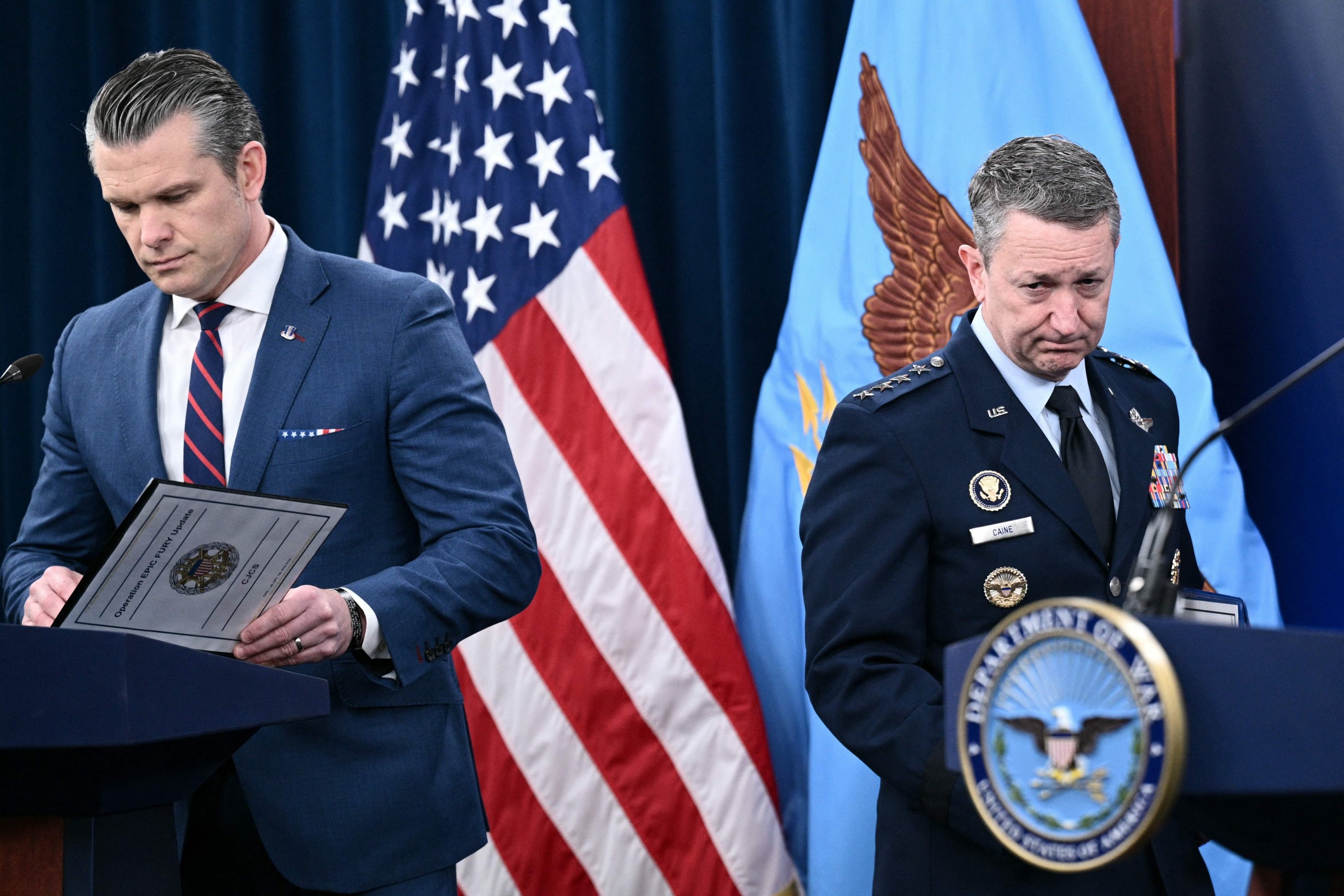
Nearly all experts share the same conviction that regime change in Iran is not possible through aerial bombardment alone. Their analysis is due to U.S. President Donald Trump's statement, which came following the attacks, that regime change is aimed at. However, Secretary of War Pete Hegseth stated that this is not a war for regime change. It appears that the U.S. administration has failed to present a consistent political objective for attacking Iran. Without a concrete political output and alternative plans, the logic of a purely military operation remains unjustified.
Furthermore, documents leaked from the Pentagon revealed that an Iranian attack on the U.S. was not anticipated, contrary to Trump’s claims that Iran posed a threat to the U.S. Amid this confusion, Secretary of State Marco Rubio’s statement that the U.S. is being dragged into a war with Iran following Israel marked a true watershed moment. The emerging picture shows the U.S. entering a war without legal or military justification, without a coherent political-military strategy, and whose negative consequences and general trajectory are impossible to contain.
On the Iranian side, the first shockwave of the war resulted in the killing of several key leaders, with Supreme Leader Ali Khamenei being the most significant one. Nevertheless, Khamenei’s death did not create the vacuum of authority or the discontinuity envisioned by the U.S. and Israel. Within the constitutional framework, institutions and actors fulfilled their roles for the sake of the system's continuity. A swiftly formed Interim Leadership Council assumed Khamenei's powers, and a new supreme leader is to be elected as soon as possible. This decisiveness in the institutional structure is vital both for the command of the war and for preventing any internal uprisings.
Iran’s fundamental strategy rests on three pillars: maintaining elite-level unity, strengthening the state-society bond, and ensuring that the direct and indirect impacts of military responses force a U.S.-Israeli withdrawal. So far, there appears to be no fragmentation among the elites. The leadership of the Islamic Republic gives the impression of having prepared for this war. Despite the falling bombs, the crowds filling the squares of major cities suggest that Iranian society is rallying around the flag.
As for Iran’s military strategy and losses, the weakness of its air defense systems against one of the greatest military powers in history is undoubtedly a factor increasing Iran’s military casualties. However, Iran’s targeting of Israel, U.S. bases in Gulf countries, and U.S. vessels, directly but with variable intensity, demonstrates that, unlike the U.S. lack of strategy, its military approach is built on a three-pronged logic.
First, inflicting direct military losses on Israel and the U.S.; second, externalizing and spreading the cost by regionalizing the war; and third, fueling global backlash by creating economic shockwaves through the closure of the Strait of Hormuz and the targeting of Dubai. Thus far, Iran appears to have relatively achieved all three objectives.
Naturally, this strategy carries various risks, such as directly antagonizing the Gulf states. But for Iran, there is no longer an easy or cost-free response.
There is no diplomatic initiative on the horizon capable of ending the war in the short term. Furthermore, the killing of Khamenei signifies that the Iranian leadership will not accept a cease-fire anytime soon, as he was not only a statesman but also a "marja al-taqlid" (source of emulation) for the Shiite world. Therefore, the chaotic consequences of his death will inevitably spill beyond Iran's borders.
Iran is a nation seasoned by protracted wars and conflicts. In contrast, the U.S. finds it far more difficult to tolerate its own casualties compared to Tehran. Thus, while a prolonged war would be devastating for Iran, it is equally unsustainable for the U.S. However, the outcome of wars is rarely determined by rational calculations. Although Trump has attempted to impose a "timeframe" on this conflict, it will not take long for him to awaken from the illusion that this war is under control.